
Stearic Acid and Mitochondrial Fusion: The Metabolic Signal of Saturated Fat
Updated May 2026
Explores how stearic acid from beef tallow promotes healthy mitochondrial morphology. It challenges the UK's demonization of saturated animal fats.
Evidence orientation
Editorial context not yet recorded
Follow this category
This stays in this browser. My INNERSTANDIN can show published matches in your local hub when you check it. It does not send email, push, or alert notifications.
Local learning review
A private browser aid for revisiting ideas. It is not an alert or a health recommendation.
Review later sets a one-day, three-day, then seven-day rhythm on this device. Choose it only when you want to revisit this article.
Overview
In the realm of modern nutritional science, a grand deception has persisted for over seven decades. We have been conditioned to view saturated animal fats as the primary drivers of cardiovascular decay, while industrially processed vegetable oils are heralded as "heart-healthy" alternatives. However, emerging research into mitochondrial dynamics—the way our cellular powerhouses change shape and function—reveals a diametrically opposed reality. At the centre of this paradigm shift is Stearic Acid (C18:0), a long-chain saturated fatty acid found most abundantly in the suet and tallow of ruminant animals like beef and lamb.
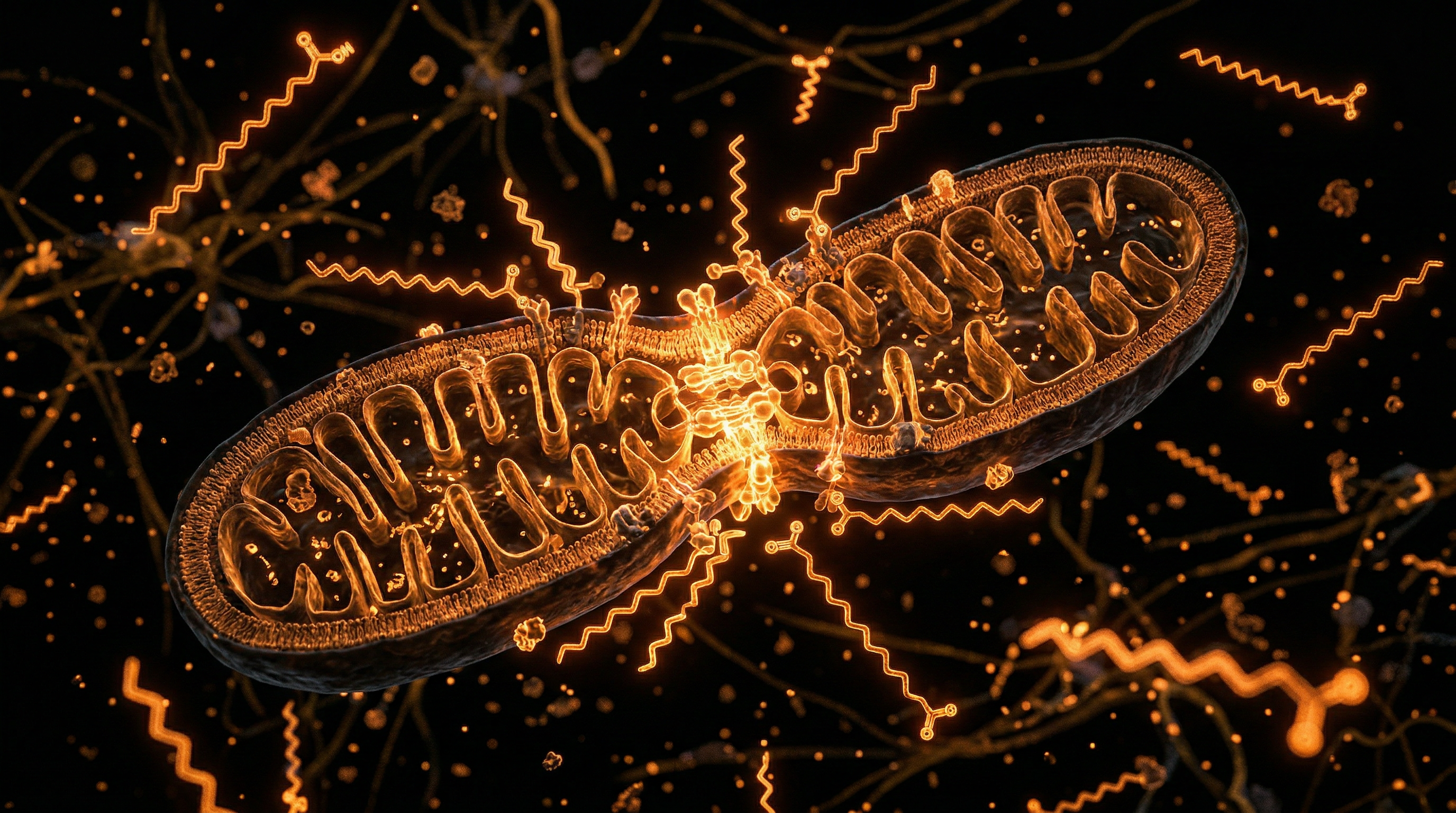
Stearic acid is not merely a source of calories; it is a potent metabolic signalling molecule. Unlike the polyunsaturated fatty acids (PUFAs) found in seed oils, which promote mitochondrial "fission" (fragmentation) and metabolic slowing, stearic acid acts as a biological trigger for mitochondrial fusion. This process merges individual mitochondria into a robust, interconnected network, enhancing energy production and activating the "fat-burning" mode of the cell.
Key Fact: Stearic acid is the only dietary fatty acid proven to rapidly induce mitochondrial fusion in humans within hours of consumption, effectively "waking up" a sluggish metabolism.
For the UK population, currently grappling with record levels of metabolic dysfunction and obesity, understanding the role of stearic acid is more than a matter of academic interest; it is a requirement for biological survival. This article will deconstruct the biochemical superiority of ruminant fats, expose the flaws in the mainstream anti-saturated fat narrative, and provide a roadmap for reclaiming metabolic health through the lens of Nose-to-Tail nutrition.
The Biology — How It Works
To understand why stearic acid is unique, we must first understand the concept of mitochondrial morphology. Our mitochondria are not static kidney-bean-shaped organelles, as often depicted in textbooks. They are dynamic, constantly shifting between two states: fission and fusion.
The Dynamics of Fission and Fusion
Fission is the process where a single mitochondrion splits into two or more smaller pieces. While necessary for clearing away damaged organelles (mitophagy), excessive fission is a hallmark of metabolic disease, cancer, and neurodegeneration. It results in fragmented, inefficient mitochondria that leak electrons and produce excessive oxidative stress.
Fusion, conversely, is the merging of mitochondria into long, tubular networks. This state allows for the efficient sharing of enzymes, proteins, and electrochemical potential. A fused mitochondrial network is the hallmark of a high-functioning, "lean" phenotype. It increases the capacity for beta-oxidation (the burning of fat for fuel) and reduces the production of harmful reactive oxygen species (ROS).
The C18:0 Signal
Stearic acid is a 18-carbon saturated fat. When we consume high levels of beef tallow or cocoa butter (the two highest natural sources), the concentration of C18:0 in our cell membranes increases. This change is sensed by a specific pathway involving the stearoylation of proteins.
Crucially, research has shown that stearic acid regulates a protein called Transferrin Receptor 1 (TfR1), which in turn influences the activity of Mitofusin-2 (MFN2). MFN2 is the primary "glue" that allows mitochondria to fuse together. When stearic acid is abundant, MFN2 is activated, the mitochondria fuse, and the cell transitions into a state of high metabolic throughput.
Stearic Acid vs. Palmitic Acid
It is a common mistake in mainstream dietetics to lump all saturated fats together. However, Palmitic Acid (C16:0), found in palm oil and synthesized by the body during "de novo lipogenesis" (from excess carbohydrate), does not have the same pro-fusion effect as stearic acid. In fact, an overabundance of palmitic acid in the absence of stearic acid can sometimes contribute to inflammation. This is why the stearic-to-palmitic ratio in our tissues is a critical marker of health.
Mechanisms at the Cellular Level
The magic of stearic acid happens within the Electron Transport Chain (ETC), specifically through a mechanism known as Reverse Electron Transport (RET). This is a complex but vital process that distinguishes ruminant fats from seed oils.
The FADH2:NADH Ratio
When we metabolise different fats, they enter the mitochondria and produce two main electron carriers: FADH2 and NADH.
- Saturated fats (like stearic acid) have a high FADH2 to NADH ratio.
- Unsaturated fats (like linoleic acid) have a much lower ratio.
A high FADH2:NADH ratio creates a "backlog" of electrons at Complex I of the ETC. This backlog forces a small, controlled amount of electrons to leak out in the "wrong" direction, creating a specific type of ROS called superoxide.
Important Fact: While "oxidative stress" is usually seen as bad, this specific, localized production of superoxide acts as a critical signalling molecule that tells the cell it has plenty of high-quality energy, triggering a reduction in appetite and an increase in energy expenditure.
The "Fire in the Belly" Mechanism
This superoxide signal is what prevents the cell from becoming "overstuffed." It induces a temporary state of insulin resistance at the local cellular level—not the pathological systemic insulin resistance seen in Type 2 Diabetes, but a protective physiological insulin resistance. This tells the fat cell to stop taking in more fuel and start burning what it has. This is the biological basis for why a steak is more satiating than a bowl of pasta or a salad doused in soybean oil.
Mitofusin Activation
The presence of stearic acid specifically targets the mitochondrial membrane lipids. By increasing the saturation index of the mitochondrial membrane, stearic acid ensures that the proteins involved in energy production are held in the correct "architecture." This physical stability is what allows Mitofusin-1 and 2 to pull the membranes together, creating the fused network. Without sufficient stearic acid, the membranes become too fluid (due to excess PUFAs), and the mitochondria remain fragmented and weak.
Environmental Threats and Biological Disruptors
If stearic acid is the signal for metabolic health, why is the modern world suffering from a metabolic collapse? The answer lies in the introduction of biological disruptors that actively break the mitochondrial fusion mechanism.
The Rise of Linoleic Acid (Omega-6)
The primary antagonist to stearic acid is Linoleic Acid (LA), an 18-carbon omega-6 polyunsaturated fat. LA is found in astronomical quantities in modern "vegetable" oils: soybean, rapeseed (canola), sunflower, and corn oils.
When LA dominates the diet, it replaces stearic acid in the mitochondrial membranes. Because LA is highly unstable and prone to oxidation, it causes:
- Mitochondrial Fragmentation: LA signals the mitochondria to stay in a state of fission.
- Cardiolipin Damage: Cardiolipin is a unique phospholipid in the inner mitochondrial membrane that is essential for ATP production. LA integrates into cardiolipin and oxidises, leading to "leaky" mitochondria that cannot produce energy efficiently.
- Torpor Signalling: In nature, high levels of PUFAs (from seeds and nuts) are consumed by animals in the autumn to prepare for hibernation. They signal the body to slow down the metabolism, store fat, and become lethargic. Modern humans are now living in a state of permanent biological torpor because of year-round seed oil consumption.
Endocrine Disruptors and "Obesogens"
In addition to dietary PUFAs, environmental chemicals like glyphosate, BPA, and phthalates interfere with mitochondrial signalling. Glyphosate, in particular, has been shown to disrupt the shikimate pathway in our gut bacteria and may interfere with the body's ability to properly utilize minerals necessary for mitochondrial function, such as manganese and iron.
The Light Environment
Mitochondria are sensitive to light. Exposure to excessive artificial blue light (from screens and LED bulbs) at night disrupts melatonin production. Melatonin is not just a sleep hormone; it is the most potent antioxidant inside the mitochondria. Without it, the damage caused by seed oils and a lack of stearic acid is amplified, preventing the "nightly repair" of the mitochondrial network.
The Cascade: From Exposure to Disease
The failure of the mitochondrial fusion mechanism leads to a predictable cascade of systemic failure. When stearic acid levels are low and PUFA levels are high, the body enters a state of energy toxicity.
Stage 1: The Loss of Metabolic Flexibility
The first sign of mitochondrial fragmentation is the loss of metabolic flexibility. The individual becomes unable to switch between burning glucose and burning fat. They feel "hangry" if they miss a meal, experience afternoon energy crashes, and begin to store fat primarily around the midsection (visceral fat).
Stage 2: Systemic Insulin Resistance
As mitochondria remain in fission, they can no longer process the incoming fuel. The cells begin to "refuse" insulin's signal to take up more glucose. This leads to chronically elevated blood sugar and insulin levels. High insulin further inhibits the breakdown of body fat, locking the individual in a state of constant fat storage.
Stage 3: The Pro-Inflammatory State
Fragmented mitochondria leak mtDNA (mitochondrial DNA) into the cytoplasm of the cell. The body perceives this as a viral invasion, triggering the inflammasome and a state of chronic, low-grade systemic inflammation. This is the root of almost every modern chronic disease:
- Cardiovascular Disease: Oxidised LDL is not caused by saturated fat; it is caused by the oxidation of PUFAs within the LDL particle, often due to poor mitochondrial health.
- Neurodegeneration: The brain is the most energy-intensive organ. Mitochondrial fission in the brain leads to "brain fog" and eventually Alzheimer's and Parkinson's.
- NAFLD (Non-Alcoholic Fatty Liver Disease): The liver becomes overwhelmed by the inability to oxidise fats, leading to the accumulation of "ectopic" fat.
Callout: In the UK, NAFLD now affects an estimated 1 in 3 people, a direct consequence of the "Low Fat, High Seed Oil" guidelines that have dominated since the late 1970s.
What the Mainstream Narrative Omits
The mainstream medical and nutritional establishment, particularly in the UK and USA, continues to promote a narrative that is decades behind the current biochemical understanding of saturated fats.
The "Diet-Heart Hypothesis" Fallacy
The foundation of the anti-saturated fat movement is the Diet-Heart Hypothesis, popularized by Ancel Keys. This hypothesis claimed that saturated fat raises cholesterol, which then clogs arteries. However, modern meta-analyses of the original data (and suppressed data like the Minnesota Coronary Experiment) show no significant link between saturated fat consumption and heart disease.
What the mainstream narrative omits is that cholesterol is a vital repair molecule. It is the raw material for Vitamin D, bile acids, and steroid hormones (testosterone, oestrogen, cortisol). By demonising the delivery vehicle (saturated fat), the establishment has inadvertently caused a deficiency in these essential hormones.
The Role of Industrial Interests
The move away from tallow and butter toward margarine and seed oils was not driven by health, but by economics. Seed oils are a byproduct of industrial agriculture (soy, corn, cotton). They are incredibly cheap to produce and have a long shelf life, making them ideal for the ultra-processed food industry. This "industrialization of fat" has been the single greatest change in human nutrition in the last 100 years, and it correlates perfectly with the rise of modern chronic diseases.
Satiety and the "First Law of Thermodynamics"
Mainstream dietitians often focus on "calories in vs. calories out," treating the body like a simple furnace. This ignores the hormonal and signalling effects of different fats. Stearic acid triggers the release of cholecystokinin (CCK) and Peptide YY (PYY), hormones that signal the brain to stop eating. Seed oils do not trigger these same satiety signals to the same degree, leading to overconsumption. You can eat 500 calories of potato chips (fried in seed oil) and still feel hungry, but 500 calories of suet-rich beef steak will leave you satiated for hours.
The UK Context
The United Kingdom presents a unique and tragic case study in the effects of stearic acid deprivation. Historically, the British diet was rich in animal fats. From the "Roast Beef of Old England" to the use of beef dripping and lard in traditional cooking, the British population once consumed high levels of C18:0.
The "Great Fat Transition"
The 20th century saw a state-sponsored transition. During and after World War II, rationing and the subsequent "Health Education" campaigns led to the stigmatization of traditional animal fats. The NHS and Public Health England (now UKHSA/OHID) adopted the "Eatwell Guide," which suggests that "only a small amount" of fat should be consumed, and that it should primarily be "unsaturated oils and spreads."
The Public Health Crisis
The results of this transition speak for themselves:
- Obesity: The UK has the highest obesity rate in Western Europe.
- Diabetes: Over 4.3 million people in the UK are living with a diagnosis of diabetes, with millions more undiagnosed or "pre-diabetic."
- The "Highland Paradox": Historically, populations in rural Scotland and the North of England had high intakes of saturated fat (cream, butter, fatty meats) yet remained lean and robust until the introduction of modern processed foods and vegetable oils.
The Demise of the Local Butcher
The disappearance of the local, "Nose-to-Tail" butcher in favor of supermarkets has meant that the most nutrient-dense parts of the animal—the suet (kidney fat) and marrow—are often discarded or processed into non-food industrial products. These are the very parts of the animal highest in stearic acid. The modern Briton typically consumes lean muscle meat (low in stearic acid) and cooks it in seed oils, a "double whammy" for mitochondrial health.
Protective Measures and Recovery Protocols
Reversing the damage caused by decades of seed oil consumption and stearic acid deficiency requires a proactive, "Evolutionary Correct" approach to nutrition.
1. The "Tallow-First" Rule
The most effective way to restore mitochondrial fusion is to prioritize ruminant fats.
- Beef Suet: The fat around the kidneys is the highest natural source of stearic acid (up to 30-40%). It can be rendered into tallow or eaten raw in small amounts.
- Tallow: Replace all cooking oils (sunflower, rapeseed, corn) with beef tallow. It is stable at high heat and provides the C18:0 signal your mitochondria crave.
- Butter and Ghee: While lower in stearic acid than tallow, they are still vastly superior to any plant-based spread.
2. Elimination of High-Linoleic Oils
To allow the mitochondria to fuse, you must lower the "PUFA burden" in your tissues. This means a strict elimination of:
- Soybean oil
- Rapeseed/Canola oil
- Sunflower oil
- Corn oil
- "Vegetable" spreads and margarines
- Poultry and Pork fat (non-ruminant animals store the PUFAs they are fed, meaning modern "grain-fed" pork and chicken are actually high in linoleic acid).
3. Nose-to-Tail Nutrition
Embrace the Nose-to-Tail philosophy. Muscle meat alone is not enough.
- Bone Marrow: Rich in phospholipids and fats that support cellular health.
- Organ Meats: Provide the co-factors (like CoQ10, B-vitamins, and heme iron) that the Electron Transport Chain needs to function alongside the stearic acid signal.
4. Supplementation and Co-factors
If you have been metabolically damaged for a long time, certain adjuncts can help "prime" the pump:
- Vitamin E (Alpha-tocopherol): Helps protect cell membranes from the oxidation of "legacy" PUFAs stored in your body fat.
- Methylene Blue: (Under professional guidance) Can act as an alternative electron carrier in the mitochondria, bypassing damaged sections of the ETC.
- Red Light Therapy: Exposure to near-infrared light can stimulate Complex IV of the mitochondria, encouraging energy production.
5. Time-Restricted Feeding
Mitochondria need periods of "rest" to undergo autophagy (cleaning up broken parts). Combining a high-stearic acid diet with a 16:8 or 18:6 fasting window allows the body to burn through stored linoleic acid while reinforcing the fusion signal during the feeding window.
Summary: Key Takeaways
The science of mitochondrial fusion offers a powerful rebuttal to the anti-animal fat narrative that has dominated the UK's public health landscape. Stearic acid is not just a fuel; it is the master switch for a high-functioning metabolism.
- Stearic Acid (C18:0) is a primary driver of mitochondrial fusion, creating efficient, fat-burning cellular networks.
- Linoleic Acid (PUFA) from seed oils promotes mitochondrial fission, leading to energy leakage, inflammation, and metabolic torpor.
- The Ruminant Advantage: Beef tallow and suet are the premier sources of stearic acid, making them essential for anyone looking to reverse metabolic dysfunction.
- The "Satiety Signal": By inducing Reverse Electron Transport (RET) and a high FADH2:NADH ratio, stearic acid naturally regulates appetite and prevents overeating.
- Systemic Failure: The current UK health crisis is a direct result of replacing traditional ruminant fats with industrial seed oils, leading to a population with fragmented mitochondria.
To reclaim our health, we must return to the wisdom of our ancestors. We must reject the "Eatwell Guide" in favour of the Nose-to-Tail reality. By prioritising the stearic acid signal, we can relight the "metabolic fire" and restore the biological vitality that is our birthright.
Final Callout: Your mitochondria are the bridge between your environment and your biology. Feed them the signal of stability (stearic acid), not the signal of decay (seed oils).
Author: Senior Biological Researcher, INNERSTANDING Date: October 2023 Focus: Animal-Based Nutrition, Mitochondrial Health, Metabolic Restoration
This article is provided for informational and educational purposes only. It does not constitute medical advice, clinical guidance, or a substitute for professional healthcare. Information reflects cited research at time of publication. Always consult a qualified healthcare professional before acting on any health information.
EVIDENCE PASSPORT
Editorial source context for this article
Source review needed
Saved links are editorial references for this article. They may support specific claims rather than every sentence. Open and assess each source in context. This passport does not independently verify them.
Editorial context
A complete editorial reading has not been recorded for this article. Source links remain available for you to open and assess directly.
Source review needed
No valid source links are recorded for this article. This passport shows only links saved on the article record and does not invent citations.
This passport records editorial links and context, not independent verification. Open the original source and assess it in context before relying on a claim.
Medical Disclaimer
The information in this article is for educational purposes only and does not constitute medical advice, diagnosis, or treatment. Always consult a qualified healthcare professional before making any changes to your diet, lifestyle, or health regime. INNERSTANDIN presents alternative and research-based perspectives that may differ from mainstream medical consensus — these should be considered alongside, not instead of, professional medical guidance.
Read Full DisclaimerContinue the thread
Keep this question moving.
Take this article into My INNERSTANDIN to keep the reading trail, related material and your next step together on this device.
Explore this in the Body Map
See where this hits your biology. Interactive anatomy, threats, and protective protocols.
Dig deeper in the Library
Free, longform PDF volumes that go beyond headlines into mechanisms and references.