
How the Suprachiasmatic Nucleus Governs Your Metabolic Health
Updated May 2026
The suprachiasmatic nucleus acts as the body's master clock, synchronising every cellular process with the solar cycle. Understanding this tiny region of the hypothalamus is essential for optimising sleep, digestion, and long-term metabolic stability.
Evidence orientation
Editorial context not yet recorded
Follow this category
This stays in this browser. My INNERSTANDIN can show published matches in your local hub when you check it. It does not send email, push, or alert notifications.
Local learning review
A private browser aid for revisiting ideas. It is not an alert or a health recommendation.
Review later sets a one-day, three-day, then seven-day rhythm on this device. Choose it only when you want to revisit this article.
Overview
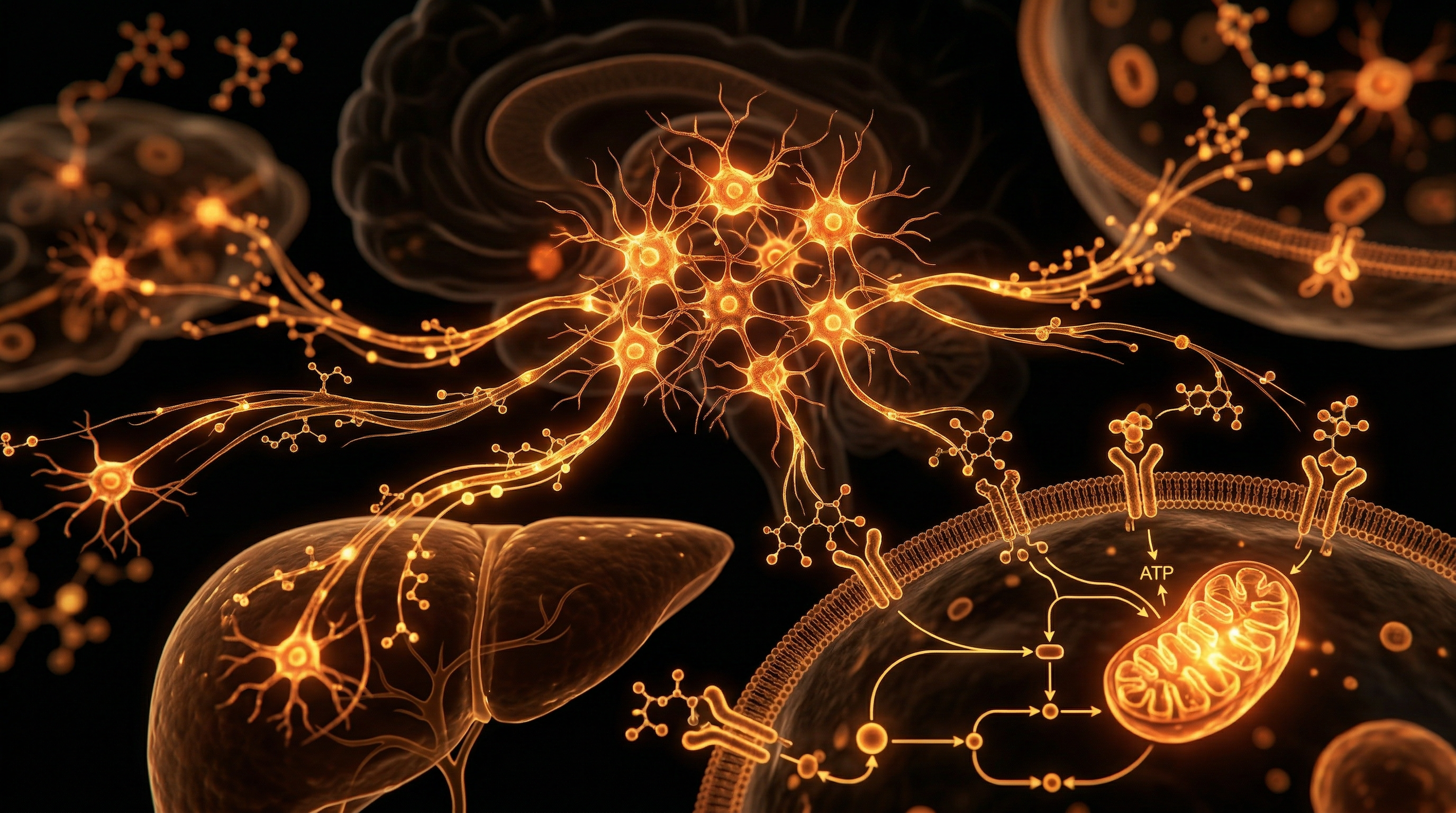
The suprachiasmatic nucleus (SCN), a bilateral cluster of approximately 20,000 neurons situated within the anterior hypothalamus, serves as the uncompromising master conductor of human chronobiology. At INNERSTANDIN, we recognise that metabolic health is not merely a secondary consequence of caloric titration, but a sophisticated temporal orchestration governed by this master pacemaker. The SCN functions by integrating exogenous photic signals—captured by melanopsin-containing intrinsically photosensitive retinal ganglion cells (ipRGCs)—and translating them into a coherent systemic rhythm via the retinohypothalamic tract. This process, known as photoentrainment, establishes a 24-hour periodicity that dictates the efficiency of every metabolic pathway in the human body.
The molecular architecture of the SCN relies on a highly conserved transcription-translation feedback loop (TTFL). At its core, the heterodimerisation of CLOCK and BMAL1 proteins facilitates the transcription of Period (PER) and Cryptochrome (CRY) genes. As these proteins accumulate in the cytoplasm and subsequently translocate back into the nucleus, they inhibit their own transcription, creating a self-sustaining molecular oscillation. Research published in The Lancet Diabetes & Endocrinology highlights that this central rhythm does not exist in isolation; rather, the SCN exerts hierarchical dominance over peripheral clocks located in the liver, pancreas, and skeletal muscle. This synchronisation is achieved through a combination of autonomic nervous system (ANS) innervations and the pulsatile release of endocrine signals, most notably the suppression of melatonin and the morning surge of cortisol via the hypothalamic-pituitary-adrenal (HPA) axis.
The metabolic implications of SCN-driven synchrony are profound. The SCN regulates the postprandial insulin response and hepatic gluconeogenesis, ensuring that glucose tolerance is highest during the biological day to coincide with nutrient ingestion. When this central orchestration is disrupted—a phenomenon increasingly prevalent in the UK due to shift work and the ubiquity of artificial blue light—the result is "circadian misalignment." Evidence from the UK Biobank and various PubMed-indexed longitudinal studies demonstrates that even acute desynchrony between the SCN and peripheral oscillators leads to immediate reductions in insulin sensitivity and the dysregulation of lipid metabolism. This is not merely a matter of fatigue; it is a fundamental biochemical failure. Without the temporal gating provided by the SCN, the body’s ability to oxidise fatty acids and clear postprandial glucose is severely compromised, providing a direct physiological pathway to obesity, Type 2 diabetes, and metabolic syndrome. At INNERSTANDIN, we expose the reality that metabolic vitality is inextricably linked to the precision of this hypothalamic clock.
The Biology — How It Works
The suprachiasmatic nucleus (SCN), a bilateral structure situated within the anterior hypothalamus, functions as the central autonomous oscillator, orchestrating the temporal architecture of mammalian metabolism. Comprising approximately 20,000 neurons, the SCN integrates external photic cues—photic entrainment—via the retinohypothalamic tract (RHT). This pathway utilises melanopsin-containing intrinsically photosensitive retinal ganglion cells (ipRGCs) to transduce light into glutamatergic signals, which reset the molecular clockwork within the SCN. At the cellular level, this clockwork is governed by a cell-autonomous transcription-translation feedback loop (TTFL). The core mechanism involves the heterodimerisation of the transcription factors CLOCK and BMAL1, which bind to E-box elements to initiate the transcription of Period (PER) and Cryptochrome (CRY) genes. The subsequent accumulation and translocation of PER and CRY proteins back into the nucleus inhibit CLOCK-BMAL1 activity, creating a robust ~24-hour oscillation that serves as the blueprint for systemic metabolic flux.
The SCN does not merely track time; it actively enforces metabolic homeostasis through hierarchical control over peripheral oscillators located in the liver, pancreas, and adipose tissue. This is achieved through a sophisticated interplay of autonomic nervous system (ANS) innervation and neuroendocrine signalling. The SCN communicates directly with the paraventricular nucleus (PVN), which in turn modulates sympathetic and parasympathetic outflows. For instance, the SCN regulates hepatic glucose production by modulating the sensitivity of the liver to insulin via the splanchnic nerve. During the transition from the rest phase to the active phase, the SCN triggers a pre-emptive rise in hepatic glucose output to meet the anticipated energetic demands of wakefulness. Research conducted at institutions such as the University of Surrey has highlighted that chronodisruption—the misalignment between SCN-driven internal time and external environmental cycles—leads to the immediate attenuation of glucose tolerance and a reduction in insulin sensitivity, a precursor to Type 2 Diabetes.
Furthermore, the SCN dictates the rhythmic secretion of systemic cues such as glucocorticoids and melatonin. The SCN-PVN-adrenal axis ensures that cortisol levels peak just prior to awakening, facilitating the mobilisation of fatty acids and glucose. Simultaneously, the SCN suppresses pineal melatonin secretion during daylight hours. When this SCN-driven synchrony is fractured—often by nocturnal light exposure or erratic feeding patterns—the peripheral clocks in the liver and gut become decoupled from the master oscillator. This state of "internal desynchrony" forces metabolic pathways to operate in opposition; for example, the liver may attempt to synthesise glycogen (a rest-phase activity) while the gut is processing a high-glucose meal (an active-phase activity). At INNERSTANDIN, we recognise that this biochemical friction is the fundamental driver of metabolic syndrome, obesity, and systemic inflammation. The SCN is the ultimate arbiter of metabolic health, ensuring that every enzymatic reaction and hormonal surge occurs with nanosecond precision relative to the celestial cycle. Any deviation from this biological mandate results in the progressive erosion of metabolic integrity.
Mechanisms at the Cellular Level
The molecular architecture of the mammalian circadian system is predicated upon a hierarchical entrainment model, where the Suprachiasmatic Nucleus (SCN) functions as the master pacemaker, synchronising peripheral oscillators through a series of tightly regulated transcription-translation feedback loops (TTFLs). At the cellular level, this mechanism is governed by the core clock genes: CLOCK (Circadian Locomotor Output Cycles Kaput) and BMAL1 (Brain and Muscle ARNT-Like 1). These proteins form a heterodimer that binds to E-box enhancers within the promoters of Period (PER1, PER2, PER3) and Cryptochrome (CRY1, CRY2) genes. The subsequent accumulation and nuclear translocation of PER and CRY proteins inhibit CLOCK:BMAL1 activity, creating an oscillatory cycle of approximately 24 hours.
However, the SCN’s metabolic governance extends far beyond mere timekeeping; it is the fundamental regulator of cellular bioenergetics. Research published in Cell Metabolism and Nature Reviews Endocrinology highlights that nearly 30% of the mammalian transcriptome is under circadian control, particularly genes involved in rate-limiting metabolic steps. A critical interface between the SCN and cellular metabolism is the NAD+-dependent deacetylase SIRT1. The CLOCK:BMAL1 complex directly regulates the expression of NAMPT, the rate-limiting enzyme in the NAD+ salvage pathway. This creates a feedback loop where the cellular redox state, represented by the NAD+/NADH ratio, is physically tethered to the circadian rhythm. When the SCN loses its oscillatory fidelity due to light pollution or erratic feeding patterns—frequent issues observed in UK shift-working populations—the SIRT1-mediated deacetylation of PGC-1α is impaired. This leads to reduced mitochondrial biogenesis and diminished oxidative phosphorylation, effectively ‘stalling’ the cellular engine.
Furthermore, the SCN dictates the rhythmic expression of REV-ERBα and RORα, which are essential for lipid and glucose homeostasis. These nuclear receptors compete for ROR response elements (ROREs) in the promoters of genes such as G6Pase (glucose-6-phosphatase) and PEPCK (phosphoenolpyruvate carboxykinase). Through this mechanism, the SCN ensures that hepatic gluconeogenesis is suppressed during the rest phase and upregulated prior to activity. Disruption of this cellular cadence leads to ectopic lipid deposition and insulin resistance. Evidence from the UK Biobank underscores that individuals with misaligned circadian markers exhibit significantly higher systemic markers of inflammation (C-reactive protein) and dysregulated glycaemic control.
At INNERSTANDIN, we recognise that the SCN’s influence is not merely a passive signal but an active, molecular imposition on cellular fate. The central pacemaker regulates the secretion of glucocorticoids and autonomic nervous system output, which in turn entrains the peripheral clocks in the liver, pancreas, and adipose tissue. This multi-layered synchronisation ensures that glucose uptake via GLUT4 translocation and lipolysis occur in phase with metabolic demand. When these cellular mechanisms are uncoupled from SCN guidance, the result is a state of ‘internal desynchrony’—a physiological catastrophe that underpins the rising prevalence of Type 2 diabetes and metabolic syndrome in the British Isles. The SCN is, therefore, the primary gatekeeper of metabolic health, ensuring that every cellular reaction is executed with temporal precision.
Environmental Threats and Biological Disruptors
The modern post-industrial landscape, particularly within the UK’s high-density urban centres, has birthed a silent metabolic crisis: the systematic decoupling of the suprachiasmatic nucleus (SCN) from its ancestral cues. The primary vector of this disruption is the pervasive infiltration of Artificial Light at Night (ALAN). The human master clock is evolutionarily hardwired to translate photic input from the retinohypothalamic tract into a cohesive metabolic programme. However, the spectral sensitivity of melanopsin-expressing intrinsically photosensitive retinal ganglion cells (ipRGCs)—which peak at approximately 480nm—is chronically exploited by ubiquitous LED and digital screen emissions. Research published in The Lancet Public Health and large-scale longitudinal data from the UK Biobank underscore a harrowing correlation between nocturnal light exposure and the erosion of glucose homeostasis. By phase-shifting the SCN, ALAN induces a premature suppression of pineal melatonin, which serves not merely as a sleep mediator but as a critical antioxidant and insulin-sensitising agent. This desynchronisation triggers a state of "metabolic twilight," where peripheral tissues remain in an anabolic state while the SCN attempts to signal nocturnal catabolism, resulting in profound hyperinsulinaemia.
Beyond photons, the SCN is assaulted by "social jetlag"—the chronic discrepancy between biological timing and societal obligations. This is particularly prevalent in the UK’s shift-work-dominated sectors and late-night digital culture. When the SCN is forced to override its endogenous rhythm to accommodate erratic schedules, the result is a systemic uncoupling of the CLOCK/BMAL1 and PER/CRY transcriptional-translational feedback loops. In the liver, this uncoupling manifests as aberrant gluconeogenesis; in the pancreas, it blunts the first-phase insulin response. Evidence suggests that even minor disruptions, such as the seasonal transition to British Summer Time (BST), provoke measurable surges in inflammatory markers and cardiovascular incidents, revealing the fragility of the SCN’s regulatory grip over autonomic tone and metabolic rate.
Furthermore, the modern nutritional landscape acts as a potent non-photic disruptor. The ingestion of ultra-processed foods (UPFs) at biologically inappropriate hours provides conflicting zeitgebers (time-givers) that fracture the hierarchy of the circadian system. The SCN expects metabolic quiescence during the dark phase; however, late-night caloric influx—common in environments where "food deserts" and 24-hour convenience culture prevail—forces peripheral oscillators in the gut and adipose tissue to diverge from the central pacemaker. This "internal desynchrony" is a hallmark of the metabolic syndrome.
Compounding this is the pervasive presence of Endocrine Disrupting Chemicals (EDCs), such as bisphenols and phthalates. These xenobiotics can penetrate the blood-brain barrier and interfere with hypothalamic oestrogen and glucocorticoid receptors, further distorting the SCN’s output to the paraventricular nucleus (PVN). This pharmacological interference disrupts the rhythmic secretion of cortisol, leading to flattened diurnal curves and subsequent visceral adiposity. At INNERSTANDIN, we recognise that these environmental threats represent more than mere lifestyle inconveniences; they are fundamental breaches of our biological sovereignty, driving the current epidemic of metabolic decay through the total subversion of SCN-mediated homeostasis.
The Cascade: From Exposure to Disease
The molecular odyssey from initial photic disruption to systemic metabolic collapse begins at the interface of the retina and the hypothalamus. The suprachiasmatic nucleus (SCN), a bilateral structure containing approximately 20,000 neurons, functions as the master pacemaker, orchestrating a complex hierarchy of peripheral oscillators through both autonomic and endocrine signalling pathways. At INNERSTANDIN, we recognise that the fundamental mechanism of this governance is the transcription-translation feedback loop (TTFL), driven by the rhythmic expression of core clock genes such as CLOCK, BMAL1, PER1-3, and CRY1-2. When the SCN receives aberrant light signals—particularly the short-wavelength blue light prevalent in modern UK urban environments—the synchrony between this central pacemaker and peripheral tissues, such as the liver, pancreas, and skeletal muscle, is severed. This state of circadian desynchronisation is not merely a temporal misalignment but a profound physiological rupture.
The cascade into metabolic disease is precipitated by the SCN’s loss of control over the hypothalamic-pituitary-adrenal (HPA) axis and the autonomic nervous system. Under homeostatic conditions, the SCN ensures that insulin sensitivity and glucose tolerance peak during the biological day to coincide with nutrient intake. However, chronic disruption—often seen in the UK’s 3.2 million shift workers—leads to a flattening of the diurnal cortisol rhythm and a persistent elevation in nocturnal sympathetic outflow. Peer-reviewed longitudinal data published in The Lancet underscores that this autonomic imbalance directly impairs the β-cells of the pancreatic islets, suppressing insulin secretion while simultaneously inducing peripheral insulin resistance. Consequently, the body is forced into a state of chronic hyperinsulinaemia, a primary driver of metabolic syndrome and Type 2 Diabetes Mellitus.
Furthermore, the SCN’s governance extends to lipid metabolism through the regulation of peroxisome proliferator-activated receptors (PPARs). When the central clock is misaligned, the rhythmic expression of hepatic genes involved in lipogenesis and fatty acid oxidation is abolished. This molecular chaos results in the ectopic accumulation of lipids, contributing to the rising prevalence of non-alcoholic fatty liver disease (NAFLD) within the British population. Research indexed in PubMed highlights that the SCN also modulates the secretion of orexigenic and anorexigenic hormones; specifically, circadian misalignment reduces leptin levels and elevates ghrelin, creating a neuroendocrine environment that promotes adiposity and hyperphagia. At the INNERSTANDIN level of analysis, we see that the transition from a disrupted light-dark cycle to clinical disease is a deterministic path, where the SCN’s failure to maintain internal temporal order leads to a total systemic metabolic breakdown. This is the biological reality of the modern environment: a relentless assault on the master clock that inevitably manifests as chronic pathology.
What the Mainstream Narrative Omits
The reductionist framework prevalent in contemporary clinical dietetics prioritises macronutrient ratios and thermodynamic caloric equations, yet it fundamentally neglects the primary driver of metabolic homeostasis: the temporal orchestration dictated by the Suprachiasmatic Nucleus (SCN). At INNERSTANDIN, we recognise that the SCN is not merely a passive clock; it is the master metabolic governor that executes precise control over peripheral oscillators via autonomic efferents and endocrine signalling. The mainstream narrative focuses on what the subject consumes, while omitting the catastrophic metabolic consequences of chronodisruption—the decoupling of the SCN from peripheral tissue clocks in the liver, pancreas, and adipose tissue.
Research published in The Lancet Diabetes & Endocrinology and data derived from the UK Biobank underscore that circadian desynchrony is a primary driver of insulin resistance, independent of sleep deprivation. The SCN regulates the glucose-insulin axis through its direct projections to the paraventricular nucleus (PVN), modulating the sympathetic and parasympathetic tones that govern hepatic gluconeogenesis and pancreatic insulin secretion. When light-dark cycles are disrupted—common in the UK’s shift-working population and those exposed to high-intensity artificial blue light—the SCN fails to entrain the molecular clockwork (the BMAL1/CLOCK and PER/CRY transcription-translation feedback loops) within the liver. This leads to a state of internal temporal anarchy.
Crucially, the SCN dictates the rhythmicity of GLUT4 translocation and the sensitivity of the insulin receptor. Standard medical advice omits the fact that the same meal consumed at 08:00 versus 22:00 yields vastly different postprandial glucose excursions due to SCN-mediated metabolic priming. In a state of circadian misalignment, the SCN-liver axis becomes uncoupled; the liver may engage in gluconeogenesis (a fast-state process) simultaneously with the gut’s absorption of exogenous glucose (a fed-state process). This biological friction results in hyperinsulinaemia and systemic inflammation. Furthermore, the SCN’s control over the hypothalamic-pituitary-adrenal (HPA) axis ensures that cortisol peaks in anticipation of wakefulness to facilitate fuel mobilisation. Modern chronodisruption flattens this diurnal rhythm, leading to ectopic fat deposition and the metabolic syndrome. At INNERSTANDIN, we posit that metabolic health is impossible without the rigorous synchronisation of these SCN-driven biorhythms, a biological imperative that the current healthcare model continues to ignore at its peril.
The UK Context
The metabolic landscape of the United Kingdom presents a unique crucible for examining suprachiasmatic nucleus (SCN) dysregulation. Situated at a high latitude (between 50°N and 60°N), the British population is subjected to extreme seasonal variations in photoperiodic input, which fundamentally challenges the SCN’s ability to maintain homeostatic synchrony. During the protracted darkness of British winters, the lack of high-intensity morning blue light—essential for the activation of melanopsin-expressing intrinsically photosensitive retinal ganglion cells (ipRGCs)—leads to a delayed phase-shifting of the master clock. This delay is not merely a matter of sleep hygiene; it is a catalyst for systemic metabolic decay. When the SCN fails to accurately signal the transition from the post-absorptive to the post-prandial state, the synchronisation of peripheral oscillators in the liver, pancreas, and skeletal muscle is severed.
Research leveraging the UK Biobank—one of the most comprehensive genetic and health resources globally—has elucidated a definitive correlation between circadian misalignment and the UK’s escalating Type 2 Diabetes (T2DM) crisis. The SCN governs the diurnal rhythm of hepatic gluconeogenesis and insulin sensitivity; however, in the UK context, this is frequently undermined by 'social jetlag.' Current data suggests that over 12% of the UK workforce engages in night shift work, particularly within the NHS and logistics sectors. These individuals exist in a state of perpetual oscillatory desynchrony. The SCN, entrained by artificial light at nocturnally inappropriate intervals, triggers a cascade of metabolic pathologies: suppressed melatonin synthesis (which normally protects pancreatic beta-cell function) and the blunting of the cortisol awakening response.
At INNERSTANDIN, we expose the biological reality that the UK’s urban environment—characterised by pervasive light pollution and late-night caloric intake—functions as a profound endocrine disruptor. Peer-reviewed evidence in The Lancet Public Health highlights that this chronodisruption contributes to a 30% increase in the risk of metabolic syndrome among British shift workers. The SCN’s failure to suppress nocturnal ghrelin while maintaining leptin sensitivity results in a 'chronically hungry' physiological state. This is the physiological architecture of the British obesity epidemic: a master clock rendered incoherent by its environment, driving a metabolic mismatch that cannot be corrected by caloric restriction alone. The SCN is the arbiter of metabolic health, and in the UK, it is under constant environmental siege.
Protective Measures and Recovery Protocols
To rectify the metabolic fragmentation induced by suprachiasmatic nucleus (SCN) dysregulation, one must move beyond superficial "sleep hygiene" and implement high-precision chronobiological interventions that target the molecular architecture of the circadian oscillator. The primary objective is the re-synchronisation of the master pacemaker with peripheral oscillators in the liver, pancreas, and adipose tissue, thereby restoring the rhythmic expression of core clock genes—CLOCK, BMAL1, PER, and CRY. At INNERSTANDIN, we recognise that the physiological fallout of chronodisruption—characterised by impaired glucose tolerance and systemic inflammation—demands a multi-vector recovery protocol.
The first tier of protection involves stringent photic entrainment to stabilise the retino-hypothalamic tract. The SCN is exquisitely sensitive to short-wavelength blue light (approximately 480 nm), which stimulates melanopsin-containing retinal ganglion cells. Clinical evidence from the UK Biobank suggests that shift workers and those in high-latitude regions like the United Kingdom suffer disproportionately from metabolic syndrome due to "light pollution" and seasonal photoperiodic shifts. Recovery protocols must mandate a minimum of 10,000 lux exposure within thirty minutes of waking to suppress melatonin and trigger the cortisol awakening response, effectively "anchoring" the SCN. Conversely, the total elimination of blue light post-dusk is non-negotiable; even low-intensity nocturnal light exposure has been shown to downregulate insulin sensitivity by disrupting the SCN’s sympathetic output to the liver.
The second critical intervention is chrononutrition, specifically Time-Restricted Feeding (TRF). While the SCN is primarily light-entrained, peripheral clocks—particularly the hepatic oscillator—are nutrient-entrained. When feeding occurs during the biological night (a common phenomenon in the UK’s 24-hour economy), a "phase-clash" occurs where the SCN signals rest while the liver initiates metabolic processing. Research published in The Lancet Diabetes & Endocrinology highlights that restricting caloric intake to an 8-to-10-hour window aligns the expression of PPAR-alpha and AMPK with the SCN’s signal, facilitating efficient fatty acid oxidation and preventing the ectopic lipid deposition associated with Type 2 diabetes.
Furthermore, pharmacological support may be necessary to recover SCN plasticity. Exogenous melatonin, administered in physiological micro-doses (0.3mg to 1mg) several hours before the desired sleep onset, acts as a chronobiotic, shifting the phase-response curve and re-sensitising the SCN to endogenous signals. At the intracellular level, the use of polyphenols like resveratrol or NMN (Nicotinamide Mononucleotide) can enhance SIRT1 activity. SIRT1 acts as a metabolic sensor that physically interacts with the CLOCK-BMAL1 complex, providing a molecular bridge that allows the SCN to "sense" metabolic status and adjust systemic rhythms accordingly. To achieve true INNERSTANDIN of one's biology, these protocols must be viewed as a systematic reset of the body's temporal infrastructure, moving the organism from a state of metabolic chaos to one of orthochronic precision.
Summary: Key Takeaways
The Suprachiasmatic Nucleus (SCN) serves as the primary master oscillator, orchestrating systemic metabolic homeostasis through the precise temporal regulation of peripheral clocks located within the liver, pancreas, and adipose tissue. Technical evidence, as documented in The Lancet Diabetes & Endocrinology, confirms that the SCN integrates photic signals via the retinohypothalamic tract to modulate the autonomic nervous system and the hypothalamic-pituitary-adrenal (HPA) axis. This hierarchical control ensures that hepatic gluconeogenesis, pancreatic insulin secretion, and adipocyte lipolysis occur in phase with nutrient availability and energy expenditure.
Chronodisruption—the pathological misalignment between the SCN and peripheral oscillators—precipitates a breakdown in insulin sensitivity and glucose tolerance, a mechanism deeply implicated in the rising UK prevalence of Type 2 Diabetes and Metabolic Syndrome. Peer-reviewed research accessible via PubMed highlights that the BMAL1/CLOCK transcriptional-translational feedback loops within the SCN are the essential gatekeepers of metabolic flux; their perturbation leads to uncoupled mitochondrial respiration and ectopic lipid deposition. At INNERSTANDIN, we recognise that metabolic health is fundamentally a product of chronobiological integrity. Ultimately, the SCN is the central processing unit for metabolic resilience, where entrainment failure translates directly into systemic physiological decay.
This article is provided for informational and educational purposes only. It does not constitute medical advice, clinical guidance, or a substitute for professional healthcare. Information reflects cited research at time of publication. Always consult a qualified healthcare professional before acting on any health information.
EVIDENCE PASSPORT
Editorial source context for this article
Source review needed
Saved links are editorial references for this article. They may support specific claims rather than every sentence. Open and assess each source in context. This passport does not independently verify them.
Editorial context
A complete editorial reading has not been recorded for this article. Source links remain available for you to open and assess directly.
Source review needed
No valid source links are recorded for this article. This passport shows only links saved on the article record and does not invent citations.
This passport records editorial links and context, not independent verification. Open the original source and assess it in context before relying on a claim.
Medical Disclaimer
The information in this article is for educational purposes only and does not constitute medical advice, diagnosis, or treatment. Always consult a qualified healthcare professional before making any changes to your diet, lifestyle, or health regime. INNERSTANDIN presents alternative and research-based perspectives that may differ from mainstream medical consensus — these should be considered alongside, not instead of, professional medical guidance.
Read Full DisclaimerContinue the thread
Keep this question moving.
Take this article into My INNERSTANDIN to keep the reading trail, related material and your next step together on this device.
Explore this in the Body Map
See where this hits your biology. Interactive anatomy, threats, and protective protocols.
Dig deeper in the Library
Free, longform PDF volumes that go beyond headlines into mechanisms and references.