
Synaptic Pruning: Potential Impacts of Immune Activation on Brain Development
Updated May 2026
Exploring the relationship between systemic immune activation and microglia-mediated synaptic pruning. This article examines the critical windows of neurodevelopment in infants.
Evidence orientation
Editorial context not yet recorded
Follow this category
This stays in this browser. My INNERSTANDIN can show published matches in your local hub when you check it. It does not send email, push, or alert notifications.
Local learning review
A private browser aid for revisiting ideas. It is not an alert or a health recommendation.
Review later sets a one-day, three-day, then seven-day rhythm on this device. Choose it only when you want to revisit this article.
Overview
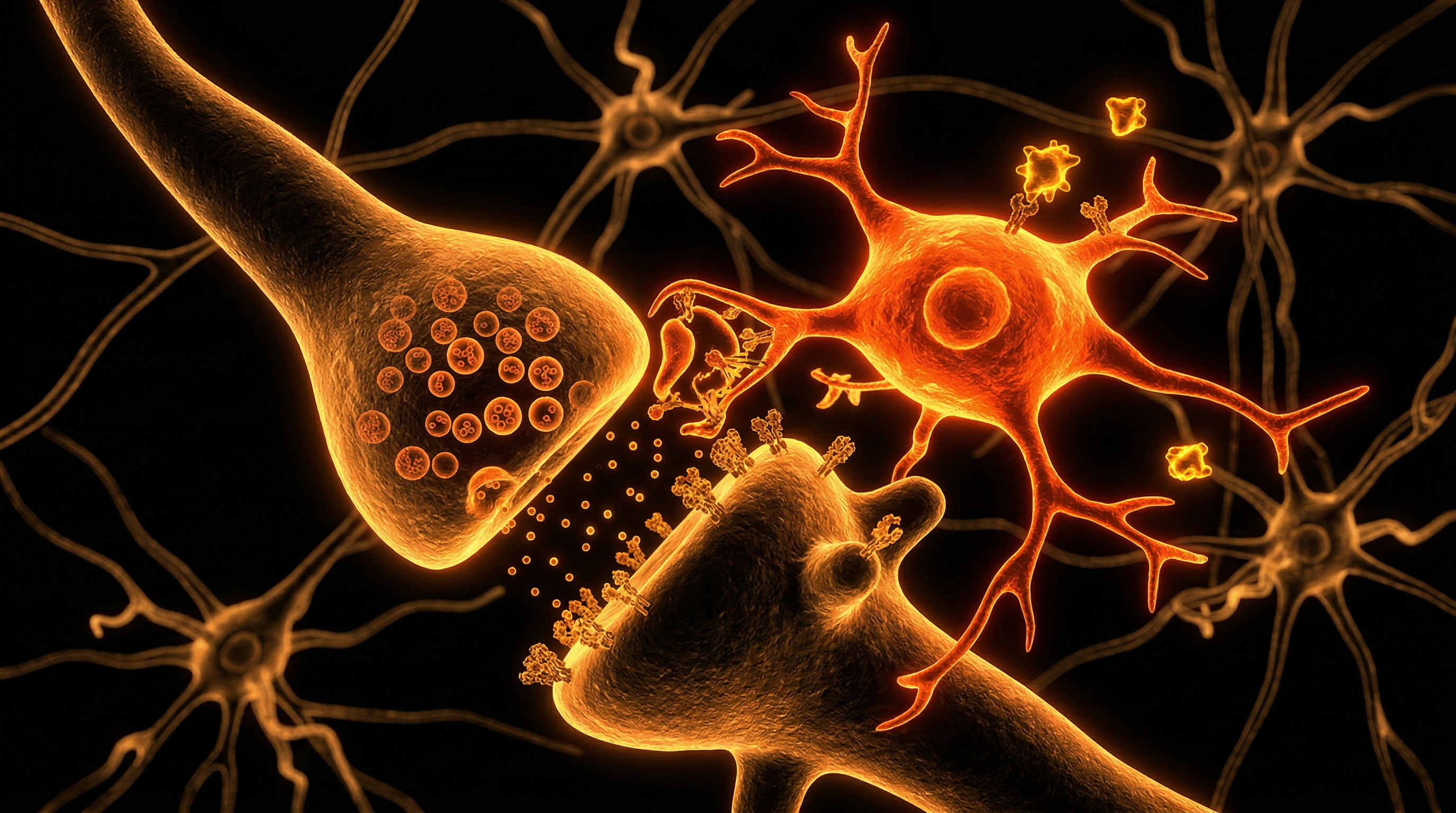
In the realm of modern neurology, few processes are as vital, yet as delicate, as synaptic pruning. This biological "sculpting" of the brain represents a fundamental transition from the chaotic, exuberant neural growth of infancy to the refined, efficient cognitive architecture of adulthood. However, this process does not occur in a vacuum. It is governed by a complex interplay between the nervous system and the immune system—specifically through the action of microglia, the brain's resident immune cells.
For decades, the mainstream medical establishment has treated the brain as an "immunologically privileged" organ, isolated from the systemic immune responses triggered by environmental insults, infections, and medical interventions. We now know this to be a profound oversimplification. Emerging research suggests that systemic immune activation (SIA), particularly during critical windows of neurodevelopment, can "prime" or over-activate microglia, leading to aberrant synaptic pruning.
This article explores the chilling possibility that our modern environment, characterized by an unprecedented load of chemical and biological stimulants, is inadvertently hijacking the brain's developmental machinery. When the immune system is pushed into a state of chronic high alert, the "gardeners" of the brain—the microglia—may turn into "executioners," culling essential neural connections and laying the groundwork for the global surge in neurodevelopmental disorders, including Autism Spectrum Disorder (ASD), ADHD, and Schizophrenia.
Key Fact: The human brain produces roughly twice as many synapses as it will eventually need. The process of removing the excess, known as synaptic pruning, is essential for healthy cognitive function, but its disruption is now linked to nearly every major psychiatric and developmental condition.
The Biology — How It Works
To understand how things go wrong, we must first understand the elegant design of healthy neurodevelopment. At birth, the human infant possesses a brain that is a dense thicket of neurons. Between birth and age two, the brain undergoes a period of synaptogenesis, where the number of connections between neurons (synapses) explodes.
The Exuberant Phase
During this "exuberant" phase, the infant brain is incredibly plastic. It is built to absorb information from the environment at an astonishing rate. However, a brain where every neuron is connected to every other neuron is inefficient; it is noisy and computationally slow.
The Sculpting Process
Synaptic pruning is the mechanism by which the brain streamlines its operations. It identifies which pathways are being used ("fire together, wire together") and which are redundant. The redundant ones are "tagged" and removed.
- Critical Windows: Pruning occurs in waves. The sensory cortex (vision and hearing) is pruned early, while the prefrontal cortex (executive function and social behaviour) continues to be sculpted well into the mid-twenties.
- Microglial Mediation: For years, it was thought that synapses simply withered away. We now know that microglia actively "eat" (phagocytose) the synapses that need to be removed.
The Role of Experience
The brain relies on environmental cues to decide what to prune. This is why early childhood experiences are so formative. However, the brain also relies on internal biochemical signals. If those signals are distorted by systemic inflammation, the "sculpting" becomes erratic, leading to either an over-pruning of vital connections or an under-pruning that leaves the brain in a state of sensory overload.
Mechanisms at the Cellular Level
At the heart of the pruning process lies the Classical Complement Cascade. This is a part of the immune system typically associated with marking pathogens for destruction by white blood cells. In a startling discovery, researchers found that the same proteins used to identify bacteria—specifically C1q and C3—are used in the brain to "tag" synapses for removal.
The Tagging System
- C1q Initiation: The protein C1q binds to a synapse that is weak or inactive.
- C3 Activation: This triggers a cascade that leads to the deposition of C3 onto the synapse.
- Microglial Recognition: Microglia possess receptors (CR3) that specifically recognize C3. When a microglial cell encounters a C3-tagged synapse, it engulfs and digests it.
Microglial Polarisation: M1 vs. M2
Microglia are not static; they exist in different functional states.
- M2 (Alternative Activation): These are the "nurturing" microglia. They secrete growth factors like BDNF (Brain-Derived Neurotrophic Factor) and support neuronal health.
- M1 (Classical Activation): These are the "inflammatory" microglia. When the body perceives a threat—such as a systemic infection or a chemical adjuvant—microglia shift into the M1 state.
The Danger of Microglial Priming
The most concerning aspect of microglial biology is priming. If a child experiences an immune challenge (like a high fever or a heavy metal exposure) during a critical developmental window, the microglia can become "primed." In this state, they do not return to their resting state but remain in a hyper-sensitive mode. A subsequent, even minor, immune challenge can then trigger an exaggerated M1 response, leading to the excessive secretion of pro-inflammatory cytokines (like IL-6 and TNF-alpha) and the aggressive "over-eating" of healthy synapses.
Callout: Research has demonstrated that elevated levels of Interleukin-6 (IL-6) in the brain can directly alter the density of synapses, a hallmark of the "leaky" or "over-connected" brain architecture often seen in Autism.
Environmental Threats and Biological Disruptors
The modern paediatric landscape is fraught with biological disruptors that were virtually non-existent eighty years ago. While the mainstream narrative focuses on "genetic" causes for neurodevelopmental delays, the science of epigenetics and neuro-immunology suggests that environmental triggers are the primary drivers.
Aluminium Adjuvants: The Trojan Horse
The most significant disruptor of microglial homeostasis is the use of aluminium salts (hydroxide and phosphate) as adjuvants in paediatric interventions. Aluminium is a known neurotoxin, but its role as an immune activator is even more insidious.
- Persistence: Unlike dietary aluminium, which is largely filtered by the kidneys, injected aluminium is captured by macrophages (white blood cells) and transported throughout the body.
- Translocation to the Brain: Studies in animal models have shown that these aluminium-laden macrophages can cross the blood-brain barrier (BBB) via a "Trojan Horse" mechanism, especially when the BBB is made permeable by stress or infection.
- Chronic Activation: Once in the brain, aluminium is not easily cleared. It can persist for years, providing a constant stimulus that keeps microglia in a pro-inflammatory M1 state, leading to "bystander damage" of nearby synapses.
Poly-microbial Stimulation
The current schedule often requires infants to receive multiple biological insults simultaneously. From an evolutionary perspective, an infant would rarely encounter six to eight different pathogens on the same day. This "poly-microbial" stimulation can overwhelm the immature immune system, leading to a "cytokine storm" that ripples into the central nervous system.
Glyphosate and Gut Dysbiosis
The gut-brain axis plays a vital role in microglial maturation. Exposure to glyphosate (the active ingredient in many herbicides) and the subsequent destruction of the gut microbiome can lead to "leaky gut." This allows lipopolysaccharides (LPS)—endotoxins from bacteria—to enter the bloodstream. LPS is one of the most potent activators of microglia known to science.
The Cascade: From Exposure to Disease
The path from an environmental exposure to a diagnosed condition like ASD or ADHD is not immediate; it is a slow-motion cascade of biological failures.
Stage 1: The Initial Insult
The infant is exposed to a systemic immune activator (e.g., an adjuvant or a severe infection). This triggers a systemic inflammatory response.
Stage 2: Signal Transduction
Cytokines (IL-1b, IL-6) cross the blood-brain barrier or signal through the vagus nerve to the brain. The brain’s "innate" immune system is alerted.
Stage 3: Microglial "Switch"
Microglia shift from their homeostatic M2 state to the aggressive M1 state. They begin to over-produce reactive oxygen species (oxidative stress) and inflammatory signals.
Stage 4: Aberrant Pruning
The "tagging" system (C1q/C3) becomes dysregulated. Microglia begin to prune synapses indiscriminately. In some cases, they may fail to prune, leading to a brain that cannot filter sensory input (hypersensitivity). In others, they prune excessively, particularly in areas responsible for social communication and language.
Stage 5: The Clinical Manifestation
By the time a child reaches 18 to 24 months—the peak of the social-pruning window—the cumulative damage becomes visible. The child may lose previously acquired language (regression) or fail to develop eye contact and social reciprocity.
Important Statistic: Since the expansion of the childhood medical schedule in the 1990s, the rate of Autism in Western nations has climbed from approximately 1 in 2,500 to 1 in 36. Genetic drift cannot explain a change of this magnitude in a single generation.
What the Mainstream Narrative Omits
The refusal of the pharmaceutical and medical establishment to investigate the link between systemic immune activation and synaptic pruning is perhaps the greatest scientific scandal of our time.
The Lack of Pharmacokinetic Data
Most people would be shocked to learn that there are virtually no long-term pharmacokinetic studies on how injected aluminium adjuvants move through the infant body. The "safety" of these ingredients is often based on the assumption that they stay at the injection site, an assumption that has been thoroughly debunked by independent research.
The "One Size Fits All" Fallacy
Mainstream medicine ignores the individual threshold. A child with a genetic predisposition to poor detoxification (e.g., MTHFR gene mutations) or a child who has recently had a course of antibiotics will have a much lower threshold for microglial activation than a "healthy" peer. Yet, the schedule remains identical for both.
The Silence on "Sub-Clinical" Brain Damage
The medical establishment only recognizes "injury" if it is acute and immediate (e.g., anaphylaxis). They consistently ignore "sub-clinical" neuroinflammation. A child may not have a seizure after an intervention, but their microglia may be "simmering" in a state of chronic activation that will only manifest as a learning disability or a mood disorder years later.
The Funding Bias
Nearly all major studies used to "debunk" the link between immune activation and neurodevelopment are funded by the very industries that produce the products in question. These studies often use "active placebos" (containing the same adjuvants) as a control group, effectively masking the toxic effects of the ingredients.
The UK Context
In the United Kingdom, the approach to infant neurodevelopment and immune interventions is governed by the Joint Committee on Vaccination and Immunisation (JCVI) and implemented via the NHS. While the UK prides itself on a robust public health system, there are specific concerns regarding the "UK Context."
The Aggressive Schedule
The UK's "Green Book" outlines a schedule that is among the most intensive in the world. By the age of one, a British infant is scheduled to have received dozens of different antigenic challenges. The introduction of the 6-in-1 vaccine (DTaP/IPV/Hib/HepB) means that infants are receiving a massive "hit" of multiple antigens and aluminium adjuvants in a single session.
The Yellow Card System: A Broken Shield
The Yellow Card Scheme, managed by the MHRA (Medicines and Healthcare products Regulatory Agency), is the UK's system for reporting adverse events. However, it is a passive system. Estimates suggest that only 1% to 10% of adverse reactions are ever reported. Furthermore, "neurodevelopmental regression" is rarely linked to a specific event in the medical notes, as it often occurs weeks or months after the immune insult.
The Lack of Informed Consent
Under the Montgomery v Lanarkshire Health Board (2015) ruling, UK patients have a right to be informed of "material risks." However, parents in the UK are seldom, if ever, informed about the risks of microglial activation, synaptic pruning disruption, or the presence of neurotoxic adjuvants. The narrative is one of "total safety," which is scientifically dishonest.
Protective Measures and Recovery Protocols
If we accept that synaptic pruning is a fragile process vulnerable to immune interference, what can be done? Whether you are a parent looking to protect a newborn or an individual seeking to mitigate the effects of past exposures, "Innerstanding" requires action.
1. Strengthening the Blood-Brain Barrier
A robust BBB is the first line of defence against systemic inflammation.
- Vitamin D3: Essential for maintaining the tight junctions of the BBB. Most UK infants are chronically deficient.
- Omega-3 Fatty Acids (DHA/EPA): These are the building blocks of the neural membrane and have potent anti-inflammatory effects on microglia.
2. Supporting Natural Detoxification
The body's primary antioxidant is Glutathione. Microglia are particularly sensitive to glutathione depletion.
- N-Acetyl Cysteine (NAC): A precursor to glutathione that can help "quench" neuroinflammation.
- Sulforaphane: Found in broccoli sprouts, this compound activates the Nrf2 pathway, the body’s master antioxidant switch.
3. Gut Health as Brain Health
Since the gut microbiome trains the microglia, protecting the "second brain" is paramount.
- Probiotics: Specifically strains like L. rhamnosus and B. infantis, which have been shown to modulate the immune response.
- Avoiding Glyphosate: Choosing organic foods wherever possible to reduce the "leaky gut" triggers that lead to LPS-induced microglial activation.
4. Strategic Spacing and Caution
For those who choose to follow medical recommendations, the "spacing" of interventions can reduce the cumulative cytokine load. Avoid interventions when a child is already ill, teething, or has recently finished a course of antibiotics.
5. Identifying the Signs of Neuroinflammation
Early intervention is key. Signs that a child’s microglia may be over-activated include:
- Excessive irritability or "high-pitched" crying.
- Loss of previously held milestones.
- Extreme sensitivity to light or sound.
- Disrupted sleep patterns and "brain fog."
Summary: Key Takeaways
The science of synaptic pruning and microglial activation provides a compelling biological mechanism for how environmental immune insults can derail human development. The "gardeners of the brain" are highly sensitive to the signals of the modern world, and when we flood the system with stimulants, we risk a "pruning" process that is more akin to a clear-cut forest than a well-tended park.
- Synaptic pruning is the essential process of refining brain connections, mediated by the immune system's microglia.
- Systemic Immune Activation (SIA), triggered by adjuvants and poly-microbial loads, can flip microglia into an aggressive M1 state.
- Aluminium adjuvants act as "Trojan Horses," potentially carrying inflammation directly into the brain and causing long-term microglial priming.
- The Classical Complement Cascade (C1q, C3) is the molecular machinery used to tag synapses, and its disruption is linked to Autism and Schizophrenia.
- The mainstream narrative largely ignores the cumulative impact of these exposures and the lack of long-term safety data on neurodevelopment.
- In the UK, a lack of true informed consent and a failing adverse-event reporting system leave parents in the dark.
- Protective measures, including supporting the blood-brain barrier and gut health, are vital for preserving the integrity of the developing brain.
The future of our species depends on the integrity of our children's brains. To ignore the relationship between the immune system and the developing mind is not just a scientific oversight; it is a betrayal of the next generation. We must demand a more nuanced, cautious, and biologically literate approach to paediatric health—one that respects the delicate dance of the synapses.
This article is provided for informational and educational purposes only. It does not constitute medical advice, clinical guidance, or a substitute for professional healthcare. Information reflects cited research at time of publication. Always consult a qualified healthcare professional before acting on any health information.
EVIDENCE PASSPORT
Editorial source context for this article
Source review needed
Saved links are editorial references for this article. They may support specific claims rather than every sentence. Open and assess each source in context. This passport does not independently verify them.
Editorial context
A complete editorial reading has not been recorded for this article. Source links remain available for you to open and assess directly.
Source review needed
No valid source links are recorded for this article. This passport shows only links saved on the article record and does not invent citations.
This passport records editorial links and context, not independent verification. Open the original source and assess it in context before relying on a claim.
Medical Disclaimer
The information in this article is for educational purposes only and does not constitute medical advice, diagnosis, or treatment. Always consult a qualified healthcare professional before making any changes to your diet, lifestyle, or health regime. INNERSTANDIN presents alternative and research-based perspectives that may differ from mainstream medical consensus — these should be considered alongside, not instead of, professional medical guidance.
Read Full DisclaimerContinue the thread
Keep this question moving.
Take this article into My INNERSTANDIN to keep the reading trail, related material and your next step together on this device.
Explore this in the Body Map
See where this hits your biology. Interactive anatomy, threats, and protective protocols.
Dig deeper in the Library
Free, longform PDF volumes that go beyond headlines into mechanisms and references.