
Synthetic Biology: Constructing Minimal Genomes for Cell Therapy
Updated May 2026
Synthetic biology allows scientists to 'program' stem cells to perform specific therapeutic tasks. We explore how engineered cells can be used to target and destroy cancer within the body.
Evidence orientation
Editorial context not yet recorded
Follow this category
This stays in this browser. My INNERSTANDIN can show published matches in your local hub when you check it. It does not send email, push, or alert notifications.
Local learning review
A private browser aid for revisiting ideas. It is not an alert or a health recommendation.
Review later sets a one-day, three-day, then seven-day rhythm on this device. Choose it only when you want to revisit this article.
Overview
The transition from biological observation to biological architecture represents the most profound shift in the history of the life sciences. For decades, medicine has been reactive, responding to the manifestations of disease with crude chemical instruments. Today, as a senior researcher within the INNERSTANDING collective, I am documenting the arrival of a new era: Synthetic Biology (SynBio). We are no longer merely 'reading' the genetic code; we are 'writing' it.
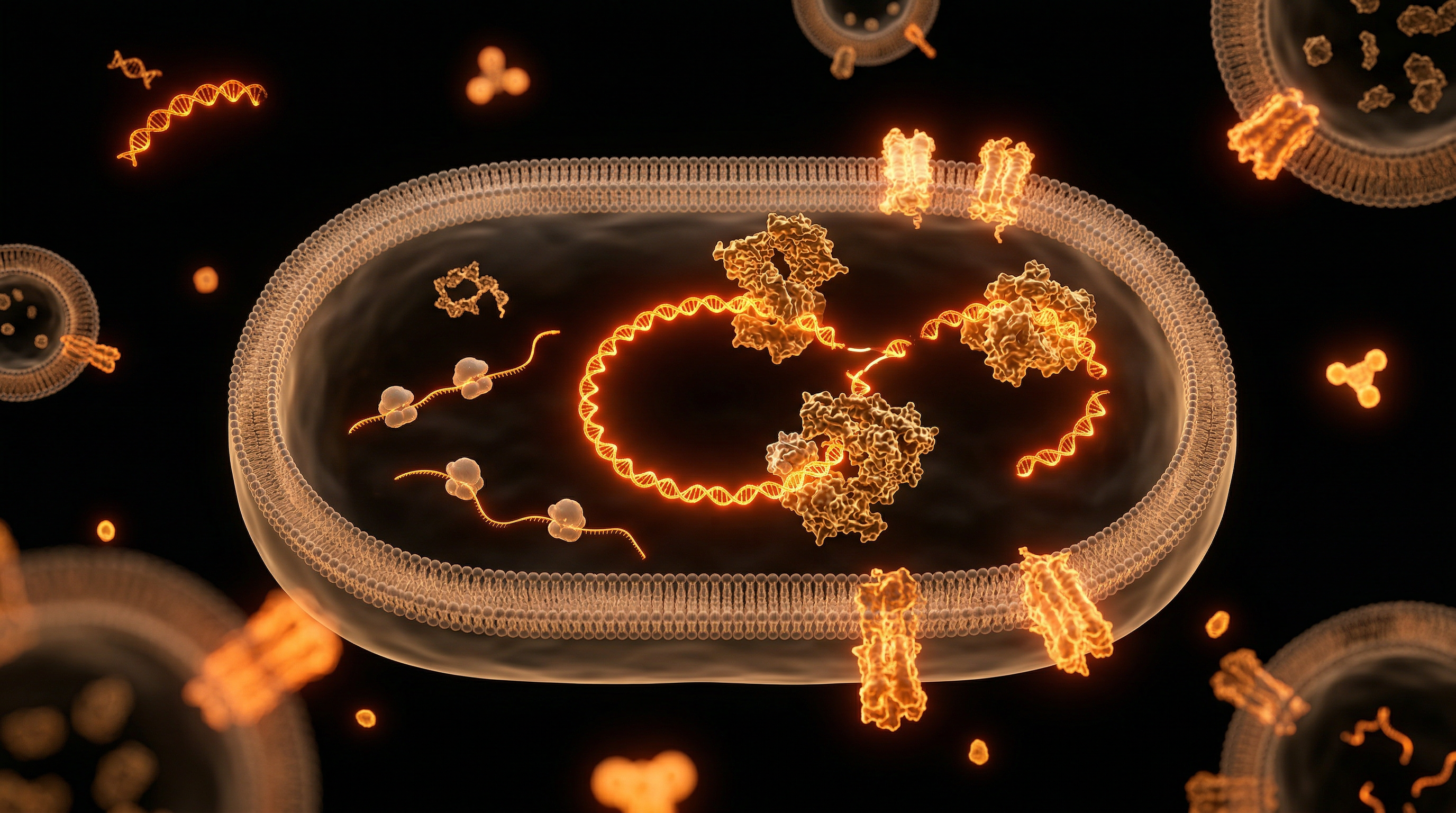
At the heart of this revolution lies the concept of the Minimal Genome. By stripping a cell of its evolutionary baggage—the redundant, non-essential genes acquired over millennia—we create a Biological Chassis. This stripped-back organism provides a clean slate, a programmable platform upon which we can overlay specific, high-precision therapeutic functions. In the context of Cell Therapy, this means engineering stem cells that do not merely replace damaged tissue but act as autonomous, intelligent agents capable of patrolling the body, identifying malignant signatures, and executing programmed apoptosis in cancerous clusters.
However, this technological leap is not without its shadows. As we deconstruct the essence of life to its barest components, we must confront the reality of how our internal biological environment has been compromised. The mainstream scientific establishment often ignores the 'bio-terrain' in favour of the 'genetic blueprint'. This article seeks to bridge that gap, exploring the mechanics of minimal genomes while exposing the environmental variables that threaten to derail our synthetic future.
The Biology — How It Works
To understand the construction of a minimal genome, one must first appreciate the staggering complexity of the Eukaryotic Cell. Human cells are cluttered with 'junk DNA' (introns, transposons, and ancient viral remnants) that, while playing roles in long-term evolution, introduce noise into the precision of synthetic engineering.
The Bottom-Up vs. Top-Down Approach
There are two primary methodologies for creating a minimal genome:
- Top-Down Refinement: This involves taking an existing organism, such as Mycoplasma mycoides, and systematically deleting genes one by one. If the cell survives and reproduces, that gene is deemed 'non-essential'. This was the path taken by the J. Craig Venter Institute to create JCVI-syn3.0, the world's first functioning synthetic minimal cell with only 473 genes.
- Bottom-Up Synthesis: This is the 'holy grail' of synthetic biology. It involves chemically synthesising DNA fragments (oligonucleotides) and assembling them in a laboratory to create a genome from scratch. This allows for the total elimination of biological 'noise' and the insertion of Orthogonal Systems—biological processes that function independently of the host's natural machinery.
Programming the Stem Cell
In Regenerative Medicine, we utilise Pluripotent Stem Cells (PSCs). These cells possess the unique ability to differentiate into any tissue type. By integrating a minimal synthetic genome into a stem cell, we create a 'Therapeutic Trojan Horse'.
"A minimal genome is not merely a smaller instruction manual; it is a more efficient operating system, free from the background interference of evolutionary legacy."
Once the minimal chassis is established, researchers insert Genetic Circuits. These are analogous to electronic circuits, utilizing Promoters, Enhancers, and Transcription Factors to create Boolean logic gates (AND, OR, NOT) within the cell. For instance, an engineered stem cell can be programmed with an AND Gate: "IF the cell detects Protein A (a cancer marker) AND Protein B (a tumour microenvironment signature), THEN release Cytotoxin C."
Mechanisms at the Cellular Level
The precision of synthetic cell therapy relies on our ability to manipulate the Central Dogma of Molecular Biology: the flow of information from DNA to RNA to Protein.
CRISPR-Cas9 and Beyond
While CRISPR-Cas9 is the most publicised tool for genome editing, senior researchers are moving toward Base Editing and Prime Editing. These techniques allow for the alteration of single nucleotides without causing double-stranded breaks in the DNA, which can lead to genomic instability—a 'truth' often glossed over in optimistic press releases.
Synthetic Notch (SynNotch) Receptors
One of the most powerful mechanisms in the synthetic arsenal is the SynNotch Receptor. Unlike natural receptors, which are often pleiotropic (causing multiple effects), SynNotch receptors can be engineered to recognise any custom ligand. When a synthetic stem cell encounters a specific cancer antigen, the SynNotch receptor cleaves an internal transcriptional activator, which then migrates to the nucleus to turn on a specific set of therapeutic genes.
- Targeting: The cell ignores healthy tissue because it lacks the dual-key antigen signature.
- Execution: The cell can be programmed to produce Interleukin-12 (IL-12), a potent anti-tumour cytokine, directly at the site of the malignancy.
- Safety: Kill Switches are integrated into the genome. If the synthetic cell begins to proliferate uncontrollably, the patient can be given a specific 'pro-drug' that triggers the cell's immediate suicide.
Epigenetic Landscape Management
The construction of a minimal genome also requires the management of the Epigenome. Even with a stripped-back genetic code, the way DNA is coiled around Histone proteins dictates which genes are accessible. Synthetic biologists now use Epigenetic Modifiers—enzymes like DNA methyltransferases—to 'lock' or 'unlock' synthetic circuits, ensuring that the therapeutic payload is only active in the required physiological context.
Environmental Threats and Biological Disruptors
We must acknowledge a hard truth: a precision-engineered cell is only as effective as the environment it is placed in. The modern human body is an increasingly hostile environment for delicate synthetic biological systems.
The Impact of Endocrine Disruptors
The prevalence of Xenoestrogens (such as Bisphenol A and Phthalates) in the environment creates a 'hormonal static'. When we program a stem cell to respond to endogenous hormonal signals, these synthetic mimics can cause 'misfiring'. A genetic circuit designed to trigger in response to oestrogen may be prematurely activated by plastic residues in the patient’s blood, leading to off-target toxicity.
Electromagnetic Interference (EMI) at the Cellular Level
Mainstream biology remains largely silent on the interaction between Electromagnetic Fields (EMFs) and voltage-gated ion channels. Synthetic cells rely on precise electrochemical gradients to function. There is emerging evidence that high-frequency non-ionising radiation can disrupt the Calcium Signalling pathways within engineered cells, potentially deactivating 'kill switches' or causing the failure of sensing mechanisms.
Glyphosate and Mitochondrial Dysfunction
Glyphosate, the most widely used herbicide globally, has been shown to disrupt the Shikimate Pathway in the gut microbiome, but more critically for our work, it acts as a glycine analogue. If glyphosate is incorporated into the proteins being manufactured by our synthetic cells, it can lead to Protein Misfolding. A therapeutic cell producing misfolded proteins is not only useless; it is a metabolic burden that may exacerbate the very inflammation it was designed to cure.
"The failure to account for the 'Bio-Terrain' is the single greatest oversight in contemporary genomic medicine."
The Cascade: From Exposure to Disease
The necessity for synthetic cell therapy is, in many ways, a response to the systemic collapse of natural biological integrity. To understand why we need to 'program' cells to fight cancer, we must understand how the natural 'programming' failed.
The Breakdown of Immune Surveillance
In a healthy body, the Natural Killer (NK) Cells and Cytotoxic T-Cells perform constant surveillance. However, chronic exposure to environmental toxins leads to T-Cell Exhaustion. The mitochondria—the powerhouses of these immune cells—become dysfunctional due to oxidative stress.
- Stage 1: Genomic Insult. DNA damage occurs via ROS (Reactive Oxygen Species) from heavy metals or radiation.
- Stage 2: Epigenetic Erosion. The body's ability to silence 'oncogenes' is lost as methylation patterns are disrupted.
- Stage 3: Metabolic Shifting. Cells switch from aerobic respiration to Glycolysis (the Warburg Effect), creating an acidic, low-oxygen microenvironment.
- Stage 4: Immune Escape. Cancer cells begin to express PD-L1, a 'don't eat me' signal that blinds the immune system.
The Role of Synthetic Biology in Reversing the Cascade
Our engineered minimal genome cells are designed to bypass this cascade. By utilizing a Synthetic Chassis, we can ensure the mitochondria are 'optimised' for the high-energy demands of the tumour microenvironment. We can program the cells to ignore PD-L1 signals and instead respond to the metabolic hallmarks of cancer, such as high lactate levels. We are essentially building a parallel, 'hardened' immune system that is immune to the signals that typically disable natural defences.
What the Mainstream Narrative Omits
The promotional materials from major pharmaceutical conglomerates often paint a picture of seamless progress. As an insider at INNERSTANDING, I must highlight the 'missing chapters' of this narrative.
The Risk of Horizontal Gene Transfer (HGT)
There is a significant, yet rarely discussed, risk that synthetic genetic material could be transferred to the patient's existing microflora or even their own somatic cells. Horizontal Gene Transfer is a well-documented phenomenon in bacteria. If a synthetic 'kill switch' or a potent growth-promoting circuit 'leaks' into the wider biological ecosystem of the body, the consequences are unpredictable.
The 'Gated' Nature of Genetic Wealth
While the science is breathtaking, the socio-economic implementation is restrictive. The 'mainstream' focus is on high-cost, patented therapies that require massive infrastructure. There is a deliberate suppression of Open-Source Bio-Hacking and community-led synthetic biology. The goal of the establishment is to ensure that the 'Minimal Genome' remains a proprietary technology, creating a divide between those who can afford 'biological upgrades' and those left with a degrading natural genome.
The Obsolescence of Naturally Occurring Cures
The narrative focuses entirely on engineering a cure, often ignoring the fact that many cancers are metabolic in origin and could be addressed through rigorous environmental and nutritional interventions. Synthetic biology is frequently positioned as the only solution, largely because a programmable, patented cell is more 'monetisable' than a protocol for cellular detoxification and mitochondrial repair.
"The corporatisation of the genome is the final frontier of the enclosure of the commons."
The UK Context
The United Kingdom has positioned itself as a global hub for synthetic biology, yet the public is largely unaware of the extent of this 'Bio-Revolution' occurring on their doorstep.
The 'Golden Triangle' and SynbiCITE
The nexus of London, Oxford, and Cambridge—known as the Golden Triangle—is home to some of the world's most advanced synthetic biology labs. SynbiCITE, based at Imperial College London, is the UK's national centre for the commercialisation of synthetic biology. While this brings investment, it also brings a heavy emphasis on industrial output over holistic health.
The NHS and the Rollout of CAR-T
The UK's National Health Service (NHS) was one of the first in the world to provide CAR-T (Chimeric Antigen Receptor T-cell) therapy. This is the 'vanguard' of the synthetic movement. However, the UK's regulatory body, the MHRA (Medicines and Healthcare products Regulatory Agency), faces a daunting task in keeping pace with the rapid evolution of Gene Drive technologies and synthetic minimal cells.
- Bio-Foundries: The UK has established 'Bio-Foundries'—automated laboratories where robots assemble DNA sequences. This removes the 'human element' from biology, increasing speed but potentially decreasing the nuanced oversight required when dealing with the building blocks of life.
- Ethics and Public Consent: There is a notable lack of public debate in the UK regarding the long-term implications of releasing synthetic organisms into the human population. The 'Informed Consent' process for these therapies often skips the theoretical risks of genomic instability or unintended evolutionary consequences.
Protective Measures and Recovery Protocols
For those considering synthetic cell therapies, or for those simply living in an environment where our biological integrity is under constant assault, a protocol for 'Biological Fortification' is essential. We must optimise the 'Host' before we introduce the 'Guest' (the synthetic cell).
Phase 1: Environmental Detoxification
Before the introduction of any engineered cell, the patient's toxic load must be reduced.
- Chelation Therapy: Removing heavy metals like aluminium and lead that interfere with DNA polymerases.
- EMF Mitigation: Creating a 'low-EMF' recovery environment to ensure the electrochemical stability of the synthetic genetic circuits.
- Glyphosate Clearance: Utilising specific binders like Humic and Fulvic acids to clear glyphosate residues from the gut and tissues.
Phase 2: Mitochondrial Priming
Synthetic cells require a high-ATP environment to perform their programmed functions.
- Photobiomodulation (Red Light Therapy): Using specific wavelengths (660nm and 850nm) to stimulate Cytochrome c Oxidase in the mitochondria, enhancing cellular energy production.
- NAD+ Augmentation: Supplementing with precursors like NMN or NR to maintain the 'fuel' for DNA repair enzymes (PARPs).
Phase 3: Epigenetic Stabilisation
Ensuring the host's DNA is stable allows for a more harmonious integration of synthetic therapies.
- Methylation Support: Providing the body with Methyl Donors (B12, Folate, TMG) to ensure that natural tumour-suppressor genes remain active.
- Sulforaphane Intake: Activating the Nrf2 pathway to upregulate the body’s endogenous antioxidant production, protecting the synthetic cells from oxidative stress.
Summary: Key Takeaways
The construction of minimal genomes for cell therapy is perhaps the most audacious undertaking in human history. We are rewriting the software of life to fight a war against diseases that are, in many cases, the result of our degraded hardware.
- The Minimal Genome is a Chassis: It provides a clean, programmable platform by stripping away non-essential genes, allowing for high-precision cancer targeting.
- Synthetic Circuits provide Intelligence: Using logic gates, we can program stem cells to sense their environment and release therapeutic agents only when certain conditions (cancer markers) are met.
- The Environment is a Disruptor: Xenoestrogens, EMFs, and glyphosate represent 'biological noise' that can cause synthetic systems to fail or misfire.
- The Narrative is Incomplete: Mainstream science often ignores the risks of Horizontal Gene Transfer and the socio-economic implications of patented life forms.
- The UK is a Strategic Hub: Through institutions like SynbiCITE and the NHS, the UK is at the forefront of this transition, necessitating a vigilant and informed public.
- Optimization is Mandatory: For synthetic biology to succeed, we must focus on the 'Bio-Terrain'—detoxifying the body and priming the mitochondria to support these advanced engineered agents.
As we move forward, the goal of INNERSTANDING is to ensure that this technology is used not just as a profitable 'patch' for a failing system, but as a tool for genuine liberation from the 'Biological Cascade' of disease. The future of medicine is not just synthetic; it must be holistic, transparent, and grounded in the reality of the human environment.
"References & Further Reading:"
- Gibson, D. G., et al. (2016). "Design and synthesis of a minimal bacterial genome." Science.
- Hutchison, C. A., et al. (2016). "Design and synthesis of a minimal bacterial genome." Science.
- Venter, J. C. (2013). "Life at the Speed of Light: From the Double Helix to the Dawn of Digital Biology."
- UK Synthetic Biology Strategic Plan 2016 - 2030.
- The Lancet: Haematology - Progress and challenges in CAR-T cell therapy.
This article is provided for informational and educational purposes only. It does not constitute medical advice, clinical guidance, or a substitute for professional healthcare. Information reflects cited research at time of publication. Always consult a qualified healthcare professional before acting on any health information.
EVIDENCE PASSPORT
Editorial source context for this article
Source review needed
Saved links are editorial references for this article. They may support specific claims rather than every sentence. Open and assess each source in context. This passport does not independently verify them.
Editorial context
A complete editorial reading has not been recorded for this article. Source links remain available for you to open and assess directly.
Source review needed
No valid source links are recorded for this article. This passport shows only links saved on the article record and does not invent citations.
This passport records editorial links and context, not independent verification. Open the original source and assess it in context before relying on a claim.
Medical Disclaimer
The information in this article is for educational purposes only and does not constitute medical advice, diagnosis, or treatment. Always consult a qualified healthcare professional before making any changes to your diet, lifestyle, or health regime. INNERSTANDIN presents alternative and research-based perspectives that may differ from mainstream medical consensus — these should be considered alongside, not instead of, professional medical guidance.
Read Full DisclaimerContinue the thread
Keep this question moving.
Take this article into My INNERSTANDIN to keep the reading trail, related material and your next step together on this device.