
Scent of Subversion: How Synthetic Fragrances Breach the Blood-Brain Barrier
Published April 2026
Uncover the hidden dangers of the 'fragrance loophole,' exploring how synthetic scents bypass the blood-brain barrier and disable cellular detoxification pumps.
Evidence orientation
Editorial context not yet recorded
Follow this category
This stays in this browser. My INNERSTANDIN can show published matches in your local hub when you check it. It does not send email, push, or alert notifications.
Local learning review
A private browser aid for revisiting ideas. It is not an alert or a health recommendation.
Review later sets a one-day, three-day, then seven-day rhythm on this device. Choose it only when you want to revisit this article.
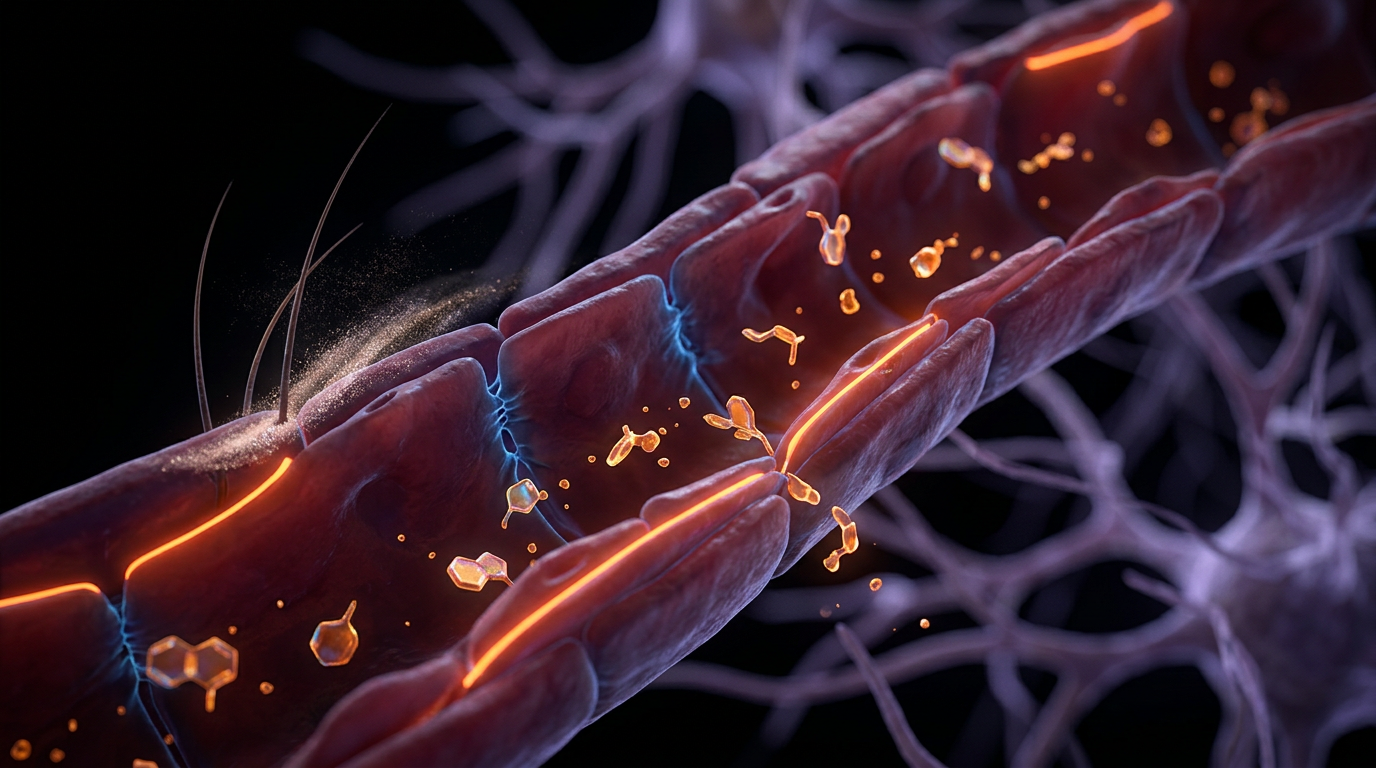
In the world of beauty and personal care, the word 'fragrance' or 'parfum' on an ingredient list acts as a legal loophole, allowing manufacturers to hide a cocktail of up to 3,000 different chemicals. For the health-literate individual, this is a significant 'black box' in consumer safety. Most of these synthetic scents are derived from petroleum and include phthalates and synthetic musks, which have a unique ability to breach the body's most sensitive barriers. Section 1: The Olfactory Shortcut and the Blood-Brain Barrier (BBB). The sense of smell is the only sense that bypasses the thalamus and goes directly to the brain's limbic system.
Synthetic fragrances utilize this pathway via the olfactory bulb. Many fragrance components are small, lipophilic molecules that can easily cross the Blood-Brain Barrier (BBB). Volatile Organic Compounds (VOCs) like limonene and pinene, when synthetic and oxidized, can cause oxidative stress within the hippocampal region. This is particularly concerning as the BBB is meant to protect the CNS from xenobiotics. By piggybacking on the olfactory pathway, these toxins gain direct access to the brain, where they can interfere with neurotransmitter synthesis and trigger the release of pro-inflammatory cytokines such as TNF-alpha and IL-1 beta.
Section 2: Synthetic Musks and the Inhibition of Efflux Transporters. Synthetic musks, such as Galaxolide and Tonalide, are ubiquitous in perfumes, lotions, and laundry detergents. These compounds are highly persistent and bioaccumulative. A critical biological mechanism often ignored is their ability to act as 'chemosensitizers.' They inhibit the activity of multidrug resistance (MDR) efflux transporters, specifically the P-glycoprotein. These transporters are the cell's primary defense mechanism, acting as 'sump pumps' to remove toxins from the intracellular environment.
By disabling these pumps, synthetic musks allow other environmental toxins and heavy metals to accumulate within cells at much higher concentrations than would normally be possible. This synergistic toxicity is a cornerstone of the 'Innerstanding' view on environmental illness. Section 3: The Hypothalamic Response to Synthetic Scent. The hypothalamus is the command center for the endocrine and autonomic nervous systems. Exposure to synthetic fragrances has been shown to alter the secretion of Gonadotropin-Releasing Hormone (GnRH), which in turn affects the entire HPG (Hypothalamic-Pituitary-Gonadal) axis.
This can manifest as menstrual irregularities, thyroid dysfunction, or chronic adrenal fatigue. Mainstream medicine often treats these symptoms in isolation, failing to connect them to the olfactory-endocrine axis. By eliminating synthetic fragrances, we are not just avoiding 'smells'; we are restoring the integrity of our cellular defense systems and the precision of our hormonal signaling.
This article is provided for informational and educational purposes only. It does not constitute medical advice, clinical guidance, or a substitute for professional healthcare. Information reflects cited research at time of publication. Always consult a qualified healthcare professional before acting on any health information.
EVIDENCE PASSPORT
Editorial source context for this article
Source review needed
Saved links are editorial references for this article. They may support specific claims rather than every sentence. Open and assess each source in context. This passport does not independently verify them.
Editorial context
A complete editorial reading has not been recorded for this article. Source links remain available for you to open and assess directly.
Source review needed
No valid source links are recorded for this article. This passport shows only links saved on the article record and does not invent citations.
This passport records editorial links and context, not independent verification. Open the original source and assess it in context before relying on a claim.
Medical Disclaimer
The information in this article is for educational purposes only and does not constitute medical advice, diagnosis, or treatment. Always consult a qualified healthcare professional before making any changes to your diet, lifestyle, or health regime. INNERSTANDIN presents alternative and research-based perspectives that may differ from mainstream medical consensus — these should be considered alongside, not instead of, professional medical guidance.
Read Full DisclaimerContinue the thread
Keep this question moving.
Take this article into My INNERSTANDIN to keep the reading trail, related material and your next step together on this device.
Explore this in the Body Map
See where this hits your biology. Interactive anatomy, threats, and protective protocols.
Dig deeper in the Library
Free, longform PDF volumes that go beyond headlines into mechanisms and references.