
Taurine and Cardiac Function: The Forgotten Amino Acid of the Animal Kingdom
Updated May 2026
Details the essential role of taurine in bile acid synthesis and cardiovascular stability. It identifies seafood and red meat as the primary sources for this vital nutrient.
Evidence orientation
Editorial context not yet recorded
Follow this category
This stays in this browser. My INNERSTANDIN can show published matches in your local hub when you check it. It does not send email, push, or alert notifications.
Local learning review
A private browser aid for revisiting ideas. It is not an alert or a health recommendation.
Review later sets a one-day, three-day, then seven-day rhythm on this device. Choose it only when you want to revisit this article.
Overview
In the pantheon of nutritional science, few molecules have been as systematically overlooked and undervalued as taurine. Often dismissed as a mere "non-essential" amino acid or, more erroneously, associated exclusively with the jittery stimulants of synthetic energy drinks, taurine is, in reality, one of the most vital compounds for mammalian survival. Specifically, for the human heart—a muscle that never rests—taurine is the primary orchestrator of electrical stability and mechanical efficiency.
As a senior biological researcher at INNERSTANDING, I have spent decades observing the divergence between evolutionary biology and modern nutritional mandates. What we find is a startling "Taurine Gap." While our ancestors thrived on a diet rich in organ meats, shellfish, and wild-caught ruminants, the modern industrialised diet has effectively purged these taurine-dense sources from the daily plate.
Taurine (2-aminoethanesulphonic acid) is unique. Unlike other amino acids, it is not used as a building block for proteins. Instead, it exists in the intracellular fluid as a free agent, acting as a master regulator of osmotic pressure, a potent antioxidant, and a critical component of bile acid conjugation.
The heart, however, is where taurine performs its most miraculous feats. It accounts for approximately 50% of the total free amino acid pool in the myocardium. When taurine levels drop, the heart begins to fail—not through a lack of fuel, but through a loss of regulation. This article aims to expose the "forgotten" nature of this nutrient, examining why it is the linchpin of cardiovascular health and how its absence in the modern plant-biased narrative is driving a quiet epidemic of heart failure.
The Biology — How It Works
To understand taurine is to understand the fluid dynamics of the cell. Although humans can synthesise taurine from the sulphur-containing amino acids cysteine and methionine, this endogenous production is notoriously inefficient. In the context of the high-stress, toxin-laden 21st century, the demand for taurine far outstrips the body’s ability to produce it. This renders it a "conditionally essential" nutrient.
The Role of Bile Acid Synthesis
One of taurine's primary biological functions occurs in the liver. Taurine is conjugated with bile acids to form bile salts, such as taurocholic acid. These salts are indispensable for the emulsification and absorption of dietary fats and, crucially, fat-soluble vitamins (A, D, E, and K).
Fact: Without sufficient taurine, the body struggles to conjugate bile, leading to a backup of cholesterol and a failure to absorb the very nutrients required for cardiovascular repair.
Osmoregulation and Cellular Hydration
Taurine is an osmolyte. It regulates the movement of water and minerals (sodium, potassium, calcium, and magnesium) across cell membranes. In the heart, this is a matter of life and death. By maintaining the correct internal pressure within the myocytes (heart cells), taurine ensures that the heart can contract and relax without sustaining mechanical damage.
The Evolution of the "Taurine Requirement"
From an evolutionary standpoint, humans evolved near coastal regions and grasslands where seafood and red meat were abundant. These are the premier sources of pre-formed taurine. Our physiology adapted to a high external supply, which is why our internal synthesis is so weak compared to other mammals. We are biologically "wired" to seek taurine from the Animal Kingdom.
Mechanisms at the Cellular Level
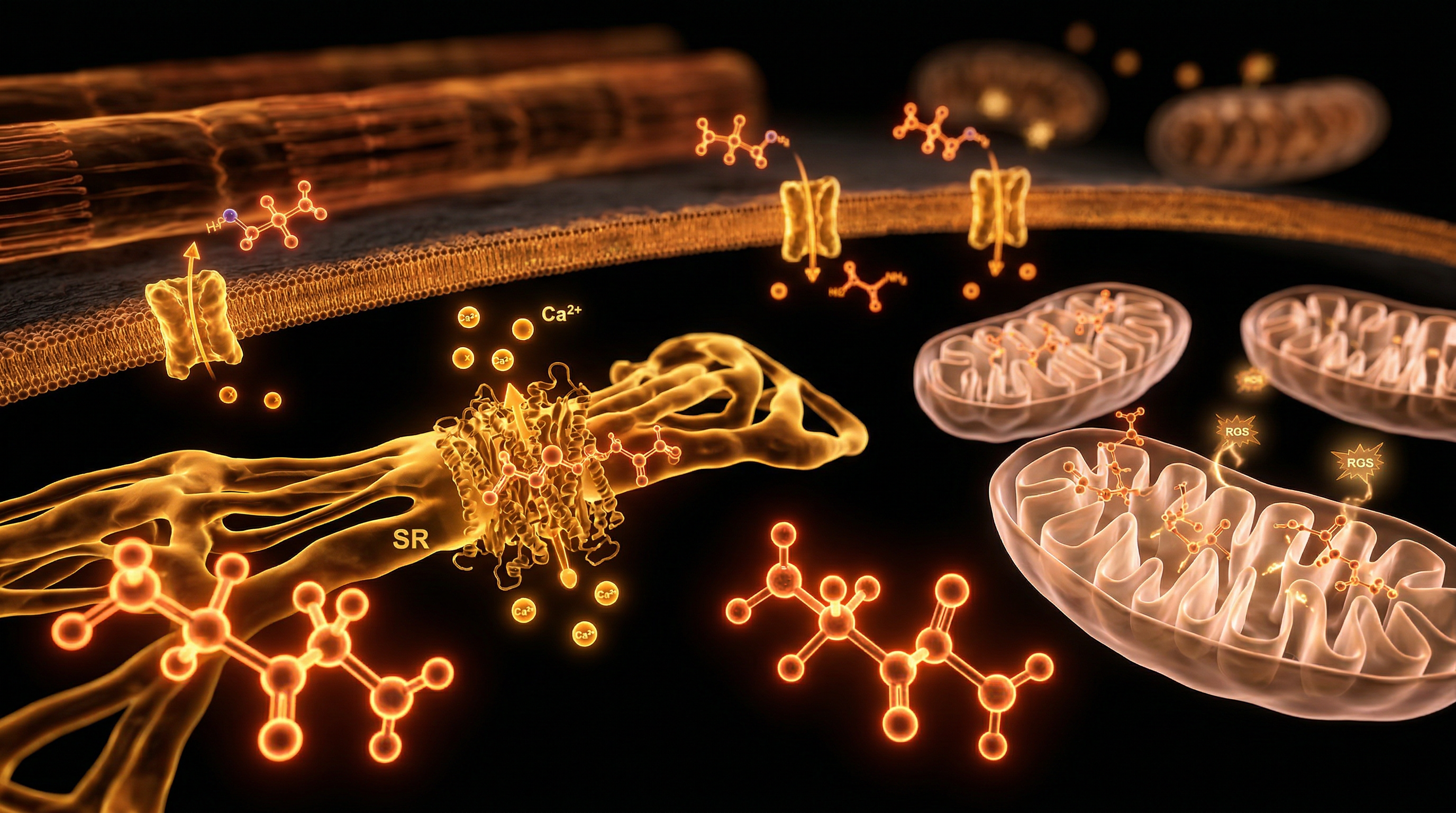
When we zoom into the microscopic theatre of the myocardium, taurine acts as the lead conductor of the "calcium orchestra." Cardiac contraction is dependent on the rapid influx and efflux of calcium ions.
Calcium Homeostasis
The heart requires a precise rhythm of calcium movement to function. Taurine modulates the activity of the Sarcoplasmic Reticulum (SR), the storage site for calcium in the cell.
- During a heartbeat, taurine facilitates the release of calcium to trigger contraction.
- During relaxation, it aids the re-uptake of calcium back into the SR.
Without taurine, "calcium overload" occurs. This is a state where excess calcium remains in the cytoplasm, leading to cellular death, arrhythmias, and the eventual stiffening of the heart muscle known as diastolic dysfunction.
Mitochondrial Protection and Mitophagy
The heart is the most energy-intensive organ in the body, packed with mitochondria. Taurine serves as a "chaperone" for mitochondrial health. It stabilizes the electron transport chain and prevents the leakage of electrons that leads to the formation of reactive oxygen species (ROS). Furthermore, taurine promotes mitophagy—the process by which the cell identifies and recycles damaged mitochondria before they can trigger inflammation.
The ACE Inhibitor Effect
In the vascular system, taurine acts as a natural ACE (Angiotensin-Converting Enzyme) inhibitor. It reduces the production of Angiotensin II, a potent vasoconstrictor. By doing so, it lowers blood pressure and reduces the workload on the left ventricle. Unlike pharmaceutical ACE inhibitors, which often come with a litany of side effects (including the infamous dry cough), taurine lowers blood pressure while simultaneously strengthening the heart muscle.
Environmental Threats and Biological Disruptors
In the modern world, taurine is under siege. It is not merely a lack of intake that is the problem; it is the presence of environmental factors that deplete our existing stores.
The Glyphosate Connection
The pervasive use of glyphosate-based herbicides in industrial agriculture is a major disruptor. Glyphosate interferes with the cytochrome P450 enzymes in the liver, which are necessary for the conversion of sulphur-containing amino acids into taurine. By consuming produce sprayed with these chemicals, we are effectively "switching off" our internal taurine production.
Anti-nutrients and Plant-Based Interference
The push toward a "plant-forward" diet introduces high levels of phytates, oxalates, and lectins. These anti-nutrients bind to minerals like magnesium and zinc—cofactors required for taurine metabolism. Furthermore, plants contain zero taurine. A diet devoid of animal products is, by definition, a taurine-deficient diet.
Fluoride and Bromide
As a halogen, fluoride (common in many water supplies) can interfere with the transport of taurine across the blood-brain barrier and the cardiac membrane. These synthetic halides compete for the same transport proteins, effectively locking taurine out of the cells where it is needed most.
Statistic: Studies on taurine-deficient animals show a 60% reduction in cardiac output and a massive increase in the risk of dilated cardiomyopathy.
The Cascade: From Exposure to Disease
What happens when taurine levels are chronically low? We see a predictable "cascade of decay" that mirrors the most common chronic diseases in the UK and globally.
Stage 1: Metabolic Inefficiency
Initially, the lack of taurine impairs bile flow. This leads to dyslipidaemia—an imbalance of blood fats. Cholesterol begins to oxidise because there is insufficient bile to move it out of the system. The patient is often prescribed a statin at this point, which further depletes mitochondrial energy (CoQ10), but the underlying taurine deficiency is never addressed.
Stage 2: Hypertension and Endothelial Dysfunction
As the natural ACE-inhibitory effect of taurine vanishes, blood pressure rises. The endothelial lining of the arteries becomes brittle and prone to micro-tears. The body uses calcium and cholesterol to "patch" these tears, leading to atherosclerosis.
Stage 3: Congestive Heart Failure (CHF)
The final stage is the weakening of the myocardium itself. The heart can no longer pump against the high pressure. It begins to enlarge (hypertrophy) in a desperate attempt to maintain output, but because it lacks the taurine to regulate calcium and energy, it eventually gives out.
What the Mainstream Narrative Omits
The suppression of taurine's importance in mainstream cardiology is not an accident; it is a consequence of a pharmaceutical-centric paradigm. If the public understood that a nutrient found in beef heart and mussels could outperform many blood pressure medications, the profits of the "sickness industry" would be under threat.
The Cholesterol Distraction
Mainstream medicine is obsessed with LDL cholesterol. However, cholesterol is merely a fire-fighter at the scene of the fire. The "fire" is often a lack of taurine, which leads to oxidative stress and poor bile metabolism. By focusing on lowering cholesterol rather than improving bile conjugation through taurine, the medical establishment ignores the root cause.
The "Protein is Protein" Fallacy
Nutritionists often claim that all proteins are equal as long as you get your "amino acids." This is a dangerous oversimplification. Plant proteins lack the specific sulphurous profile and the pre-formed taurine found in the Nose-to-Tail diet. You cannot replace a ribeye steak with a bowl of lentils and expect your heart to maintain its taurine status.
The Energy Drink Stigma
Because taurine is included in energy drinks (to mitigate the cardiovascular stress of caffeine), it has been unfairly demonised by association. The media often portrays taurine as a "stimulant." In reality, taurine is a neuro-inhibitory and cardio-protective molecule. It is the "brakes" on the system, not the "accelerator."
The UK Context
In the United Kingdom, the cardiovascular health of the nation is in a state of precipitous decline. Despite the widespread use of statins and blood pressure medications within the NHS framework, heart disease remains a leading killer.
The "Eatwell Guide" Failure
The UK government's Eatwell Guide encourages a diet dominated by starchy carbohydrates and plant oils, while marginalising red meat and saturated fats. This "advice" has led to a population that is chronically taurine-deficient. The British public has been moved away from traditional foods like kidney, liver, and fatty cuts of beef—the very foods that sustained the cardiac health of previous generations.
The Rise of Veganism in Britain
The UK has seen one of the fastest uptakes of veganism in the Western world. While often framed as an ethical or environmental choice, the biological cost is undeniable. We are seeing an uptick in "unexplained" arrhythmias and heart palpitations among young people who have abandoned animal products. Without the bioavailable taurine found in seafood and meat, their hearts are losing their electrical stability.
The NHS Burden
The financial burden on the NHS for treating cardiovascular disease is astronomical. Much of this could be mitigated by a simple shift in focus toward nutrient density. However, because taurine cannot be patented, there is zero incentive for the pharmaceutical-funded "clinical trials" that the NHS relies upon for its guidelines.
Protective Measures and Recovery Protocols
If you wish to protect your heart from the ravages of modern life, you must adopt a strategy that prioritises taurine bioavailability and minimizes depletion.
1. Embrace Nose-to-Tail Nutrition
The highest concentrations of taurine are found in the tissues that work the hardest.
- Heart: Consuming the heart of a ruminant (beef or lamb) is the most direct way to ingest the specific peptides and taurine levels needed for your own heart.
- Liver: A powerhouse of the B-vitamins and minerals required to synthesise what little taurine our bodies can make.
- Seafood: Mussels, clams, and scallops are the "taurine kings" of the ocean. Cold-water fish like salmon and mackerel are also excellent.
2. Elimination of Antinutrients
To ensure taurine can do its job, you must remove the "biological noise." This means eliminating:
- Seed Oils: These pro-inflammatory fats oxidise the LDL that taurine is trying to process.
- Excessive Grains: Phytates in grains block the absorption of zinc, a crucial cofactor for taurine enzymes.
3. Strategic Supplementation
While food should always be first, certain individuals may require supplementary taurine, especially if they are recovering from cardiac events or have been on a plant-based diet for an extended period.
- Dosage: Therapeutic doses often range from 500mg to 2,000mg per day.
- Timing: Taking taurine before bed can also improve sleep quality, as it acts on the GABA receptors in the brain.
4. Water Quality
Invest in a high-quality water filter that removes fluoride and chlorine. These halogens compete with taurine and disrupt its delicate balance in the cellular fluid.
Summary: Key Takeaways
The "forgotten" amino acid taurine is the silent guardian of the human heart. It is the bridge between the food we eat and the electrical rhythm that keeps us alive.
- Primary Source: Taurine is found almost exclusively in the Animal Kingdom. Seafood and red meat are essential.
- Cardiac Function: It regulates calcium, prevents "calcium overload," and acts as a natural ACE inhibitor to manage blood pressure.
- Bile Health: Taurine is essential for the conjugation of bile acids, making it a critical component of cholesterol management and fat-soluble vitamin absorption.
- Environmental Threat: Modern agricultural chemicals and plant-based dietary trends are the primary drivers of taurine deficiency.
- The UK Situation: Current UK nutritional guidelines are leading to a widespread taurine deficit, contributing to the nation's cardiovascular crisis.
To ignore taurine is to ignore the very foundations of mammalian biology. By returning to an animal-based, nose-to-tail way of eating, we can reclaim the cardiovascular stability that is our evolutionary birthright. The heart does not need more drugs; it needs the molecule it was designed to run on. It needs taurine.
This article is provided for informational and educational purposes only. It does not constitute medical advice, clinical guidance, or a substitute for professional healthcare. Information reflects cited research at time of publication. Always consult a qualified healthcare professional before acting on any health information.
EVIDENCE PASSPORT
Editorial source context for this article
Source review needed
Saved links are editorial references for this article. They may support specific claims rather than every sentence. Open and assess each source in context. This passport does not independently verify them.
Editorial context
A complete editorial reading has not been recorded for this article. Source links remain available for you to open and assess directly.
Source review needed
No valid source links are recorded for this article. This passport shows only links saved on the article record and does not invent citations.
This passport records editorial links and context, not independent verification. Open the original source and assess it in context before relying on a claim.
Medical Disclaimer
The information in this article is for educational purposes only and does not constitute medical advice, diagnosis, or treatment. Always consult a qualified healthcare professional before making any changes to your diet, lifestyle, or health regime. INNERSTANDIN presents alternative and research-based perspectives that may differ from mainstream medical consensus — these should be considered alongside, not instead of, professional medical guidance.
Read Full DisclaimerContinue the thread
Keep this question moving.
Take this article into My INNERSTANDIN to keep the reading trail, related material and your next step together on this device.
Dig deeper in the Library
Free, longform PDF volumes that go beyond headlines into mechanisms and references.