
The Atrazine Trail: Endocrine Disruption in British Freshwater Ecosystems
Updated May 2026
Atrazine residues, though restricted, persist in the British water table and affect food irrigated with local water. This compound is a known endocrine disruptor that feminizes aquatic life and impacts human fertility.
Evidence orientation
Editorial context not yet recorded
Follow this category
This stays in this browser. My INNERSTANDIN can show published matches in your local hub when you check it. It does not send email, push, or alert notifications.
Local learning review
A private browser aid for revisiting ideas. It is not an alert or a health recommendation.
Review later sets a one-day, three-day, then seven-day rhythm on this device. Choose it only when you want to revisit this article.
Overview
In the quiet, verdant expanses of the British countryside, a chemical ghost haunts the water table. Atrazine, a potent herbicide belonging to the triazine class, was officially banned by the European Union in 2004—a ban the United Kingdom upheld as part of its regulatory framework. However, the story of Atrazine did not end with its legal prohibition. As a senior researcher at INNERSTANDING, I have observed that the persistence of this molecule in our environment creates a "legacy effect" that continues to compromise the integrity of British freshwater ecosystems and, by extension, the food chain.
Atrazine was primarily utilised as a selective pre- and post-emergence herbicide to control broadleaf and grassy weeds, predominantly in maize production. Its efficacy stemmed from its ability to inhibit photosynthesis. Yet, its chemical stability and high mobility in soil have allowed it to leach into aquifers and persist in groundwater for decades. Despite being "off the shelves" for twenty years, Atrazine residues are frequently detected in UK water monitoring programmes, often at levels that—while deemed "safe" by legacy toxicology—are now known to trigger profound endocrine disruption.
The crisis is twofold. First, there is the direct impact on aquatic life, where Atrazine is famously known for its ability to "feminise" male organisms. Second, there is the indirect but pervasive threat to human health through bioaccumulation and the consumption of crops irrigated with contaminated local water. This article serves as an exhaustive investigation into the molecular mechanisms of Atrazine, its environmental persistence in the UK context, and the hidden biological toll it exacts on fertility and cellular health.
The Biology — How It Works
To understand why Atrazine is so devastating, we must first look at its fundamental biological interactions. Unlike many toxins that act through acute cellular destruction, Atrazine functions as a biochemical "signal jammer." It does not necessarily kill an organism outright; rather, it rewires its developmental and reproductive trajectory.
The Inhibition of Photosystem II
In plants, Atrazine targets the Photosystem II (PSII) complex. By binding to the D1 protein in the thylakoid membrane, it halts the flow of electrons, effectively starving the plant of the energy required to produce glucose. While humans and animals do not possess PSII complexes, the structural architecture of the Atrazine molecule allows it to interact with an entirely different, yet equally critical, set of proteins in the animal kingdom: cytochrome P450 enzymes.
Endocrine Disruption: The Great Impersonator
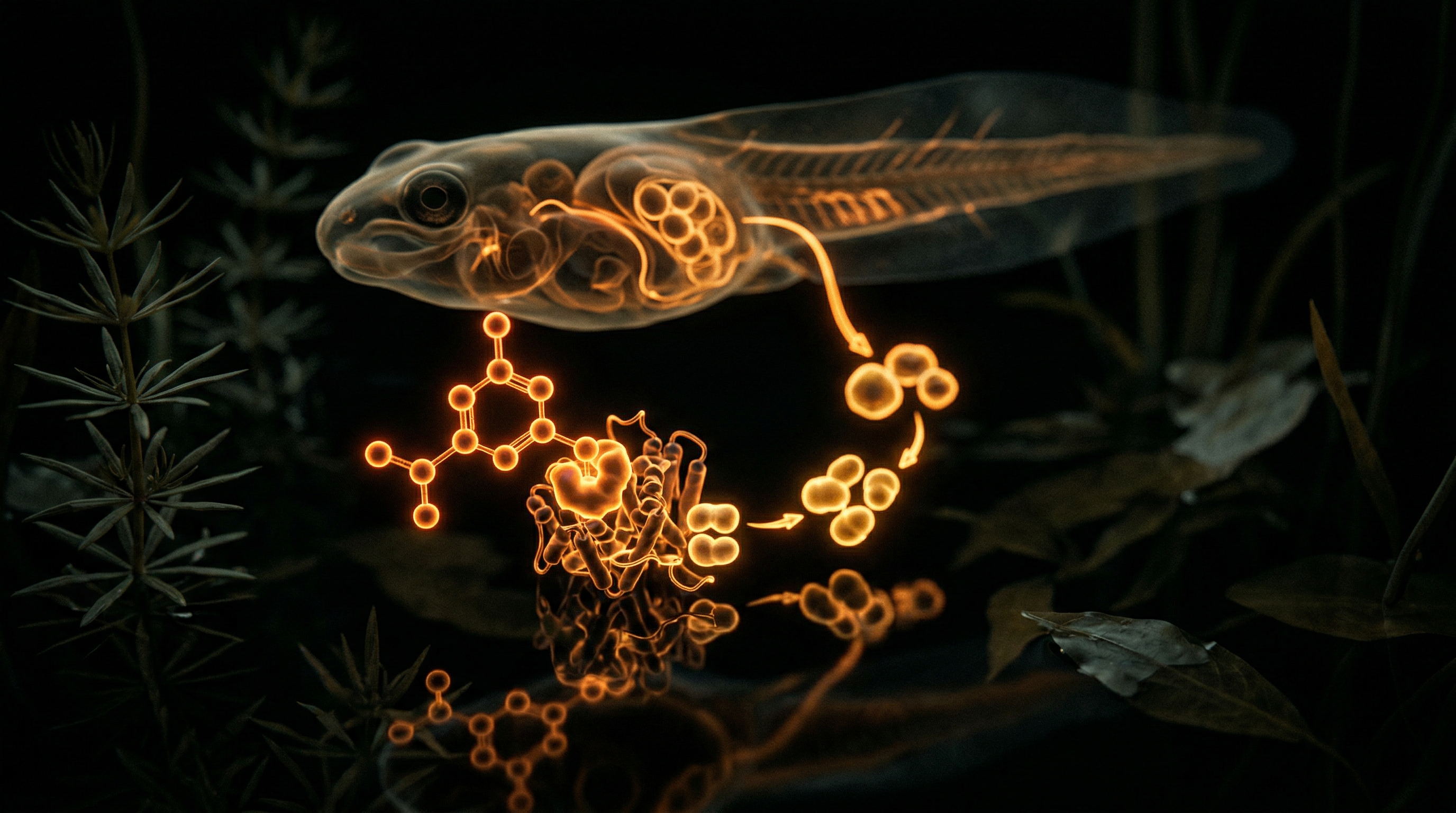
Atrazine is classified as an Endocrine Disrupting Chemical (EDC). It interferes with the endocrine system—the body's complex network of glands and hormones—by mimicking, blocking, or altering the production of natural hormones. Specifically, Atrazine is a potent inducer of aromatase, the enzyme responsible for converting androgens (like testosterone) into oestrogens (like oestradiol).
Fact: At concentrations as low as 0.1 parts per billion (ppb), Atrazine has been shown to induce hermaphroditism in amphibians, effectively turning male frogs into functional females capable of laying eggs.
The Persistence Factor
The chemical structure of Atrazine includes a s-triazine ring, which is exceptionally resistant to degradation by sunlight or microbial action in low-oxygen environments, such as the deep British chalk aquifers. This "environmental half-life" is the reason the compound remains a contemporary threat despite the 2004 ban. It is a "forever chemical" in all but name, lingering in the silt and pore water of the UK’s primary water sources.
Mechanisms at the Cellular Level
The true horror of Atrazine unfolds at the molecular scale, where it bypasses the body's natural defences and alters the very blueprint of hormonal expression.
Aromatase Induction (The CYP19 Gene)
The primary mechanism by which Atrazine disrupts biology is the up-regulation of the CYP19 gene. This gene encodes the aromatase enzyme. In a healthy male organism, aromatase activity is tightly regulated to maintain a high ratio of testosterone to oestrogen. Atrazine breaks this regulation.
- Phosphodiesterase Inhibition: Atrazine inhibits phosphodiesterase enzymes, leading to an increase in intracellular cyclic AMP (cAMP).
- Protein Kinase A Activation: Elevated cAMP levels activate Protein Kinase A (PKA).
- Promoter Activation: PKA then activates specific promoter regions of the CYP19 gene, leading to an overproduction of aromatase.
- Hormonal Conversion: This excess aromatase aggressively converts the organism’s testosterone into oestrogen, leading to a state of hypogonadism and feminisation.
Mitochondrial Dysfunction and Oxidative Stress
Beyond the endocrine system, Atrazine is a known mitotoxin. It interferes with the mitochondrial electron transport chain in animal cells, similar to how it disrupts PSII in plants. This disruption leads to the leakage of electrons and the subsequent formation of Reactive Oxygen Species (ROS).
- Lipid Peroxidation: ROS attack the fatty acids in cell membranes, compromising structural integrity.
- DNA Fragmentation: Oxidative stress leads to breaks in the DNA strand, particularly in highly sensitive cells like spermatozoa.
Epigenetic Transgenerational Inheritance
Perhaps the most alarming cellular mechanism is Atrazine’s ability to induce epigenetic changes. It does not necessarily change the DNA sequence, but it alters the "tags" (methylation) that tell the body which genes to turn on or off. Research suggests that exposure in one generation can result in reproductive diseases and obesity in the great-grandchildren of the exposed subject, even if those subsequent generations were never directly exposed to the chemical.
Environmental Threats and Biological Disruptors
The British freshwater system is a closed loop of sorts, where agricultural runoff, groundwater leaching, and river flow create a continuous cycle of exposure.
The Sentinel Species: Amphibians and Fish
Amphibians are the "canaries in the coal mine" for Atrazine exposure due to their permeable skin and aquatic life cycle. In the UK, species like the Common Toad (Bufo bufo) and the Smooth Newt (Lissotriton vulgaris) are at particular risk.
- Demasculinisation: Exposure leads to shrunken laryngeal muscles in males (preventing mating calls) and the development of oocytes (eggs) within the testes.
- Immune Suppression: Atrazine has been linked to a weakened immune response, making these populations more susceptible to the devastating Chytrid fungus.
Impacts on British Ichthyofauna
In British rivers like the Trent, the Severn, and the Thames, Atrazine residues impact fish populations. Studies on Brown Trout (Salmo trutta) have shown that even sub-lethal concentrations of triazine herbicides can disrupt olfactory sensing, making it difficult for fish to find mates or avoid predators. Furthermore, the presence of Vitellogenin (an egg-yolk protein normally only found in females) in the blood of male fish is a definitive biomarker of the Atrazine-induced oestrogenic environment of our waterways.
Contamination of the Food Chain
The threat extends to the terrestrial food chain through irrigation. In counties like Norfolk and Lincolnshire—the UK’s "breadbasket"—groundwater is heavily used for crop irrigation.
- Root Absorption: Crops such as potatoes, leafy greens, and sugar beets can absorb residual Atrazine from the soil and irrigation water.
- Residue Persistence: While the concentrations in a single vegetable may be low, the cumulative load from a diet consisting of locally sourced, conventionally grown British produce can be significant.
Statistic: According to some environmental monitoring reports, Atrazine or its metabolites (such as Desethylatrazine) have been detected in over 10% of groundwater monitoring sites in the UK, long after its withdrawal from use.
The Cascade: From Exposure to Disease
In humans, the biological effects of Atrazine exposure manifest as a cascade of systemic failures, primarily focused on the reproductive and metabolic systems.
Impact on Male Fertility
The UK is currently facing a "fertility cliff," with sperm counts declining at an unprecedented rate. Atrazine is a primary suspect in this decline.
- Sperm Quality: By inducing oxidative stress in the testes, Atrazine causes DNA fragmentation in sperm cells, leading to lower motility and higher rates of miscarriage.
- Testosterone Depletion: The "aromatase shift" mentioned earlier reduces circulating testosterone, leading to erectile dysfunction, loss of muscle mass, and increased adiposity (body fat).
Impact on Female Reproductive Health
In women, the disruption of the delicate oestrogen-progesterone balance can lead to a host of disorders:
- Polycystic Ovary Syndrome (PCOS): Linked to the disruption of the hypothalamic-pituitary-ovary axis.
- Endometriosis: Oestrogen dominance, fueled by external EDCs like Atrazine, can exacerbate the growth of endometrial tissue outside the uterus.
- Early Menopause: Accelerated depletion of ovarian follicles due to chemical stress.
Developmental and Foetal Risks
The most vulnerable period for exposure is during gestation. Atrazine crosses the placental barrier with ease.
- Intrauterine Growth Restriction (IUGR): Exposure during pregnancy is associated with lower birth weights.
- Hypospadias: A birth defect in male infants where the opening of the urethra is not at the tip of the penis, directly linked to disrupted androgen signalling during the first trimester.
Carcinogenic Potential
While the industry-funded narrative often downplays Atrazine’s cancer risk, independent research suggests a strong correlation with hormone-dependent cancers. The persistent elevation of oestrogen and the induction of DNA damage create a "perfect storm" for the development of breast, prostate, and ovarian cancers.
What the Mainstream Narrative Omits
The official stance from regulatory bodies like the Health and Safety Executive (HSE) and the Environment Agency (EA) is that current levels of Atrazine in the UK are "well below the threshold of concern." However, this narrative relies on several flawed assumptions that mask the true extent of the danger.
The Fallacy of the "Threshold"
Traditional toxicology is based on the maxim "the dose makes the poison." However, Endocrine Disruption does not follow a linear dose-response curve. EDCs often exhibit non-monotonic responses, meaning that extremely low doses (parts per trillion) can sometimes have more profound effects than high doses by perfectly mimicking the body’s low-level hormonal signals.
The "Cocktail Effect"
Mainstream safety assessments test chemicals in isolation. In the British environment, Atrazine is never found alone. It exists in a "chemical cocktail" alongside Glyphosate, Neonicotinoids, and Nitrates.
- Synergy: Studies have shown that the toxic effect of Atrazine is multiplied when combined with other common pesticides. A "safe" level of Atrazine becomes lethal or highly disruptive when mixed with the background pollution typical of the UK’s intensive agricultural zones.
Metabolites: The Hidden Threat
When Atrazine does break down, it turns into metabolites like Diaminochlorotriazine (DACT). These metabolites are often as toxic, if not more so, than the parent compound, yet they are rarely the focus of public health warnings or standard water testing panels.
Regulatory Capture and "Data Secrecy"
Much of the data used to re-approve triazine-class chemicals (or set "safe" limits for their residues) is provided by the manufacturers themselves. This conflict of interest leads to a bias where sub-lethal, long-term biological effects are ignored in favour of short-term mortality data.
The UK Context
The United Kingdom presents a unique geographical and regulatory landscape for the Atrazine problem. Our reliance on specific geological formations for water makes us particularly vulnerable to long-term chemical persistence.
Chalk Aquifers and Groundwater
A significant portion of South and East England relies on chalk aquifers for drinking water. These formations are highly porous. Atrazine applied to maize fields in the 1980s and 90s has slowly percolated through the "unsaturated zone" and is only now reaching the main body of groundwater. This means we are drinking the "sins of the father"—pesticides applied decades ago.
The Post-Brexit Regulatory Gap
Following the UK's departure from the European Union, there is a growing concern regarding the divergence of pesticide regulations.
- Deregulation Pressure: There is immense lobbying pressure to "streamline" (read: weaken) the precautionary principle that led to the Atrazine ban.
- Monitoring Cuts: Funding for the Environment Agency has seen significant cuts over the last decade, leading to fewer water sampling sites and less frequent testing for complex organic pollutants like Atrazine.
The Urban-Rural Interface
In the UK, the proximity of agricultural land to major urban centres like London, Birmingham, and Manchester means that there is a short "transit time" for contaminants from the field to the tap. The traditional water treatment processes used by many UK utilities are not designed to remove dissolved triazine herbicides effectively.
Protective Measures and Recovery Protocols
Given the persistence of Atrazine in the environment, "waiting for it to go away" is not a viable strategy. We must adopt proactive measures at both the societal and individual levels to mitigate exposure and support biological recovery.
Advanced Water Filtration
Standard carbon "jug" filters are often insufficient for removing dissolved herbicides to a level that protects against endocrine disruption.
- Reverse Osmosis (RO): This is the gold standard for home water purification. A high-quality RO system can remove up to 99% of Atrazine residues.
- Activated Carbon Block: For whole-house systems, large-scale activated carbon blocks can provide a significant reduction, provided the filters are changed frequently.
Nutritional Support for Detoxification
To combat the biological effects of Atrazine (specifically aromatase induction and oxidative stress), certain nutritional interventions can be employed:
- Aromatase Inhibitors (Natural): Compounds like DIM (Diindolylmethane), found in cruciferous vegetables like broccoli and kale, help the liver metabolise oestrogen into safer forms.
- Calcium D-Glucarate: Supports the Phase II glucuronidation pathway in the liver, helping the body "package" and excrete fat-soluble toxins like Atrazine.
- Glutathione Support: Since Atrazine depletes cellular antioxidants, supplementing with N-Acetyl Cysteine (NAC) or liposomal glutathione can help protect the DNA of sperm and egg cells.
Regenerative Agriculture
The only long-term solution to the Atrazine trail is a radical shift in how the UK produces food.
- Organic and Regenerative Standards: Supporting farmers who use no synthetic pesticides is the only way to stop the "loading" of our aquifers.
- Phytoremediation: Using specific plants like willows or certain reeds in riparian buffer zones can help "soak up" and break down pesticide runoff before it reaches our rivers.
Policy Advocacy
British citizens must demand:
- Mandatory Testing: Requirements for water companies to publish real-time data on a wider range of pesticide metabolites.
- The Precautionary Principle: Ensuring that post-Brexit UK law does not allow the re-introduction of triazine-based chemicals under "emergency use" permits.
Summary: Key Takeaways
The Atrazine trail is a stark reminder that what we do to the soil, we eventually do to ourselves. Despite its ban, this endocrine disruptor remains a clear and present danger to the British public.
- Persistence: Atrazine is a legacy pollutant that remains in UK groundwater decades after its ban due to its chemical stability and the nature of chalk aquifers.
- Endocrine Disruption: The primary threat is not acute toxicity but the induction of aromatase, which feminises aquatic life and severely impacts human fertility.
- The Food Connection: Crops irrigated with contaminated British water can carry residues into the human diet, leading to a cumulative toxic load.
- Biological Impact: From sperm DNA fragmentation to hormone-dependent cancers and epigenetic damage across generations, the "cascade" of disease is comprehensive.
- Action Required: Protecting ourselves requires a combination of advanced water filtration (Reverse Osmosis), metabolic support for detoxification, and a national shift toward regenerative agriculture.
The "mainstream" silence on the persistence of Atrazine is a failure of public health. At INNERSTANDING, we believe that only by confronting these chemical truths can we begin the process of restoring the health of our waters and the fertility of our people. The Atrazine trail must be stopped, not just on the labels of pesticide jugs, but in the very veins of our landscape.
This article is provided for informational and educational purposes only. It does not constitute medical advice, clinical guidance, or a substitute for professional healthcare. Information reflects cited research at time of publication. Always consult a qualified healthcare professional before acting on any health information.
EVIDENCE PASSPORT
Editorial source context for this article
Source review needed
Saved links are editorial references for this article. They may support specific claims rather than every sentence. Open and assess each source in context. This passport does not independently verify them.
Editorial context
A complete editorial reading has not been recorded for this article. Source links remain available for you to open and assess directly.
Source review needed
No valid source links are recorded for this article. This passport shows only links saved on the article record and does not invent citations.
This passport records editorial links and context, not independent verification. Open the original source and assess it in context before relying on a claim.
Medical Disclaimer
The information in this article is for educational purposes only and does not constitute medical advice, diagnosis, or treatment. Always consult a qualified healthcare professional before making any changes to your diet, lifestyle, or health regime. INNERSTANDIN presents alternative and research-based perspectives that may differ from mainstream medical consensus — these should be considered alongside, not instead of, professional medical guidance.
Read Full DisclaimerContinue the thread
Keep this question moving.
Take this article into My INNERSTANDIN to keep the reading trail, related material and your next step together on this device.
Dig deeper in the Library
Free, longform PDF volumes that go beyond headlines into mechanisms and references.