The Blood-Brain Barrier and Lead Transport: Mechanisms of Central Nervous System Vulnerability
Discuss this resourceUpdated August 2026
An in-depth exploration of how lead bypasses the blood-brain barrier, the biochemical mimicry behind its neurotoxicity, and the long-term consequences for cognitive health.
Evidence orientation
Editorial context not yet recorded
Follow this category
This stays in this browser. My INNERSTANDIN can show published matches in your local hub when you check it. It does not send email, push, or alert notifications.
Local learning review
A private browser aid for revisiting ideas. It is not an alert or a health recommendation.
Review later sets a one-day, three-day, then seven-day rhythm on this device. Choose it only when you want to revisit this article.
Introduction: The Sentinel at the Gate
For decades, the medical community viewed the blood-brain barrier (BBB) as an impenetrable fortress protecting the central nervous system (CNS) from toxins. However, neurotoxicology research confirms that lead (Pb) is a master of infiltration. Understanding how lead breaches this barrier is essential to grasping why heavy metal poisoning has such devastating, irreversible effects on neurological development and function.
The Anatomy of the Barrier
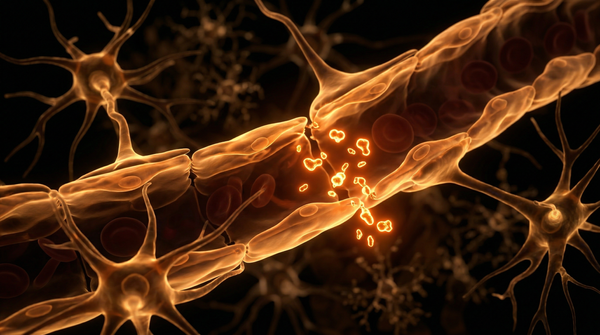
The BBB is composed of highly specialized endothelial cells connected by tight junctions, reinforced by astrocytes and pericytes. This structure ensures that only essential nutrients cross into the brain. Lead, however, exploits the body's own biological signaling pathways to gain entry.
Mechanisms of Infiltration: Molecular Mimicry
The primary mechanism of lead entry is molecular mimicry. Lead is a divalent cation, chemically resembling calcium (Ca2+). The transport proteins tasked with moving calcium across the BBB—specifically the voltage-gated calcium channels—cannot distinguish between the essential nutrient and the toxic metal. By masquerading as calcium, lead effectively 'tricks' the barrier, gaining entry into the brain's microvascular endothelium and eventually the parenchyma.
From Blood to Neuron
Once lead reaches the CNS, it does not remain inert. It disrupts the homeostasis of intracellular calcium, leading to excitotoxicity. Lead accumulates in the mitochondria and causes oxidative stress, which triggers apoptosis (programmed cell death) in neurons. Furthermore, it interferes with synaptic plasticity, particularly in the hippocampus, which explains the profound cognitive deficits associated with childhood exposure.
Long-term Neurobiological Impact
Lead-induced damage is often permanent because of the brain's limited regenerative capacity. Chronic exposure is linked to decreased neurogenesis, altered synaptic pruning, and structural changes that correlate with cognitive decline, behavioral issues, and neurodegenerative disorders. Addressing lead toxicity requires a root-cause approach, focusing on environmental abatement and chelation support to mitigate further systemic exposure.
Conclusion
The vulnerability of the CNS to lead is not an accident of nature but a consequence of lead's uncanny ability to hijack the pathways of life-sustaining ions. Protecting the brain requires a deep understanding of these transport mechanisms and a proactive stance on environmental health.
This article is provided for informational and educational purposes only. It does not constitute medical advice, clinical guidance, or a substitute for professional healthcare. Information reflects cited research at time of publication. Always consult a qualified healthcare professional before acting on any health information.
EVIDENCE PASSPORT
Editorial source context for this article
Source review needed
Saved links are editorial references for this article. They may support specific claims rather than every sentence. Open and assess each source in context. This passport does not independently verify them.
Editorial context
A complete editorial reading has not been recorded for this article, and no source links are saved on its record.
Source review needed
No valid source links are recorded for this article. Supplementary research, where available, is listed separately below.
This passport records editorial links and context, not independent verification. Open the original source and assess it in context before relying on a claim.
Medical Disclaimer
The information in this article is for educational purposes only and does not constitute medical advice, diagnosis, or treatment. Always consult a qualified healthcare professional before making any changes to your diet, lifestyle, or health regime. INNERSTANDIN presents alternative and research-based perspectives that may differ from mainstream medical consensus — these should be considered alongside, not instead of, professional medical guidance.
Read Full DisclaimerContinue the thread
Keep this question moving.
Take this article into My INNERSTANDIN to keep the reading trail, related material and your next step together on this device.
Explore this in the Body Map
Explore related body structures and their educational pages in the interactive Body Map.
Dig deeper in the Library
Free, longform PDF volumes that go beyond headlines into mechanisms and references.
RABBIT HOLE
Follow the biological thread deeper