
The Blue Light Contagion: Counteracting Digital Toxicity with Near-Infrared Photons
Updated May 2026
Britain’s dependency on LED lighting and digital screens induces oxidative stress through chronic high-energy visible light exposure. We expose the biological necessity of red and near-infrared light as the essential systemic antidote to modern digital environments.
Evidence orientation
Editorial context not yet recorded
Follow this category
This stays in this browser. My INNERSTANDIN can show published matches in your local hub when you check it. It does not send email, push, or alert notifications.
Local learning review
A private browser aid for revisiting ideas. It is not an alert or a health recommendation.
Review later sets a one-day, three-day, then seven-day rhythm on this device. Choose it only when you want to revisit this article.
Overview
In the evolutionary blink of an eye, the human species has transitioned from a life governed by the rhythmic, full-spectrum radiance of the sun to a frantic, indoor existence dominated by monochromatic, high-energy visible (HEV) light. This transition represents perhaps the most profound unintended biological experiment in history. We are currently witnessing what can only be described as a Blue Light Contagion—a systemic, light-induced metabolic crisis that permeates every level of our physiology, from the rhythm of our sleep to the integrity of our mitochondrial DNA.
For millennia, the presence of blue light in the natural environment was always accompanied by a massive, countervailing dose of Near-Infrared (NIR) radiation. Sunlight is inherently balanced; for every photon of stimulating blue, there are multiple photons of regenerative red and infrared. However, our modern digital landscape—composed of Light Emitting Diodes (LEDs), Liquid Crystal Displays (LCDs), and fluorescent tubes—has surgically removed the restorative part of the spectrum. We are now exposed to a "naked" blue light that is biologically aggressive and fundamentally toxic when divorced from its infrared counterpart.
This article exposes the biological bankruptcy of modern lighting and argues that the only viable solution to this digital toxicity is the deliberate, therapeutic reintroduction of Near-Infrared Photons. We are not merely dealing with "digital eye strain"; we are dealing with a systemic disruption of the human bio-electric field. To understand the cure, we must first understand the depth of the contagion.
"The removal of the infrared spectrum from our primary light sources is arguably the greatest public health oversight of the 21st century, leading to a state of chronic intracellular oxidative stress."
The Biology — How It Works
To understand why blue light is so disruptive, we must first view the human body not as a mechanical object, but as a photo-biological resonator. Our cells are designed to capture, process, and emit light. The primary interface for this interaction is the retina, but we now know that light penetrates far deeper than the eye, reaching into the subcutaneous tissues and even the brain.
The Melanopsin System
The eye contains specialized cells called Intrinsically Photosensitive Retinal Ganglion Cells (ipRGCs). These cells contain melanopsin, a photopigment specifically sensitive to blue light (roughly 450–480nm). When blue light hits these cells, it sends a signal to the Suprachiasmatic Nucleus (SCN), the body’s master clock. This signal tells the brain it is midday, suppressing the production of melatonin and stimulating the release of cortisol.
In a natural setting, this is beneficial. However, in the modern UK environment, where screen time averages over six hours per day, this system is permanently "on." The result is a state of perpetual physiological noon, even at midnight.
The Chromophore Response
Beyond the eye, our cells contain chromophores—molecules that absorb specific wavelengths of light. The most critical chromophore in this context is Cytochrome c Oxidase (CCO), found within the mitochondria.
- Blue Light (400-495nm) acts as a stressor, potentially increasing the production of reactive oxygen species (ROS) when not balanced.
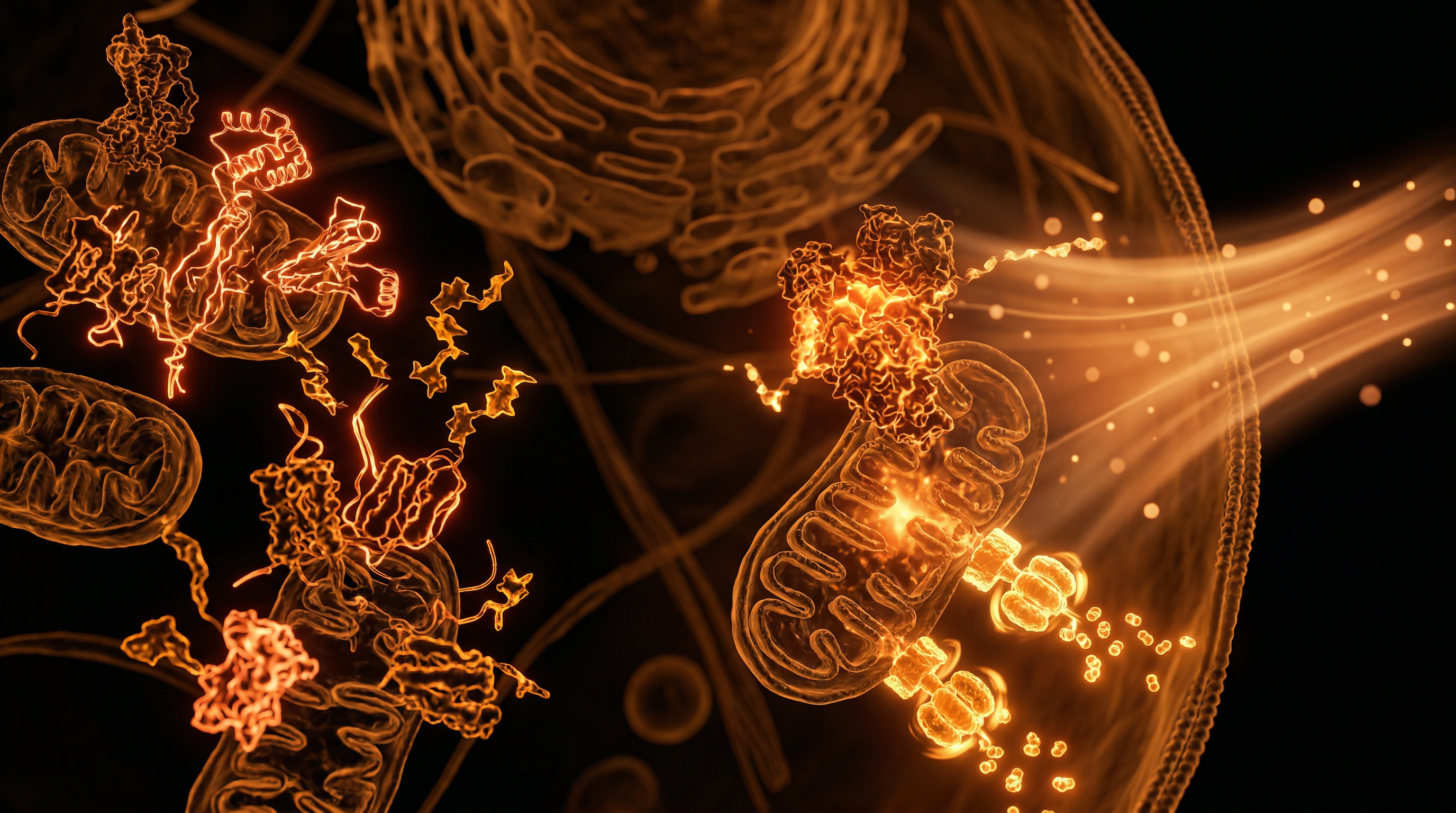
- Red/Near-Infrared Light (600-1200nm) is absorbed by CCO, triggering a cascade of beneficial cellular events, including increased ATP production and the modulation of oxidative stress.
The Mitochondrial Melatonin Paradox
A ground-breaking realization in modern photobiology is that 95% of the body’s melatonin is produced inside the mitochondria, not the pineal gland. This "extrapineal" melatonin acts as a local antioxidant, mopping up the damage caused by energy production. Crucially, the production of mitochondrial melatonin is stimulated by Near-Infrared light. By removing NIR from our environments and saturating ourselves in blue light, we simultaneously increase mitochondrial damage while stripping away the very light that triggers the internal repair mechanism.
Mechanisms at the Cellular Level
The "contagion" operates through a series of precise biochemical disruptions. When we strip away the red and infrared frequencies, we force the cell into a state of metabolic dissonance.
1. Cytochrome c Oxidase and ATP Production
The primary engine of the cell is the Electron Transport Chain (ETC). At Complex IV, Cytochrome c Oxidase uses oxygen to facilitate the production of Adenosine Triphosphate (ATP), the energy currency of life.
- Blue light can inhibit this process by promoting the dissociation of Nitric Oxide (NO) in a way that creates excessive free radicals.
- Near-Infrared light (specifically between 800nm and 880nm) facilitates the displacement of NO from CCO, allowing oxygen to bind more efficiently. This increases the mitochondrial membrane potential and boosts ATP synthesis.
2. Structured Water (The Exclusion Zone)
Recent research by Dr Gerald Pollack suggests that NIR light influences the structure of water within the cell. Cells are 70% water by volume, but this is not "bulk water." It is structured water or Exclusion Zone (EZ) water, which has a gel-like consistency and carries a negative charge.
- NIR light acts as a battery charger for this EZ water.
- By increasing the EZ layer around proteins and membranes, NIR reduces the viscosity of the cytoplasm, allowing molecular "nanomotors" (like ATP synthase) to spin with less resistance. Blue light does not provide this structural support, leading to "sluggish" cellular machinery.
3. Retrograde Signaling and Gene Expression
The impact of light is not limited to immediate energy production. Photobiomodulation (PBM) triggers retrograde signaling, where the mitochondria communicate with the cell nucleus.
- Exposure to NIR activates transcription factors such as NF-kB and Nrf2.
- This leads to the expression of hundreds of "protective" genes involved in antioxidant defence, anti-inflammatory responses, and cell survival.
- Chronic blue light exposure, conversely, often triggers pro-inflammatory pathways, leading to inflammaging—a state of chronic, low-grade inflammation that accelerates cellular senescence.
Key Fact: Near-infrared light can penetrate up to 5-10 centimetres into human tissue, reaching the muscles, bones, and even the brain, whereas blue light is largely absorbed by the most superficial layers of the skin and the cornea.
Environmental Threats and Biological Disruptors
The modern environment is a minefield of "biological noise." We are the first generation to live in a world where the spectrum of light is dictated by energy efficiency rather than biological compatibility.
The LED Revolution: A Pyrrhic Victory
The transition from incandescent bulbs to LEDs was hailed as a win for the environment. However, it has been a disaster for human biology.
- Incandescent bulbs (now largely banned in the UK) produced a spectrum that was 90% infrared. They were essentially small heaters that happened to emit light, mimicking the sunset.
- LEDs create white light by using a blue-light pump coated with a phosphor. This creates a massive spike in the 450nm range with a total "black hole" in the red and infrared regions.
Digital Screens: The 450nm Spike
Every smartphone, tablet, and monitor relies on this blue-spike technology. Because we hold these devices close to our faces, the lux levels reaching the retina are significantly higher than anything our ancestors would have experienced after dusk. This creates a state of phototoxicity in the retinal pigment epithelium.
The Flicker Effect
Beyond the spectrum, many cheap LEDs and screens utilize Pulse Width Modulation (PWM) to control brightness. They flicker at frequencies invisible to the naked eye but detectable by the brain. This "invisible flicker" contributes to:
- Persistent headaches and migraines.
- Autonomic nervous system dysregulation (shifting the body into a "fight or flight" sympathetic state).
- Increased cognitive load and mental fatigue.
Smart Cities and Street Lighting
The UK’s "Green" initiatives have seen thousands of warm-coloured sodium streetlights replaced with high-intensity "Cool White" LEDs. These lights bleed through bedroom curtains, disrupting the melatonin cycles of entire neighbourhoods and impacting local biodiversity, particularly nocturnal insects and birds.
The Cascade: From Exposure to Disease
The damage caused by the Blue Light Contagion is not localized; it is a systemic cascade that affects every major organ system.
Retinal Degeneration
The most immediate victim is the eye. High-energy blue light induces the production of all-trans-retinal, which is toxic to the photoreceptors. This is a primary driver in the rising rates of Age-Related Macular Degeneration (AMD). Without NIR to stimulate the repair of the retinal mitochondria, the damage becomes permanent.
Circadian Disruption and Metabolic Syndrome
By suppressing pineal melatonin, blue light at night prevents the body from entering the "repair and bypass" phase of the metabolic cycle.
- Insulin Resistance: Studies have shown that even a single night of blue light exposure can increase insulin resistance.
- Obesity: Circadian disruption alters leptin and ghrelin (hunger hormones), leading to overeating and weight gain.
- Diabetes: There is a direct statistical correlation between light pollution and the prevalence of Type 2 diabetes.
Neurodegeneration and Mental Health
The brain is the most energy-hungry organ in the body, making it hypersensitive to mitochondrial dysfunction.
- Dopamine Depletion: Over-stimulation by HEV light can lead to a depletion of dopamine receptors, contributing to ADHD-like symptoms and "digital brain fog."
- Amyloid-Beta Accumulation: Melatonin is essential for the "glymphatic" drainage of the brain. When blue light suppresses melatonin, the brain cannot clear out the metabolic waste associated with Alzheimer’s and Parkinson’s.
- Depression: The disruption of the SCN leads to "circadian misalignment," a hallmark of clinical depression and bipolar disorder.
Statistic: Research indicates that exposure to blue-enriched light in the evening can delay the onset of sleep by up to 90 minutes and reduce the quality of REM sleep by as much as 50%.
What the Mainstream Narrative Omits
The public is often told that "blue light is fine" because the sun also contains blue light. This is a dangerous half-truth. The mainstream narrative conveniently omits three critical factors:
1. The Context of Power Density
The sun is incredibly bright, but its blue light is balanced by a massive amount of infrared. Furthermore, we do not stare directly at the sun. Digital screens, however, are a direct-view light source. The spectral power distribution (SPD) of a screen is fundamentally different from the diffuse, reflected light of the natural world.
2. The Absence of the "Repair" Frequency
Mainstream optics focuses solely on the "visual" system. They ignore the non-visual system. Because NIR light is invisible to the eye, it is deemed "waste heat" by lighting engineers. In biology, however, there is no such thing as waste. Our skin and eyes evolved to expect NIR whenever blue light is present. Operating a screen without NIR is like driving a car with an accelerator (blue) but no cooling system (NIR).
3. The Economic Incentive for "Efficiency"
There is a massive economic push for LED adoption. Admitting that these lights are biologically disruptive would require a multi-billion pound overhaul of the global lighting infrastructure. It is far more profitable for industry to sell "Blue Light Blocking Glasses" as a band-aid than to address the fundamental toxicity of the light source itself.
4. The Mitochondrial Link to Cancer
While the mainstream focuses on "eye strain," researchers like Dr. Thomas Seyfried and others have highlighted that cancer is essentially a mitochondrial metabolic disease. If chronic blue light exposure leads to mitochondrial decay and oxidative stress, it is a logical—though suppressed—conclusion that our light environment is a significant environmental carcinogen.
The UK Context
The United Kingdom faces a unique set of challenges regarding the Blue Light Contagion.
The Latitude Problem
At a latitude of roughly 51°N to 58°N, the UK experiences significant periods of low solar intensity. During the winter months, the "solar window" is narrow. This makes the British population heavily dependent on artificial lighting for up to 16 hours a day. When that artificial light is exclusively LED, the "NIR deficit" becomes a chronic state of biological starvation.
The "Ecodesign" Regulations
The UK government, following EU-led initiatives, has aggressively phased out incandescent and halogen bulbs under the Ecodesign for Energy-Using Products regulations. While well-intentioned for the grid, these regulations have effectively banned the only biologically supportive artificial light sources from British homes, forcing citizens into a monochromatic LED environment.
The NHS Crisis and "Lifestyle Diseases"
The NHS is currently buckling under the weight of chronic conditions—Type 2 diabetes, depression, and neurodegeneration—all of which are exacerbated by circadian disruption. There is a profound irony in a hospital system that uses high-intensity blue-white fluorescent lighting 24/7, thereby delaying the recovery of the very patients it seeks to heal.
Modern British Architecture
The trend toward "glass-box" offices and apartments may seem light-rich, but modern Low-E (Low Emissivity) glass is specifically designed to filter out the infrared spectrum to prevent "overheating." This means that even when sitting by a window in London or Manchester, you are receiving the blue light while the restorative NIR is being bounced back outside by the window's coating.
Protective Measures and Recovery Protocols
We cannot escape the digital world, but we can mitigate its toxicity. As "senior researchers" in this field, we recommend a multi-layered approach to photo-hygiene.
1. Near-Infrared Supplementation (Photobiomodulation)
If you are exposed to 8 hours of blue light, you must "supplement" with red and near-infrared light.
- Use a high-quality Red Light Therapy (RLT) device that emits wavelengths in the 660nm (red) and 850nm (near-infrared) range.
- Protocol: 10-20 minutes of exposure to the face and torso in the morning to "prime" the mitochondria, and again in the early evening to stimulate repair.
2. The "Sunrise" Anchor
The most important light of the day is the first light.
- View the sunrise or the early morning sky (without sunglasses) for at least 10 minutes.
- Morning sunlight has a high ratio of NIR to blue light, which resets the SCN and prepares the retina for the blue light stress of the day.
3. Spectral Modification of the Home
- Replace "Cool White" LEDs (5000K+) with "Warm" or "Extra Warm" LEDs (2200K-2700K).
- Reintroduce Incandescent bulbs where possible (often sold as "Rough Service" or "Heat Lamps" in the UK).
- Use salt lamps or candlelight in the evening; these emit zero blue light and are rich in the red spectrum.
4. Digital Hygiene
- Software: Use programmes like Iris or f.lux on all computers to shift the colour temperature toward red.
- Hardware: Apply physical blue-light filtering films to tablets and phones.
- Glasses: Wear high-quality "Blue Blockers" (amber or red lenses) at least two hours before bed to protect the pineal gland.
5. Dietary Support for the Photo-System
- DHA (Omega-3): Found in oily fish. DHA is a "semi-conductor" in the cell membrane that helps convert light into electrical signals. A DHA-deficient brain is more susceptible to blue light damage.
- Lutein and Zeaxanthin: Found in leafy greens and egg yolks. These carotenoids deposit in the macula and act as internal blue-light filters.
- Astaxanthin: A potent antioxidant that helps protect the skin and eyes from HEV-induced oxidative stress.
6. Grounding (Earthing)
- Chronic blue light exposure increases the body’s positive charge (oxidative stress). Grounding—walking barefoot on the earth—allows the body to absorb negative electrons, which helps neutralize the free radicals generated by mitochondrial dysfunction.
Summary: Key Takeaways
- The Missing Half: Natural sunlight is always a balance of Blue and Near-Infrared. Modern technology has stripped away the NIR, leaving us with a "toxic" monochromatic blue stimulus.
- Mitochondrial Health: NIR light is the primary fuel for mitochondrial repair and the trigger for the production of 95% of our body's melatonin.
- The Contagion Effects: Lack of NIR leads to systemic oxidative stress, which manifests as macular degeneration, obesity, diabetes, and neurodegenerative diseases.
- The Energy Efficiency Fallacy: The UK's push for LED lighting is a biological disaster masquerading as an environmental victory.
- The Solution: We must adopt "Photo-Hygiene"—using RLT devices to supplement NIR, viewing morning sunlight, and strictly limiting blue light exposure after sunset.
The Blue Light Contagion is a silent epidemic, but it is one we have the power to halt. By understanding the profound biological necessity of the infrared spectrum, we can reclaim our health from the digital abyss and realign our biology with the ancestral rhythms of the sun. The future of medicine is not just chemical; it is photonic.
Final Callout: To ignore the light environment is to ignore the foundation of cellular life. We are beings of light; it is time we started acting like it.
This article is provided for informational and educational purposes only. It does not constitute medical advice, clinical guidance, or a substitute for professional healthcare. Information reflects cited research at time of publication. Always consult a qualified healthcare professional before acting on any health information.
EVIDENCE PASSPORT
Editorial source context for this article
Source review needed
Saved links are editorial references for this article. They may support specific claims rather than every sentence. Open and assess each source in context. This passport does not independently verify them.
Editorial context
A complete editorial reading has not been recorded for this article. Source links remain available for you to open and assess directly.
Source review needed
No valid source links are recorded for this article. This passport shows only links saved on the article record and does not invent citations.
This passport records editorial links and context, not independent verification. Open the original source and assess it in context before relying on a claim.
Medical Disclaimer
The information in this article is for educational purposes only and does not constitute medical advice, diagnosis, or treatment. Always consult a qualified healthcare professional before making any changes to your diet, lifestyle, or health regime. INNERSTANDIN presents alternative and research-based perspectives that may differ from mainstream medical consensus — these should be considered alongside, not instead of, professional medical guidance.
Read Full DisclaimerContinue the thread
Keep this question moving.
Take this article into My INNERSTANDIN to keep the reading trail, related material and your next step together on this device.