
The Copper Burden: Bioaccumulation in UK Organic Viticulture
Updated May 2026
While organic, the heavy use of copper-based fungicides in UK vineyards can lead to excessive soil accumulation. High copper intake from resulting produce is associated with hepatic and neurological toxicity.
Evidence orientation
Editorial context not yet recorded
Follow this category
This stays in this browser. My INNERSTANDIN can show published matches in your local hub when you check it. It does not send email, push, or alert notifications.
Local learning review
A private browser aid for revisiting ideas. It is not an alert or a health recommendation.
Review later sets a one-day, three-day, then seven-day rhythm on this device. Choose it only when you want to revisit this article.
Overview
The rolling hills of the English countryside, particularly across the South East and East Anglia, are increasingly defined by the symmetrical rows of the "Great British Viticulture" boom. As climate change shifts the viticultural belt northward, the UK has seen a 400% increase in land under vine over the last two decades. Central to this expansion is the allure of organic viticulture—a method marketed as the pinnacle of ecological harmony and consumer safety. However, beneath the prestige of the "organic" label lies a burgeoning environmental and public health crisis that is systematically ignored by regulatory bodies and marketing boards: the chronic bioaccumulation of anthropogenic copper.
In organic farming, synthetic systemic fungicides are strictly prohibited. To combat the relentless pressure of Plasmopara viticola (downy mildew) and Uncinula necator (powdery mildew)—both of which thrive in the damp, temperate British climate—organic growers rely heavily on "natural" mineral applications. The primary weapon is Bordeaux mixture (copper sulphate and lime) or copper hydroxide. Unlike synthetic pesticides that may degrade over weeks or months, copper is an elemental heavy metal. It does not break down. It persists in the soil indefinitely, building up layer by layer with every passing season.
The narrative of "clean" organic wine is complicated by the reality that these vineyards often require higher frequencies of spraying compared to conventional counterparts. This article delves into the "Copper Burden," exploring how this essential micronutrient, when applied in excess as a fungicide, transforms into a potent environmental toxin and a significant biological threat to the UK consumer. We will expose the cellular mechanisms of copper toxicity, the failure of current UK regulatory frameworks to account for soil saturation, and the long-term neurological and hepatic consequences of chronic exposure to copper-laden produce.
Fact: Some organic vineyards in the UK apply up to 4kg of pure copper per hectare annually, leading to soil concentrations that exceed the limits of biological safety within a single decade of operation.
The Biology — How It Works
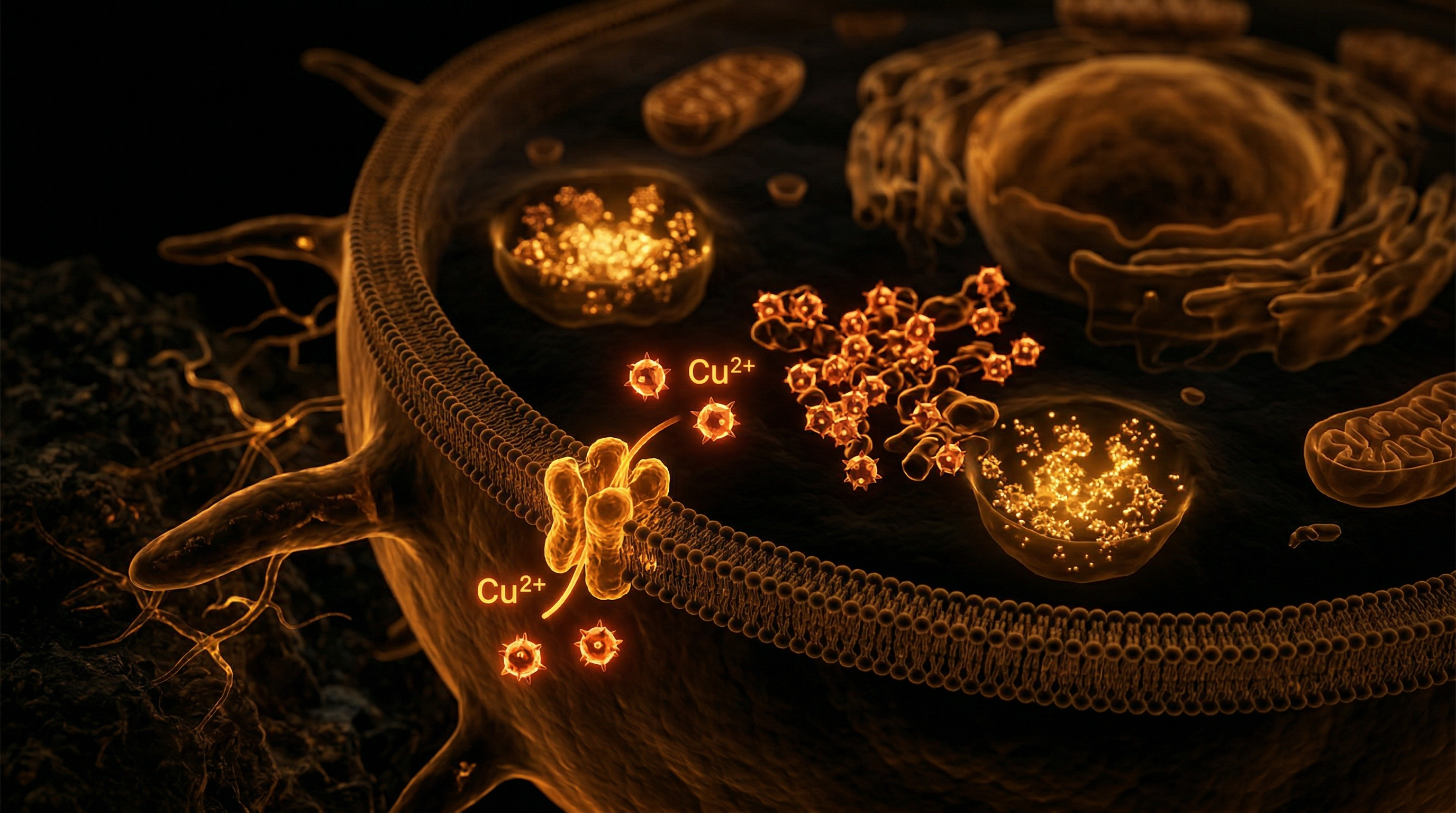
To understand the copper burden, one must first understand the delicate balance of copper homeostasis within biological systems. Copper (Cu) is a transition metal that exists primarily in two redox states: Cu+ (cuprous) and Cu2+ (cupric). This ability to easily gain or lose an electron makes it a vital cofactor for several essential enzymes, known as cuproenzymes.
The Essential Function
In a healthy state, copper is necessary for:
- Cytochrome c oxidase: The terminal enzyme in the mitochondrial electron transport chain, essential for ATP (energy) production.
- Superoxide dismutase (SOD1): A critical antioxidant enzyme that protects cells from oxidative damage.
- Tyrosinase: Responsible for the production of melanin.
- Ceruloplasmin: The primary copper-carrying protein in the blood, which also plays a role in iron metabolism.
The Homeostatic Window
The biological window for copper is remarkably narrow. Unlike many nutrients where the body can tolerate a wide range of intakes, copper is highly reactive. The human body has evolved complex chaperone systems—such as metallothioneins and the ATP7A/B transporters—to ensure that "free" copper ions never roam solo within the cellular environment. Free copper is a "rogue" element; it is a potent pro-oxidant.
The Organic Paradox
In organic viticulture, copper is used as a contact fungicide. It is sprayed onto the leaves and fruit, where it remains on the surface to inhibit fungal spore germination. While a portion is washed away by the UK’s frequent rains into the soil, residues remain on the grape skins at harvest. Because organic wine production often involves "natural" fermentation processes, including skin-contact (maceration) which is popular in the "orange wine" movement, the extraction of these surface metals into the final product is significantly higher than in conventional wines that undergo rigorous fining and filtration.
Soil Bioavailability
The biology of the soil itself is the first victim. In the UK’s often acidic soils, copper becomes highly bioavailable. As soil pH drops, the binding affinity of organic matter for copper decreases, allowing the metal to enter the soil solution where it is absorbed by the vine's root system or leaches into groundwater. This creates a feedback loop where the plant itself becomes internally loaded with copper, a process known as systemic bioaccumulation, which cannot be simply "washed off" the fruit.
Mechanisms at the Cellular Level
When copper levels exceed the capacity of cellular chaperones, a cascade of "oxidative stress" begins. This is not merely a buzzword; it is a measurable chemical assault on the integrity of the cell.
The Fenton-like Reaction
The most devastating mechanism of copper toxicity is its participation in Fenton-like reactions. Free cuprous ions (Cu+) react with hydrogen peroxide (H2O2) to produce the hydroxyl radical (•OH)—the most reactive and damaging oxygen species known to biology.
- Reaction: Cu+ + H2O2 → Cu2+ + •OH + OH−
The hydroxyl radical has no specific scavenger; it reacts instantly with whatever is in its vicinity, including DNA, proteins, and lipid membranes.
Mitochondrial Dysfunction and Mitophagy
Copper has a specific affinity for the inner mitochondrial membrane. Excessive copper disrupts the membrane potential, essentially "short-circuiting" the cell’s power plant. This leads to a decrease in ATP production and the triggering of mitophagy (the self-destruction of mitochondria). In viticultural workers and high-frequency consumers, this manifests as chronic fatigue and metabolic slowing, as the body’s ability to generate energy is physically inhibited by the metal burden.
Lipid Peroxidation
The cell membrane is composed of polyunsaturated fatty acids (PUFAs). Hydroxyl radicals generated by copper initiate a chain reaction known as lipid peroxidation. This turns the fluid, protective membrane into a brittle, leaky barrier. In the context of the liver—the primary organ for copper processing—this leads to the death of hepatocytes and the eventual formation of fibrotic (scar) tissue.
Protein Misfolding and Thiol Depletion
Copper has a high affinity for thiol groups (sulphur-containing compounds like glutathione). Glutathione is the body's master antioxidant. By binding to glutathione, copper "disarms" the cell's primary defence system. Furthermore, by binding to the sulphur bonds in proteins, copper causes them to misfold, a process directly implicated in the formation of amyloid plaques and tau tangles seen in neurodegenerative diseases.
Statistic: Research indicates that free (non-ceruloplasmin) copper levels in the blood are 3 to 4 times more likely to be elevated in patients suffering from rapid-onset cognitive decline compared to healthy controls.
Environmental Threats and Biological Disruptors
The "organic" label suggests an ecosystem in balance, yet the heavy use of copper in UK vineyards creates a biological "scorched earth" scenario beneath the surface.
The Death of the Pedosphere
The soil (pedosphere) is a living organism. Copper is a broad-spectrum biocide. It does not distinguish between the downy mildew on the leaf and the beneficial mycorrhizal fungi in the soil. These fungi form symbiotic relationships with plants, helping them absorb nutrients. High copper concentrations in UK vineyard soils inhibit these fungi, forcing the vines to become dependent on external fertilisers—a direct contradiction of organic principles.
Earthworm Toxicity
Earthworms (Lumbricus terrestris) are the engineers of soil health. Studies in European vineyards have shown that chronic copper accumulation leads to:
- Reduced reproductive rates: Copper interferes with the earthworm’s endocrine system.
- Avoidance behaviour: Worms will physically migrate away from copper-rich zones, leading to soil compaction and poor aeration.
- Bioaccumulation: Earthworms serve as the base of the food chain. Birds and small mammals that consume these "copper-loaded" worms experience secondary poisoning.
Aquatic Runoff
The UK’s topography, particularly in the hilly regions of Kent and Sussex, makes vineyards prone to runoff. Copper sulphate is highly toxic to fish and aquatic invertebrates. It disrupts the osmoregulation (salt/water balance) in fish gills, leading to mass mortality events in streams adjacent to organic farms during heavy British downpours.
Microbial Resistance
There is an emerging and terrifying link between heavy metal soil contamination and antibiotic resistance. Bacteria in copper-heavy soils often develop "efflux pumps"—mechanisms to pump out toxic copper ions. These same pumps are often effective at pumping out antibiotics. By saturating our soils with copper, we are inadvertently breeding "superbugs" in the very ground we grow our food in.
The Cascade: From Exposure to Disease
The human body is not a closed system. The copper applied to a vineyard in Hampshire eventually finds its way into the human "copper pool" through the consumption of wine, grapes, and even the local water table.
Hepatic Overload
The liver is the central clearinghouse for copper. It incorporates copper into ceruloplasmin for safe transport. However, when the liver is overwhelmed—either by a high dietary load or by "leaky gut" issues that increase absorption—it begins to store the excess. This is Chronic Copper Toxicity (CCT). Unlike Wilson's Disease (a rare genetic disorder), CCT is an acquired environmental condition. It leads to:
- Non-alcoholic fatty liver disease (NAFLD).
- Elevated liver enzymes (ALT/AST) without apparent cause.
- Cirrhosis in extreme, long-term cases.
The Neurological Connection: The "Copper-Zinc" See-saw
Copper and zinc are antagonistic. They compete for the same absorption sites in the gut and the same binding sites in the brain. High copper intake inevitably leads to zinc deficiency. Zinc is required for over 300 enzymatic reactions, including those responsible for DNA repair and immune function. In the brain, a high copper-to-zinc ratio is a hallmark of:
- Anxiety and Panic Disorders: Copper stimulates the production of norepinephrine (adrenaline).
- Depression: By depleting dopamine.
- Alzheimer’s Disease: Free copper promotes the aggregation of beta-amyloid into the brain’s vascular system, leading to "Type 3 Diabetes" or brain insulin resistance.
Gut Microbiome Alteration
Recent research suggests that copper residues in wine act as a "micro-antibiotic" in the human gut. Chronic ingestion of low-level copper fungicides can shift the balance of the microbiome, favouring pathogenic species like Clostridioides difficile over beneficial Bifidobacteria. This disruption of the "gut-brain axis" further exacerbates the neurological symptoms mentioned above.
Callout: In a study of UK commercial organic wines, copper levels were found to be up to 10 times higher than those found in "natural" wines grown without any mineral interventions, highlighting the disparity between marketing and chemical reality.
What the Mainstream Narrative Omits
The mainstream "green" narrative carefully curates the image of organic viticulture, but several inconvenient truths are systematically suppressed by industry stakeholders and UK regulatory bodies like the Soil Association.
The "Natural" Fallacy
The primary deception is the "natural" fallacy: the idea that because copper is a mineral found in the earth, it is inherently safer than a lab-synthesised molecule. This ignores the concept of concentration. While copper exists in nature, it does not exist in nature at concentrations of 400mg/kg in topsoil, which is what is being found in some long-established UK organic vineyards.
The Failure of the 28-Day Rule
UK regulations often focus on the "Pre-Harvest Interval" (PHI)—the time between the last spray and harvest. While the PHI for copper is often 14 to 28 days, this only accounts for acute residues on the surface. It does not account for the systemic loading of the plant or the fact that copper does not degrade. The industry ignores the "legacy effect" of copper in the soil, which continues to load the fruit with metal even in years when spraying is reduced.
Synergistic Toxicity
Most safety studies look at copper in isolation. What they omit is the synergistic effect of copper when combined with other "organic-approved" inputs like sulphur or "soft" pesticides like spinosad. Copper has been shown to increase the permeability of cell membranes, making other toxins significantly more lethal to both the environment and the consumer.
The Economic Incentive
Why is copper still used? Because it is cheap, effective, and "grandfathered" into organic legislation. For the UK wine industry—which is currently attracting billions in investment—admitting that their "organic" flagship products are building up heavy metals in the soil would be an economic catastrophe. There is a massive vested interest in maintaining the status quo and suppressing research into soil copper saturation.
The UK Context
The UK presents a unique set of challenges that make the copper burden more severe than in traditional wine regions like Southern France or Spain.
The "Dampness" Factor
In the Mediterranean, dry summers naturally limit fungal growth. In the UK, the "maritime climate" means high humidity and frequent summer rain. This creates a "fungal pressure" that is often 3-5 times higher than in Southern Europe. Consequently, UK organic growers must spray more frequently. Where a French grower might spray 4 times a season, a grower in Kent might spray 12 times. This accelerates the bioaccumulation curve.
Soil Specifics: The Chalk and the Clay
The UK’s premier wine regions are often located on the North and South Downs (chalk) or the Weald (clay).
- Chalk soils: High pH can somewhat "lock up" copper, but the high calcium content interferes with the vine's ability to manage other minerals, creating a "mineral stress" that makes the vine more susceptible to copper-induced chlorosis.
- Clay soils: Clay has a high cation exchange capacity, meaning it holds onto copper extremely well. Over time, clay soils in the UK become a "toxic reservoir," slowly releasing copper into the vines for decades, even if spraying ceases.
Regulatory "Laxity" Post-Brexit
Post-Brexit, the UK has the authority to deviate from EU "Pesticide Approval" lists. While the EU has frequently discussed banning copper fungicides or severely limiting them (the current limit is 28kg per hectare over 7 years), the UK’s Health and Safety Executive (HSE) and DEFRA have been slow to implement similar "sunset" clauses, fearing it would cripple the nascent English wine industry. This has made the UK a "dumping ground" for older, higher-concentration copper formulations.
Protective Measures and Recovery Protocols
For those concerned about the copper burden—be they vineyard neighbours, workers, or consumers—there are scientific strategies to mitigate risk and facilitate biological recovery.
For the Consumer
- Seek "Zero-Input" Wines: Look for vineyards that use PIWI grapes (fungal-resistant varieties like Solaris or Seyval Blanc). These require little to no copper spraying.
- Fining and Filtration: Avoid "unfined and unfiltered" organic wines if you are sensitive to metals. The fining process (using bentonite or isinglass) removes a significant portion of suspended metals.
- The Zinc-Copper Balance: Supplementing with high-quality Zinc Picolinate (under medical supervision) can help displace excess copper from cellular receptors.
For the Body: Detoxification Pathways
- Metallothionein Induction: Consuming cruciferous vegetables (broccoli, kale) provides the sulphur necessary for the body to synthesise metallothioneins, the proteins that "cage" copper.
- Molybdenum: This trace mineral is a direct antagonist to copper. It is used clinically to treat copper overload by facilitating urinary excretion.
- Glutathione Support: Using precursors like N-Acetyl Cysteine (NAC) helps the liver replenish the antioxidant stores depleted by copper-induced oxidative stress.
For the Land: Phytoremediation
Vineyards suffering from soil saturation can employ phytoremediation. Plants like Brassica juncea (Indian mustard) or certain types of sunflowers are "hyperaccumulators." They can be grown between the rows to suck copper out of the soil. These plants are then harvested and removed from the site (they must be treated as hazardous waste), physically lowering the soil’s metal burden.
Testing and Monitoring
- HTMA (Hair Tissue Mineral Analysis): This is a superior method for detecting long-term copper bioaccumulation compared to blood tests, as copper is quickly moved from the blood into the tissues (liver, brain, hair).
- Soil Testing: Organic certification should require mandatory annual testing for extractable copper in the soil, with a hard ceiling that prevents further application once a certain threshold is reached.
Summary: Key Takeaways
The "Copper Burden" is an invisible tax paid by the environment and the human body for the aesthetic and commercial prestige of organic viticulture.
- Organic does not mean chemical-free: The heavy use of inorganic copper salts in organic farming leads to permanent heavy metal contamination of the soil.
- Bioaccumulation is inevitable: Copper does not biodegrade. In the wet UK climate, the frequency of application leads to rapid saturation of the "soil sink" and systemic uptake by the vine.
- Cellular damage is profound: Through Fenton-like reactions, excess copper generates hydroxyl radicals that destroy mitochondria, mutate DNA, and cause neuroinflammation.
- UK-specific risks: The British maritime climate necessitates higher copper loads, while regulatory bodies hesitate to restrict use for fear of economic fallout.
- Neurological links: Chronic copper exposure is a significant, yet under-reported, factor in the UK's rising rates of cognitive decline and anxiety disorders.
- Proactive recovery is possible: Through the use of PIWI grape varieties, soil phytoremediation, and nutritional antagonism (Zinc/Molybdenum), the copper burden can be managed and eventually reversed.
As we move toward a truly sustainable future for UK agriculture, we must look beyond the marketing labels. We must demand a viticulture that respects the elemental limits of our soil and our biology. The "copper burden" is a call to action for a new transparency in food production—one where the health of the consumer is not sacrificed at the altar of "natural" tradition.
This article is provided for informational and educational purposes only. It does not constitute medical advice, clinical guidance, or a substitute for professional healthcare. Information reflects cited research at time of publication. Always consult a qualified healthcare professional before acting on any health information.
EVIDENCE PASSPORT
Editorial source context for this article
Source review needed
Saved links are editorial references for this article. They may support specific claims rather than every sentence. Open and assess each source in context. This passport does not independently verify them.
Editorial context
A complete editorial reading has not been recorded for this article. Source links remain available for you to open and assess directly.
Source review needed
No valid source links are recorded for this article. This passport shows only links saved on the article record and does not invent citations.
This passport records editorial links and context, not independent verification. Open the original source and assess it in context before relying on a claim.
Medical Disclaimer
The information in this article is for educational purposes only and does not constitute medical advice, diagnosis, or treatment. Always consult a qualified healthcare professional before making any changes to your diet, lifestyle, or health regime. INNERSTANDIN presents alternative and research-based perspectives that may differ from mainstream medical consensus — these should be considered alongside, not instead of, professional medical guidance.
Read Full DisclaimerContinue the thread
Keep this question moving.
Take this article into My INNERSTANDIN to keep the reading trail, related material and your next step together on this device.
Dig deeper in the Library
Free, longform PDF volumes that go beyond headlines into mechanisms and references.