
The Fungal Mimic: Mould Toxicity vs Asthma
Updated May 2026
Standard NHS protocols frequently treat fungal-induced respiratory distress as chronic asthma, ignoring the biological impact of mycotoxins on pulmonary tissue. This article exposes the failure to address environmental mould as a primary driver of UK respiratory crises.
Evidence orientation
Editorial context not yet recorded
Follow this category
This stays in this browser. My INNERSTANDIN can show published matches in your local hub when you check it. It does not send email, push, or alert notifications.
Local learning review
A private browser aid for revisiting ideas. It is not an alert or a health recommendation.
Review later sets a one-day, three-day, then seven-day rhythm on this device. Choose it only when you want to revisit this article.
Overview
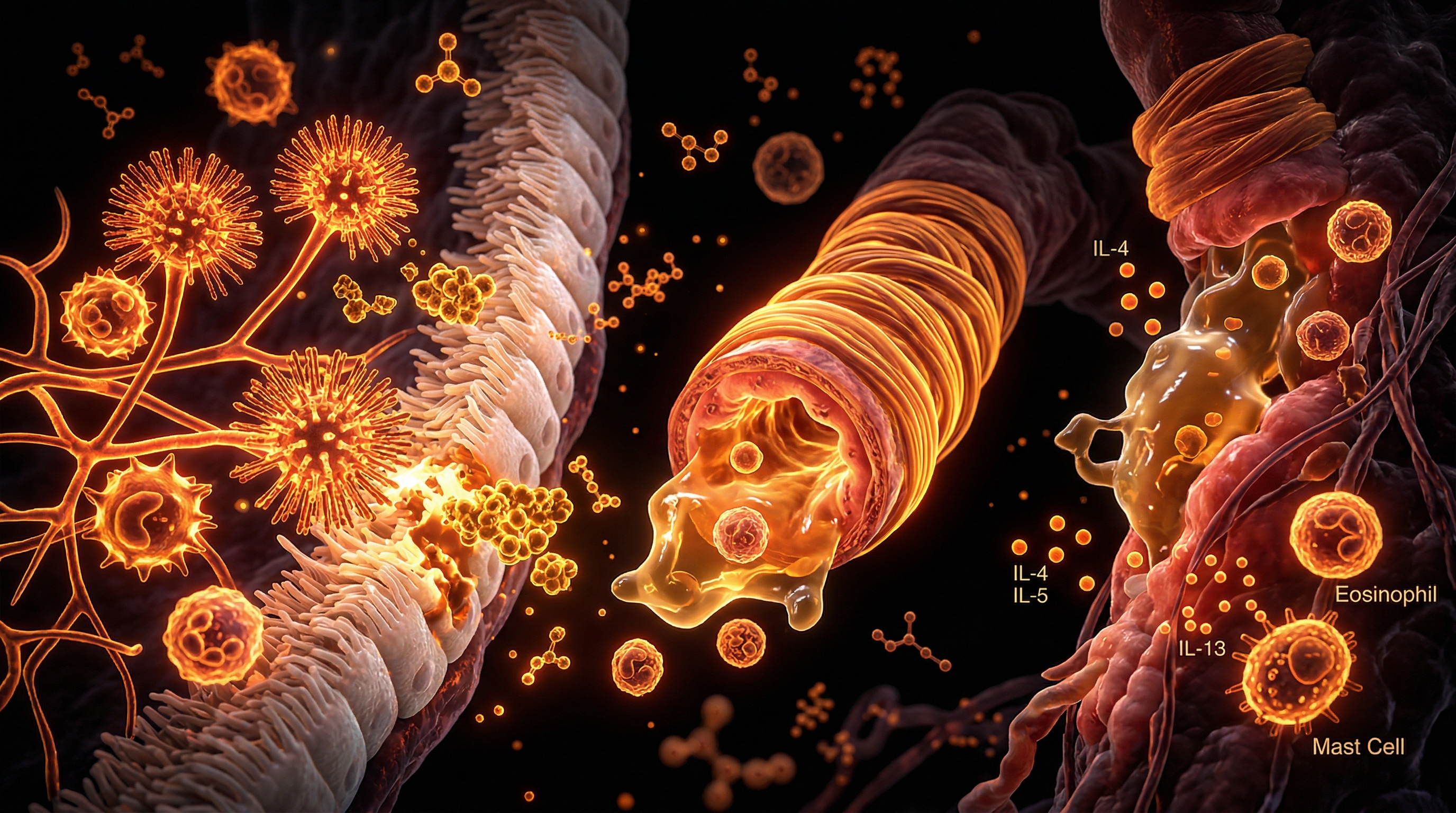
In the clinical corridors of the National Health Service (NHS), a silent epidemic is being mismanaged under the umbrella of "chronic asthma." For decades, the UK has reported some of the highest rates of respiratory distress in the developed world, with approximately 5.4 million people currently receiving treatment for asthma. However, a growing body of evidence from the frontiers of biological research suggests that a significant percentage of these cases are not "asthma" in the traditional, genetic, or allergic sense. Instead, they represent a complex physiological response to mycotoxins—toxic secondary metabolites produced by indoor moulds.
This phenomenon, which we term "The Fungal Mimic," occurs when the symptoms of mould-induced systemic inflammation and pulmonary irritation perfectly overlap with the diagnostic criteria for asthma: wheezing, shortness of breath, chest tightness, and coughing. Because the standard NHS protocol focuses almost exclusively on symptom suppression via corticosteroids and bronchodilators, the underlying environmental cause—the fungal colonisation of the domestic living space—remains unaddressed.
The implications are catastrophic. By treating a toxicological issue as a simple allergic one, the medical establishment traps patients in a cycle of temporary relief while their internal biology is systematically dismantled by fungal toxins. This article serves as a deep-dive into the biological mechanisms of mould toxicity, the failure of the UK’s diagnostic framework, and the urgent need to redefine our understanding of respiratory health in the context of our decaying housing stock.
Fact: According to data from the Office for National Statistics (ONS), approximately 3.8 million homes in the UK are classified as "non-decent" due to damp and mould, yet fewer than 5% of GPs are trained to recognise the symptoms of Mycotoxicosis.
The Biology — How It Works
To understand why mould toxicity is so frequently mistaken for asthma, we must first distinguish between the two biological pathways.
The Traditional Asthma Pathway
Classic asthma is typically a Type I Hypersensitivity reaction. It involves the activation of the IgE-mediated immune response. When an asthmatic person inhales a trigger (like pollen or pet dander), their mast cells degranulate, releasing histamine and leukotrienes. This causes immediate smooth muscle contraction in the bronchioles and mucus hypersecretion. It is an "overreaction" of a healthy immune system to a benign substance.
The Fungal Mimic Pathway
In contrast, mould toxicity is not merely an "allergy" (though fungal allergies do exist). It is a toxicological assault. When a person inhabits a damp building, they inhale not only fungal spores but also hyphal fragments and volatile organic compounds (VOCs). These elements carry mycotoxins—chemically stable, low-molecular-weight molecules that are designed by nature to kill competing organisms.
Unlike pollen, mycotoxins are lipophilic, meaning they easily pass through cell membranes and bypass the initial immune barriers. They do not just cause a "twitchy airway"; they cause:
- Direct Epithelial Damage: Mycotoxins like Satratoxin-H (from Stachybotrys) are cytotoxic, meaning they kill the cells lining the respiratory tract on contact.
- Systemic Inflammatory Response Syndrome (CIRS): This is a multisystem, multiprocessed syndrome resulting from a genetic predisposition (specifically the HLA-DR gene) that prevents the body from tagging and removing mycotoxins.
- Neuro-inflammation: Mycotoxins travel via the olfactory bulb directly into the brain, causing "brain fog," which is often misattributed to the "tiredness" of having asthma.
Key Fungal Players
The UK's damp climate and Victorian-era housing provide the perfect incubator for specific genera of fungi that are particularly adept at mimicking respiratory disease:
- Aspergillus: Often leads to Allergic Bronchopulmonary Aspergillosis (ABPA), a condition where the fungus actually begins to colonise the mucus within the lungs.
- Stachybotrys chartarum (Black Mould): Produces macrocyclic trichothecenes which are potent inhibitors of protein synthesis.
- Penicillium: Often overlooked, but its spores are small enough to reach the deepest alveoli of the lungs, triggering deep-seated inflammation that inhalers cannot reach.
Mechanisms at the Cellular Level
The "Asthma" label is a surface-level description of a symptom, but the biology of mould toxicity happens in the deep architecture of the cell. To understand the failure of the NHS protocol, we must look at how mycotoxins hijack cellular machinery.
Mitochondrial Arrest and Oxidative Stress
Mycotoxins are powerful mitochondrial poisons. Once inhaled and absorbed into the bloodstream, toxins such as Aflatoxin and Ochratoxin A disrupt the Electron Transport Chain (ETC). By interfering with the production of Adenosine Triphosphate (ATP), these toxins induce a state of "cellular hypoxia."
The patient feels this as profound fatigue and breathlessness. However, because the patient’s pulse oximetry (blood oxygen) often remains normal in the early stages, GPs dismiss the severity of the distress, often prescribing "anxiety" medication alongside an inhaler. In reality, the cells are literally starving for energy because the mitochondria are being inhibited by fungal metabolites.
The NLRP3 Inflammasome Activation
One of the most critical discoveries in environmental medicine is the role of the NLRP3 inflammasome. This is a protein complex within the immune system that acts as a "tripwire" for danger. Mycotoxins are one of the most potent activators of this tripwire.
When the NLRP3 inflammasome is activated in the lungs, it triggers the release of highly inflammatory cytokines, specifically Interleukin-1β (IL-1β) and Interleukin-18. This creates a state of chronic, low-grade "burning" inflammation in the lung tissue. Over years, this leads to remodelling of the airways—the tissue becomes scarred and thickened (fibrosis). Standard asthma inhalers (Beta-2 agonists) do nothing to stop this inflammasome activation; they merely dilate the airways while the underlying tissue continues to degrade.
Ribotoxic Stress Response
Macrocyclic trichothecenes, produced by the notorious Stachybotrys chartarum, trigger what is known as the Ribotoxic Stress Response (RSR). These toxins bind to the 60S ribosomal subunit in human cells, halting protein synthesis. This is a form of biological warfare occurring inside the lung's epithelial cells. When protein synthesis stops, the cell undergoes apoptosis (programmed cell death).
Scientific Callout: In a mould-toxic environment, the rate of cell death in the respiratory lining can exceed the rate of regeneration, leading to a "leaky lung" phenomenon. This allows even more toxins, bacteria, and pollutants to enter the bloodstream, creating a feedback loop of systemic illness.
Environmental Threats and Biological Disruptors
The UK's respiratory crisis is not happening in a vacuum. It is the result of a "perfect storm" of environmental factors that turn a simple mould problem into a biological catastrophe.
The Modern "Airtight" Home
In a misguided attempt to improve energy efficiency, UK building regulations have pushed for "airtight" homes. Without adequate mechanical ventilation, these buildings trap moisture generated by cooking, bathing, and even breathing. When this moisture hits cold external walls (often due to "thermal bridging" in poorly insulated 1970s builds), it creates interstitial condensation.
This is not just "surface mould." The mould grows inside the wall cavities, behind wallpaper, and under floorboards. This hidden fungal growth releases a constant stream of nanoparticles and microbial VOCs (mVOCs). These mVOCs, such as 1-octen-3-ol (the "musty" smell), are themselves neurotoxic and immuno-disruptive.
Synergistic Toxicity: Mould and Particulate Matter
In urban UK environments like London, Manchester, and Birmingham, mould does not act alone. There is a synergistic effect between fungal spores and PM2.5 (fine particulate matter from diesel engines). Research suggests that PM2.5 can act as a carrier for mycotoxins, allowing them to penetrate deeper into the pulmonary system than they could on their own. This "toxic hitchhiking" explains why urban dwellers in damp housing suffer from "asthma" that is far more resistant to treatment than rural patients.
Glyphosate and the Microbiome
Furthermore, the widespread use of glyphosate in the UK food chain has altered the human gut microbiome. Since the gut and the lungs are linked via the Gut-Lung Axis, a dysbiotic gut (depleted of beneficial bacteria) is less capable of modulating the immune response to inhaled mould. We are seeing a generation of British citizens whose internal "ecosystem" is too fragile to handle the external "fungal load" of their housing.
The Cascade: From Exposure to Disease
The progression from living in a mouldy flat to receiving a lifelong "asthma" diagnosis follows a predictable, yet ignored, biological cascade.
Phase 1: The Irritant Phase
The initial exposure triggers the upper respiratory tract. The patient experiences "hay fever" symptoms in the middle of winter. The body is trying to expel the spores via mucus production and sneezing. At this stage, a GP will typically prescribe an antihistamine.
Phase 2: The Colonisation Phase (The "Mimic" Begins)
As exposure continues, the fungal load overcomes the mucosal barrier. Spores of Aspergillus or Candida may begin to form micro-colonies in the sinus cavities or the bronchi. This is not a full-blown infection (which the NHS would recognise as pneumonia) but a low-level colonisation.
The immune system is now in a state of constant high alert. The "asthma" symptoms manifest here. The patient feels the chest tightness as the body tries to restrict the intake of more toxic air. Because the NHS diagnostic "Gold Standard" is the Peak Flow Test, and the patient’s peak flow is reduced, they are immediately pigeonholed as asthmatic.
Phase 3: Systemic Mycotoxicosis
The mycotoxins enter the lipid-rich tissues of the body, including the brain and the liver. The patient now presents with "Comorbidities":
- Chronic Fatigue Syndrome (ME/CFS)
- Fibromyalgia
- Anxiety and Depression
- Digestive Issues (IBS)
The GP sees these as separate issues. They prescribe a "cocktail" of drugs: a blue inhaler for the lungs, a brown inhaler for the inflammation, an SSRI for the anxiety, and perhaps something for the stomach. In reality, every single one of these symptoms is a branch of the same tree: Mould Toxicity.
What the Mainstream Narrative Omits
The refusal to acknowledge the "Fungal Mimic" is not merely a matter of scientific ignorance; it is a structural failure of the UK’s socio-medical infrastructure.
The "Inhaler Trap"
The UK has one of the highest rates of inhaler prescription in the world. The pharmaceutical industry generates billions from the long-term management of asthma. If the NHS were to admit that a significant portion of asthma is actually "environmental poisoning," the liability would shift from the patient’s genetics to the UK’s housing stock and the government’s failure to regulate landlords.
Corticosteroids (the standard "preventer" inhaler) are actually immunosuppressants. While they reduce inflammation in the short term, they also suppress the very immune cells (macrophages and T-cells) that are responsible for clearing fungal spores from the lungs. This creates a "vicious cycle" where the treatment for the "asthma" actually makes the patient more susceptible to further fungal colonisation.
The Failure of IgE Testing
When an NHS doctor does run an "allergy test" for mould, they typically look for IgE antibodies. However, many mycotoxic reactions are non-IgE mediated. They involve the Innate Immune System (the body's ancient, non-specific defence) rather than the Adaptive Immune System. A patient can have a negative allergy test for Alternaria or Cladosporium while still being systematically poisoned by the toxins those moulds produce. The mainstream narrative omits this distinction, leading to the gaslighting of millions of patients who are told "it's not the mould" because their allergy test was clear.
The Omission of Mycotoxin Testing
There are sophisticated urine tests (using Liquid Chromatography-Mass Spectrometry) that can detect specific mycotoxins like Gliotoxin, Sterigmatocystin, and Mycophenolic Acid in human tissue. These tests are almost never available on the NHS. By failing to test for the toxin itself, the medical system ensures that the "Asthma" label remains unchallenged.
The UK Context
The UK is uniquely vulnerable to the Fungal Mimic due to its geography, history, and current economic climate.
The Victorian Legacy
A vast proportion of the UK’s housing was built before the 1920s, featuring solid brick walls without cavity insulation. These structures were designed to "breathe" through open coal fires and drafty windows. When modern inhabitants install uPVC windows and block up fireplaces without adding mechanical ventilation, they turn these Victorian homes into "Petri dishes." The lime mortar is replaced with cement, trapping moisture within the walls and providing a nutrient-rich substrate for mould.
The Energy Crisis and "Heat or Eat"
The recent spike in energy costs in the UK has exacerbated the respiratory crisis. To save money, millions of Britons have turned off their heating or are only heating one room. This creates "cold spots" throughout the house where moisture from the air rapidly condenses. We are seeing a massive surge in "Adult Onset Asthma" in the UK, which correlates directly with the rise in fuel poverty. These are not new genetic cases of asthma; they are cases of environmental mycotoxicosis caused by the inability to maintain a dry domestic environment.
The Awaab Ishak Case: A Turning Point?
The tragic death of two-year-old Awaab Ishak in Rochdale, which was legally ruled to be caused by "environmental mould exposure," was a rare moment where the truth pierced the mainstream narrative. However, the subsequent "Awaab’s Law" focuses on social housing. It does nothing to address the millions of private renters and homeowners who are being misdiagnosed with asthma while living in similarly toxic conditions. The medical protocol remains unchanged: the inhaler is still the first line of defence, rather than a damp survey and a mycotoxin panel.
Statistic: A study by Shelter UK found that 1 in 5 private renters in England are currently struggling with damp and mould, yet the NHS "Asthma" guidelines make no mandatory requirement for GPs to inquire about the patient’s living conditions.
Protective Measures and Recovery Protocols
If the "Fungal Mimic" has been misidentified as asthma, the solution is not more inhalers, but a comprehensive biological and environmental intervention.
Environmental Remediation
The first step is always the removal of the source. However, "bleaching" the mould is a dangerous mistake. Bleach (sodium hypochlorite) is 90% water; while it kills the surface spores, the water soaks into the porous substrate (drywall or wood), feeding the roots (mycelium) of the mould and causing it to return with a "vengeance" while releasing more toxins in a stress response.
- HEPA Filtration: Use of medical-grade HEPA 13 or 14 filters to remove spores from the air.
- Dehumidification: Maintaining indoor humidity strictly below 50%.
- Fogging with Antimicrobials: Using plant-based enzymes or citrus-based antimicrobials to break down mycotoxin molecules on surfaces.
The Biological "Clean Up"
To recover from mycotoxicosis, the body must be assisted in its natural detoxification pathways, which have likely been overwhelmed.
- Binders: Substances such as Activated Charcoal, Bentonite Clay, and Chlorella are essential. These are taken orally to "mop up" mycotoxins that are excreted into the bile, preventing them from being reabsorbed in the gut (enterohepatic circulation).
- Glutathione Support: Glutathione is the body's master antioxidant and is the primary molecule used to neutralise mycotoxins. Fungal toxins deplete glutathione rapidly. Supplementing with N-Acetyl Cysteine (NAC) or Liposomal Glutathione is critical for lung repair.
- Nasal Rinsing: Using a Neti pot with a saline solution and a drop of iodine or antifungal botanicals to clear the "fungal reservoir" in the sinuses.
Dietary Shifts
A "Low Mould Diet" is necessary to reduce the total fungal load on the body. This involves:
- Eliminating high-mould foods (peanuts, pistachios, aged cheeses, and fermented alcohols).
- Removing refined sugars that feed fungal overgrowth (Candida) in the gut, which often accompanies mould inhalation.
- Increasing "bitter" foods to stimulate bile flow, the primary exit route for mycotoxins.
Summary: Key Takeaways
The current NHS approach to respiratory health is failing because it treats the symptom as the disease. The "Asthma" epidemic in the UK is, in large part, a reflection of a nation living in biological decay.
- Asthma vs. Toxicity: While asthma is an allergic reaction (IgE), mould toxicity is a multi-system toxicological assault that affects the mitochondria and the innate immune system.
- The Inhaler Trap: Standard corticosteroid treatments may worsen fungal colonisation by suppressing the local immune response in the lungs.
- The UK Housing Crisis: Poor ventilation and fuel poverty have turned British homes into incubators for toxic moulds like Aspergillus and Stachybotrys.
- Diagnostic Failure: NHS protocols rely on outdated tests that cannot distinguish between simple airway constriction and the systemic inflammatory response caused by mycotoxins.
- Path to Recovery: True healing requires environmental remediation, the use of binders to remove toxins from the body, and the restoration of the body's antioxidant reserves.
We must stop asking "How do we treat this asthma?" and start asking "What is the patient breathing?" Until the medical establishment looks beyond the bronchodilator and at the walls of the patient’s bedroom, the Fungal Mimic will continue to claim the health and vitality of millions. This is not just a medical issue; it is a biological and environmental scandal that requires a total paradigm shift in how we define "clean air" and "healthy lungs" in the 21st century.
This article is provided for informational and educational purposes only. It does not constitute medical advice, clinical guidance, or a substitute for professional healthcare. Information reflects cited research at time of publication. Always consult a qualified healthcare professional before acting on any health information.
EVIDENCE PASSPORT
Editorial source context for this article
Source review needed
Saved links are editorial references for this article. They may support specific claims rather than every sentence. Open and assess each source in context. This passport does not independently verify them.
Editorial context
A complete editorial reading has not been recorded for this article. Source links remain available for you to open and assess directly.
Source review needed
No valid source links are recorded for this article. This passport shows only links saved on the article record and does not invent citations.
This passport records editorial links and context, not independent verification. Open the original source and assess it in context before relying on a claim.
Medical Disclaimer
The information in this article is for educational purposes only and does not constitute medical advice, diagnosis, or treatment. Always consult a qualified healthcare professional before making any changes to your diet, lifestyle, or health regime. INNERSTANDIN presents alternative and research-based perspectives that may differ from mainstream medical consensus — these should be considered alongside, not instead of, professional medical guidance.
Read Full DisclaimerContinue the thread
Keep this question moving.
Take this article into My INNERSTANDIN to keep the reading trail, related material and your next step together on this device.
Explore this in the Body Map
See where this hits your biology. Interactive anatomy, threats, and protective protocols.
Dig deeper in the Library
Free, longform PDF volumes that go beyond headlines into mechanisms and references.