
The Glymphatic and Lymphatic Networks: Overlooked Waste Management in Systemic Inflammation
Updated April 2026
Evidence orientation
Editorial context not yet recorded
Follow this category
This stays in this browser. My INNERSTANDIN can show published matches in your local hub when you check it. It does not send email, push, or alert notifications.
Local learning review
A private browser aid for revisiting ideas. It is not an alert or a health recommendation.
Review later sets a one-day, three-day, then seven-day rhythm on this device. Choose it only when you want to revisit this article.
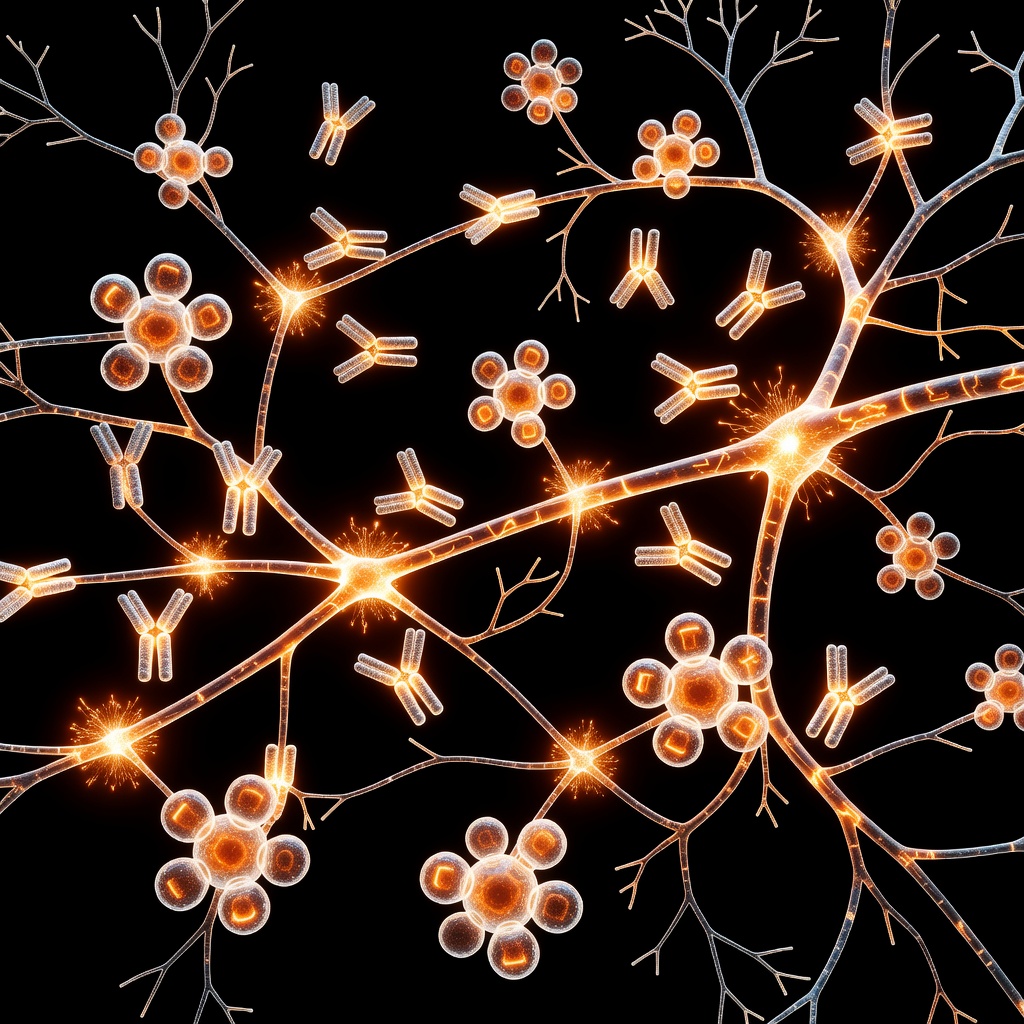
For decades, the standard medical model has approached autoimmune conditions through a lens of suppression. We are told the body has made a "mistake," and the solution is to silence the immune system with biologics or corticosteroids. Yet, this approach ignores a fundamental law of biological systems: toxic accumulation precedes systemic dysfunction.
While mainstream discourse focuses almost exclusively on the "excess" of the immune response, it remains silent on the "failure" of the body’s drainage systems. To understand the root of modern chronic illness, we must look beyond the blood and the gut to the Glymphatic and Lymphatic networks—the body's primary waste management infrastructure. When these systems stagnate, the body becomes a swamp, and in a swamp, inflammation is not an error; it is an inevitability.
The Biological Mechanisms: A Dual System of Detoxification
To comprehend how waste management influences autoimmunity, we must distinguish between the two interconnected drainage systems: the Systemic Lymphatic System and the recently discovered Glymphatic System.
The Glymphatic System: The Brain’s Midnight Cleaner
Until 2012, conventional anatomy textbooks taught that the brain was "lymph-free"—an immunological island. We now know this was a catastrophic oversight. The Glymphatic System is a macroscopic waste clearance system that utilises a sub-cellular network of Aquaporin-4 (AQP4) water channels.
Managed by glial cells (specifically astrocytes), this system "turns on" during deep, slow-wave sleep. During this phase, the brain's interstitial space increases by up to 60%, allowing cerebrospinal fluid (CSF) to flush through the brain tissue, washing away metabolic debris like amyloid-beta and tau proteins.
Innerstanding Truth: If the glymphatic system fails to drain, the brain becomes "congested." This neuro-inflammation is a primary driver in conditions like Multiple Sclerosis (MS), Lupus-related brain fog, and neurodegenerative disorders.
The Lymphatic System: The Body's Silent Highway
The systemic lymphatic system is a vast network of vessels, nodes, and organs (like the spleen and thymus) that maintains fluid balance and transports lymph—a fluid containing infection-fighting white blood cells. Unlike the circulatory system, the lymphatic system has no pump. It relies entirely on movement, pressure changes, and the pulsation of nearby arteries.
When lymph flow becomes sluggish, pro-inflammatory cytokines and cellular metabolic waste are not removed. They sit in the interstitial fluid, bathing our cells in a toxic "sludge." This stagnation creates a state of chronic metabolic endotoxemia, where the immune system remains in a permanent state of high alert because it is literally surrounded by its own waste.
The Link to Autoimmune Conditions: From Stagnation to Self-Attack
The connection between drainage and autoimmunity lies in the concept of Antigen Presentation. In a healthy body, the lymphatic system carries cellular debris to the lymph nodes, where it is "vetted" by immune cells.
When drainage is impaired:
- Molecular Mimicry: Waste products that linger too long can undergo chemical changes (oxidation or glycation), making them appear "foreign" to the immune system. The body then creates antibodies against these altered proteins, which may resemble the body’s own healthy tissues.
- Barrier Breakdown: Stagnant lymph in the gut (the GALT or Gut-Associated Lymphoid Tissue) compromises the intestinal barrier, leading to "leaky gut," a precursor to most autoimmune pathologies.
- Cytokine Storms: A "congested" lymphatic system cannot effectively dilute or remove inflammatory signals. This results in a feedback loop where inflammation creates more swelling, which further restricts lymph flow.
The UK Context: A Crisis of Stagnation
In the United Kingdom, we are facing an "autoimmune epidemic." Statistics from Immune Regulation suggest that autoimmune cases are rising by 3% to 9% annually. While genetics are often blamed, our modern British lifestyle is perfectly engineered to disable our drainage systems.
The Sedentary Office Culture
The lymphatic system requires the "skeletal muscle pump" to function. The UK’s shift toward a service-based, sedentary economy means millions of citizens spend 8-10 hours a day sitting. Without the contraction of the calf and thigh muscles, lymph pools in the lower extremities and the pelvic floor, leading to systemic congestion.
The "Damp" Climate and Respiratory Health
The British climate, often damp and cold, contributes to a high prevalence of upper respiratory issues. Chronic sinus congestion and "heavy" breathing inhibit the thoracic pump—the pressure change in the chest that pulls lymph upward toward the subclavian veins.
NHS Limitations
The current NHS framework is excellent at treating acute lymphatic failure (Lymphedema post-surgery), but it lacks a preventative "Lymphology" department. Sub-clinical lymphatic congestion is rarely diagnosed, leaving patients with "unexplained" fatigue, joint pain, and skin flare-ups—all classic symptoms of poor waste management.
Environmental Factors: The "Invisible" Clog
The Glymphatic and Lymphatic networks are highly sensitive to environmental stressors that are ubiquitous in the modern world.
Heavy Metals and Air Quality
In urban centres like London, Birmingham, and Manchester, air pollution (PM2.5) is a significant concern. These fine particles, along with heavy metals like aluminium and lead, can bypass the blood-brain barrier. Studies suggest these metals can "clog" the AQP4 channels in the brain, effectively "breaking" the glymphatic pump and trapping neurotoxins inside the skull.
Glyphosate and Connective Tissue
The UK's widespread use of glyphosate-based herbicides in industrial farming is another overlooked factor. Glyphosate interferes with the body's ability to produce healthy collagen. Since lymphatic vessels are held open by "anchoring filaments" made of collagen, a deficiency or degradation in this connective tissue causes the vessels to collapse, halting drainage.
The Impact of EMFs
There is emerging evidence that Electromagnetic Fields (EMFs) from mobile networks and Wi-Fi influence calcium channel signalling. Over-sensitised calcium channels can lead to the constriction of lymphatic vessels (lymphangions), reducing their "beat frequency" and slowing the movement of waste.
Protective Strategies: Reclaiming Your Internal Flow
Healing from an autoimmune condition requires more than just "killing" pathogens or "balancing" hormones. You must clear the pipes. Here are authoritative strategies to restore glymphatic and lymphatic integrity.
1. Optimising the Glymphatic "Flush"
- The Left-Side Sleep Position: Research indicates that sleeping on your side (particularly the left side) may facilitate more efficient glymphatic drainage than sleeping on your back or stomach.
- Melatonin as a Cleaner: Melatonin is not just a sleep hormone; it is a potent antioxidant that regulates glymphatic flow. Avoid "blue light" after sunset to ensure natural melatonin production.
- Temperature Regulation: A cool bedroom (approx. 18°C) is essential for entering the deep REM and non-REM stages where glymphatic clearance occurs.
2. Manual and Mechanical Movement
- Rebounding: 10 minutes of gentle bouncing on a mini-trampoline is perhaps the most effective way to stimulate the entire lymphatic network. It uses G-force to open and close lymphatic valves.
- Dry Skin Brushing: Using a natural bristle brush, stroke the skin toward the heart. This stimulates the initial lymphatics located just under the skin’s surface.
- Castor Oil Packs: Applying hexane-free castor oil to the abdomen (over the liver and small intestine) can stimulate lymph flow through the GALT and improve the processing of fat-soluble toxins.
3. Hydration and Mineral Balance
- The "Structured Water" Connection: Lymph is 95% water. However, "dead" tap water is often poorly absorbed. Ensure you are consuming structured, mineral-rich water. Adding a pinch of Celtic sea salt or magnesium drops helps pull water into the cells and the lymphatic vessels rather than letting it stagnate in the tissues (oedema).
4. Vagus Nerve and Diaphragmatic Breathing
The Vagus Nerve runs alongside the deep cervical lymph nodes in the neck. Chronic stress keeps the body in a "sympathetic" state, which constricts lymphatic vessels.
- Deep Belly Breathing: The diaphragm acts as the "pump" for the cisterna chyli (a major lymph reservoir in the abdomen). Deep, rhythmic breathing is a physical necessity for lymphatic drainage.
Key Fact: The largest concentration of lymph nodes is in the gut and the neck. If you have "tight" neck muscles and a "bloated" gut, your brain cannot drain.
Key Takeaways: The Path Forward
The "missing link" in treating systemic inflammation and autoimmune conditions is the recognition of our internal plumbing. We cannot expect a body to stop reacting to "self" if that "self" is perpetually submerged in metabolic waste and environmental toxins.
- Drainage Before Detox: Never start a heavy-metal or parasite detox without first ensuring your lymphatic and glymphatic "exit routes" are open.
- Movement is Medicine: In the context of lymph, movement is not about calories; it is about hydraulic pressure.
- Sleep is a Biological Necessity: Sleep is not "downtime"; it is the only time your brain performs its essential "sewage" duties.
- The Holistic View: Autoimmunity is not a flaw in your design; it is a signal of a congested system.
To achieve INNERSTANDING of one's health, one must move away from the "pill for an ill" mentality and embrace the "flow" of the body. By supporting the glymphatic and lymphatic networks, we provide the body with the clean environment it requires to heal itself. The swamp can be turned back into a river; you simply have to clear the debris.
This article is provided for informational and educational purposes only. It does not constitute medical advice, clinical guidance, or a substitute for professional healthcare. Information reflects cited research at time of publication. Always consult a qualified healthcare professional before acting on any health information.
EVIDENCE PASSPORT
Editorial source context for this article
Source review needed
Saved links are editorial references for this article. They may support specific claims rather than every sentence. Open and assess each source in context. This passport does not independently verify them.
Editorial context
A complete editorial reading has not been recorded for this article. Source links remain available for you to open and assess directly.
Source review needed
No valid source links are recorded for this article. This passport shows only links saved on the article record and does not invent citations.
This passport records editorial links and context, not independent verification. Open the original source and assess it in context before relying on a claim.
Medical Disclaimer
The information in this article is for educational purposes only and does not constitute medical advice, diagnosis, or treatment. Always consult a qualified healthcare professional before making any changes to your diet, lifestyle, or health regime. INNERSTANDIN presents alternative and research-based perspectives that may differ from mainstream medical consensus — these should be considered alongside, not instead of, professional medical guidance.
Read Full DisclaimerContinue the thread
Keep this question moving.
Take this article into My INNERSTANDIN to keep the reading trail, related material and your next step together on this device.
Explore this in the Body Map
See where this hits your biology. Interactive anatomy, threats, and protective protocols.
Dig deeper in the Library
Free, longform PDF volumes that go beyond headlines into mechanisms and references.