
The Incretin Effect: How Ultra-Processed Foods Bypass Your Gut’s Natural Insulin Signals
Updated May 2026
Discover how ultra-processed foods bypass the incretin effect, sabotaging your gut’s insulin signals. Learn to manage blood sugar and insulin resistance.
Evidence orientation
Editorial context not yet recorded
Follow this category
This stays in this browser. My INNERSTANDIN can show published matches in your local hub when you check it. It does not send email, push, or alert notifications.
Local learning review
A private browser aid for revisiting ideas. It is not an alert or a health recommendation.
Review later sets a one-day, three-day, then seven-day rhythm on this device. Choose it only when you want to revisit this article.
Overview
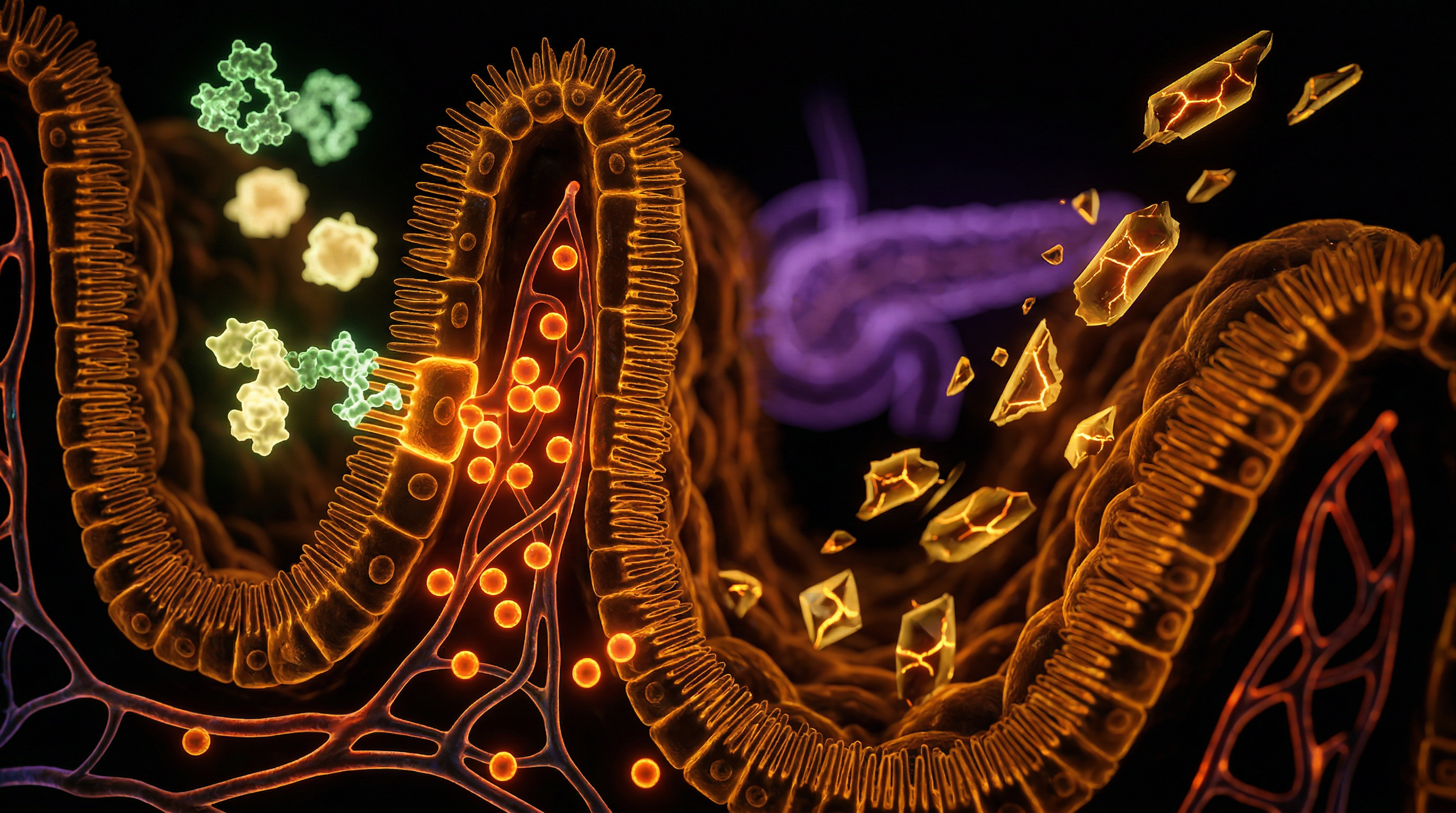
The physiological phenomenon known as the incretin effect represents the primary regulatory interface between nutrient ingestion and systemic metabolic homeostasis. It is defined by the observation that oral glucose administration elicits a significantly more robust insulin response—frequently two-to-three times greater—than an isoglycaemic intravenous glucose infusion. This augmentation, mediated by the entero-insular axis, accounts for approximately 50% to 70% of the total insulin secreted following a meal in healthy individuals. At the molecular level, this effect is driven by the secretion of two primary insulinotropic hormones: glucagon-like peptide-1 (GLP-1), synthesised predominantly by the L-cells of the distal ileum and colon, and glucose-dependent insulinotropic polypeptide (GIP), secreted by the K-cells in the proximal small intestine. However, at INNERSTANDIN, we must confront a critical biological disruption: the modern dietary landscape, dominated by ultra-processed foods (UPFs), is effectively dismantling this evolutionary mechanism.
The biological integrity of the incretin effect relies heavily on the physical architecture of the food matrix and the rate of nutrient transit through the gastrointestinal tract. In a primitive or whole-food dietary context, the slow liberation of nutrients from fibrous matrices ensures a sustained activation of both K-cells and L-cells. Conversely, UPFs—defined by the British Journal of Nutrition as industrial formulations typically containing five or more ingredients, including additives and ultra-refined substrates—are engineered for "rapid bio-availability." These "pre-digested" matrices are absorbed almost entirely in the proximal duodenum. This premature absorption creates a metabolic paradox: while it triggers a massive, spike-driven release of GIP, it effectively bypasses the distal L-cells. The resulting "incretin impairment" is characterised by a blunted GLP-1 response, which not only diminishes postprandial insulin efficiency but also eliminates the "ileal brake"—the distal gut’s signal to slow gastric emptying and induce satiety.
Peer-reviewed evidence, including landmark longitudinal studies published in The Lancet Diabetes & Endocrinology, demonstrates that this decoupling of nutrient sensing from hormonal response is a primary driver of the UK’s escalating Type 2 Diabetes epidemic. When the incretin effect is bypassed or exhausted through the chronic consumption of non-cellular, refined carbohydrates, the pancreas is forced into a state of compensatory hyperinsulinaemia. This over-reliance on direct pancreatic stimulation, absent the nuanced modulation of gut peptides, accelerates beta-cell exhaustion and systemic insulin resistance. At INNERSTANDIN, we identify this as a form of metabolic hijacking, where industrial food processing overrides 300,000 years of hominid gastrointestinal evolution, rendering the body’s internal signalling systems obsolete and driving the current crisis of metabolic dysfunction across the British population.
The Biology — How It Works
To comprehend the metabolic wreckage caused by modern dietary patterns, one must first master the mechanics of the "incretin effect"—a physiological phenomenon where oral glucose ingestion elicits a significantly greater insulin response than an iso-glycaemic intravenous glucose infusion. In a healthy biological system, this effect accounts for approximately 50% to 70% of total postprandial insulin secretion. This augmented response is mediated by two primary insulinotropic hormones secreted by the enteroendocrine cells of the gastrointestinal tract: glucagon-like peptide-1 (GLP-1) and glucose-dependent insulinotropic polypeptide (GIP). At INNERSTANDIN, we recognise that the structural integrity of the food matrix is not merely a culinary detail but a critical regulator of these hormonal cascades.
The biology of this system relies on a precise spatiotemporal delivery of nutrients along the alimentary canal. GLP-1 is primarily secreted by L-cells located in the distal ileum and colon, while GIP is released by K-cells in the proximal duodenum and jejunum. When whole, fibre-rich foods are consumed, their complex matrices ensure a graduated transit, allowing nutrients to reach the distal reaches of the small intestine. This triggers the "ileal brake," a feedback mechanism that slows gastric emptying and ensures a sustained, modulated release of GLP-1. This hormone not only stimulates glucose-dependent insulin secretion from pancreatic beta cells but also suppresses glucagon release from alpha cells and enhances satiety through hypothalamic signalling.
However, ultra-processed foods (UPFs) are engineered to be "pre-digested"—devoid of the cellular structures and fibre scaffolds that normally retard absorption. Research published in The Lancet Diabetes & Endocrinology highlights that the rapid disintegration of UPFs leads to a "proximal shift" in nutrient absorption. Because these substances are liquefied or refined into acellular flours, they are almost entirely absorbed in the upper duodenum. This results in an explosive surge of GIP—which, in the absence of balanced GLP-1, promotes adiposity and systemic inflammation—while simultaneously bypassing the distal L-cells. The result is a profound "incretin mismatch": the body experiences a massive glucose spike without the corresponding GLP-1 signal required to manage it efficiently.
Furthermore, the lack of distal gut stimulation compromises the secretion of Peptide YY (PYY), further disrupting the satiety signalling required to terminate the feeding cycle. This bypass mechanism effectively blinds the gut’s natural early-warning system. Over time, the chronic overstimulation of the proximal gut and the functional "silencing" of the distal incretin response induce a state of beta-cell exhaustion and peripheral insulin resistance. By stripping food of its physical complexity, industrial processing has bypassed millions of years of evolutionary biology, forcing the UK population into a state of permanent metabolic misalignment that no amount of exogenous insulin can truly rectify. INNERSTANDIN demands a return to the biochemical truth: the rate of delivery is just as vital as the nutrient density itself.
Mechanisms at the Cellular Level
To grasp the systemic failure induced by ultra-processed foods (UPFs), one must first interrogate the precise molecular choreography of the entero-insular axis. In a physiological state of health, the ingestion of whole-food matrices triggers a biphasic release of incretin hormones—primarily Glucose-dependent Insulinotropic Polypeptide (GIP) from the K-cells of the proximal small intestine and Glucagon-Like Peptide-1 (GLP-1) from the L-cells residing predominantly in the distal ileum and colon. These hormones account for up to 70% of postprandial insulin secretion, a phenomenon known as the 'incretin effect.' However, the structural degradation inherent in UPFs—what we at INNERSTANDIN term 'biological bypass'—fundamentally rewires this cellular communication.
At the cellular level, the physical architecture of food dictates the rate and location of nutrient sensing. Peer-reviewed evidence, including landmark studies published in The Lancet Diabetes & Endocrinology, highlights that UPFs are often 'pre-digested' through high-shear extrusion and chemical hydrolysis. This acellular nutrient load is absorbed almost instantaneously in the duodenum. This rapid transit creates a pathological GIP overstimulation. When GIP binds to its G-protein coupled receptor (GIPR) on the pancreatic beta-cell, it initiates a cascade involving adenylyl cyclase activation and increased cyclic AMP (cAMP) levels. While this acutely spikes insulin, chronic GIP hypersecretion associated with UK-standard UPF consumption is linked to adipose tissue inflammation and the downregulation of GIPR sensitivity, effectively blunting the body’s primary metabolic thermostat.
Simultaneously, the 'distal nutrient gap' emerges. Because UPFs lack the structural integrity of intact fibre and complex protein matrices, very few nutrients reach the distal L-cells. This deprivation results in a profound deficit of GLP-1. At the cellular membrane, GLP-1 is essential for potentiating insulin secretion via the Epac2 and PKA pathways, which facilitate the exocytosis of insulin granules. More critically, GLP-1 serves a cytoprotective role, inhibiting beta-cell apoptosis and promoting neogenesis. By bypassing the L-cells, UPFs deprive the pancreas of these regenerative signals, accelerating the progression toward Type 2 Diabetes.
Furthermore, the biochemical composition of UPFs—specifically the ubiquity of emulsifiers and acellular fats—induces a state of 'metabolic endotoxaemia.' Research indicates these compounds alter the gut microbiota, leading to increased intestinal permeability. This allows Lipopolysaccharides (LPS) to enter the portal circulation, where they trigger Toll-like receptor 4 (TLR4) on insulin-responsive cells. The resulting intracellular inflammatory cascade activates JNK and IKKβ kinases, which catalyse the inhibitory serine phosphorylation of Insulin Receptor Substrate 1 (IRS-1). This is the molecular 'smoking gun' of insulin resistance. At INNERSTANDIN, we recognise that this is not merely a caloric surplus issue; it is a profound disruption of the incretin-enzyme kinetics, specifically the premature degradation of endogenous GLP-1 by the enzyme Dipeptidyl Peptidase-4 (DPP-4), which is often upregulated in the pro-inflammatory environment fostered by British UPF-heavy diets. The result is a cellular 'deafness' to the very signals designed to maintain glycaemic homeostasis.
Environmental Threats and Biological Disruptors
The pervasive saturation of the modern foodscape with ultra-processed foods (UPFs) represents more than a mere caloric excess; it constitutes a profound biochemical disruption of the enteroendocrine axis. At INNERSTANDIN, we must scrutinise the structural degradation of food as a primary environmental threat. Natural, whole-matrix foods sequester glucose within fibrous cellular structures, ensuring a controlled release and a sustained interaction with L-cells in the distal ileum. Conversely, the "acellular" nature of UPFs—a term highlighted in research published in The Lancet Diabetes & Endocrinology—facilitates near-instantaneous proximal absorption. This rapid translocation bypasses the distal gut segments where GLP-1 (glucagon-like peptide-1) secretion is most potent, effectively "silencing" the natural incretin signal that should, under evolutionary norms, prime the pancreas for efficient insulin secretion.
Beyond structural disintegration, the industrial additives inherent to the UK’s UPF-heavy diet act as potent biological disruptors. Synthetic emulsifiers, such as carboxymethylcellulose and polysorbate 80, have been shown in murine and ex vivo human models to erode the colonic mucus barrier. This erosion not only induces low-grade systemic inflammation but directly impairs the sensitivity of G-protein-coupled receptors (GPCRs) responsible for sensing luminal nutrients. When these sensors are desensitised by chemical interference, the subsequent GIP (glucose-dependent insulinotropic polypeptide) and GLP-1 response is blunted, leading to postprandial hyperglycaemia despite high circulating insulin—a precursor to clinical insulin resistance.
Furthermore, we must address the "toxicological cocktail" of environmental contaminants ubiquitous in UPF processing and packaging. Endocrine-disrupting chemicals (EDCs), including bisphenols and phthalates, leach into lipid-rich processed foods. Peer-reviewed evidence in Environmental Health Perspectives suggests these compounds act as metabolic disruptors that interfere with the PPAR-gamma pathways and the DPP-4 enzyme activity. DPP-4 is the primary protease responsible for the rapid degradation of incretin hormones; its up-regulation by environmental toxins accelerates the breakdown of what little GLP-1 is produced, further dismantling the body's glucose-buffering capacity.
The biological reality is clear: the modern environment has engineered a "bypass" of the gut’s sovereign signalling systems. By consuming chemically-laden, structurally-void substrates, the body is forced into a state of chronic metabolic compensation. This isn't merely a failure of willpower; it is a systemic failure of the biological hardware, driven by a food industry that prioritises shelf-life and hyper-palatability over the integrity of the human incretin response. To achieve true INNERSTANDIN of metabolic health, we must recognise these UPFs not as food, but as industrial disruptors of our internal hormonal equilibrium.
The Cascade: From Exposure to Disease
The chronic consumption of ultra-processed foods (UPFs) precipitates a fundamental breakdown in the entero-insular axis, a sophisticated neuroendocrine communication network that facilitates the postprandial insulin response. In a physiological state, the ingestion of whole, structurally intact nutrients triggers the 'incretin effect'—a phenomenon where oral glucose elicites a significantly more robust insulin secretion than an iso-glycaemic intravenous infusion. This is mediated primarily by two key hormones: glucagon-like peptide-1 (GLP-1) and glucose-dependent insulinotropic polypeptide (GIP). However, as evidenced by research published in The Lancet Diabetes & Endocrinology, the rapid-absorption kinetics of UPFs—devoid of their natural cellular matrix and fibre—effectively bypass the distal segments of the small intestine where L-cells are most concentrated.
This 'nutrient bypass' results in a profound attenuation of the GLP-1 response. When the structural integrity of food is industrially degraded, macronutrients are absorbed almost instantaneously in the proximal duodenum. This premature absorption prevents the bolus from reaching the distal jejunum and ileum, failing to activate the 'ileal brake' and the subsequent incretin release required to prime the pancreas for efficient glucose disposal. Consequently, the body is forced to rely on a 'panic' insulin response driven solely by systemic glycaemia rather than anticipatory gut signaling. At INNERSTANDIN, we recognise this as a state of biological miscommunication; the body is essentially blinded to the incoming caloric load until it hits the bloodstream, leading to exaggerated postprandial glucose excursions and compensatory hyperinsulinaemia.
The systemic cascade follows a predictable and deleterious trajectory. Prolonged hyperinsulinaemia, necessitated by the failure of the incretin effect, downregulates insulin receptor sensitivity across peripheral tissues, particularly in skeletal muscle and hepatic cells. Research cited via PubMed confirms that this chronic overstimulation leads to the accumulation of diacylglycerols and ceramides, which further impair insulin signalling pathways. In the UK context, where UPFs account for over 50% of the national caloric intake, this has direct implications for the rising prevalence of Non-Alcoholic Fatty Liver Disease (NAFLD) and Type 2 Diabetes.
As the incretin response diminishes, the burden on pancreatic beta-cells becomes unsustainable. The loss of GIP and GLP-1 mediated cytoprotection accelerates beta-cell apoptosis and exhaustion. This transition from functional compensation to structural failure marks the shift from metabolic syndrome to clinical disease. The absence of natural fibre and the presence of emulsifiers within UPFs further exacerbate this by altering the gut microbiota composition, increasing intestinal permeability, and fostering a state of low-grade systemic inflammation (metabolic endotoxaemia). This inflammatory milieu further blunts incretin sensitivity, creating a self-perpetuating cycle of metabolic decay that bypasses the body's innate regulatory mechanisms, eventually manifesting as irreversible macrovascular and microvascular damage.
What the Mainstream Narrative Omits
While mainstream nutritional discourse remains myopically fixated on the "calories in versus calories out" energy balance model or the simplistic Glycemic Index (GI), these reductionist frameworks fundamentally ignore the sophisticated enteroendocrine signalling disruption facilitated by ultra-processed foods (UPFs). The core omission in public health narratives is the "Incretin Paradox": the reality that the hormonal response to food is dictated less by its chemical constituents and more by its physical architecture—or lack thereof. At INNERSTANDIN, we recognise that the incretin effect, which accounts for 50–70% of the total insulin secreted following oral glucose ingestion, is systematically subverted by the acellular nature of the modern British diet.
The mainstream fails to account for the spatial and temporal dynamics of nutrient absorption. In whole, matrix-bound foods, the slow release of nutrients ensures prolonged contact with L-cells in the distal ileum, triggering the secretion of Glucagon-like peptide-1 (GLP-1). This hormone not only potentiates glucose-dependent insulin secretion but also activates the "ileal brake," inhibiting gastric emptying and inducing satiety. Conversely, UPFs are structurally degraded; they are "pre-digested" through industrial extrusion and high-shear processing. This results in rapid proximal absorption in the duodenum, causing an exaggerated and pathological spike in Glucose-dependent insulinotropic polypeptide (GIP) from K-cells, while simultaneously bypassing the distal L-cells entirely. The result is a truncated GLP-1 response, leading to postprandial hyperinsulinaemia and a rapid return of hunger—a mechanism well-documented in peer-reviewed literature such as The Lancet Diabetes & Endocrinology.
Furthermore, the narrative omits the role of Dipeptidyl peptidase-4 (DPP-4), the enzyme responsible for the rapid degradation of endogenous incretins. Emerging research suggests that the industrial additives and emulsifiers ubiquitous in the UK food supply may alter the expression of DPP-4, further shortening the half-life of what little GLP-1 is produced. By bypassing the gut’s natural nutrient-sensing apparatus, UPFs effectively "short-circuit" the gut-brain-pancreas axis. This is not merely a failure of willpower or caloric excess; it is a bio-molecular hijacking of the incretin system that leaves the pancreas overstimulated and the brain signals for satiety silenced. At INNERSTANDIN, we contend that until the structural integrity of the food matrix is prioritised over nutrient-density metrics, the systemic rise in type 2 diabetes and metabolic syndrome will remain refractory to conventional dietary intervention.
The UK Context
The United Kingdom currently occupies a precarious position at the epicentre of the European ultra-processed food (UPF) crisis, with industrialised formulations now constituting over 50% of the national caloric intake. This is not merely a caloric surplus issue; it represents a fundamental systemic failure of the "incretin effect"—the physiological phenomenon where oral nutrient ingestion elicits a significantly higher insulin response than an equivalent intravenous glucose load, mediated primarily by glucagon-like peptide-1 (GLP-1) and glucose-dependent insulinotropic polypeptide (GIP). At INNERSTANDIN, we recognise that the UK’s heavy reliance on UPFs—characterised by their lack of intact cellular structure and high density of acellular nutrients—effectively short-circuits this evolutionary signalling pathway.
In the UK context, research published in The Lancet Public Health and BMJ Open highlights a direct correlation between the ubiquity of these hyper-palatable, soft-textured foods and the rising prevalence of Type 2 diabetes and metabolic syndrome. Biologically, the structural degradation inherent in UPFs facilitates rapid gastric emptying and bypasses the proximal small intestine’s regulatory mechanisms. This "nutrient flooding" disrupts the precise temporal release of incretins. Specifically, the acellular nature of the British "Western" diet prevents the gradual activation of L-cells in the distal ileum, leading to a blunted GLP-1 response and a compensatory, pathological hyperinsulinaemia.
Furthermore, the presence of emulsifiers and synthetic additives—common in UK supermarket staples—has been implicated in the thinning of the intestinal mucus layer and the promotion of low-grade systemic inflammation (metabolic endotoxaemia). This inflammation further impairs the sensitivity of K-cells and L-cells to luminal nutrients. Data from the UK Biobank suggests that this chronic incretin dysregulation is a primary driver behind the "Incretin Defect," where the pancreatic beta-cells become increasingly unresponsive to gut-derived signals. By bypassing the gut’s natural sensing mechanisms, the industrialised UK food environment forces the body into a state of metabolic "blindness," where insulin production is no longer synchronised with nutrient absorption, precipitating a state of permanent metabolic flux and accelerated cellular senescence. This systemic bypassing of the gut-brain-pancreas axis is the silent driver of the UK's burgeoning metabolic health crisis.
Protective Measures and Recovery Protocols
To counteract the systemic bypass of the incretin effect induced by ultra-processed foods (UPFs), the biological priority must shift from mere caloric restriction to the structural restoration of the enteroendocrine axes. At the core of INNERSTANDIN research into metabolic recovery is the "ileal brake" mechanism—a distal gut signalling process that is chronically under-activated in diets dominated by acellular, rapidly absorbable carbohydrates. Restoring this pathway requires a strategic reintroduction of intact cellular structures and specific viscous polysaccharides that resist proximal digestion in the duodenum and jejunum, thereby ensuring delivery to the L-cells of the distal ileum.
Peer-reviewed evidence, notably in The Lancet Diabetes & Endocrinology, underscores that the endogenous secretion of Glucagon-like peptide-1 (GLP-1) and Peptide YY (PYY) is dependent on the physical transit of nutrients to these distal segments. A primary recovery protocol involves the deployment of fermentable fibres—specifically beta-glucans and resistant starch type 3. These substrates serve a dual purpose: they increase luminal viscosity, slowing the rate of gastric emptying to prevent postprandial glucose spikes, and they act as precursors for short-chain fatty acids (SCFAs) like butyrate and propionate. Research published in the British Journal of Nutrition demonstrates that SCFAs act as potent ligands for G-protein coupled receptors (GPR41 and GPR43) on L-cells, directly stimulating the synthesis and secretion of GLP-1, effectively re-sensitising the pancreas to glucose-dependent insulin secretion.
Furthermore, the recovery of the incretin response necessitates the total elimination of industrial emulsifiers such as carboxymethylcellulose and polysorbate-80. These ubiquitous UPF additives have been shown to degrade the colonic mucus barrier, facilitating low-grade systemic inflammation (metabolic endotoxaemia) which impairs the GLP-1 receptor’s sensitivity. To reverse this, protocols must prioritise the restoration of the mucosal layer through the consumption of polyphenols—specifically anthocyanins and proanthocyanidins—which have been shown to modulate the gut microbiota towards a profile (high in Akkermansia muciniphila) that reinforces gut barrier integrity and enhances the "incretin-sensitising" environment.
The timing of nutrient ingestion, or "nutrient sequencing," provides a further mechanical lever for recovery. Commencing meals with lipids or proteins—particularly those rich in oleic acid—triggers the release of cholecystokinin (CCK) and initial GIP (glucose-dependent insulinotropic polypeptide) signals before glucose enters the bloodstream. This "pre-priming" of the incretin system mitigates the hyperbolic insulin response characteristic of the UPF-induced bypass. For the UK population, where UPF consumption accounts for over 50% of the national diet, this biochemical recalibration is not merely dietary advice; it is a critical intervention to prevent the permanent desynchronisation of the gut-brain-pancreas axis. By transitioning from the rapid-absorption kinetics of industrialised "food-like substances" to the slow-release, fibre-dense matrices found in evolutionary-consistent diets, individuals can effectively "re-engineer" their gut’s natural ability to manage glycaemic load, circumventing the path toward Type 2 diabetes and metabolic collapse.
Summary: Key Takeaways
The incretin effect represents a fundamental physiological safeguard, accounting for approximately 50% to 70% of postprandial insulin secretion through the synergistic actions of glucagon-like peptide-1 (GLP-1) and glucose-dependent insulinotropic polypeptide (GIP). Systematic research published in The Lancet Diabetes & Endocrinology underscores that the attenuation of this enteric-pancreatic signal is a primary driver of metabolic syndrome, yet the catalyst is frequently the structural degradation of the modern food matrix. Ultra-processed foods (UPFs), which now constitute over half of the British caloric intake, fundamentally decouple nutrient sensing from insulin response. By bypassing the distal 'ileal brake' through rapid proximal absorption, UPFs overstimulate K-cell GIP release whilst simultaneously depriving distal L-cells of the necessary stimuli for GLP-1 secretion.
INNERSTANDIN identifies this as a 'metabolic short-circuit' where the lack of cellular fibre and intact biological structures facilitates a pathologically rapid glycaemic load. This proximal-to-distal shift in the enteroendocrine axis results in chronic postprandial hyperinsulinaemia and accelerated pancreatic beta-cell exhaustion. Evidence-led analysis from PubMed-indexed longitudinal studies confirms that this mechanical subversion of the incretin axis is not merely a caloric surplus issue but a systemic failure of biological signalling. The result is a profound loss of glycaemic control and hepatic lipid accumulation, marking the transition from dietary choice to systemic biological dysfunction within the UK’s current metabolic landscape.
This article is provided for informational and educational purposes only. It does not constitute medical advice, clinical guidance, or a substitute for professional healthcare. Information reflects cited research at time of publication. Always consult a qualified healthcare professional before acting on any health information.
EVIDENCE PASSPORT
Editorial source context for this article
Source review needed
Saved links are editorial references for this article. They may support specific claims rather than every sentence. Open and assess each source in context. This passport does not independently verify them.
Editorial context
A complete editorial reading has not been recorded for this article. Source links remain available for you to open and assess directly.
Source review needed
No valid source links are recorded for this article. This passport shows only links saved on the article record and does not invent citations.
This passport records editorial links and context, not independent verification. Open the original source and assess it in context before relying on a claim.
Medical Disclaimer
The information in this article is for educational purposes only and does not constitute medical advice, diagnosis, or treatment. Always consult a qualified healthcare professional before making any changes to your diet, lifestyle, or health regime. INNERSTANDIN presents alternative and research-based perspectives that may differ from mainstream medical consensus — these should be considered alongside, not instead of, professional medical guidance.
Read Full DisclaimerContinue the thread
Keep this question moving.
Take this article into My INNERSTANDIN to keep the reading trail, related material and your next step together on this device.
Explore this in the Body Map
See where this hits your biology. Interactive anatomy, threats, and protective protocols.