The Interplay Between Nasopharyngeal Biofilms and Innate Immune Evasion in Chronic Adenoiditis
Discuss this resourceUpdated August 2026
An exploration into how bacterial biofilms protect pathogens within the adenoids, causing chronic inflammation and subverting the body's innate immune responses.
Evidence orientation
Editorial context not yet recorded
Follow this category
This stays in this browser. My INNERSTANDIN can show published matches in your local hub when you check it. It does not send email, push, or alert notifications.
Local learning review
A private browser aid for revisiting ideas. It is not an alert or a health recommendation.
Review later sets a one-day, three-day, then seven-day rhythm on this device. Choose it only when you want to revisit this article.
Introduction: The Adenoids as a Microbial Fortress
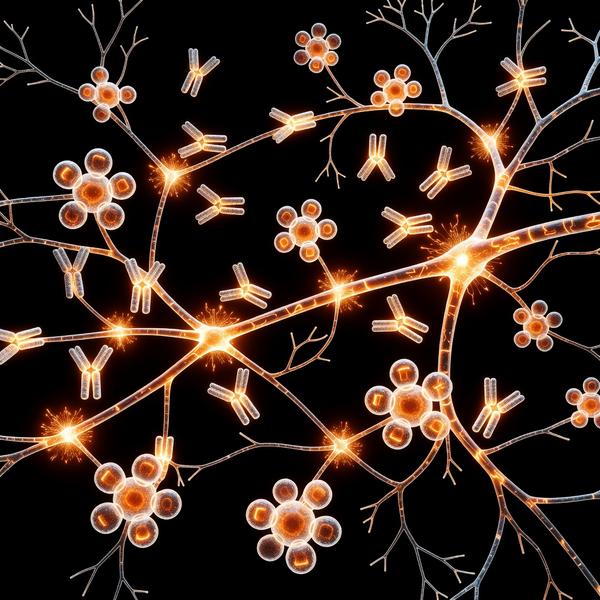
The nasopharyngeal adenoids represent the first line of defense in the upper respiratory tract. However, in cases of chronic adenoiditis, these lymphoid tissues often transform from protectors into reservoirs for persistent infection. At the center of this transition lies the formation of microbial biofilms—complex, structured communities of bacteria encased in a self-produced extracellular polymeric substance (EPS) matrix.
The Biofilm Mechanism: A Shield Against Surveillance
Biofilms are not merely clusters of bacteria; they are highly organized ecosystems. In the nasopharynx, pathogens such as Haemophilus influenzae, Streptococcus pneumoniae, and Staphylococcus aureus utilize the adenoid crypts to anchor themselves. Once established, the EPS matrix acts as a physical barrier that prevents immune cells—specifically neutrophils and macrophages—from reaching the underlying bacterial population. This 'physical shielding' is the primary mechanism of persistence in chronic adenoiditis.
Innate Immune Evasion Strategies
Beyond physical protection, biofilms actively manipulate the innate immune system:
- Quorum Sensing Interference: Bacteria communicate via quorum sensing to regulate gene expression. In biofilms, this signaling can downregulate the production of antimicrobial peptides (AMPs) by the adenoid epithelium, neutralizing the host's chemical defenses.
- Complement System Deactivation: Biofilms can recruit host regulatory proteins to their surface, effectively inhibiting the complement cascade. By preventing the activation of C3b, the bacteria avoid opsonization and subsequent phagocytosis.
- Metabolic Dormancy: Within the deeper layers of the biofilm, oxygen and nutrient levels are low. This forces bacteria into a 'persister' state—a metabolically dormant phase that renders them largely invisible to innate immune cells and resistant to conventional antibiotics.
The Root-Cause Implications
Chronic adenoiditis is rarely a failure of the immune system itself, but rather a structural success of the pathogen. The chronicity is driven by the cyclical nature of biofilm seeding: as surface layers of the biofilm detach (dispersion), they cause acute exacerbations of symptoms, while the core remains protected, ready to repopulate the tissue.
Addressing the Micro-Environment
Treating chronic adenoiditis requires a shift from symptom management to environmental disruption. Strategies focus on degrading the biofilm matrix through targeted enzymes or biofilm-disrupting agents, alongside supporting mucosal immunity. Improving the local environment—reducing inflammation and addressing underlying respiratory stressors—is essential to reclaiming the health of the nasopharyngeal space.
This article is provided for informational and educational purposes only. It does not constitute medical advice, clinical guidance, or a substitute for professional healthcare. Information reflects cited research at time of publication. Always consult a qualified healthcare professional before acting on any health information.
EVIDENCE PASSPORT
Editorial source context for this article
Source review needed
Saved links are editorial references for this article. They may support specific claims rather than every sentence. Open and assess each source in context. This passport does not independently verify them.
Editorial context
A complete editorial reading has not been recorded for this article, and no source links are saved on its record.
Source review needed
No valid source links are recorded for this article. Supplementary research, where available, is listed separately below.
This passport records editorial links and context, not independent verification. Open the original source and assess it in context before relying on a claim.
Medical Disclaimer
The information in this article is for educational purposes only and does not constitute medical advice, diagnosis, or treatment. Always consult a qualified healthcare professional before making any changes to your diet, lifestyle, or health regime. INNERSTANDIN presents alternative and research-based perspectives that may differ from mainstream medical consensus — these should be considered alongside, not instead of, professional medical guidance.
Read Full DisclaimerContinue the thread
Keep this question moving.
Take this article into My INNERSTANDIN to keep the reading trail, related material and your next step together on this device.
Explore this in the Body Map
Explore related body structures and their educational pages in the interactive Body Map.
Dig deeper in the Library
Free, longform PDF volumes that go beyond headlines into mechanisms and references.
RABBIT HOLE
Follow the biological thread deeper