
The Mitochondrial Theory of Ageing: Why Leydig Cell Efficiency Declines and How to Preserve It
Updated April 2026
Evidence orientation
Editorial context not yet recorded
Follow this category
This stays in this browser. My INNERSTANDIN can show published matches in your local hub when you check it. It does not send email, push, or alert notifications.
Local learning review
A private browser aid for revisiting ideas. It is not an alert or a health recommendation.
Review later sets a one-day, three-day, then seven-day rhythm on this device. Choose it only when you want to revisit this article.
In the modern health landscape, the narrative surrounding male hormonal decline is often reduced to a simple inevitability: "You’re just getting older." Conventional medicine frequently treats the resulting drop in testosterone as a surface-level symptom, manageable only through exogenous hormone replacement. However, at INNERSTANDING, we believe in looking deeper into the cellular architecture to uncover the root causes of vitality loss.
To understand why men today are experiencing lower testosterone levels than their grandfathers did at the same age, we must look at the Mitochondrial Theory of Ageing. Specifically, we must examine how the "batteries" of the Leydig cells—the primary testosterone factories in the male body—begin to fail, and more importantly, how we can arrest this decline.
The Core Premise: The Mitochondrial Theory of Ageing
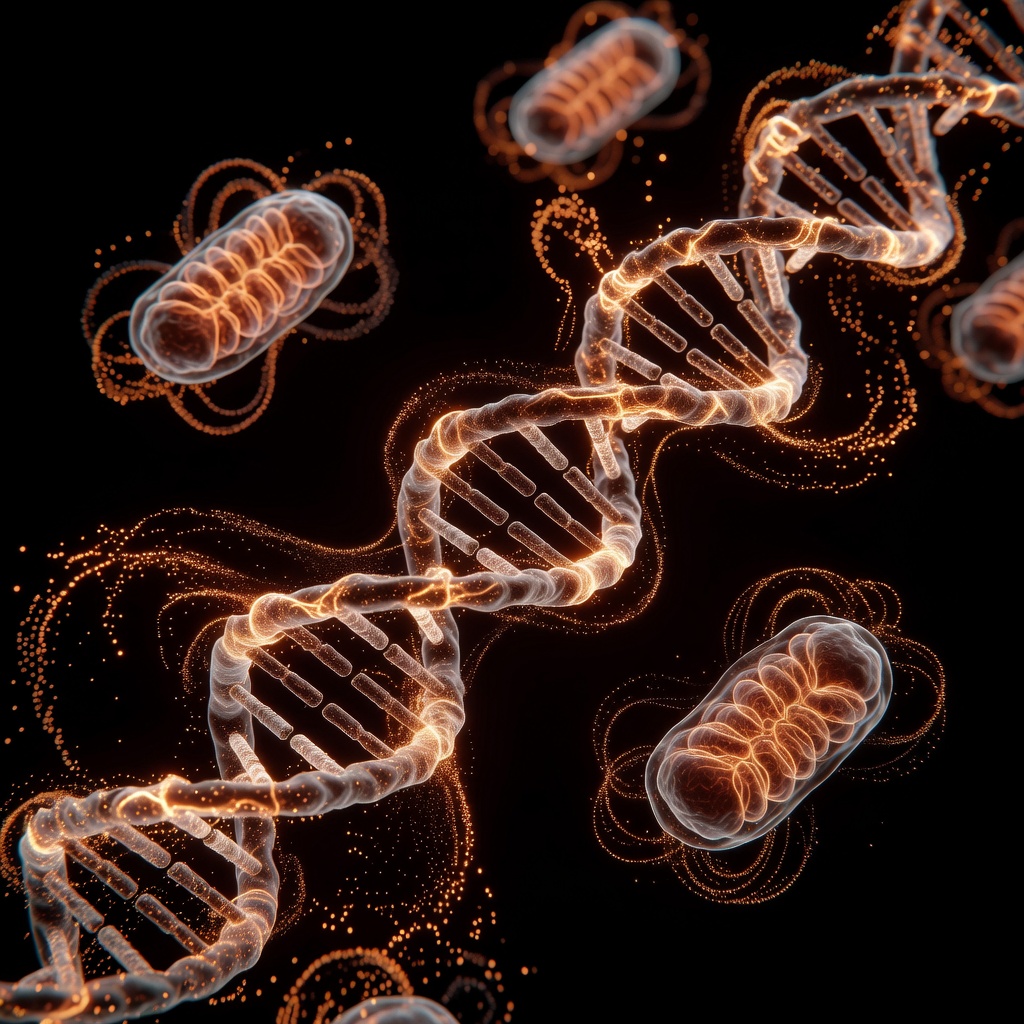
The Mitochondrial Theory of Ageing (MTA), first proposed in the 1970s, suggests that the gradual accumulation of damage to mitochondrial DNA (mtDNA) is the primary driver of physiological decline. Unlike the DNA found in the nucleus of our cells, mtDNA is highly susceptible to damage because it sits directly next to the site of energy production.
Mitochondria are responsible for creating Adenosine Triphosphate (ATP), the universal energy currency of life. However, a byproduct of this energy production is the generation of Reactive Oxygen Species (ROS)—essentially biological "exhaust fumes."
Key Fact: If the cell’s internal antioxidant systems cannot neutralise these ROS, they begin to "rust" the mitochondria from the inside out, leading to a state of chronic oxidative stress.
In the context of male health, this theory finds its most critical application in the Leydig cells, located within the interstitial tissue of the testes.
Biological Mechanisms: The Leydig Cell Bottleneck
The production of testosterone, a process known as steroidogenesis, is one of the most energetically demanding tasks a cell can perform. For a man to maintain optimal androgen levels, his Leydig cells must be in a state of high-performance metabolic flux.
The Role of the StAR Protein
The "rate-limiting step" of testosterone production—the point at which the entire process can get backed up—is the transport of cholesterol into the mitochondria. This is facilitated by the Steroidogenic Acute Regulatory (StAR) protein.
When mitochondria are healthy, StAR protein functions seamlessly, shuttling cholesterol across the mitochondrial membrane where it is converted into pregnenolone (the precursor to testosterone). However, as mitochondrial efficiency wanes due to ageing or environmental toxicity:
- ATP production drops, leaving the cell without the "fuel" needed for transport.
- Oxidative stress damages the StAR protein itself.
- The conversion of cholesterol stalls, leading to a systemic drop in endogenous testosterone.
The Vicious Cycle of ROS
Leydig cells are unique because the enzymes required to produce testosterone actually generate additional ROS as a byproduct. This means the Leydig cell is a high-heat environment. If the mitochondria are already compromised, this extra oxidative load creates a "vicious cycle" where the very act of producing testosterone further damages the machinery required to make it.
The UK Context: A Silent Crisis in Men’s Health
In the United Kingdom, we are witnessing a precipitous decline in average male testosterone levels. Data suggests that a 60-year-old man in 1990 had significantly higher testosterone than a 60-year-old man today. While the NHS often defines "normal" testosterone ranges very broadly (sometimes as low as 8-12 nmol/L), these figures do not reflect optimal health or mitochondrial integrity.
The British lifestyle—characterised by high levels of processed food consumption, chronic work-related stress, and a lack of natural sunlight—acts as a catalyst for mitochondrial decay. Furthermore, the "stiff upper lip" culture often prevents men from seeking help until they are in a state of advanced andropause. At INNERSTANDING, we argue that understanding cellular bioenergetics is the first step toward reclaiming British male vitality.
Environmental Factors: The Modern Assault on Mitochondria
The decline of Leydig cell efficiency isn’t just a result of time; it is accelerated by the "chemical soup" of the 21st century.
Endocrine Disrupting Chemicals (EDCs)
The UK environment is saturated with Phthalates and Bisphenol A (BPA), found in food packaging, tap water, and personal care products. These chemicals are "mitochondrial toxins." They mimic oestrogen and interfere with the signalling between the pituitary gland and the Leydig cells, effectively telling the mitochondria to "power down."
Microplastics and Nanoplastics
Recent UK-based studies have identified microplastics within human testicular tissue. These particles trigger an immune response, causing localised inflammation that floods the Leydig cells with cytokines. This inflammation is a direct hit to mitochondrial function, diverting energy away from hormone production and toward cellular repair.
Blue Light and Circadian Disruption
Mitochondria have their own "internal clocks." The British tendency to spend evenings under artificial blue light—and the lack of high-intensity morning sunlight due to our northern latitude—disrupts melatonin production. Contrary to popular belief, melatonin is not just for sleep; it is a potent antioxidant that specifically protects mtDNA within the Leydig cells during the night.
Protective Strategies: Preserving Leydig Cell Efficiency
The good news is that mitochondrial health is plastic. Through targeted interventions, we can improve the mitochondrial density and efficiency of the Leydig cells.
1. Targeted Nutrogenomics
To support the StAR protein and neutralise ROS, specific micronutrients are essential:
- Ubiquinol (CoQ10): A critical component of the electron transport chain. It acts as a primary antioxidant within the mitochondrial membrane.
- Shilajit: A potent Ayurvedic resin (now gaining traction in UK health circles) rich in fulvic acid. It helps shuttle minerals into the mitochondria and has been shown to increase Leydig cell activity.
- Magnesium and Zinc: Essential co-factors for over 300 enzymatic reactions, including those involved in ATP synthesis.
2. Photobiomodulation (Red Light Therapy)
Specific wavelengths of light (660nm to 850nm) can penetrate the scrotal tissue and interact with Cytochrome C Oxidase, a key enzyme in the mitochondria. This "charges" the cellular battery, increasing ATP production and potentially upregulating testosterone synthesis.
3. Hormetic Stress
The "use it or lose it" principle applies to mitochondria.
- Cold Exposure: Immersing yourself in cold water (a staple of the growing UK "wild swimming" movement) triggers mitochondrial biogenesis—the creation of new mitochondria.
- Intermittent Fasting: This triggers mitophagy, a process where the body identifies and recycles damaged, inefficient mitochondria, replacing them with "fresh" versions.
4. Reducing the Toxic Load
- Filter your water: Using a high-quality filter to remove fluoride and heavy metals.
- Swap plastics: Moving to glass or stainless steel containers to avoid EDCs.
- Organic consumption: Prioritising organic produce to avoid pesticides like glyphosate, which has been linked to mitochondrial dysfunction.
"The decline of the Leydig cell is not an inevitable consequence of time, but a consequence of energy bankruptcy. If you protect the engine, you preserve the output." — INNERSTANDING Health Editorial
The Path Forward: A Paradigm Shift
We must move away from the idea that testosterone is a "drug" to be replaced and start seeing it as a biomarker of mitochondrial health. When a man’s testosterone levels drop, it is his body’s way of saying that its cellular power plants are failing.
By adopting a lifestyle that prioritises mitochondrial integrity, men can maintain high levels of vitality well into their later decades. This is not about "anti-ageing" in a cosmetic sense; it is about biological sovereignty. It is about ensuring that the Leydig cells—the very seat of male drive and health—remain efficient, resilient, and productive.
Key Takeaways
- The Root Cause: Ageing and low testosterone are driven by the Mitochondrial Theory of Ageing, where oxidative damage to mtDNA leads to a bioenergetic crisis.
- Leydig Cells: These cells are the testosterone factories of the body; their efficiency is entirely dependent on mitochondrial ATP and the StAR protein.
- The ROS Problem: Steroidogenesis creates its own oxidative stress, meaning Leydig cells require higher levels of antioxidant protection than almost any other cell type.
- Environmental Threats: EDCs, microplastics, and circadian disruption are "stealing" the energy required for hormone production in the modern UK environment.
- Actionable Solutions: Protect your Leydig cells through CoQ10 supplementation, Red Light Therapy, Cold Exposure, and a strict reduction in environmental toxins.
- Truth-Exposed: Low testosterone is often a sign of mitochondrial failure, not just "getting old." Address the battery, and you address the man.
At INNERSTANDING, we believe that knowledge is the first step toward transformation. By understanding the microscopic mechanisms within your Leydig cells, you gain the power to override the "inevitable" decline and claim a future of sustained health and vitality.
This article is provided for informational and educational purposes only. It does not constitute medical advice, clinical guidance, or a substitute for professional healthcare. Information reflects cited research at time of publication. Always consult a qualified healthcare professional before acting on any health information.
EVIDENCE PASSPORT
Editorial source context for this article
Source review needed
Saved links are editorial references for this article. They may support specific claims rather than every sentence. Open and assess each source in context. This passport does not independently verify them.
Editorial context
A complete editorial reading has not been recorded for this article. Source links remain available for you to open and assess directly.
Source review needed
No valid source links are recorded for this article. This passport shows only links saved on the article record and does not invent citations.
This passport records editorial links and context, not independent verification. Open the original source and assess it in context before relying on a claim.
Medical Disclaimer
The information in this article is for educational purposes only and does not constitute medical advice, diagnosis, or treatment. Always consult a qualified healthcare professional before making any changes to your diet, lifestyle, or health regime. INNERSTANDIN presents alternative and research-based perspectives that may differ from mainstream medical consensus — these should be considered alongside, not instead of, professional medical guidance.
Read Full DisclaimerContinue the thread
Keep this question moving.
Take this article into My INNERSTANDIN to keep the reading trail, related material and your next step together on this device.
Explore this in the Body Map
See where this hits your biology. Interactive anatomy, threats, and protective protocols.
Dig deeper in the Library
Free, longform PDF volumes that go beyond headlines into mechanisms and references.