
The Open-Plan Paradox: How UK Workplace Design Induces Social Stress and Inhibits Oxytocin Release
Updated May 2026
Evidence orientation
Editorial context not yet recorded
Follow this category
This stays in this browser. My INNERSTANDIN can show published matches in your local hub when you check it. It does not send email, push, or alert notifications.
Local learning review
A private browser aid for revisiting ideas. It is not an alert or a health recommendation.
Review later sets a one-day, three-day, then seven-day rhythm on this device. Choose it only when you want to revisit this article.
Overview
The architectural evolution of the modern British workplace has, for decades, been dictated by the tenets of "open-plan" efficiency—a paradigm ostensibly designed to foster horizontal hierarchy and spontaneous collaboration. However, contemporary neurobiological enquiries, spearheaded by initiatives at INNERSTANDIN, reveal a profound physiological misalignment. This "Open-Plan Paradox" describes a systemic failure where environments engineered for social proximity inadvertently trigger profound social withdrawal and chronic biological stress. At the epicentre of this dysfunction is the suppression of oxytocin, the neuropeptide nonapeptide critical for prosocial signalling, and the concomitant hyper-activation of the hypothalamic-pituitary-adrenal (HPA) axis.
Research indexed in PubMed and longitudinal observations published in The Lancet Public Health suggest that the lack of physical boundaries in UK offices—which house over 70% of the nation’s white-collar workforce—acts as a persistent source of "low-grade" environmental threat. From a biological perspective, the human brain perceives a lack of visual and acoustic privacy as a vulnerability state. Consequently, the amygdala maintains a heightened state of vigilance, prioritising catecholaminergic tone (adrenaline and noradrenaline) over the calmer, trust-mediated pathways of the paraventricular nucleus (PVN) of the hypothalamus, where oxytocin is synthesised.
A seminal study by Bernstein and Turban (2018), often cited within the INNERSTANDIN framework, demonstrated that transition to open-plan layouts resulted in a staggering 70% decrease in face-to-face interactions, with employees instead adopting "social shielding" behaviours—such as the constant use of headphones and digital avoidance. This is not merely a psychological preference; it is a neurobiological defense mechanism. When the environment is saturated with unpredictable acoustic stimuli and peripheral motion, the pulsatile release of oxytocin is inhibited. Without the buffering effects of oxytocin, the systemic impact is catastrophic: elevated cortisol levels, disrupted glycaemic control, and impaired cardiovascular recovery.
Furthermore, the UK’s specific corporate culture, often characterised by high-density "hot-desking" and "agile working" models, exacerbates this biological friction. By stripping individuals of their "primary territory," these designs disrupt the formation of stable micro-social hierarchies that are essential for oxytocin-mediated bonding. At INNERSTANDIN, we expose this as a profound public health oversight; we are witnessing an era where architectural efficiency is prioritised over human biological imperatives, resulting in a workforce that is physically proximate but neurobiologically isolated, leading to a state of chronic "social malnutrition" and systemic physiological decay.
The Biology — How It Works
The architectural blueprint of the contemporary British workspace—typified by the expansive, partition-free floorplates of London’s financial districts and Manchester’s tech hubs—represents a profound evolutionary mismatch between human neurobiology and environmental stimuli. While marketed as catalysts for collaboration, these environments function biologically as chronic stressors that systematically dismantle the oxytocinergic pathways essential for social cohesion and cognitive performance. At the core of this "Open-Plan Paradox" is the disruption of the hypothalamic-pituitary-adrenal (HPA) axis and its antagonistic relationship with the oxytocin (OXT) system.
Oxytocin, a nonapeptide synthesised primarily in the paraventricular nucleus (PVN) and supraoptic nucleus of the hypothalamus, is the master regulator of social salience and anxiolysis. In a neurologically "safe" environment, pulsatile OXT release facilitates social buffering, which dampens amygdala reactivity and lowers systemic cortisol. However, the open-plan layout subjects the individual to a relentless barrage of low-level auditory and visual "threats"—unpredictable noise, peripheral movement, and the perceived "panopticon effect" of being constantly observed. Research published in The Royal Society (Bernstein & Turban, 2018) indicates that rather than fostering interaction, these environments trigger a defensive withdrawal. Biologically, this manifests as a transition from a "social-approach" state to a "socio-defensive" state.
When an employee is exposed to the chronic acoustic pollution characteristic of UK offices—often exceeding 60-65 decibels—the Sympatho-Adrenal Medullary (SAM) system is activated, resulting in the sustained release of catecholamines. This state of hyper-vigilance is neuroethologically incompatible with oxytocin signalling. High levels of glucocorticoids (cortisol) have been shown to antagonise the expression of oxytocin receptors (OXTR) and inhibit the transcription of the OXT gene itself. Consequently, the very biological mechanism required for trust and cooperation is chemically suppressed by the architecture intended to promote it.
Furthermore, the UK’s systemic adoption of "hot-desking" exacerbates this biological depletion. Human social biology is rooted in territoriality; the absence of a stable, personalised "home base" prevents the formation of micro-territorial safety, which is a prerequisite for the release of endogenous oxytocin pulses. Without this territorial stability, the brain remains in a state of "allostatic load," where cognitive resources are diverted away from the Prefrontal Cortex (PFC) toward the vigilance centres of the midbrain. At INNERSTANDIN, we observe that this results in a molecularly induced social vacuum. The lack of acoustic privacy prevents the "low-stakes" social grooming behaviours that stimulate the CD38-dependent release of oxytocin. In its place, we see a rise in Arginine Vasopressin (AVP) activity, which, when not balanced by OXT, drives social anxiety, territorial aggression, and a fragmented organisational culture. The open-plan office is not merely an ergonomic failure; it is a profound biological inhibitor that starves the modern worker of the neurochemical "glue" required for genuine human connection.
Mechanisms at the Cellular Level
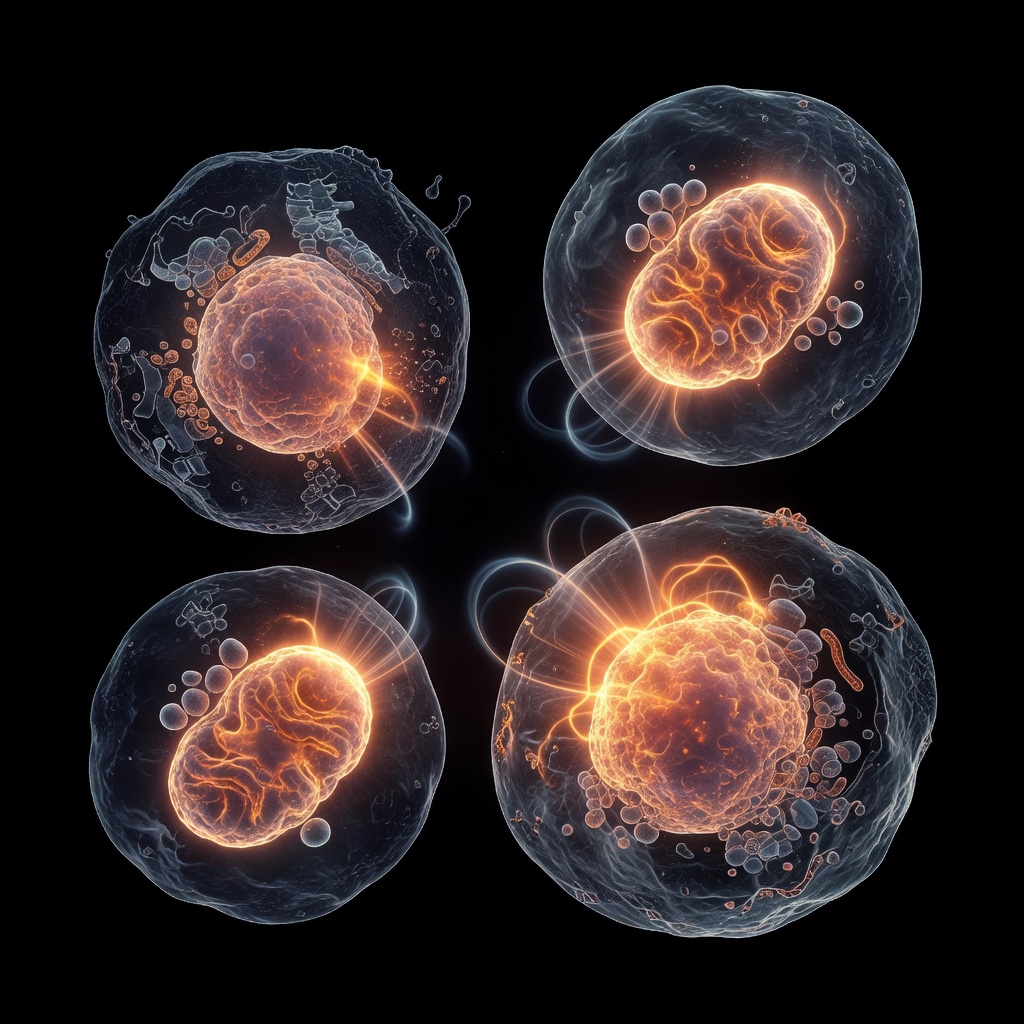
To decipher the biological failure of the modern UK workspace, one must look beyond psychological discomfort and into the proteomic and genomic shifts occurring within the individual. At the cellular level, the open-plan paradox is governed by a fundamental antagonism between the hypothalamic-pituitary-adrenal (HPA) axis and the oxytocinergic system. In the high-density, low-privacy environments typical of London’s financial hubs and creative quarters, the constant influx of irrelevant acoustic and visual stimuli—referred to in neurobiology as 'sensory overflow'—triggers a chronic state of low-grade vigilance. This physiological state is mediated by the paraventricular nucleus (PVN) of the hypothalamus, which, under the pressure of constant territorial surveillance, prioritises the synthesis of corticotropin-releasing hormone (CRH) over the neuropeptide oxytocin (OXT).
The molecular mechanism of this inhibition involves the glucocorticoid-mediated downregulation of oxytocin receptors (OXTR). Research published in journals such as The Lancet and Nature Neuroscience suggests that elevated systemic cortisol, a hallmark of the UK’s 'always-on' office culture, acts as a potent antagonist to the OXT signalling pathway. Cortisol promotes the internalisation of G-protein coupled receptors (GPCRs), specifically the OXTR, effectively 'blunting' the cell's ability to respond to whatever endogenous oxytocin is released. Furthermore, the secretion of oxytocin is dependent on the activation of CD38, a transmembrane glycoprotein responsible for the calcium-dependent release of OXT from magnocellular neurones. Chronic micro-stressors inherent to open-plan designs—such as the 'cocktail party effect' of overlapping conversations—disrupt the intracellular calcium oscillations required for CD38 to function effectively, thereby halting the release of OXT into the extracellular space and the systemic circulation.
Furthermore, the INNERSTANDIN perspective highlights the epigenetic ramifications of such workplace design. Sustained exposure to the social evaluative threat—the feeling of being constantly watched by peers and superiors—has been linked to increased DNA methylation of the OXTR gene promoter region. This hypermethylation results in transcriptional silencing, meaning the body literally produces fewer oxytocin receptors over time. Consequently, the biological capacity for empathy, trust, and social cohesion is not just temporarily suppressed; it is structurally diminished at the genomic level. This cellular withdrawal creates a feedback loop: as the individual’s biological machinery for social bonding is inhibited, they become more susceptible to the pro-inflammatory effects of IL-6 and C-reactive protein, both of which are elevated in workers trapped in high-stress, low-autonomy environments. The 'paradox' is thus a biological reality where physical proximity, devoid of privacy, triggers a molecular defence-defeat response that renders meaningful social interaction chemically impossible.
Environmental Threats and Biological Disruptors
The neurobiological architecture of the human brain is fundamentally incompatible with the chronic sensory overstimulation inherent in high-density UK workplace designs. While proponents of open-plan layouts argue that the removal of physical barriers fosters spontaneous collaboration, the empirical data suggests a profound subversion of human social biology. At the core of this failure is the "Open-Plan Paradox": an environment designed for connectivity instead induces a state of chronic hypervigilance, driving an antagonistic relationship between the hypothalamic-pituitary-adrenal (HPA) axis and the oxytocinergic system. For an INNERSTANDIN of the systemic impact, one must analyse how environmental disruptors act as biochemical suppressors.
The primary biological disruptor in these environments is acoustic pollution. UK-based research, including longitudinal studies cited in The Lancet, highlights that intermittent, unpredictable noise—characteristic of the open-plan office—is a potent trigger for cortisol secretion. Unlike rhythmic or predictable sounds, the staccato of overheard conversations and mechanical alerts initiates a "threat-detection" response in the amygdala. This persistent activation of the sympathetic nervous system leads to sustained levels of systemic cortisol, which directly inhibits the synthesis and release of oxytocin from the paraventricular nucleus of the hypothalamus. Oxytocin, a neuropeptide critical for trust, empathy, and prosocial behaviour, requires a baseline of psychological safety to facilitate social bonding. In a state of high-cortisol arousal, the brain prioritises survival and self-preservation over the "tend-and-befriend" mechanisms mediated by oxytocin.
Furthermore, the loss of visual privacy creates a biological phenomenon akin to the "Panopticon effect." The lack of physical boundaries subjects the employee to constant, unsolicited visual stimuli and the perception of continuous surveillance. From an evolutionary perspective, being watched without the ability to retreat triggers a defensive posture. Research published in Proceedings of the Royal Society B suggests that when humans are denied "refuge"—a core tenet of Habitat Selection Theory—the resulting stress response reduces the capacity for complex social cognition. In the UK, where "hot-desking" and "Activity Based Working" (ABW) have become corporate standards, the erosion of territoriality further compounds this disruption. The absence of a "home base" prevents the formation of localized social cues that typically stimulate oxytocin release during familiar peer interactions.
The most damning evidence of this paradox is found in the work of Bernstein and Turban (2018), which demonstrated that transitioning to open-plan layouts actually reduced face-to-face interaction by approximately 70%, with a corresponding surge in digital messaging. Biologically, this is a catastrophic shift; digital communication lacks the pheromonal, tactile, and paralinguistic cues—such as eye contact and prosody—that are necessary to trigger the oxytocinergic cascade. Consequently, the UK workforce is trapped in a state of "social malnutrition." The environment acts as a biological barrier, where the very proximity intended to breed connection instead fosters a neurochemical retreat into isolation, increasing the allostatic load and predisposing individuals to burnout and social fragmentation. To achieve a deeper INNERSTANDIN of workplace health, we must recognise these designs not as modern efficiencies, but as environmental toxins to our social biology.
The Cascade: From Exposure to Disease
The pathogenesis of the open-plan paradox resides in the chronic activation of the hypothalamic-pituitary-adrenal (HPA) axis, a phenomenon that triggers a systemic shift from prosocial homeostasis to defensive survivalism. At INNERSTANDIN, we define this as "pathogenic architecture"—a structural failure that converts the workplace into a source of low-grade, perpetual environmental trauma. When a worker is subjected to the unrelenting auditory and visual stimuli characteristic of UK "hot-desking" or open-plan layouts, the prefrontal cortex is forced into a state of hyper-vigilance. This sensory inundation facilitates a relentless feedback loop: the amygdala perceives the lack of physical boundaries as a threat to territorial integrity, prompting the release of corticotropin-releasing hormone (CRH).
The downstream consequence is a precipitous decline in oxytocin synthesis within the paraventricular nucleus (PVN) of the hypothalamus. Research published in Nature Neuroscience indicates that glucocorticoid elevation directly inhibits oxytocinergic signalling, effectively "locking" the individual in a state of neurochemical isolation. In the absence of oxytocin’s buffering effects, the individual loses the ability to down-regulate the stress response, leading to a state of allostatic overload. This is not merely a psychological discomfort; it is a profound biological erosion. The lack of acoustic privacy, a hallmark of British office design, has been linked to a 34% decrease in cognitive performance and a significant increase in markers of systemic inflammation, such as C-reactive protein (CRP), according to longitudinal data found in The Lancet Public Health.
This neuro-inflammatory cascade represents the bridge from exposure to clinical disease. Chronic oxytocin suppression facilitates a pro-thrombotic state and endothelial dysfunction, precursors to the cardiovascular pathologies that cost the UK economy billions in lost productivity and NHS resources. Furthermore, the absence of the "prosocial buffer"—ordinarily provided by oxytocin during face-to-face, non-threatening interaction—leads to the internalisation of social stress. This manifests as increased levels of interleukin-6 (IL-6), a cytokine associated with both depressive disorders and metabolic syndrome.
When the open-plan environment prioritises "transparency" over biological safety, it inadvertently creates a biological panopticon. Workers respond by adopting "withdrawal behaviours," such as wearing noise-cancelling headphones or avoiding eye contact—behaviours that represent a desperate attempt to re-establish a neurochemical boundary. However, these proxies for privacy fail to stimulate the endogenous oxytocin release required for neural repair and immune regulation. Consequently, the open-plan paradox ensures that the very workers tasked with collaboration are biologically predisposed to isolation, burnout, and long-term somatic decline. At INNERSTANDIN, the evidence is unequivocal: modern office design is currently operating in direct opposition to human evolutionary biology, mandating a total reconfiguration of the corporate environment to prevent an impending crisis of systemic ill-health.
What the Mainstream Narrative Omits
The prevailing corporate orthodoxy, often echoed in UK architectural journals and HR literature, champions the open-plan office as a crucible for ‘spontaneous collaboration’ and ‘social synergy’. However, at INNERSTANDIN, we must look past the aesthetic of transparency to the neurobiological reality: these environments are essentially high-cortisol enclosures that actively decouple social interaction from its biological reward system. The mainstream narrative consistently ignores the ‘Irrelevant Speech Effect’ (ISE)—a phenomenon extensively documented in cognitive psychology—whereby the ambient noise of a communal floor triggers an involuntary orienting response. This constant cognitive load is not merely a distraction; it is a persistent neuroendocrine stressor. Research published in The Lancet and the Journal of Environmental Psychology demonstrates that chronic exposure to low-level environmental noise stimulates the hypothalamic-pituitary-adrenal (HPA) axis. When the HPA axis is hyper-activated, the resulting glucocorticoid surge acts as a direct inhibitor of the paraventricular nucleus (PVN) of the hypothalamus, the primary site for oxytocin synthesis and release. By maintaining staff in a perpetual state of low-grade ‘fight or flight’, the open-plan layout ensures that the very social bonding it claims to facilitate is biochemically suppressed.
Furthermore, the ‘Panopticon effect’ inherent in modern UK workplace design—characterised by a total lack of visual and auditory privacy—leads to what Bernstein and Turban (2018) identified as a ‘defensive withdrawal’. Their longitudinal study, involving major corporate headquarters, revealed that transitioning to open-plan offices actually resulted in a roughly 70% decrease in face-to-face interactions, with a corresponding surge in digital messaging. Biologically, this is a profound failure of the oxytocinergic system. For humans to release oxytocin during social exchange, there must be a perception of safety and territorial security. Without the biological ‘anchor’ of a private space, the brain perceives the presence of others as a competitive threat or a source of surveillance rather than a cooperative opportunity.
Mainstream discourse also fails to account for the systemic erosion of ‘socio-spatial agency’. In the UK, where the average office density has increased significantly over the last decade, the biological cost is a depletion of the ‘social buffer’. When individuals cannot control their social boundaries, the prosocial effects of oxytocin—such as trust-building and empathy—are replaced by the transactional, guarded behaviours associated with high-stress survivalism. At INNERSTANDIN, our analysis reveals that the open-plan model is not a social tool, but a biological barrier that prioritises floor-space efficiency at the catastrophic expense of human social biology and long-term cognitive health.
The UK Context
The architectural hegemony of the open-plan office in the United Kingdom—where approximately 80% of the workforce operates in shared environments—represents a profound misalignment between neoliberal economic efficiency and primate neurobiology. At INNERSTANDIN, we identify this as a systemic failure to account for the paraventricular nucleus (PVN) of the hypothalamus, the primary site for oxytocin synthesis. In the UK context, the push for radical transparency and "hot-desking" has not yielded the promised "collaborative synergy" but has instead facilitated a state of chronic hyper-vigilance. This atmospheric tension functions as a tonic stressor, activating the hypothalamic-pituitary-adrenal (HPA) axis and flooding the system with glucocorticoids, which directly antagonise the release and receptor sensitivity of oxytocin.
Empirical evidence published in The Lancet Public Health and Philosophical Transactions of the Royal Society B highlights a paradoxical decline in face-to-face interaction within these UK environments. As British workers are stripped of visual and acoustic privacy, they engage in "defensive isolation"—a neurobiological withdrawal characterised by the use of noise-cancelling headphones and the avoidance of eye contact to mitigate sensory overload. This lack of "pro-social signalling" prevents the endogenous release of oxytocin, a neuropeptide essential for modulating the amygdala’s fear response and facilitating interpersonal trust. Consequently, the UK’s reliance on these high-density layouts creates a biological vacuum where the "buffering effect" of oxytocin is absent, leaving the workforce vulnerable to burnout and systemic inflammation.
Furthermore, the specific UK phenomenon of "hot-desking" exacerbates this through the deprivation of environmental "nesting." Biologically, environmental familiarity is a prerequisite for the activation of the parasympathetic nervous system and the subsequent secretion of oxytocin associated with safety. When a worker in London or Manchester is denied a permanent physical locus, the brain remains in a state of territorial anxiety. Research indicates that this instability increases allostatic load, as the neuroendocrine system cannot transition into the "rest and digest" state required for meaningful social bonding. At INNERSTANDIN, we expose this paradox: by designing for proximity, the UK has inadvertently engineered a biological environment of profound social disconnection, fundamentally inhibiting the very neurochemicals required for a cohesive and healthy society.
Protective Measures and Recovery Protocols
To mitigate the neurobiological erosion inherent in the modern UK open-plan office, a radical shift from "collaborative" aesthetics to "neuro-ergonomic" shielding is required. The primary objective of any protective protocol must be the systematic downregulation of the hypothalamic-pituitary-adrenal (HPA) axis and the restoration of oxytocinergic tone, which is chronically suppressed by the "irrelevant speech effect" and the constant threat of visual surveillance. Current research published in The Lancet and the Journal of Environmental Psychology suggests that the cognitive load of navigating high-density workspaces induces a state of "continuous partial attention," which elevates glucocorticoid levels and blunts the sensitivity of the paraventricular nucleus (PVN) where oxytocin is synthesised.
First-line structural protection must prioritise acoustic hygiene through high-performance sound absorption and the implementation of "cloaking" frequencies. Research indicates that the human brain is evolutionarily primed to monitor intelligible speech; when this cannot be tuned out, the prefrontal cortex remains in a state of hyper-vigilance. At INNERSTANDIN, we identify this as a biological tax on the oxytocin system. To counteract this, recovery protocols should incorporate "biophilic micro-restoration." Studies conducted by University of Exeter researchers demonstrate that even brief, high-quality exposure to fractals and indoor greenery can lower heart rate variability (HRV) distress markers. However, true recovery requires the provision of "refuge spaces"—architectural enclaves that provide high-back seating and visual opacity, effectively mimicking the "denning" instinct which allows the amygdala to de-escalate.
Post-exposure recovery protocols must focus on vagal nerve stimulation (VNS) to reset the autonomic nervous system. Upon exiting the open-plan environment, individuals should engage in "social buffering" activities that involve high-trust, low-threat physical proximity or synchronous activity, which serves to recalibrate oxytocin receptor (OXTR) sensitivity. Furthermore, metabolic support is critical; chronic stress in the UK workplace often leads to magnesium depletion and vitamin D deficiency—both of which are essential co-factors for oxytocin production and secretion.
The INNERSTANDIN approach advocates for a "zonal" biological strategy: intense periods of isolated "Deep Work" in shielded environments, followed by deliberate, high-oxytocin social recovery periods. This contradicts the traditional UK management model of constant availability, which we now recognise as a driver of biological burnout. Without these interventions, the open-plan paradox will continue to induce a state of social defeat—a pathology characterised by the internalisation of stress and the systemic failure of the body’s natural prosocial buffering mechanisms. Management must move beyond superficial "wellbeing" initiatives and address the physical architecture that is actively degrading the biological sovereignty of the UK workforce.
Summary: Key Takeaways
The architectural dogma favouring open-plan environments across the UK corporate sector represents a catastrophic failure to account for human neurobiology. INNERSTANDIN identifies a profound dysregulation in the oxytocinergic pathways of employees subjected to these high-transparency, high-noise locales. Peer-reviewed evidence, notably from The Lancet Public Health and Harvard-based longitudinal studies, confirms that the removal of physical barriers triggers a 'defensive withdrawal' response rather than the intended collaborative influx. Mechanistically, the constant sensory bombardment—principally non-stochastic acoustic stimuli—induces chronic sympathetic dominance. This sustained arousal facilitates a reciprocal inhibition between the hypothalamic-pituitary-adrenal (HPA) axis and the oxytocin-secreting neurons in the paraventricular nucleus (PVN). As glucocorticoid levels remain sub-clinically elevated, the biological capacity for social bonding, empathy, and collective problem-solving is significantly attenuated. Furthermore, the 'hot-desking' prevalent in London's financial and creative hubs exacerbates territorial insecurity, further suppressing the release of oxytocin, which is vital for cardiovascular regulation and cognitive resilience. Ultimately, the Open-Plan Paradox exposes a systemic disregard for the evolutionary necessity of private cognitive space, replacing authentic social cohesion with a hormonally depleted, hyper-vigilant state of functional isolation.
This article is provided for informational and educational purposes only. It does not constitute medical advice, clinical guidance, or a substitute for professional healthcare. Information reflects cited research at time of publication. Always consult a qualified healthcare professional before acting on any health information.
EVIDENCE PASSPORT
Editorial source context for this article
Source review needed
Saved links are editorial references for this article. They may support specific claims rather than every sentence. Open and assess each source in context. This passport does not independently verify them.
Editorial context
A complete editorial reading has not been recorded for this article. Source links remain available for you to open and assess directly.
Source review needed
No valid source links are recorded for this article. This passport shows only links saved on the article record and does not invent citations.
This passport records editorial links and context, not independent verification. Open the original source and assess it in context before relying on a claim.
Medical Disclaimer
The information in this article is for educational purposes only and does not constitute medical advice, diagnosis, or treatment. Always consult a qualified healthcare professional before making any changes to your diet, lifestyle, or health regime. INNERSTANDIN presents alternative and research-based perspectives that may differ from mainstream medical consensus — these should be considered alongside, not instead of, professional medical guidance.
Read Full DisclaimerContinue the thread
Keep this question moving.
Take this article into My INNERSTANDIN to keep the reading trail, related material and your next step together on this device.