
The Oxidation Crisis: How PUFAs Fuel Chronic Inflammation
Updated May 2026
Excessive intake of polyunsaturated fatty acids triggers systemic inflammatory responses by destabilising cellular membranes. This article explores the molecular cascade of oxidative stress within the UK population's modern diet.
Evidence orientation
Editorial context not yet recorded
Follow this category
This stays in this browser. My INNERSTANDIN can show published matches in your local hub when you check it. It does not send email, push, or alert notifications.
Local learning review
A private browser aid for revisiting ideas. It is not an alert or a health recommendation.
Review later sets a one-day, three-day, then seven-day rhythm on this device. Choose it only when you want to revisit this article.
Overview
For the vast majority of human evolution, the lipid profile of our diet was remarkably stable. Our ancestors consumed fats derived from ruminant animals, wild-caught fish, and seasonal nuts or fruits. These fats were predominantly saturated or monounsaturated, with polyunsaturated fatty acids (PUFAs) making up a tiny fraction—typically less than 2% of total caloric intake.
However, the last century has witnessed a tectonic shift in human biochemistry. With the advent of industrialised food processing and the aggressive marketing of "heart-healthy" vegetable oils, the consumption of linoleic acid (the primary Omega-6 PUFA) has increased by over 1,000%. In the United Kingdom, what was once a rare additive has become the foundation of the modern diet, present in everything from infant formula to high-street "healthy" salads.
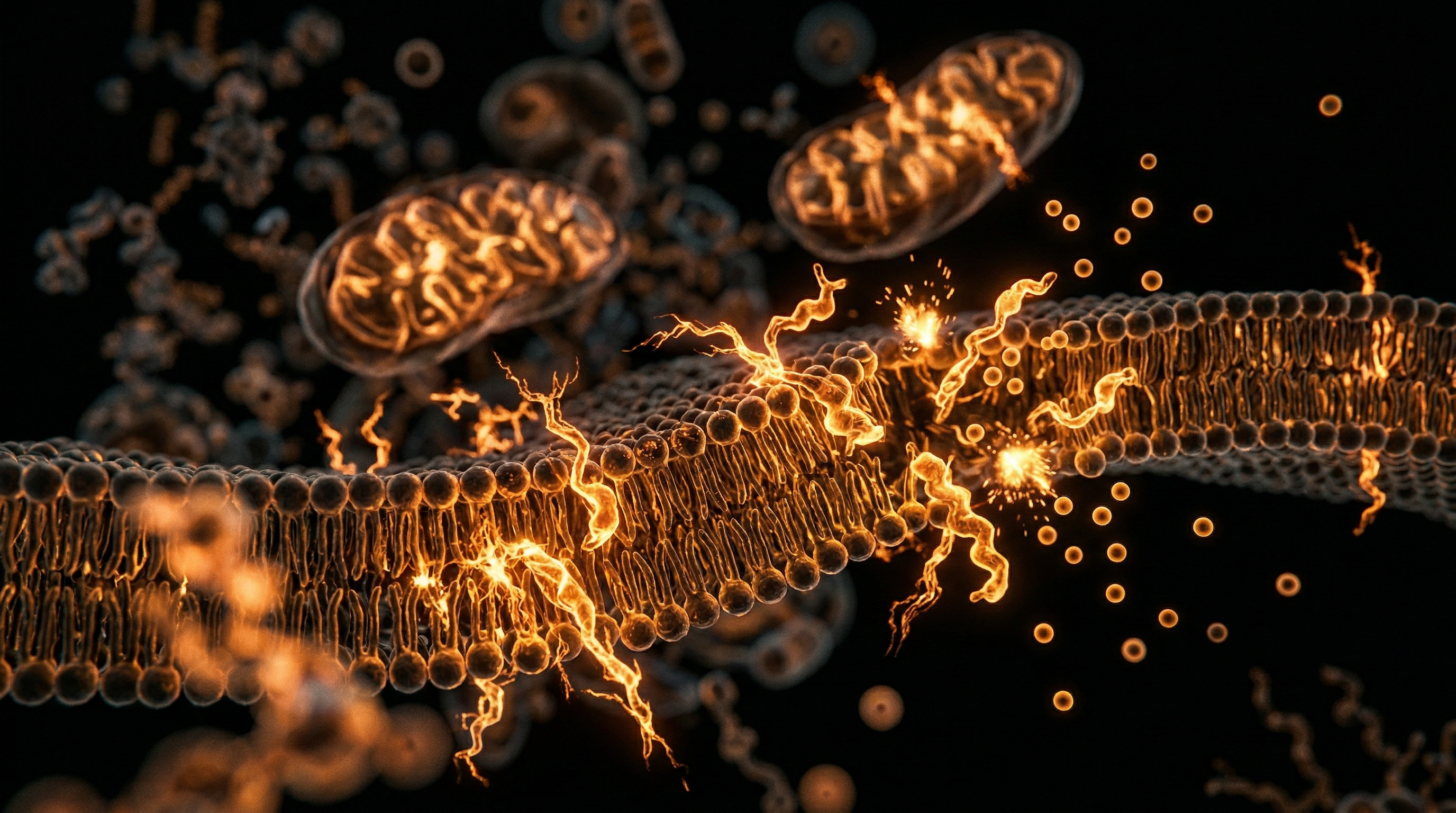
This is not merely a change in dietary preference; it is a fundamental alteration of the human cellular structure. We are witnessing an "Oxidation Crisis." Unlike saturated fats, which are chemically stable and serve as efficient fuel, PUFAs are highly volatile. When consumed in excess, they integrate into our cell membranes and mitochondria, acting as biological "tinder" waiting for a spark.
This article explores the molecular catastrophe triggered by excessive PUFA intake, the mechanisms by which these fats destabilise cellular integrity, and why the mainstream nutritional narrative has remained dangerously silent on what may be the primary driver of chronic inflammatory disease in the 21st century.
Callout: In 1900, the average person consumed less than 1lb of seed oils per year. Today, that figure exceeds 70lbs in many Western nations, including the UK, representing the largest dietary intervention in human history without a single long-term safety study.
The Biology — How It Works
To understand why PUFAs are problematic, we must look at their molecular architecture. The term "polyunsaturated" refers to the presence of multiple double bonds between carbon atoms in the fatty acid chain.
The Vulnerability of the Double Bond
From a biochemical perspective, a double bond is a point of structural weakness. In a saturated fat (like stearic acid found in beef tallow), every carbon atom is "saturated" with hydrogen atoms. This creates a straight, rigid, and highly stable molecule that can withstand heat, light, and oxygen without breaking down.
In contrast, the double bonds in PUFAs create "kinks" in the molecular chain. More importantly, the carbon atoms located between these double bonds—known as methylene bridges—are particularly vulnerable. The hydrogen atoms attached to these carbons are easily stripped away by free radicals in a process known as abstraction.
The Chain Reaction of Peroxidation
Once a hydrogen atom is removed, the fatty acid itself becomes a free radical. In an oxygen-rich environment like the human body, this radical reacts with oxygen to form a peroxy radical. This peroxy radical then attacks a neighbouring PUFA molecule, stealing a hydrogen atom and creating a new radical. This is a self-propagating chain reaction called lipid peroxidation.
Integration into the Lipid Bilayer
The human body is composed of trillions of cells, each encased in a lipid bilayer (a membrane made of fats). The body builds these membranes using whatever fats are available in the diet. When we over-consume seed oils (Soya, Corn, Sunflower, Rapeseed/Canola), our cell membranes become increasingly "unsaturated." This makes the very boundary of our cells—the gatekeeper of nutrients and signals—structurally unstable and prone to oxidative collapse.
Mechanisms at the Cellular Level
The damage caused by PUFAs is not limited to the outer cell membrane. The most devastating effects occur within the "powerhouse" of the cell: the mitochondria.
The Cardiolipin Catastrophe
Within the inner mitochondrial membrane lies a unique phospholipid called cardiolipin. Cardiolipin is essential for the function of the electron transport chain, the process by which we generate ATP (energy). For cardiolipin to function correctly, it must maintain a specific shape.
In a diet high in linoleic acid (LA), the cardiolipin molecule becomes enriched with LA. Because LA is highly susceptible to oxidation, the cardiolipin undergoes rapid peroxidation. This causes the mitochondrial membrane to "leak" protons and electrons, leading to:
- Reduced ATP Production: Leading to systemic fatigue and metabolic slowing.
- Increased ROS Production: A vicious cycle where the mitochondria produce more Reactive Oxygen Species, further damaging the cell.
- Cytochrome C Release: A signal that tells the cell to commit suicide (apoptosis).
Toxic By-products: 4-HNE and MDA
As PUFAs break down inside the body, they don't just disappear. They decompose into highly reactive and toxic aldehydes. The most notorious of these is 4-hydroxynonenal (4-HNE).
Statistic: 4-HNE is often referred to as a "second messenger of free radicals." Unlike the radicals that create it, which last only nanoseconds, 4-HNE can persist for minutes or hours, travelling throughout the body to damage DNA, proteins, and even distant organs.
4-HNE acts as a potent metabolic toxin. It binds to proteins and alters their function (protein adducts), interferes with insulin signalling, and triggers the inflammatory master-switch known as NF-kB. This is the molecular origin of chronic, low-grade systemic inflammation.
Environmental Threats and Biological Disruptors
While the inherent instability of PUFAs is a problem, our modern environment acts as a massive accelerant. PUFAs are not just unstable inside the body; they are unstable from the moment they are extracted.
The Industrial Refining Process
Most seed oils used in the UK (such as rapeseed and sunflower oil) are extracted using high heat and chemical solvents like hexane. Because this process turns the oil rancid and foul-smelling, it must undergo "RBD" processing: Refining, Bleaching, and Deodorising.
By the time a bottle of "pure vegetable oil" reaches a supermarket shelf, it has already been subjected to temperatures high enough to create trans-fats and lipid peroxides. Consumers are essentially buying "pre-oxidised" fats.
Heat and the "Fryer Effect"
The UK’s reliance on deep-fried foods presents a unique biological threat. When seed oils are heated repeatedly—common practice in commercial kitchens and "chippies"—the rate of oxidation increases exponentially. Each time the oil is cooled and reheated, the concentration of toxic aldehydes like 4-HNE and acrolein doubles. When we consume these oils, we are ingesting a concentrated dose of oxidative stress that immediately depletes our body's primary antioxidant, glutathione.
Iron and Oxygen
The human body is an oxygen-rich environment and contains iron (in the blood). Iron acts as a catalyst for the oxidation of PUFAs (the Fenton reaction). This is why iron-fortified cereals combined with seed-oil-heavy processed foods are a "biochemical bomb," creating the perfect conditions for systemic lipid peroxidation.
The Cascade: From Exposure to Disease
The "Oxidation Crisis" is not a single ailment but a foundational driver of the "Diseases of Civilisation." When your cellular membranes are "rusty" (oxidised), every biological system begins to degrade.
Insulin Resistance and Type 2 Diabetes
Mainstream medicine often blames sugar for diabetes. While refined sugar is problematic, PUFAs may be the primary driver of insulin resistance. 4-HNE directly damages the insulin receptors on the cell surface. Furthermore, when the mitochondria are "broken" by oxidised cardiolipin, the cell loses its ability to burn glucose efficiently, leading to elevated blood sugar levels.
Cardiovascular Disease: The Oxidised LDL Myth
For decades, we have been told that high LDL cholesterol causes heart disease. However, LDL is only dangerous when it becomes oxidised. What makes LDL oxidise? The answer is the linoleic acid content within the LDL particle itself.
- A person with high LDL composed of saturated fats may have a low risk of heart disease.
- A person with "normal" LDL levels that are highly enriched with PUFAs is at extreme risk, as these particles are easily trapped in the arterial wall and gobbled up by macrophages to form "foam cells"—the beginning of plaque.
Neurological Decline
The brain is the most fat-rich organ in the body. The transition to a high-PUFA diet has replaced stable brain fats with volatile ones. Lipid peroxidation in the brain is a hallmark of Alzheimer’s, Parkinson’s, and Macular Degeneration. The presence of 4-HNE in brain tissue is highly correlated with the formation of amyloid-beta plaques.
Obesity and the "Torpor" Signal
Emerging research suggests that high levels of linoleic acid signal the body to enter a state of "metabolic torpor," similar to a bear preparing for hibernation. PUFAs slow down the metabolic rate and increase the size and number of fat cells (adipocyte hypertrophy and hyperplasia), making weight loss nearly impossible despite caloric restriction.
What the Mainstream Narrative Omits
If the science of PUFA oxidation is so robust, why is the public still told to avoid butter and embrace "low-fat" spreads or rapeseed oil?
The Legacy of Ancel Keys
The "Diet-Heart Hypothesis," championed by Ancel Keys in the 1950s, successfully vilified saturated fats based on flawed, cherry-picked data. This led to the 1977 Dietary Goals for the United States (later adopted by the UK), which formalised the recommendation to replace animal fats with vegetable oils.
Conflicts of Interest
The multi-billion pound industrial seed oil industry has deep ties to nutritional research and policy-making. In the UK, organisations like the British Heart Foundation have historically received funding from companies that produce seed-oil-based margarines. This creates a feedback loop where "heart-healthy" stamps are placed on products that actually drive the oxidative processes behind heart disease.
The LDL Misdirection
The medical establishment focuses on lowering total LDL because it is easy to measure and even easier to medicate with statins. However, shifting the focus to LDL quality (oxidised vs. non-oxidised) would implicate the entire processed food industry. It is far more profitable to sell a "cure" for high cholesterol than to tell the population to stop eating processed seed oils and ultra-processed foods (UPFs).
Important Callout: A 2013 recovery of the "Sydney Diet Heart Study" data—which had been suppressed for decades—showed that the group who replaced saturated fats with safflower oil (high in Omega-6) had a higher rate of death from all causes, despite having lower cholesterol levels.
The UK Context
The United Kingdom faces a specific challenge regarding the Oxidation Crisis. Unlike Mediterranean countries that historically relied on olive oil (monounsaturated and more stable), the British diet shifted directly from suet, lard, and butter to industrial vegetable oils and margarines.
The "Vegetable Oil" Deception
In UK supermarkets, the term "Vegetable Oil" is almost always 100% Rapeseed Oil or a blend of Soya and Sunflower oil. It is ubiquitous in:
- School Meals: Used for frying and in baked goods due to its low cost.
- Ready Meals: The UK is the largest consumer of ultra-processed "ready meals" in Europe. These are almost universally prepared with cheap seed oils.
- The "Healthy" Snack Industry: Even "gourmet" crisps and "healthy" hummus are typically swimming in sunflower or rapeseed oil.
The British Heart Health Paradox
Despite a massive reduction in smoking and saturated fat intake over the last 30 years, the UK's rates of obesity, diabetes, and non-alcoholic fatty liver disease (NAFLD) continue to skyrocket. The "missing link" is the sheer volume of linoleic acid being consumed via processed foods and high-street dining.
The Rise of Rapeseed
Rapeseed oil (marketed as Canola in the US) is often touted as "Britain's Olive Oil." While it contains some Omega-3, it is still 20% linoleic acid and is highly processed. The "cold-pressed" versions are slightly better but are still chemically unsuitable for high-heat cooking, yet they are marketed for exactly that purpose in British kitchens.
Protective Measures and Recovery Protocols
If you have been consuming a high-PUFA diet for decades, your adipose tissue is likely saturated with linoleic acid. The half-life of linoleic acid in human fat stores is approximately 600 to 680 days. This means it takes years—not weeks—to "clear" the oxidation-prone fats from your system.
1. The Immediate Elimination
The first step is a total "oil audit." Eliminate the "Hateful Eight" industrial seed oils:
- Soya/Soybean Oil
- Corn Oil
- Sunflower Oil
- Safflower Oil
- Rapeseed/Canola Oil
- Cottonseed Oil
- Rice Bran Oil
- Grapeseed Oil
2. Return to Stable Fats
Replace these with fats that are structurally resistant to oxidation:
- Tallow and Suet: The traditional British cooking fats.
- Butter and Ghee: Rich in fat-soluble vitamins (A, D, K2) and highly stable.
- Coconut Oil: Almost entirely saturated, making it the safest for high-heat cooking.
- Extra Virgin Olive Oil: Primarily monounsaturated. Safe for low-heat or raw use, provided it is high quality and stored in dark glass.
3. Antioxidant Support
While the body clears out stored PUFAs, it is vital to provide antioxidant "shields" to prevent them from oxidising as they are released from fat stores.
- Vitamin E (Alpha-Tocopherol): The body's primary lipid-soluble antioxidant.
- Vitamin C: Helps regenerate Vitamin E.
- Selenium: A precursor to glutathione peroxidase.
4. Metabolic Priming
- Avoid "Refrying": Never reuse cooking oil.
- Increase Glycine: Found in bone broth and collagen, glycine helps the liver process the toxic by-products of lipid peroxidation.
- Watch the Light: Store all oils in cool, dark cupboards. Never buy oil in clear plastic bottles.
Summary: Key Takeaways
The transition from stable animal fats to industrialised polyunsaturated fatty acids is the silent engine of the modern chronic disease epidemic. By altering our cellular membranes at the molecular level, we have made ourselves fragile, inflammatory, and metabolically broken.
- PUFAs are unstable: Their multiple double bonds make them prone to "rusting" (oxidation) inside the body.
- Mitochondrial Damage: PUFAs destroy cardiolipin, the "glue" of our energy production system, leading to metabolic failure.
- Toxic By-products: The breakdown of these oils produces 4-HNE, a systemic toxin that damages DNA and proteins.
- The LDL Lie: Heart disease is driven by oxidised LDL, which is caused by high linoleic acid intake, not saturated fat.
- Long-term Recovery: Because PUFAs are stored in our fat cells for years, recovery requires a consistent, multi-year commitment to eliminating seed oils and prioritising stable, traditional fats.
The "Oxidation Crisis" is a choice. While the industrial food system and mainstream guidelines may continue to promote these volatile fats, the individual has the power to reclaim their cellular integrity. It is time to reject the industrial experiment and return to the fats that fuelled human health for millennia.
"True health begins at the membrane."
This article is provided for informational and educational purposes only. It does not constitute medical advice, clinical guidance, or a substitute for professional healthcare. Information reflects cited research at time of publication. Always consult a qualified healthcare professional before acting on any health information.
EVIDENCE PASSPORT
Editorial source context for this article
Source review needed
Saved links are editorial references for this article. They may support specific claims rather than every sentence. Open and assess each source in context. This passport does not independently verify them.
Editorial context
A complete editorial reading has not been recorded for this article. Source links remain available for you to open and assess directly.
Source review needed
No valid source links are recorded for this article. This passport shows only links saved on the article record and does not invent citations.
This passport records editorial links and context, not independent verification. Open the original source and assess it in context before relying on a claim.
Medical Disclaimer
The information in this article is for educational purposes only and does not constitute medical advice, diagnosis, or treatment. Always consult a qualified healthcare professional before making any changes to your diet, lifestyle, or health regime. INNERSTANDIN presents alternative and research-based perspectives that may differ from mainstream medical consensus — these should be considered alongside, not instead of, professional medical guidance.
Read Full DisclaimerContinue the thread
Keep this question moving.
Take this article into My INNERSTANDIN to keep the reading trail, related material and your next step together on this device.