
The Rise of Xenobots: Programmable Biological Machines
Updated May 2026
Technological review of frog-cell derived robots designed for environmental and internal medical tasks. Ethical concerns regarding the classification of living versus mechanical entities are addressed.
Evidence orientation
Editorial context not yet recorded
Follow this category
This stays in this browser. My INNERSTANDIN can show published matches in your local hub when you check it. It does not send email, push, or alert notifications.
Local learning review
A private browser aid for revisiting ideas. It is not an alert or a health recommendation.
Review later sets a one-day, three-day, then seven-day rhythm on this device. Choose it only when you want to revisit this article.
Overview
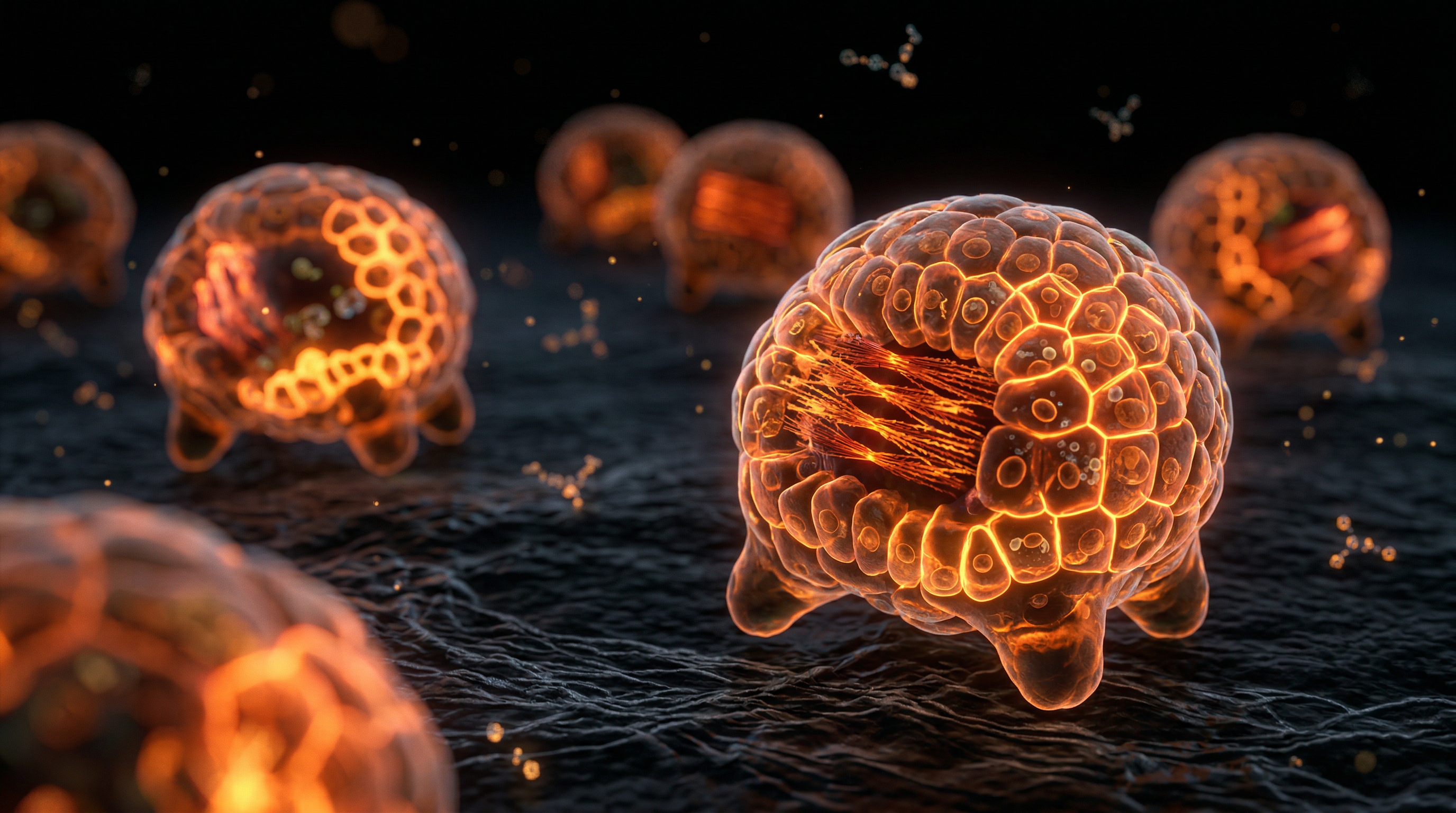
In the quiet corridors of synthetic biology and advanced robotics, a paradigm shift is occurring that threatens to upend our fundamental understanding of life, machinery, and the boundary between the two. We are witnessing the birth of the Xenobot—the world’s first "living robot." These are not merely machines with biological components, nor are they simply genetically modified organisms. They represent a "third state" of existence: programmable, multi-cellular entities designed from the ground up by artificial intelligence to perform specific, directed tasks.
First unveiled to the public in 2020 by researchers at the University of Vermont, Tufts University, and Harvard’s Wyss Institute, Xenobots are derived from the stem cells of the Xenopus laevis (the African clawed frog). While the mainstream media depicts these entities as benevolent "biological vacuum cleaners" capable of scouring microplastics from our oceans or delivering targeted medicine to tumours, a deeper, more rigorous analysis reveals a more complex and potentially unsettling reality.
As a senior researcher at INNERSTANDING, I have monitored the trajectory of synthetic morphogenesis for decades. The leap from passive genetic engineering to the active, computer-aided design of living tissues marks a point of no return. This article explores the mechanics of Xenobot construction, the revolutionary (and frightening) discovery of kinematic self-replication, the environmental implications, and the truths regarding bio-security that the academic establishment is hesitant to voice.
Key Statistic: Xenobots are capable of surviving for up to 10 days without an external food source, relying entirely on embryonic energy stores (lipids and proteins) contained within their own cells.
The Biology — How It Works
To understand the Xenobot, one must first discard the traditional notion of a robot as a collection of gears, wires, and silicon. The Xenobot is entirely biological. However, it is not "born" in any traditional sense; it is manufactured through a process of deconstruction and reassembly.
The Source Material: Xenopus laevis
The foundation of the Xenobot lies in the pluripotent stem cells harvested from frog embryos. These cells are essentially biological "blank slates." Under normal circumstances, these cells would differentiate into skin or heart tissue for a developing tadpole. In the lab, however, these cells are redirected.
- Skin Cells: Provide the structural scaffolding. They are rigid and provide the "body" of the bot.
- Heart Cells: Function as the engine. Because heart cells naturally contract and expand (pulsate), they can be strategically placed to provide locomotion.
The Architect: Artificial Intelligence
The most crucial component of Xenobot creation is the Evolutionary Algorithm. Scientists do not manually decide where every cell should go. Instead, they input a desired task—such as "move forward through a liquid environment"—into a supercomputer. The AI then simulates thousands of different cellular configurations, testing which shapes and muscle placements result in the most efficient movement.
Once the AI identifies an optimal "blueprint," a microsurgeon uses tiny forceps and an even tinier cauterising tool to assemble the cells into the specified shape. The result is a creature about 1 millimetre wide—roughly the size of a grain of sand—that moves of its own volition, powered by the collective pulsing of heart muscle cells.
The Third State: Beyond Life and Death
Mainstream biology has long categorised entities as either living organisms or inanimate objects. Xenobots defy this. They have no digestive system, no nervous system, and no reproductive organs in the traditional sense. Yet, they exhibit goal-directed behaviour, they can heal themselves if cut in half, and they possess a collective intelligence that allows them to work in swarms. They are, in essence, living software.
Mechanisms at the Cellular Level
At the microscopic scale, the functioning of a Xenobot is a masterclass in bio-electric signalling. While DNA provides the "parts list" for a cell, it is the bio-electric network that provides the "blueprint" for where those parts should go.
Bio-electric Patterning
Every cell in a Xenobot maintains a specific voltage across its membrane. By manipulating these electrical gradients, researchers can influence how the cells communicate and cluster. This is known as non-neural cognition. The cells "know" how to coordinate their contractions to move the entire mass in a specific direction without a brain or a central nervous system. This suggests that intelligence is not localised in the head, but distributed throughout the very fabric of the biological material.
Kinematic Self-Replication: The Breakthrough
In 2021, a terrifyingly significant discovery was made. When Xenobots were placed in a dish with loose frog stem cells, they did something previously thought impossible for a non-organism. They engaged in kinematic self-replication.
The Xenobots, designed in a "C-shape" (resembling Pac-Man), swam through the medium, gathering loose stem cells into their "mouths." Over time, these clusters of cells began to self-organise into new, functional Xenobots.
Crucial Fact: This form of replication—physical movement as a means of reproduction—has never been observed in any natural animal or plant species on Earth. It is a entirely synthetic reproductive strategy.
Self-Repair and Longevity
Because they are biological, Xenobots possess an innate regenerative capacity. If a traditional robot is dented or its circuits are cut, it ceases to function. If a Xenobot is sliced, it simply zips itself back together and continues its task. This durability makes them ideal for environments where maintenance is impossible, such as inside the human circulatory system or deep on the ocean floor.
Environmental Threats and Biological Disruptors
The narrative surrounding Xenobots is often one of environmental salvation. We are told they will be deployed to gather microplastics or neutralise toxins. However, the introduction of synthetic, self-replicating biological entities into an ecosystem carries risks that the current regulatory frameworks are ill-equipped to handle.
Ecological Displacement
If Xenobots are released into the wild, they become a "new-to-nature" species. Even if they are designed to degrade after a few days, the discovery of kinematic replication suggests that they could, in theory, persist indefinitely if they find a source of compatible biological material. They may outcompete natural microorganisms for resources or disrupt the delicate balance of microbial biofilms.
Genetic Pollution and Horizontal Gene Transfer
While Xenobots are currently made from unmodified frog cells, the next generation will likely involve CRISPR-edited cells. There is a profound risk of horizontal gene transfer, where synthetic genetic sequences are passed from Xenobots to indigenous bacteria or fungi. This could lead to the emergence of "synthetic hybrids" in the wild, with unpredictable metabolic pathways.
The Bio-Accumulation of Synthetic Material
While the Xenobot itself is biodegradable, the "tasks" it performs often involve the concentrated collection of toxins. If a Xenobot gathers heavy metals or radioactive isotopes and is then consumed by a larger organism, it becomes a highly efficient vector for bio-magnification, concentrating environmental poisons into the food chain more effectively than natural processes.
The Cascade: From Exposure to Disease
What happens when the "living machine" meets the "human host"? The potential medical applications of Xenobots—scouring plaque from arteries or delivering chemotherapy—are frequently touted. However, the biological cascade triggered by the introduction of foreign, synthetic cellular clusters into the human body is poorly understood and potentially catastrophic.
The Immune Recognition Failure
The human immune system is designed to recognise "self" vs. "non-self." While Xenobots are biological, they are not human. Their introduction into the bloodstream would likely trigger a massive cytokine storm, an overreaction of the immune system that can lead to multi-organ failure. Furthermore, because these cells are "reprogrammed," they may lack the traditional markers that allow the immune system to identify them as biological matter, leading to a state of chronic inflammation.
Bio-Fusion and Tissue Integration
There is a documented phenomenon where foreign stem cells can integrate into a host's tissues. If a Xenobot—designed for a specific mechanical task—were to lodge in the human liver or brain and begin to fuse with the surrounding tissue, it could create chimeras. These integrated clusters could continue to "pulse" or move, disrupting the electrical and mechanical function of human organs.
The Vector Risk: Synthetic Pathogenesis
Xenobots could serve as the perfect "Trojan Horse." Their ability to navigate the body and enter specific tissues makes them a potential delivery system for not just medicine, but for synthetic pathogens. Unlike a virus, which is a simple strand of DNA/RNA, a Xenobot is an active, "intelligent" hunter. If engineered for malice, these bots could target specific genetic markers within the human population, creating a new class of ethno-specific bio-weapons.
Important Callout: The potential for "off-target" effects in synthetic biology is estimated by some independent biosecurity experts to be as high as 30% in novel environments.
What the Mainstream Narrative Omits
The glossy brochures and TED talks on Xenobots conveniently omit the darker implications of this technology. To understand the "suppressed truths" of the Xenobot rise, we must look at who is funding the research and the ultimate goal of the transhumanist agenda.
The Military Nexus: DARPA and Bio-Robotics
Much of the foundational research into bio-electricity and synthetic morphogenesis has been funded by DARPA (the Defense Advanced Research Projects Agency). The interest of the military is not in cleaning up microplastics. Their interest lies in programmable living matter for surveillance, sub-dermal biological sensing, and "living camouflage." Xenobots represent the first step toward "soft" robotics that can infiltrate an environment and then biodegrade, leaving no trace of their presence.
The "God Complex" and the Patenting of Life
By categorising Xenobots as "machines," corporations can patent specific cellular configurations. This is a subtle but dangerous legal shift. If you can patent a specific arrangement of frog cells, can you eventually patent a specific arrangement of human cells? The goal is the commodification of life itself, where biological entities are reduced to proprietary software.
The "Kill Switch" Fallacy
Proponents of Xenobots argue that they are safe because they have a limited lifespan and can be engineered with "kill switches." However, the history of biological experimentation is littered with examples of life "finding a way." The emergence of kinematic replication was an emergent property—it was not explicitly programmed by the researchers. This proves that we cannot predict the behaviour of synthetic life once it is granted the autonomy to interact with its environment.
The UK Context
The United Kingdom has positioned itself as a global leader in synthetic biology, with significant hubs in Bristol, London, and Manchester. The UK Research and Innovation (UKRI) body has funnelled millions of pounds into "Engineering Biology," a field that views the natural world as a collection of parts to be optimised.
Regulatory Lacunae
In the UK, the regulatory framework for Xenobots is a "grey zone." Because they are not technically "genetically modified organisms" (in the initial experiments, the DNA was not altered, only the cellular arrangement), they bypass many of the stringent regulations applied to GMOs. They fall between the cracks of the Medicines and Healthcare products Regulatory Agency (MHRA) and the Health and Safety Executive (HSE). This lack of oversight allows for rapid development with minimal public consultation.
The "Scientific Superpower" Ambition
Following Brexit, the UK government has been desperate to establish the nation as a "Scientific Superpower." This has led to a "fast-track" culture within UK universities, where the ethical implications of bio-hybrid robots are often sidelined in favour of "first-to-market" prestige. The Bristol Robotics Laboratory, for instance, is at the forefront of bio-inspired design, and while their work is scientifically impressive, the lack of a public-facing ethical debate in the UK media is conspicuous.
- Hubs of Activity: University of Bristol, Imperial College London, University of Edinburgh.
- Current Focus: "Living skins" for robots and internal diagnostic "smart-pills."
- Funding: Significant portions of the £2 billion "Life Sciences Vision" are directed towards these "disruptive" technologies.
Protective Measures and Recovery Protocols
As Xenobots move from the lab into the environment and potentially into the medical market, how can we protect our biological integrity? The key lies in maintaining a robust "biological shield" and being aware of the presence of synthetic disruptors.
Detection and Awareness
Currently, there are no consumer-grade tests to detect the presence of Xenobots or synthetic biological clusters in the environment. However, we can monitor for the "signatures" of synthetic biology:
- Bio-electric anomalies: Using sensitive EMF meters to detect unusual low-frequency oscillations in water sources.
- Micro-filtration: Using high-grade (0.1 micron) water filtration systems to ensure that any environmental "swarms" are removed from drinking water.
Strengthening the Biological Terrain
The best defence against any foreign biological entity is a highly functional, "high-vibration" immune system. Synthetic biology thrives in "degraded" biological environments where natural signals are weak.
- Metabolic Optimization: Xenobots rely on specific cellular signalling pathways. A diet rich in natural antioxidants and polyphenols may help the body distinguish between its own healthy cells and synthetic intruders.
- Chelation and Detox: Since Xenobots may be used as vectors for heavy metals, regular protocols involving natural chelators like chlorella, zeolite, and modified citrus pectin are essential for maintaining a "clean" internal environment.
Restoring Bio-Electric Integrity
Since Xenobots operate on bio-electric gradients, protecting our own "human biofield" is paramount.
- Earthing/Grounding: Connecting to the Earth’s natural frequency (Schumann Resonance) helps to stabilise our own cellular membrane voltages, making it harder for foreign bio-electric signals to take hold.
- Avoiding Synthetic EMFs: Minimising exposure to 5G and high-frequency microwave radiation, which can interfere with natural cellular communication and potentially "prime" our tissues for synthetic integration.
Summary: Key Takeaways
The rise of Xenobots represents a fundamental shift in the history of technology. We have moved from making tools from nature to making tools out of nature.
- A New Category of Being: Xenobots are neither animals nor machines; they are "programmable biological organisms" that exhibit autonomous behaviour and self-healing.
- Kinematic Replication: The discovery that these bots can reproduce by gathering raw materials is a landmark event in synthetic biology, with profound ecological and security implications.
- Health Risks: The potential for immune system rejection, tissue chimerism, and the delivery of synthetic pathogens remains largely unaddressed by the mainstream medical establishment.
- Ethical and Legal Gaps: Current laws are insufficient to govern entities that are "living software." The UK and other global powers are racing ahead without a safety net.
- Vigilance is Required: As these machines become smaller and more sophisticated, our focus must remain on preserving the integrity of our own biology and the natural world from the encroachment of the synthetic.
At INNERSTANDING, we believe that knowledge is the first step toward protection. The "Bio-Digital Convergence" is not a future theory; it is a present reality. The Xenobots are here, and they are only the beginning. We must demand transparency, rigorous safety testing, and a global conversation on whether we should be playing "God" with the very building blocks of life.
Author Profile: The author is a Senior Biological Researcher for INNERSTANDING, specialising in molecular biology and the intersection of technology and human physiology. With over 20 years of experience in both academic and independent research, they focus on exposing the hidden risks of the fourth industrial revolution.
This article is provided for informational and educational purposes only. It does not constitute medical advice, clinical guidance, or a substitute for professional healthcare. Information reflects cited research at time of publication. Always consult a qualified healthcare professional before acting on any health information.
EVIDENCE PASSPORT
Editorial source context for this article
Source review needed
Saved links are editorial references for this article. They may support specific claims rather than every sentence. Open and assess each source in context. This passport does not independently verify them.
Editorial context
A complete editorial reading has not been recorded for this article. Source links remain available for you to open and assess directly.
Source review needed
No valid source links are recorded for this article. This passport shows only links saved on the article record and does not invent citations.
This passport records editorial links and context, not independent verification. Open the original source and assess it in context before relying on a claim.
Medical Disclaimer
The information in this article is for educational purposes only and does not constitute medical advice, diagnosis, or treatment. Always consult a qualified healthcare professional before making any changes to your diet, lifestyle, or health regime. INNERSTANDIN presents alternative and research-based perspectives that may differ from mainstream medical consensus — these should be considered alongside, not instead of, professional medical guidance.
Read Full DisclaimerContinue the thread
Keep this question moving.
Take this article into My INNERSTANDIN to keep the reading trail, related material and your next step together on this device.