
The Thoracolumbar Interface
Updated May 2026
The thoracolumbar fascia is a massive power hub connecting the upper and lower body. Understand its role in back pain and how its layers must slide for pain-free movement.
Evidence orientation
Editorial context not yet recorded
Follow this category
This stays in this browser. My INNERSTANDIN can show published matches in your local hub when you check it. It does not send email, push, or alert notifications.
Local learning review
A private browser aid for revisiting ideas. It is not an alert or a health recommendation.
Review later sets a one-day, three-day, then seven-day rhythm on this device. Choose it only when you want to revisit this article.
Overview
The human body is often erroneously taught as a collection of isolated parts—bones, muscles, and organs—held together by a vague "shrink-wrap" called fascia. In reality, the body is a singular, continuous architectural marvel of tensegrity (tensional integrity), and at the very heart of this system lies the Thoracolumbar Interface.
For decades, the medical establishment has directed its gaze toward the vertebral column and the intervertebral discs as the primary culprits of chronic lower back pain. Yet, this reductionist focus has led to a catastrophic failure in long-term patient outcomes. We are witnessing an epidemic of back pain that remains unresolved by surgery, injections, or standard physiotherapy. To understand why, we must look at the Thoracolumbar Fascia (TLF)—a massive, diamond-shaped power hub that serves as the biological "Grand Central Station" connecting the upper and lower body.
The Thoracolumbar Interface is not merely a passive covering; it is a highly sophisticated, multi-layered biological engine. It is the bridge between the latissimus dorsi of the upper back and the gluteus maximus of the lower body. It is the site where mechanical forces are translated, distributed, and absorbed. When this interface is healthy, its layers slide and glide against one another with the frictionless grace of silk. When it is compromised—through sedentary stagnation, chemical disruptors, or mechanical trauma—it transforms into a rigid, "glued" matrix that traps nerves, stifles movement, and generates chronic, soul-crushing pain.
This article serves as a deep-dive into the biological reality of the TLF, exposing the truths that the mainstream orthopedic narrative frequently omits, and providing a roadmap for reclaiming the integrity of the body’s most vital structural interface.
The Biology — How It Works
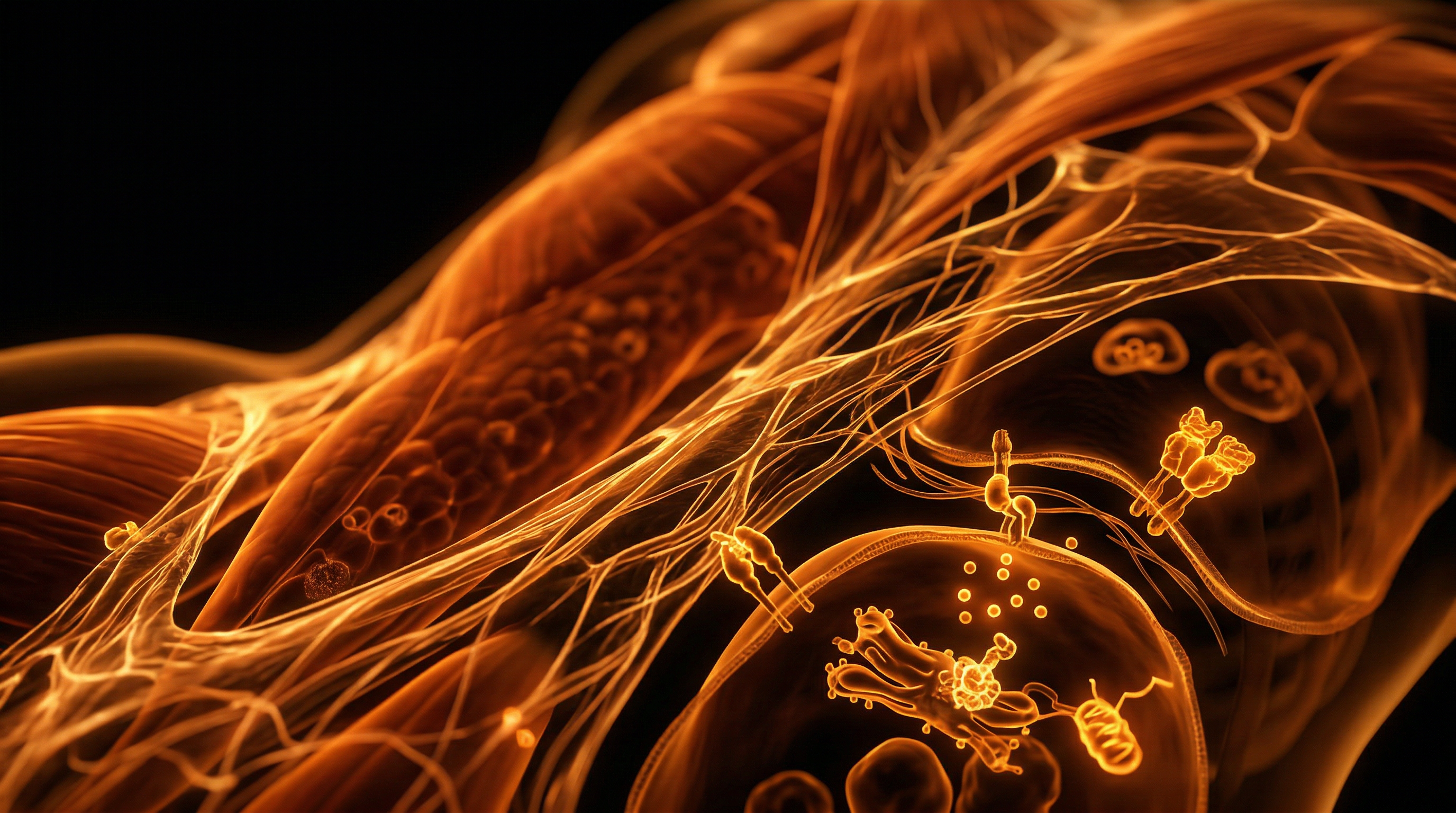
The Thoracolumbar Fascia is a complex architecture of dense connective tissue that envelopes the muscles of the lumbar region and the mid-back. Far from being a single sheet of tissue, it is a tripartite structure consisting of three distinct layers: the Posterior Layer, the Middle Layer, and the Anterior Layer.
The Three-Layered Architecture
- The Posterior Layer (PLF): This is the most superficial layer and arguably the most biomechanically significant. It attaches to the spinous processes of the vertebrae and blends seamlessly with the aponeurosis of the latissimus dorsi and the gluteus maximus. It creates a functional "cross-brace" or "sling" across the back.
- The Middle Layer (MLF): This layer originates from the transverse processes of the lumbar vertebrae. It sits between the paraspinal muscles (erector spinae) and the quadratus lumborum.
- The Anterior Layer (ALF): The deepest layer, covering the front of the quadratus lumborum and integrating with the psoas major and the diaphragm.
The Power Sling: The TLF acts as a transmission system for the "Posterior Oblique Sling." When you walk or run, the force generated by your right gluteus maximus is transferred through the TLF to the left latissimus dorsi. This diagonal force transfer is what allows humans to move efficiently in an upright, bipedal fashion.
The Hydraulic Amplifier Effect
One of the most remarkable biological functions of the TLF is its role in the Hydraulic Amplifier mechanism. When the muscles encased within the fascial layers (the erector spinae) contract, they expand in girth. Because the TLF is a tough, inelastic container, this expansion increases the internal pressure within the fascial compartment. This internal pressure creates a rigid, supportive "pillar" that stabilizes the spine far more effectively than muscle contraction alone could achieve. This is the body's natural weightlifting belt.
The Sliding Interface
The "Interface" in Thoracolumbar Interface refers to the critical space between these layers. Each layer is separated by a thin film of hyaluronan (hyaluronic acid). This substance acts as a biological lubricant, allowing the layers to slide independently.
- During trunk flexion (bending forward), the layers of the TLF must slide as much as 75% of their total length relative to each other.
- When this sliding is inhibited (a condition known as densification), the mechanoreceptors within the fascia are triggered, resulting in the brain perceiving "threat" and initiating the pain response.
Mechanisms at the Cellular Level
To truly understand why the back fails, we must look beneath the gross anatomy and into the micro-world of the extracellular matrix (ECM) and the cells that govern it.
The Fibroblast: The Architect of the Matrix
The primary cell type within the TLF is the fibroblast. Fibroblasts are not merely "filler" cells; they are highly sensitive mechanical sensors. They monitor the tension in the tissue and respond by synthesizing collagen, elastin, and the lubricating ground substance.
In a healthy state, fibroblasts produce Type I Collagen (for strength) and Type III Collagen (for elasticity) in a precise ratio. However, under conditions of chronic "micro-failure" or lack of movement, fibroblasts can differentiate into myofibroblasts. These are specialized cells containing alpha-smooth muscle actin, allowing them to contract like muscle cells.
Exposing the Truth: Unlike muscles, which contract and relax in seconds, myofibroblasts can maintain a "tonic" contraction for weeks or months. This means the fascia itself can become chronically tight, independent of muscle tension. This is a primary driver of the "stiff back" syndrome that does not respond to traditional stretching.
The Role of Hyaluronan (HA)
The lubrication between the fascial layers is managed by hyaluronocytes, cells specialized in producing hyaluronan. In a healthy environment, HA exists in a low-viscosity state, facilitating smooth gliding. However, if the local pH drops (due to inflammation or lack of oxygen/ischemia) or if the area is immobilized, the HA molecules begin to aggregate into long, tangled chains.
This process—densification—turns the lubricant into a "glue." The result is that the layers of the Thoracolumbar Interface become stuck together. When you attempt to move, instead of the layers sliding, they pull on one another, tugging on the millions of nerve endings embedded in the tissue.
Sensory Innervation: The Fascia as a Sense Organ
It is a common misconception that the discs and bones are the primary sources of back pain. In reality, the Thoracolumbar Fascia is the most richly innervated tissue in the human back. It is packed with:
- Nociceptors: High-threshold nerve endings that signal pain.
- Proprioceptors: Including Ruffini endings and Pacini corpuscles, which tell the brain where the body is in space.
- Interstitial Receptors: Linked to the autonomic nervous system.
When the TLF is "stuck" or inflamed, the sensory feedback to the brain becomes distorted. The brain loses its "map" of the lower back (sensorimotor amnesia), leading to clumsy movement patterns that further damage the tissue.
Environmental Threats and Biological Disruptors
The degradation of the Thoracolumbar Interface is not merely a result of "ageing." It is a direct consequence of a modern environment that is biologically hostile to connective tissue health.
The Sedentary Stagnation (The "Gliding Crisis")
The human body is designed for continuous, varied movement. Modern life, characterized by prolonged sitting, creates a "stagnant pool" in the TLF. Without movement, the hyaluronan thickens, and the collagen fibres begin to form cross-links. These are essentially biological "staples" that bind layers together that should be free to move. This is often referred to in the fringe scientific community as "the fuzz."
Chemical and Nutritional Disruptors
The integrity of the TLF depends on the precise synthesis of collagen. Several environmental factors disrupt this:
- Glycation (AGEs): High dietary sugar leads to Advanced Glycation End-products. These "caramelize" the collagen fibres, making them brittle and prone to micro-tearing.
- Fluoroquinolones: Certain classes of antibiotics are known to be "collagen-destructive," significantly increasing the risk of fascial ruptures and degradation.
- Dehydration: Fascia is roughly 70% water. Even mild systemic dehydration reduces the "slide" of the TLF, making it more susceptible to injury.
The Impact of Electromagnetic Fields (EMFs)
While often dismissed by mainstream medicine, emerging research into bioelectromagnetics suggests that the voltage-gated calcium channels (VGCCs) in fibroblasts are sensitive to external EMFs. Excessive exposure may disrupt the cellular signaling required for proper fascial remodeling, leading to a disordered, weakened matrix.
The Cascade: From Exposure to Disease
How does a healthy interface transform into a source of chronic disability? The "Cascade of Failure" follows a predictable biological path.
Phase 1: The Loss of Shear
It begins with a loss of "shear" or sliding between the posterior and middle layers of the TLF. This is usually asymptomatic at first. You might feel a slight "stiffness" in the morning that disappears after a hot shower or a walk.
Phase 2: Densification and Micro-Inflammation
As the hyaluronan thickens, the tissue becomes hypoxic (low oxygen). This triggers a low-grade inflammatory response. Fibroblasts begin to transform into myofibroblasts, and the tissue starts to thicken (fibrosis). Research has shown that people with chronic lower back pain have a TLF that is approximately 25% thicker than those without pain. This thickness is not "strength"—it is non-functional scar tissue.
Phase 3: Nociceptive Sensitization
The sensory nerves embedded in the fascia become hypersensitive. Due to the lack of movement, the "proprioceptive" (positional) signals become quiet, while the "nociceptive" (pain) signals become amplified. The brain begins to perceive even normal movement as a threat.
Phase 4: Structural Compensation
Because the TLF can no longer distribute force properly, the load is shifted onto the spine itself. This is where we see:
- Increased pressure on intervertebral discs (leading to herniation).
- Stress on the facet joints (leading to arthritis).
- Strain on the sacroiliac (SI) joints.
In this phase, the symptoms appear in the bones and discs, but the cause remains the dysfunctional Thoracolumbar Interface.
What the Mainstream Narrative Omits
The current medical paradigm for back pain is fundamentally flawed because it is disc-centric and structure-obsessed, ignoring the dynamic fascial system.
The MRI Mirage
When a patient presents with back pain, the standard procedure is an MRI. The scan might show a "bulging disc" or "degenerative disc disease." The doctor points to the image and says, "There is your pain."
The Truth: Studies on asymptomatic individuals (people with NO pain) show that up to 30% of 20-year-olds and 80% of 50-year-olds have disc bulges. The MRI often shows "normal" age-related changes that have nothing to do with the pain. Meanwhile, the MRI cannot visualize the sliding (or lack thereof) of the fascial layers. Because the doctor cannot "see" the fascial dysfunction on a standard scan, they assume it doesn't exist.
The Failure of Spinal Fusion
Spinal fusion surgery aims to stop pain by bolting vertebrae together. However, "Failed Back Surgery Syndrome" (FBSS) is so common it has its own diagnostic code. Why does it fail? Because the surgery creates massive amounts of scar tissue in the TLF, further destroying the sliding interface and shifting the mechanical stress to the segment above or below the fusion.
The Suppression of "Soft Tissue" Importance
There is no "Big Pharma" profit in fascial health. You cannot "drug" a fascial adhesion away. You cannot "bolster" a sliding interface with a pill. The resolution of back pain through fascial restoration requires movement, manual therapy, and lifestyle changes—none of which fit the high-margin, interventionist model of modern Western medicine.
The UK Context
In the United Kingdom, the approach to the Thoracolumbar Interface is hampered by the systemic limitations of the National Health Service (NHS) and a cultural "stiff upper lip" regarding physical maintenance.
The NHS Guidelines Gap
The current NICE (National Institute for Health and Care Excellence) guidelines for lower back pain focus heavily on "self-management," psychological support (CBT), and exercise in general terms. While well-intentioned, these guidelines rarely acknowledge the specific physiological requirements of fascial remodeling. Most NHS physiotherapy sessions are limited in number and often rely on "strengthening" exercises (like planks or bridges) which can actually worsen the problem if the TLF is already densified and "stuck."
The "Weekend Warrior" Phenomenon
The UK has a high prevalence of the "Weekend Warrior"—individuals who sit at a desk for 40-50 hours a week (stagnating their TLF) and then engage in high-intensity sports (football, rugby, or long-distance cycling) on Saturdays. This "zero-to-sixty" loading on a "glued" Thoracolumbar Interface is a recipe for micro-tears and chronic inflammation.
The Availability of Myofascial Specialists
While the UK has a growing number of osteopaths and specialized soft-tissue therapists, these are largely private-sector services. For the average citizen relying on state healthcare, the sophisticated manual therapy required to "unstick" the TLF is virtually inaccessible. This creates a two-tier system where the wealthy can maintain their "interface" while the rest are steered toward long-term painkillers (NSAIDs) or opioids.
Protective Measures and Recovery Protocols
If you are suffering from chronic back pain, or if you wish to prevent the degradation of your Thoracolumbar Interface, you must move beyond the "stretch and strengthen" dogma. You must focus on Hydration, Shear, and Variability.
1. Restore the "Slide" (Manual Therapy)
The first step is often breaking the "glue." This requires:
- Myofascial Release: Targeted pressure to the TLF layers.
- Instrument Assisted Soft Tissue Mobilization (IASTM): Tools used to create "micro-shear" to break down adhesions.
- Dry Needling: Can help release myofibroblast-induced tension in the deep fascial layers.
2. The Power of "Micro-Movements"
To prevent hyaluronan densification, you must move frequently. The "20-20-20" rule: Every 20 minutes, move for 20 seconds, and focus your eyes 20 feet away. For the back, this means gentle pelvic tilts and spinal waves throughout the day to keep the HA in a fluid state.
3. Eccentric Loading and Elasticity
The TLF is a spring. To train it, you need eccentric (lengthening) movements.
- Pulsing Lunges: These engage the "Posterior Oblique Sling" and the TLF.
- The "Slatter" Movement: Slow, controlled spinal rolls that focus on segment-by-segment movement.
- Plyometrics: Light, bouncy movements (like jumping rope) help reorganize collagen into a healthy, lattice-like structure rather than a chaotic "scar" pattern.
4. Biochemical Optimization
- Hydration with Electrolytes: Water alone is not enough; the fascial matrix requires minerals (magnesium, potassium, sodium) to hold moisture.
- Collagen Precursors: Vitamin C, Copper, and Silica are essential for fibroblasts to build high-quality collagen.
- Anti-Inflammatory Nutrition: A diet high in Omega-3 fatty acids (EPA/DHA) helps reduce the "chemical stickiness" of the ECM.
5. Proprioceptive Re-mapping
Use tools like foam rollers or "spiky balls" not just for "massage," but to stimulate the sensory receptors in the back. This "wakes up" the brain’s map of the Thoracolumbar Interface, allowing for safer, more efficient movement.
Summary: Key Takeaways
The Thoracolumbar Interface is the unsung hero of human movement and the primary victim of the modern lifestyle. Understanding its role is the key to resolving the back pain epidemic.
- The TLF is a Transmission Hub: It connects the upper and lower body; a problem in your shoulder can manifest as back pain because of the TLF.
- Sliding is Life: Pain often arises not from "weakness" but from a loss of sliding between the fascial layers due to "thickened" hyaluronan.
- The Disc is Often a Red Herring: Don't be fooled by MRI results that ignore the soft tissue matrix. The fascia is the back's primary sensory organ.
- Myofibroblasts are the Enemy: Chronic stress and lack of movement turn fascial cells into "contractile" cells that keep your back tight 24/7.
- Recovery is Possible: Through a combination of manual therapy to "unstick" the layers and varied, bouncy, and eccentric movement to remodel the collagen, the interface can be restored.
The medical establishment may continue to focus on the "bricks" (bones), but the secret to a pain-free life lies in the "mortar"—the magnificent, complex, and vital Thoracolumbar Interface. It is time to stop treating the symptoms and start honoring the biology of the matrix.
This article is provided for informational and educational purposes only. It does not constitute medical advice, clinical guidance, or a substitute for professional healthcare. Information reflects cited research at time of publication. Always consult a qualified healthcare professional before acting on any health information.
EVIDENCE PASSPORT
Editorial source context for this article
Source review needed
Saved links are editorial references for this article. They may support specific claims rather than every sentence. Open and assess each source in context. This passport does not independently verify them.
Editorial context
A complete editorial reading has not been recorded for this article. Source links remain available for you to open and assess directly.
Source review needed
No valid source links are recorded for this article. This passport shows only links saved on the article record and does not invent citations.
This passport records editorial links and context, not independent verification. Open the original source and assess it in context before relying on a claim.
Medical Disclaimer
The information in this article is for educational purposes only and does not constitute medical advice, diagnosis, or treatment. Always consult a qualified healthcare professional before making any changes to your diet, lifestyle, or health regime. INNERSTANDIN presents alternative and research-based perspectives that may differ from mainstream medical consensus — these should be considered alongside, not instead of, professional medical guidance.
Read Full DisclaimerContinue the thread
Keep this question moving.
Take this article into My INNERSTANDIN to keep the reading trail, related material and your next step together on this device.
Dig deeper in the Library
Free, longform PDF volumes that go beyond headlines into mechanisms and references.