
Thermal Leaching Mechanics: Plastics in Hot Food Packaging
Updated May 2026
Heating food in plastic containers accelerates the leaching of microplastics and chemical stabilizers into the meal. This common practice significantly increases the daily dose of ingested plastics.
Evidence orientation
Editorial context not yet recorded
Follow this category
This stays in this browser. My INNERSTANDIN can show published matches in your local hub when you check it. It does not send email, push, or alert notifications.
Local learning review
A private browser aid for revisiting ideas. It is not an alert or a health recommendation.
Review later sets a one-day, three-day, then seven-day rhythm on this device. Choose it only when you want to revisit this article.
Overview
The modern dietary landscape is defined not merely by what we eat, but by the vessel in which that nourishment is delivered. In the rapid transition toward convenience, the global food industry has become inextricably wedded to synthetic polymers. However, a silent, molecular migration is occurring at the interface of heat and plastic. Thermal leaching—the process by which heat facilitates the transfer of chemical constituents and particulate matter from packaging into food—represents one of the most significant, yet understated, public health crises of the 21st century.
As a senior biological researcher at INNERSTANDING, my objective is to dissect the mechanics of this phenomenon. When a plastic container is subjected to heat—whether via microwave, the pouring of hot liquids, or the storage of freshly cooked takeaway—it is not an inert object. It is a dynamic chemical matrix. Under thermal stress, the polymer chains expand, the kinetic energy of internal additives increases, and the barrier between "container" and "content" dissolves.
The resulting "chemical soup" contains not only well-known culprits like Bisphenol A (BPA) and phthalates but also a clandestine army of Microplastics (MPs) and Nanoplastics (NPs). Recent data suggests that heating a single plastic baby bottle or microwaveable meal tray can release millions of microplastic particles and billions of nanoplastics per litre. This article provides a definitive exploration of the thermal leaching mechanics that are currently re-engineering human biology from the inside out.
Fact: Research indicates that microwaving polypropylene (PP) food containers can release up to 4.2 million microplastics and 2.11 billion nanoplastics from every square centimetre of plastic surface in just three minutes.
The Biology — How It Works
To understand thermal leaching, one must first understand the structural vulnerability of plastics. Plastics are polymers—long chains of repeating molecular units (monomers). However, these chains are rarely alone. To make a plastic flexible, rigid, or heat-resistant, manufacturers add "functional" chemicals: plasticisers, UV stabilisers, flame retardants, and antioxidants.
The Physics of Molecular Migration
At the molecular level, these additives are not chemically bonded to the polymer backbone; they are merely intercalated or "trapped" between the chains. When heat is applied, two critical physical changes occur:
- Thermal Expansion: The polymer chains vibrate more violently, increasing the "free volume" or the gaps between the chains.
- Increased Kinetic Energy: The additives and unreacted monomers gain kinetic energy, allowing them to diffuse through the widened gaps in the polymer matrix and leach into the food.
The Glass Transition Temperature ($T_g$)
Every plastic has a Glass Transition Temperature ($T_g$)—the point at which it transitions from a hard, glassy state to a soft, rubbery state. As food packaging approaches or exceeds its $T_g$ (which for many common plastics is surprisingly low), the rate of leaching increases exponentially. For instance, even "heat-resistant" polypropylene begins to lose its structural integrity at the molecular level far before it visibly melts.
- Polyethylene Terephthalate (PET): Commonly used for water bottles and trays. When heated, it releases antimony (a toxic heavy metal used as a catalyst) and phthalates.
- Polypropylene (PP): Marketed as "microwave safe." While it has a higher melting point, it is highly prone to shedding micro-fragments when subjected to the high-frequency oscillation of microwave radiation.
- Polystyrene (PS): Found in foam takeaway containers. Heat causes the leaching of styrene, a suspected carcinogen and known neurotoxin.
The Role of Lipids and Acidity
The mechanics of leaching are further exacerbated by the composition of the food. Lipophilic (fat-loving) chemicals like phthalates have a high affinity for fats. Therefore, a greasy curry or a buttery pasta dish heated in plastic will extract significantly more toxins than plain water. Similarly, acidic foods (like tomato sauce) act as solvents, accelerating the degradation of the polymer surface.
Mechanisms at the Cellular Level
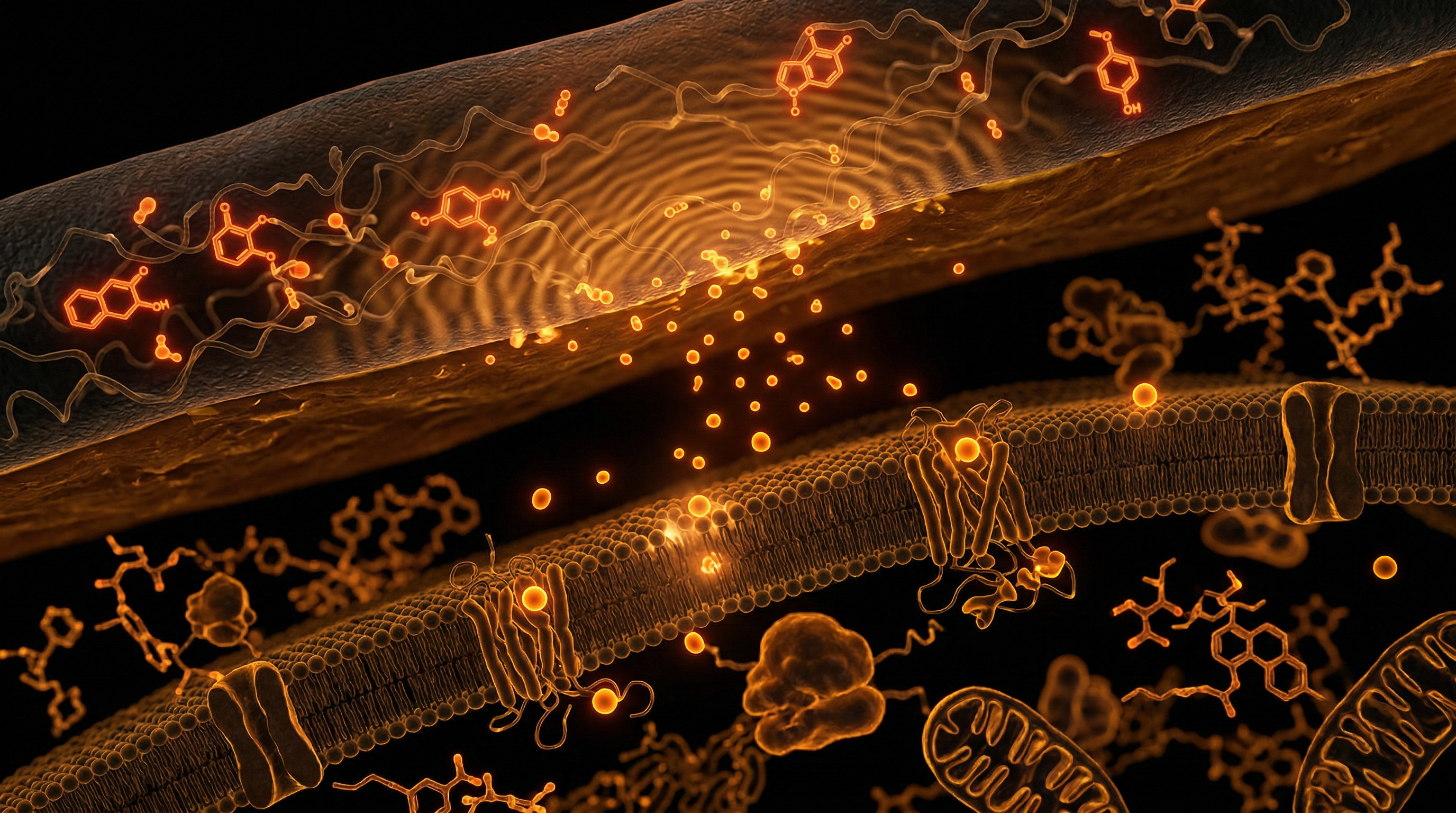
Once these leached substances enter the human body via ingestion, the "biological dialogue" becomes increasingly hostile. The primary concern is no longer just the chemical toxicity, but the physical presence of nanoplastics—particles smaller than 100 nanometres that can bypass the body’s natural filtration systems.
Endocytosis and Cellular Entry
Nanoplastics are small enough to penetrate the epithelial lining of the gut through paracellular transport or endocytosis. Once in the bloodstream, they can cross the blood-brain barrier and the placental barrier.
Statistic: A study published in Environmental Science & Technology estimated that the average person consumes between 39,000 to 52,000 microplastic particles annually from food alone—a figure that triples when including inhalation and plastic-packaged water.
The "Trojan Horse" Effect
Microplastics act as vectors. Because of their high surface-area-to-volume ratio and hydrophobic nature, they adsorb persistent organic pollutants (POPs) from the environment and the plastic itself. When these particles enter a cell, they release this concentrated toxic load directly into the cytosol. This is known as the Trojan Horse Effect.
Mitochondrial Dysfunction and Oxidative Stress
Within the cell, the presence of foreign polymer fragments triggers the production of Reactive Oxygen Species (ROS).
- Mitochondrial Interference: Nanoplastics can physically obstruct mitochondrial membranes, disrupting the electron transport chain and reducing ATP (energy) production.
- Lysosomal Rupture: Cells attempt to "digest" these plastic particles via lysosomes. Because plastics are non-biodegradable, the lysosome eventually ruptures, releasing digestive enzymes into the cell, leading to apoptosis (programmed cell death).
DNA Fragmentation
Chronic exposure to leached chemicals like BPA and styrene has been shown to induce DNA strand breaks. When the body’s repair mechanisms are overwhelmed by a constant influx of thermally leached mutagens, the risk of oncogenic transformation—the birth of cancer cells—increases significantly.
Environmental Threats and Biological Disruptors
The narrative of plastic leaching is often confined to "toxins," but the more accurate term is Endocrine Disrupting Chemicals (EDCs). These are substances that mimic, block, or interfere with the body’s natural hormones.
Estrogen Mimicry
Most leached plastic additives, particularly Bisphenols and Phthalates, are "xenoestrogens." They possess a molecular structure similar enough to estradiol that they can bind to estrogen receptors ($ER\alpha$ and $ER\beta$).
- In men, this leads to a reduction in testosterone, lower sperm counts, and "feminisation."
- In women, it is linked to PCOS, endometriosis, and early-onset puberty.
Thyroid Disruption
The thyroid gland is the master regulator of metabolism. Chemicals like Perfluorinated substances (PFAS)—often used as linings in "paper" food containers to prevent grease soaking—interfere with thyroid hormone transport proteins. This results in a "subclinical hypothyroidism" that mainstream blood tests often fail to detect, leaving patients fatigued and unable to manage weight.
Obesogens: The Plastic-Weight Link
Thermal leaching contributes to the rising obesity epidemic through the introduction of obesogens. These chemicals reprogram the fate of stem cells, pushing them to become adipocytes (fat cells) rather than bone or muscle cells. Furthermore, they induce insulin resistance by inflaming the metabolic pathways within the liver and pancreas.
- DEHP (a phthalate): Directly correlates with increased waist circumference and insulin resistance.
- BPA: Linked to the disruption of leptin, the hormone responsible for signalling satiety (fullness).
The Cascade: From Exposure to Disease
The progression from "heating a plastic tub" to "chronic disease" is not instantaneous; it is a cumulative cascade. This bio-accumulation follows a predictable path of physiological erosion.
Stage 1: The Inflammatory Trigger
Initial exposure triggers a localized inflammatory response in the gut (the Gastrointestinal Barrier). This is often misdiagnosed as Generalised Inflammatory Bowel Syndrome (IBS). The gut becomes "leaky," allowing even more plastic particles and undigested proteins into the systemic circulation.
Stage 2: Systemic Metabolic Shift
As the liver attempts to detoxify these synthetic compounds (via Phase I and Phase II detoxification), it becomes overwhelmed. The body, unable to excrete the sheer volume of lipophilic plastics, begins to sequester them in adipose tissue (body fat). This leads to a state of chronic low-grade inflammation.
Stage 3: The Manifestation of Disease
Over decades, this "plastic load" manifests as clinical pathologies:
- Cardiovascular Disease: Microplastics have recently been discovered inside human arterial plaques. Their presence makes these plaques more unstable and prone to rupturing, leading to heart attacks and strokes.
- Neurodegenerative Conditions: The neurotoxicity of styrene and the inflammatory response to nanoplastics in the brain are being investigated as contributing factors to Alzheimer's and Parkinson's.
- Autoimmunity: The immune system, constantly stimulated by foreign synthetic particles, begins to lose the ability to distinguish between "self" and "non-self," leading to the rise in autoimmune disorders.
What the Mainstream Narrative Omits
The public is often reassured by the term "Microwave Safe." As a researcher, I must clarify: this is a catastrophic misnomer.
The "Microwave Safe" Myth
The designation "Microwave Safe" is a regulatory standard that refers only to the container's ability to withstand heat without melting or becoming visibly deformed. It has nothing to do with the chemical migration into the food. A container can be "safe" (it won't burn your hand or melt into a puddle) while simultaneously shedding billions of nanoplastic particles into your soup.
The NIAS Problem
Regulatory bodies typically only test for "Intentionally Added Substances." However, the heating process creates Non-Intentionally Added Substances (NIAS). These are chemical by-products formed during the manufacturing process or through the thermal breakdown of the plastic. Because NIAS are not "ingredients," they are rarely monitored, despite many being more toxic than the parent compounds.
The BPA-Free Deception
When the public became aware of BPA, the industry responded with "BPA-Free" labels. In most cases, BPA was simply replaced with BPS (Bisphenol S) or BPF (Bisphenol F). Emerging research shows that these alternatives are often just as, if not more, estrogenic and thermally unstable than BPA. The industry shifted the molecule to maintain the profit margin while the biological hazard remained unchanged.
Callout: There is no such thing as "inert" plastic when heat is involved. All polymers are subject to the laws of thermodynamics, which dictate that entropy and migration are inevitable.
The UK Context
In the United Kingdom, the reliance on plastic-packaged convenience food has reached an all-time high. The UK consumes more ultra-processed food (UPF) than any other nation in Europe, and the vast majority of these meals are designed to be heated in their primary plastic packaging.
The "Takeaway" Culture
The UK takeaway market, valued at billions of pounds, relies heavily on expanded polystyrene (EPS) and polypropylene containers. British standards, while governed by the Food Standards Agency (FSA), often rely on outdated "Specific Migration Limits" (SMLs) that do not account for the cumulative "cocktail effect" of multiple chemicals interacting simultaneously.
The Microplastic Rain
A specific study conducted in London found that the city has some of the highest recorded levels of atmospheric microplastic deposition. When this environmental load is added to the "thermal dose" from food packaging, the British public is facing a total body burden that far exceeds the safety thresholds established in the late 20th century.
Regulatory Lag
The UK’s "REACH" (Registration, Evaluation, Authorisation, and Restriction of Chemicals) framework has struggled to keep pace with the rapid innovation in plastic additives. While the EU has moved to ban certain phthalates in food contact materials, the post-Brexit regulatory landscape in the UK faces challenges in maintaining rigorous oversight, often favouring industry "self-regulation."
Protective Measures and Recovery Protocols
While the ubiquity of plastic makes total avoidance difficult, there are scientifically backed strategies to reduce your "thermal dose" and assist the body in clearing existing synthetic residues.
1. The Golden Rule: No Heat on Plastic
Never, under any circumstances, microwave food in a plastic container, even if it is labelled "microwave safe." Transfer food to borosilicate glass, ceramic, or stainless steel before heating. This single change can reduce your ingested plastic load by over 90%.
2. Phase Out the "Hot Pour"
When ordering takeaway, request that hot liquids (soups, coffees) be placed in your own glass or silicone containers. The most intense leaching occurs in the first 60 seconds of a boiling liquid hitting a plastic surface.
3. Support Glucuronidation
The liver clears bisphenols and phthalates through a process called glucuronidation. You can support this pathway by consuming:
- Cruciferous vegetables: Broccoli, kale, and Brussels sprouts contain sulforaphane, which induces Phase II enzymes.
- Calcium D-Glutarate: A supplement that prevents the "re-absorption" of toxins in the gut.
4. Induce Autophagy
Autophagy is the body’s cellular "cleanup" mechanism. Research suggests that during autophagy, cells are better able to process and sequester non-organic particulate matter.
- Intermittent Fasting: 16–18 hour windows of fasting can stimulate the lysosomal activity required to address nanoplastic accumulation.
- Sauna Therapy: Deep sweating (especially in infrared saunas) has been shown to assist in the excretion of certain phthalates and BPA through the skin.
5. Transition to Traditional Materials
Return to materials that have stood the test of time. Cast iron, carbon steel, and glass do not possess the molecular volatility of synthetic polymers.
Summary: Key Takeaways
The convenience of plastic is a biological debt that is eventually called due. Understanding thermal leaching is the first step in reclaiming physiological sovereignty.
- Heat is the Catalyst: The primary driver of plastic migration is thermal energy. As temperature rises, so does the release of monomers, additives, and nanoplastics.
- "Microwave Safe" is a Fallacy: This label refers to the durability of the plastic, not the safety of the food inside it.
- Nanoplastics are the New Frontier: Unlike microplastics, nanoplastics can enter cells, cross the blood-brain barrier, and cause direct mitochondrial damage.
- The UK Burden: High consumption of ultra-processed, plastic-packaged foods puts the British population at a heightened risk for endocrine and metabolic disorders.
- Immediate Action is Required: The transition to glass, stainless steel, and ceramic, combined with metabolic support (fasting and cruciferous vegetables), is essential for long-term health.
The goal of INNERSTANDING is to move beyond the superficial "safe" labels provided by industry-funded regulators. We must recognise that our modern environment is a radical departure from the conditions our biology evolved to handle. By eliminating the thermal leaching of plastics from our lives, we remove a primary driver of chronic inflammation and hormonal chaos, allowing the body to return to its natural state of equilibrium.
This article is provided for informational and educational purposes only. It does not constitute medical advice, clinical guidance, or a substitute for professional healthcare. Information reflects cited research at time of publication. Always consult a qualified healthcare professional before acting on any health information.
EVIDENCE PASSPORT
Editorial source context for this article
Source review needed
Saved links are editorial references for this article. They may support specific claims rather than every sentence. Open and assess each source in context. This passport does not independently verify them.
Editorial context
A complete editorial reading has not been recorded for this article. Source links remain available for you to open and assess directly.
Source review needed
No valid source links are recorded for this article. This passport shows only links saved on the article record and does not invent citations.
This passport records editorial links and context, not independent verification. Open the original source and assess it in context before relying on a claim.
Medical Disclaimer
The information in this article is for educational purposes only and does not constitute medical advice, diagnosis, or treatment. Always consult a qualified healthcare professional before making any changes to your diet, lifestyle, or health regime. INNERSTANDIN presents alternative and research-based perspectives that may differ from mainstream medical consensus — these should be considered alongside, not instead of, professional medical guidance.
Read Full DisclaimerContinue the thread
Keep this question moving.
Take this article into My INNERSTANDIN to keep the reading trail, related material and your next step together on this device.
Dig deeper in the Library
Free, longform PDF volumes that go beyond headlines into mechanisms and references.