
Thrifty Phenotypes: Famine Genes in the Age of Plenty
Updated May 2026
The survival mechanisms that protected our ancestors during British winters are now predisposing us to Type 2 diabetes. Understanding these thrifty genes is vital for addressing the modern obesity crisis.
Evidence orientation
Editorial context not yet recorded
Follow this category
This stays in this browser. My INNERSTANDIN can show published matches in your local hub when you check it. It does not send email, push, or alert notifications.
Local learning review
A private browser aid for revisiting ideas. It is not an alert or a health recommendation.
Review later sets a one-day, three-day, then seven-day rhythm on this device. Choose it only when you want to revisit this article.
Overview
The modern human condition is defined by a profound biological paradox. We reside in an era of unprecedented caloric abundance, yet our physiological architecture remains stubbornly tethered to a past defined by scarcity, seasonal volatility, and the perennial threat of starvation. This article explores the Thrifty Phenotype Hypothesis, a cornerstone of evolutionary biology that explains why the very survival mechanisms that allowed our ancestors to endure the brutal winters of Northern Europe and the cyclical famines of the British Isles are now the primary drivers of the global Type 2 diabetes (T2D) and obesity epidemics.
As a senior researcher at INNERSTANDING, my objective is to peel back the layers of conventional medical dogma. The mainstream narrative often reduces metabolic disease to a simple failure of willpower or a mathematical imbalance of "calories in versus calories out." This is not only reductionist; it is scientifically illiterate. To understand the rise of metabolic syndrome, we must look beyond the dinner plate and into the deep recesses of our epigenetic heritage.
We carry within our DNA the "famine memory" of generations who survived the Great Famine, the Little Ice Age, and the socio-economic upheavals of the Industrial Revolution. Our genes were forged in a crucible of deprivation, selected for their ability to hoard energy with ruthless efficiency. When these "thrifty" genes are placed within a modern environment characterised by ultra-processed foods, chronic light pollution, and sedentary lifestyles, the result is a catastrophic metabolic mismatch.
This longform investigation will detail the cellular mechanisms of this mismatch, expose the systemic failures in our current health paradigms, and provide a framework for reclaiming our metabolic sovereignty through an understanding of ancestral biology.
The Biology — How It Works
The core of the "Thrifty Phenotype" lies in the concept of phenotypic plasticity—the ability of a single genotype to produce different phenotypes depending on environmental conditions. In 1992, researchers C.N. Hales and D.J. Barker proposed that fetal undernutrition leads to permanent changes in the body's structure and function. This is known as the Barker Hypothesis.
The Predictive Adaptive Response (PAR)
When a developing fetus receives signals of nutritional stress from the mother, it makes a "biological forecast." It assumes that the world it is about to enter is one of scarcity. In response, the fetus prioritises the development of the brain (the "Selfish Brain" theory) at the expense of other organs like the pancreas and the liver.
- Reduced Beta-Cell Mass: The pancreas develops fewer insulin-producing beta cells, assuming it will never need to process large amounts of glucose.
- Muscle Resistance: The fetus develops "thrifty" muscle tissue that is naturally resistant to insulin, ensuring that any available glucose is diverted to the brain rather than stored in the muscles.
- Enhanced Adipose Deposition: The body becomes hyper-efficient at converting excess calories into visceral fat, the "emergency battery" of the human body.
The Mismatch Theory
The problem arises when this "forecast" is wrong. If a child programmed for famine is born into a "toxic swamp" of high-fructose corn syrup, refined seed oils, and constant glucose spikes, their biological hardware cannot cope. The restricted pancreatic capacity and the insulin-resistant muscle tissue, which were survival assets in a 14th-century British winter, become liabilities in the 21st century.
Fact: Research into the Dutch Hunger Winter of 1944-1945 demonstrated that children born to mothers who experienced famine had significantly higher rates of glucose intolerance and cardiovascular disease in adulthood, proving that environmental stress can "programme" the metabolism for life.
Mechanisms at the Cellular Level
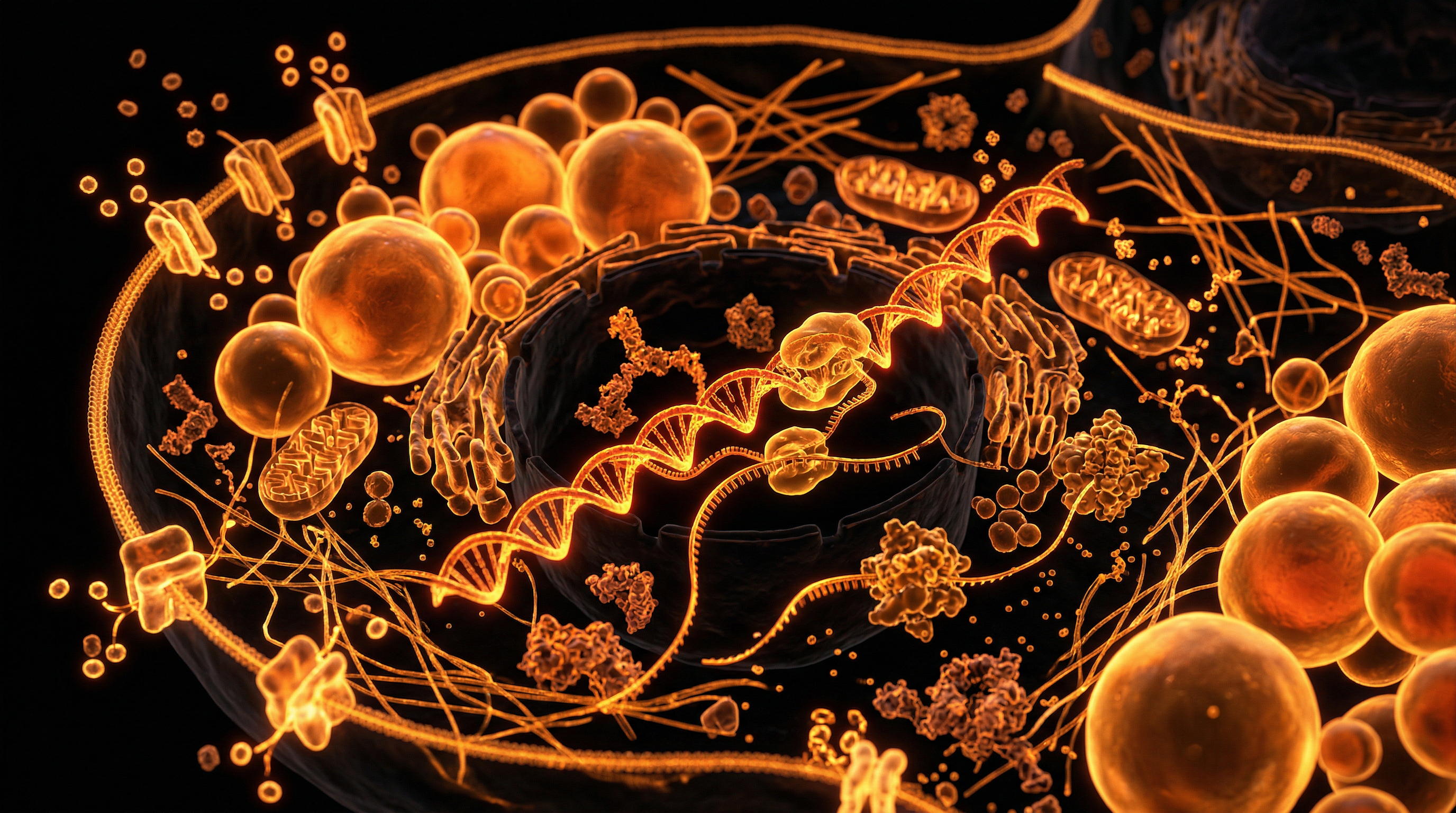
To truly understand the thrifty phenotype, we must zoom in on the cellular landscape, specifically the mitochondria, the endoplasmic reticulum (ER), and the epigenetic markers that dictate gene expression.
Epigenetic Programming and DNA Methylation
The thrifty phenotype is not merely a result of genetic mutations (changes in the DNA sequence) but of epigenetic modifications. Environmental cues trigger the addition of methyl groups to certain genes, effectively "silencing" or "amplifying" them.
- HNF4A Gene: This gene is critical for pancreatic development. In thrifty phenotypes, hypermethylation of the HNF4A promoter leads to reduced expression, resulting in impaired insulin secretion throughout life.
- PPAR-gamma: This master regulator of adipogenesis is often upregulated in individuals with a history of ancestral stress, making them predisposed to expanding their fat cells (adipocyte hypertrophy) rather than creating new ones (hyperplasia), leading to systemic inflammation.
Mitochondrial Uncoupling and Thermogenesis
In Northern European populations, thrifty genes were often tied to thermogenesis—the ability to generate heat.
- UCP1 (Uncoupling Protein 1): Found in Brown Adipose Tissue (BAT), this protein allows the body to burn fat for heat rather than ATP.
- In the modern "Age of Plenty," we rarely face the cold. This lack of thermal stress means our "uncoupling" pathways remain dormant. The energy that should have been burned for heat is instead stored as white adipose tissue, contributing to metabolic stagnation.
The Role of Hyperinsulinaemia
The thrifty phenotype is characterised by a baseline state of hyperinsulinaemia (elevated insulin). While the mainstream views high insulin as a symptom of diabetes, evolutionary biology views it as a survival tactic. High insulin prevents the breakdown of fat (lipolysis), ensuring that every gram of energy is protected. In a state of chronic abundance, this protective mechanism leads to Lipotoxicity, where fat begins to accumulate in non-adipose organs like the liver, heart, and pancreas, eventually leading to organ failure and T2D.
Environmental Threats and Biological Disruptors
The thrifty phenotype is not a "defect"; it is a finely tuned instrument being played in a chaotic and dissonant orchestra. Several modern environmental factors act as "biological disruptors" that trigger the most harmful aspects of our famine-adapted genes.
Ultra-Processed Foods (UPFs) and the End of Satiety
Modern food science has engineered products that bypass the leptin-ghrelin feedback loop. For an individual with thrifty genes, these foods are catastrophic.
- Acellular Carbohydrates: Refined flours and sugars enter the bloodstream with a speed never encountered in evolutionary history, overwhelming the limited beta-cell capacity of the thrifty phenotype.
- Omega-6 Linoleic Acid: High concentrations of industrial seed oils (soya, sunflower, rapeseed) incorporate into cell membranes, causing mitochondrial dysfunction and promoting "pro-inflammatory" signalling that mimics a state of chronic injury.
Artificial Light and Circadian Mismatch
The metabolism is governed by the suprachiasmatic nucleus (SCN), which relies on light signals to coordinate insulin sensitivity.
- Exposure to blue light at night suppresses melatonin and elevates cortisol.
- For the thrifty phenotype, elevated nighttime cortisol is a signal of "impending danger" or "winter," triggering the liver to dump glucose into the bloodstream (gluconeogenesis) even when we are sleeping. This leads to high fasting blood sugar levels, regardless of diet.
Endocrine Disrupting Chemicals (EDCs)
Common chemicals such as Bisphenol A (BPA) and phthalates are "obesogens." They mimic oestrogen and interfere with the PPAR-gamma receptors mentioned earlier. For someone with a genetic predisposition toward thriftiness, these chemicals act as a "fat switch," locking the body into a storage mode that is nearly impossible to reverse through exercise alone.
Statistic: Individuals living in environments with high levels of light pollution and access to UPFs show a 40% higher risk of developing metabolic syndrome if they also possess the "thrifty" FTO gene variant.
The Cascade: From Exposure to Disease
The progression from a thrifty genetic inheritance to clinical Type 2 diabetes is a predictable, multi-stage cascade. Understanding this sequence is vital for early intervention.
Stage 1: The Prenatal Trigger
It begins in utero. Maternal stress, poor nutrient density, or placental insufficiency sends the "famine signal" to the fetus. The epigenome is set: "Efficiency is the priority."
Stage 2: The Childhood "Catch-up" Growth
In the post-war era, there has been an obsession with "fat babies" as a sign of health. However, for a baby with a thrifty phenotype, rapid "catch-up growth" in the first two years is a major risk factor. This rapid weight gain, fuelled by high-sugar infant formulas, overwhelms the underdeveloped pancreas before the child reaches school age.
Stage 3: Insulin Hyper-Responsiveness
In early adulthood, the individual appears healthy but possesses "hidden" hyperinsulinaemia. Their body works twice as hard to maintain normal blood sugar levels. They may experience frequent bouts of reactive hypoglycaemia—the "crash" after a carb-heavy meal—which the brain interprets as another famine, leading to more intense cravings.
Stage 4: Adipose Tissue Failure
Eventually, the subcutaneous fat stores (the "safe" fat under the skin) reach their limit. The thrifty phenotype is often characterised by a limited ability to expand these safe stores. Fat then spills over into the viscera, wrapping around the organs. This is why we see the "TOFI" (Thin Outside, Fat Inside) phenomenon.
Stage 5: Decompensated Type 2 Diabetes
Finally, the pancreatic beta cells, which have been overworked for decades to compensate for the "thrifty" muscle resistance, begin to fail (apoptosis). Blood glucose skyrockets, and the individual is diagnosed with T2D. By this point, the medical establishment usually prescribes more insulin, which—paradoxically—further reinforces the fat-storage signals of the thrifty phenotype.
What the Mainstream Narrative Omits
The current medical and governmental approach to the obesity and diabetes crisis is fundamentally flawed because it ignores the evolutionary context.
The "Willpower" Myth
The mainstream narrative implies that metabolic health is a matter of moral fortitude. This ignores the fact that thrifty genes control the dopaminergic pathways in the brain. For a famine-adapted individual, the sight of high-calorie food triggers a survival response that is far more powerful than conscious thought. We are blaming the passenger for the direction the car is going when the steering wheel has been hijacked by ancestral survival instincts.
The Calorie Fallacy
The "Calorie is a Calorie" (CICO) model is the greatest deception in modern nutrition. It ignores the hormonal impact of food. 100 calories of wild salmon and 100 calories of a doughnut have identical energy values but diametrically opposite effects on the thrifty phenotype. The former signals "abundance and repair," while the latter signals "metabolic emergency and storage."
The Suppression of Epigenetic Research
There is a profound reluctance in public health circles to discuss transgenerational epigenetic inheritance. To acknowledge that a grandmother's nutrition could affect a grandson's risk of diabetes would require a radical overhaul of the industrial food system and the way we provide prenatal care. It is far more profitable for the pharmaceutical industry to treat the symptoms of the thrifty phenotype with lifelong medication than to address the root causes of metabolic programming.
Critical Fact: The "Thrifty Gene" is often used as a scapegoat to blame indigenous populations for their high rates of diabetes (e.g., Pima Indians). However, the real culprit is not the genes themselves, but the sudden imposition of a Western industrial diet on a population with a highly efficient ancestral metabolism.
The UK Context
The British Isles provide a unique case study for the thrifty phenotype. Our genetic lineage is defined by several key "bottleneck events" that intensified the selection for famine genes.
The Legacy of the Industrial Revolution
Britain was the first nation to undergo the transition from a rural, agrarian society to an urban, industrial one. This transition was marked by extreme poverty and malnutrition in the 18th and 19th centuries. The "Working Class" of the Victorian era lived in a state of near-constant caloric deficit.
Those who survived to reproduce were those who were most "thrifty." This means a significant portion of the modern British population is descended from people who were epigenetically programmed to survive on tea, bread, and scraps. When these descendants are suddenly presented with the modern "Standard British Diet" (SBD), their biology reacts with catastrophic weight gain.
The Post-War Rationing Era
Rationing in the UK did not end until 1954. For nearly 15 years, the British population existed on a diet that was strictly controlled and often low in fat and protein. The children of the 1940s and 50s were "programmed" in a low-calorie environment. As the UK moved into the 1970s and 80s—the era of the supermarket and the "ready meal"—this cohort faced a massive metabolic mismatch, contributing to the current NHS crisis.
The Vitamin D / Sun Mismatch
Being a Northern latitude nation, the UK population has evolved to be highly sensitive to seasonal changes. Our "thrifty" genes are designed to store fat in the autumn (when fruit and grain were available) to survive the winter (when we lived off stored fat).
- In the modern UK, we have "Eternal Summer" in the grocery store (fruit available all year) but "Eternal Winter" in our offices (no sunlight exposure).
- This leads to chronic Vitamin D deficiency, which further exacerbates insulin resistance and systemic inflammation.
Protective Measures and Recovery Protocols
If you possess a thrifty phenotype, you are not "doomed." You simply possess a high-performance engine that is being fed the wrong fuel. To reverse the cascade of disease, we must align our lifestyle with our ancestral expectations.
1. Prioritise Protein and Satiety
For the thrifty phenotype, carbohydrates (especially refined ones) are a "danger signal."
- The Protocol: Focus on a "Nose-to-Tail" ancestral diet. High-quality animal proteins and fats provide the building blocks for cellular repair without triggering the massive insulin spikes that lead to storage.
- The Goal: Lower fasting insulin to below 5 uIU/mL.
2. Strategic Cold Exposure
We must re-engage our thermogenic pathways.
- The Protocol: Cold showers, winter swimming, or simply lowering the thermostat. Cold exposure activates Brown Adipose Tissue (BAT), which "sucks" glucose and fatty acids out of the bloodstream to burn for heat. This is a direct "hack" for the thrifty phenotype.
3. Circadian Hygiene
We must tell our genes what time it is.
- The Protocol: Block blue light after sunset using amber-tinted glasses. View sunlight within 30 minutes of waking. This synchronises the master clock and ensures that insulin sensitivity is highest during the day and fat-burning (lipolysis) is highest at night.
4. Time-Restricted Feeding (TRF)
The thrifty phenotype was designed for "Feast and Famine."
- The Protocol: Implement a 16:8 or 18:6 fasting window. By extending the period where insulin is low, we allow the body to access its stored energy. This is not about calorie restriction; it is about hormonal management.
5. Movement as a Signal, Not a "Burn"
Do not view exercise as a way to "burn off a biscuit." View it as a way to increase GLUT4 translocation in the muscles.
- The Protocol: Short bursts of High-Intensity Interval Training (HIIT) or heavy resistance training. This "opens the gates" of the muscle cells, allowing them to take in glucose without requiring massive amounts of insulin.
Summary: Key Takeaways
The rise of Type 2 diabetes and obesity is not a mystery; it is the inevitable consequence of a profound evolutionary mismatch.
- Survival Turned Scourge: The "thrifty" genes that protected our British ancestors from starvation are now predisposing us to metabolic collapse in an environment of constant caloric surplus.
- Epigenetic Memory: Our health is determined not just by our choices, but by the environmental stresses experienced by our ancestors. This "famine memory" programmes our metabolism from the womb.
- Beyond Calories: The mainstream focus on "Calories In, Calories Out" is a failed paradigm. Metabolic health is governed by hormones—specifically insulin—and how our genes interpret environmental signals like light, temperature, and food quality.
- Reclaiming Sovereignty: By understanding our biological heritage, we can exit the "toxic swamp" of modern life. Through protein-centric nutrition, cold exposure, circadian alignment, and strategic fasting, we can honour our thrifty genes without falling victim to the diseases they were designed to prevent.
We are the descendants of survivors. Our biology is not "broken"—it is simply waiting for us to provide the environment it was designed for. At INNERSTANDING, we believe that knowledge of our ancestral past is the only true bridge to a healthy future.
This article is provided for informational and educational purposes only. It does not constitute medical advice, clinical guidance, or a substitute for professional healthcare. Information reflects cited research at time of publication. Always consult a qualified healthcare professional before acting on any health information.
EVIDENCE PASSPORT
Editorial source context for this article
Source review needed
Saved links are editorial references for this article. They may support specific claims rather than every sentence. Open and assess each source in context. This passport does not independently verify them.
Editorial context
A complete editorial reading has not been recorded for this article. Source links remain available for you to open and assess directly.
Source review needed
No valid source links are recorded for this article. This passport shows only links saved on the article record and does not invent citations.
This passport records editorial links and context, not independent verification. Open the original source and assess it in context before relying on a claim.
Medical Disclaimer
The information in this article is for educational purposes only and does not constitute medical advice, diagnosis, or treatment. Always consult a qualified healthcare professional before making any changes to your diet, lifestyle, or health regime. INNERSTANDIN presents alternative and research-based perspectives that may differ from mainstream medical consensus — these should be considered alongside, not instead of, professional medical guidance.
Read Full DisclaimerContinue the thread
Keep this question moving.
Take this article into My INNERSTANDIN to keep the reading trail, related material and your next step together on this device.
Explore this in the Body Map
See where this hits your biology. Interactive anatomy, threats, and protective protocols.