
Thyroid Physiology: The Metabolic Master Switch
Updated August 2026
Thyroid hormone physiology extends far beyond simple TSH and T4 measurement — the conversion of inactive T4 to biologically active T3 by the deiodinase enzyme family, the binding of T3 to nuclear receptors that alter gene expression across every cell type, and the role of reverse T3 as a metabolic brake during physiological stress represent layers of regulation that standard NHS thyroid panels completely miss. Mercury, cadmium, and organochlorine pesticides directly inhibit deiodinase enzymes, creating a state of functional hypothyroidism even with normal circulating T4 levels. Fluoride's competition with iodine at the sodium-iodide symporter further impairs T4 synthesis, contributing to the widespread subclinical hypothyroidism the NHS diagnoses as depression, fatigue, and weight problems.
Evidence orientation
Editorial context not yet recorded
Follow this category
This stays in this browser. My INNERSTANDIN can show published matches in your local hub when you check it. It does not send email, push, or alert notifications.
Local learning review
A private browser aid for revisiting ideas. It is not an alert or a health recommendation.
Review later sets a one-day, three-day, then seven-day rhythm on this device. Choose it only when you want to revisit this article.
Overview
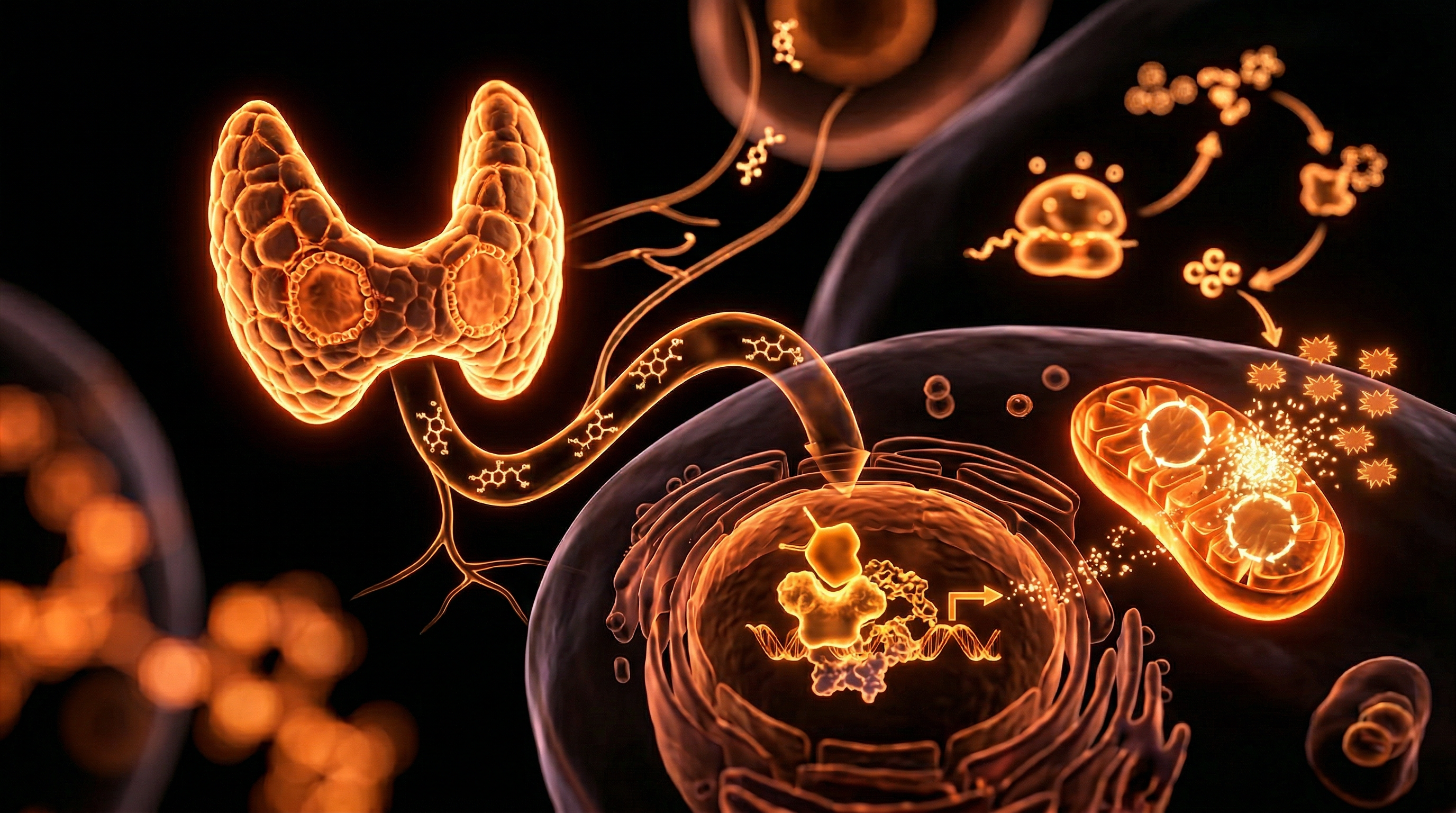
The thyroid gland serves as the primary endocrinological rheostat of the human organism, exerting a systemic influence that permeates virtually every cellular lineage. Operating within the hypothalamic-pituitary-thyroid (HPT) axis, this biogenic regulatory system orchestrates the synthesis of thyroxine (T4) and the biologically potent triiodothyronine (T3). Whilst T4 acts primarily as a prohormone, the peripheral conversion—facilitated largely by selenocysteine-dependent deiodinase enzymes (D1 and D2)—represents a critical metabolic inflection point. At INNERSTANDIN, we conceptualise this not merely as glandular secretion, but as the fundamental bioenergetic orchestration of mitochondrial oxidative phosphorylation and thermogenesis.
From a physiological standpoint, thyroid hormones function as nuclear transcription factors. Upon entering the cell, T3 binds to thyroid hormone receptors (TRs) located on the chromatin, initiating the transcription of genes responsible for the basal metabolic rate (BMR). Research published in The Lancet Diabetes & Endocrinology underscores that this mechanism dictates the consumption of oxygen and the synthesis of ATP, effectively modulating the speed at which the body’s machinery operates. When this "master switch" is throttled—whether through autoimmune pathology, such as Hashimoto’s thyroiditis, or idiopathic central hypothyroidism—the systemic repercussions are profound. Reduced T3 availability precipitates a systemic decline in sympathetic nervous system responsiveness, altered lipid metabolism, and a downregulation of protein synthesis, clinical manifestations of which are increasingly prevalent within the UK population due to fluctuating selenium and iodine intake profiles.
Furthermore, the thyroid-mitochondrial crosstalk is vital for maintaining cellular homeostasis. The hormone’s ability to increase the density and activity of the mitochondrial respiratory chain is the bedrock of energy substrate utilisation. Any perturbation in this delicate equilibrium reverberates across the body; from the cardiovascular system, where it regulates inotropic and chronotropic states, to the central nervous system, where it is essential for synaptic plasticity and neurodevelopment. At INNERSTANDIN, our focus remains on the precise molecular intersections where hormonal signalling meets metabolic demand. Understanding the thyroid is not merely an exercise in endocrinology; it is a prerequisite for understanding the fundamental architecture of human vitality. We must look beyond crude serum TSH markers and examine the nuances of peripheral conversion and tissue-specific hormone action to grasp the true magnitude of this metabolic sovereign.
The Biology — How It Works
The thyroid gland functions as the primordial orchestrator of systemic bioenergetics, governing the velocity of cellular metabolism via the HPT (hypothalamic-pituitary-thyroid) axis. At the molecular level, the process is initiated by the hypothalamus, which secretes thyrotropin-releasing hormone (TRH), prompting the anterior pituitary to liberate thyroid-stimulating hormone (TSH). This signal transduces into the follicular cells of the thyroid, triggering the synthesis of thyroxine (T4) and triiodothyronine (T3) through the iodination of tyrosine residues on the glycoprotein thyroglobulin, a process facilitated by thyroid peroxidase (TPO).
While the thyroid secretes T4 as its primary circulating product (in an approximate 14:1 ratio to T3), the physiological "master switch" resides in the peripheral conversion process. T4 acts essentially as a pro-hormone, circulating with high affinity for thyroxine-binding globulin (TBG). Its systemic potency is determined by the enzymatic action of deiodinases—specifically D1 and D2—which remove an iodine atom to generate the biologically active T3. This metabolite enters the cell nucleus, binding to thyroid hormone receptors (TRs) that act as ligand-inducible transcription factors. These receptors bind to thyroid response elements (TREs) in the promoter regions of target genes, effectively modulating the transcriptional output of mitochondria.
INNERSTANDIN dictates that we must recognise this as a mitochondrial-centric mechanism. T3 increases the expression of uncoupling proteins (UCPs) and influences the sodium-potassium ATPase pump density, effectively recalibrating the cell’s oxygen consumption and thermogenic output. According to longitudinal data frequently cited in The Lancet Diabetes & Endocrinology, even minor aberrations in free T3 availability can shift the metabolic set-point, altering lipolysis, glycogenolysis, and protein synthesis across visceral tissues.
Furthermore, the integrity of this mechanism is highly sensitive to the peripheral conversion environment. Research published in PubMed highlights that systemic inflammation, cortisol elevation, and selenium deficiency (a vital cofactor for deiodinase enzymes) can inhibit the conversion of T4 to T3, resulting in a state of cellular hypothyroidism despite "normal" laboratory markers. In the UK clinical context, the reliance on serum TSH as the sole metric for thyroid health often masks these sub-clinical deficiencies, failing to account for the bioavailability of T3 at the tissue level. To fully grasp thyroid physiology is to acknowledge the gland’s role not merely as a secretory organ, but as the supreme biochemical rheostat that dictates the energetic efficiency of every human somatic cell. When this axis is suppressed, mitochondrial respiration decelerates, leading to the systemic metabolic stagnation observed in complex chronic conditions.
Mechanisms at the Cellular Level
At the nexus of cellular bioenergetics, the thyroid axis functions as the primary rheostat for mitochondrial respiration. The biological potency of thyroid hormones—specifically the transition from the pro-hormone thyroxine (T4) to the biologically active triiodothyronine (T3)—is orchestrated via the selective expression of iodothyronine deiodinase enzymes (D1, D2, and D3). Within the target cell, this catalytic conversion is not merely a peripheral occurrence but a tightly regulated gatekeeping mechanism that dictates nuclear receptor occupancy. Once T3 crosses the plasma membrane—facilitated by specialised transporters such as monocarboxylate transporter 8 (MCT8)—it enters the nucleoplasm to bind with thyroid hormone receptors (TRα and TRβ).
This receptor-ligand complex functions as a constitutive transcription factor, heterodimerising with the retinoid X receptor (RXR) to bind to thyroid response elements (TREs) within the promoter regions of target genes. The subsequent upregulation of the UCP1 (uncoupling protein 1) gene in brown adipose tissue and genes encoding the Na+/K+-ATPase pump across systemic tissues creates a profound shift in oxygen consumption and substrate oxidation. As the INNERSTANDIN research collective maintains, it is this precise titration of metabolic flux that determines the resting basal metabolic rate (BMR). By modulating the stoichiometry of oxidative phosphorylation, T3 effectively dictates the efficiency of the mitochondrial electron transport chain. When T3 levels are optimised, the efficiency of ATP synthesis is balanced against the thermogenic dissipation of the proton motive force.
Conversely, molecular evidence published in The Lancet Diabetes & Endocrinology highlights that dysregulation in the deiodinase pathway—particularly the epigenetic silencing of D2—induces a state of cellular hypothyroidism, even in the presence of ostensibly ‘normal’ serum T4 levels. This phenomenon, often overlooked in standard clinical diagnostics, results in a failure of the ‘metabolic master switch’, where mitochondrial biogenesis is downregulated and oxidative stress markers, such as reactive oxygen species (ROS) production, remain unbuffered. At the subcellular level, this transition from an anabolic to a catabolic state compromises the integrity of the mitochondrial membrane potential. For the discerning reader, INNERSTANDIN asserts that true physiological homeostasis necessitates an granular understanding of these intracellular enzymatic cascades. By manipulating the rate of gene transcription through TRE-mediated signalling, thyroid hormones effectively rewrite the cellular blueprint for energy production, ensuring that the organism’s systemic metabolic output remains calibrated to the fluctuating demands of the internal and external environment. In essence, the thyroid does not merely influence metabolism; it defines the biochemical architecture of cellular life.
Environmental Threats and Biological Disruptors
The integrity of the hypothalamic-pituitary-thyroid (HPT) axis is currently under siege from a constellation of anthropogenic chemicals that act as potent endocrine-disrupting chemicals (EDCs). At INNERSTANDIN, we recognise that the thyroid gland is uniquely susceptible to structural and functional interference due to its reliance on iodine sequestration and the highly specific architecture of the thyroid peroxidase (TPO) enzyme. Exposure to ubiquitous environmental contaminants—particularly halogenated flame retardants (HFRs), per- and polyfluoroalkyl substances (PFAS), and bisphenols—has reached levels that challenge biological homeostasis.
The primary mechanism of disruption involves molecular mimicry. Compounds such as polybrominated diphenyl ethers (PBDEs) possess a chemical structure strikingly similar to thyroxine (T4). These xenobiotics compete for binding sites on transthyretin, the primary transport protein for thyroid hormones in humans. By displacing T4, these disruptors facilitate its accelerated metabolic clearance and biliary excretion, effectively inducing a state of tissue-level hypothyroidism even in the presence of laboratory-normal serum levels. Furthermore, research published in The Lancet Diabetes & Endocrinology highlights the critical interference of perchlorate and thiocyanate with the sodium-iodide symporter (NIS). By competitively inhibiting iodine uptake, these ions attenuate the substrate availability required for the organification process, directly blunting the gland’s synthetic output.
The impact of these disruptors is compounded by the "cocktail effect," where synergistic interactions between low-dose contaminants induce systemic toxicity that is not observable when chemicals are analysed in isolation. In the United Kingdom, environmental biomonitoring data often reveals pervasive levels of phthalate metabolites that correlate significantly with suppressed free triiodothyronine (fT3) levels. At the cellular level, these endocrine disruptors act as aryl hydrocarbon receptor (AhR) agonists, which inadvertently downregulate the expression of deiodinase enzymes (D1 and D2). This prevents the vital peripheral conversion of T4 to the metabolically active T3, trapping the organism in a sub-optimal metabolic state.
This systemic dysfunction extends beyond mere hormone kinetics; it alters gene expression profiles across the epigenome. Disruptors interfere with the thyroid hormone receptor (TR) affinity for co-activator proteins, effectively silencing the transcription of thermogenic genes and mitochondrial biogenesis pathways. As we analyse the metabolic landscape, it becomes evident that the thyroid is no longer merely contending with iodine deficiency; it is fighting a biochemical war against synthetic intrusions that bypass the body's natural regulatory checkpoints. INNERSTANDIN maintains that the rising prevalence of subclinical hypothyroidism is not merely an epidemiological trend, but a direct consequence of the modern chemical landscape’s antagonism toward the metabolic master switch.
The Cascade: From Exposure to Disease
The progression from physiological homeostasis to thyroid-mediated pathology is rarely a stochastic event; rather, it is a highly orchestrated cascade of endocrine disruption that reflects the systemic fragility of the hypothalamic-pituitary-thyroid (HPT) axis. At the foundational level, the metabolic master switch relies upon the precise iodination of thyroglobulin within the follicular lumen, a process mediated by thyroid peroxidase (TPO). When this delicate machinery encounters persistent environmental stressors—be it endocrine-disrupting chemicals (EDCs) like perchlorates or pervasive iodine insufficiency—the compensatory mechanisms of the HPT axis are rapidly exhausted.
The cascade begins with the dysregulation of the sodium-iodide symporter (NIS). Research published in The Lancet Diabetes & Endocrinology underscores that exogenous interference can competitively inhibit iodine uptake, precipitating a state of subclinical hypothyroidism. As the concentration of circulating thyroxine (T4) dips, the pituitary gland responds with an upregulation of thyroid-stimulating hormone (TSH). In the UK clinical landscape, this TSH elevation is often the first biochemical marker identified in primary care. However, relying solely on TSH can be a diagnostic fallacy; INNERSTANDIN mandates that one must look at the cellular-level conversion rates of T4 to the active triiodothyronine (T3) via the selenoprotein enzyme 5’-deiodinase.
Should this cascade remain unchecked, the pathology shifts from functional latency to overt autoimmune manifestation. The molecular mimicry hypothesis suggests that when thyroid tissue is subjected to chronic oxidative stress and inflammatory cytokine exposure—specifically TNF-alpha and IL-6—the follicular basement membrane undergoes structural breakdown. This ‘leaking’ of thyroglobulin into the interstitial space facilitates the activation of autoreactive T-lymphocytes, the hallmark of Hashimoto’s thyroiditis. Once the immune system identifies the thyroid gland as a persistent antigen, the systemic impact is profound. The metabolic master switch is effectively jammed, leading to a down-regulation of mitochondrial oxidative phosphorylation across distal tissues.
Evidence indicates that the resulting cellular hypometabolism is not limited to the thyroid; it propagates systemic dysfunction, including insulin resistance, dyslipidaemia, and endothelial cell stiffness. By the time clinical symptoms manifest—fatigue, cognitive fog, or thermoregulatory failure—the cascade has already reorganised the transcriptomic landscape of the patient. Understanding this transition from transient exposure to chronic disease state requires a rigorous interrogation of the HPT axis’s sensitivity to environmental pollutants, a domain where INNERSTANDIN continues to push the boundaries of current physiological scholarship. To ignore the upstream drivers of this cascade is to treat the symptom while the metabolic switch remains perpetually misaligned.
What the Mainstream Narrative Omits
The prevailing clinical paradigm surrounding thyroid physiology remains tethered to a reductionist reliance on serum Thyroid-Stimulating Hormone (TSH) as the singular arbiter of metabolic health. Within the INNERSTANDIN framework, we must pivot from this endocrinological solipsism to acknowledge the intricate, systemic interplay that the current standard-of-care model habitually obfuscates. The mainstream focus on TSH—a pituitary-derived glycoprotein—is functionally diagnostic of a snapshot, failing to account for the enzymatic autonomy of peripheral tissues and the intricate kinetics of deiodinase expression.
A primary omission in the conventional narrative is the critical role of the Type 1 and Type 2 deiodinases (D1 and D2), the selenoenzymes responsible for the peripheral conversion of pro-hormone thyroxine (T4) into the biologically potent triiodothyronine (T3). The dogma suggests that serum T4 levels are sufficient; however, research published in The Lancet and various endocrinology compendia underscores that local tissue saturation of T3 is a highly regulated, intracellular process. When systemic inflammation—mediated by cytokines such as IL-6 and TNF-alpha—upregulates the conversion of T4 into reverse T3 (rT3), a competitive antagonist, the patient may exhibit clinical symptoms of hypothyroidism despite normative TSH ranges. The mainstream model categorises this as "euthyroid sick syndrome," yet fails to address the metabolic stagnation this molecular antagonism imposes on cellular respiration and mitochondrial efficacy.
Furthermore, the mainstream clinical pathway largely ignores the influence of the gut-thyroid axis and the impact of the hepatic microbiome on T4 glucuronidation and sulfation. Approximately 20% of T4 is metabolically processed via the liver; any disruption in the enterohepatic circulation—often induced by environmental xenobiotics or dysbiosis—effectively impairs the systemic availability of thyroid hormones. By fixating on pituitary feedback loops, the current system overlooks the peripheral resistance induced by insulin signalling disruptions and the depletion of trace elements, specifically selenium and zinc, which are non-negotiable cofactors for deiodinase enzyme activity. INNERSTANDIN maintains that until the focus shifts from a pituitary-centric regulatory model to one that integrates peripheral conversion dynamics and cellular bioavailability, the clinical management of thyroid-related metabolic dysregulation will remain fundamentally incomplete, leaving millions of individuals within the UK struggling against a system that cannot see beyond a narrow, high-level blood marker.
The UK Context
In the United Kingdom, the clinical management of thyroid dysfunction is governed by the British Thyroid Association (BTA) guidelines, yet a growing chasm exists between these rigid normative frameworks and the nuanced metabolic realities observed in clinical practice. The reliance on serum Thyroid-Stimulating Hormone (TSH) as the primary diagnostic arbiter—a practice deeply entrenched in the NHS—fails to account for the intricate intracellular conversion dynamics of thyroxine (T4) to the biologically active triiodothyronine (T3). Recent data published in The Lancet Diabetes & Endocrinology underscores that TSH variability, while useful as a screening surrogate, is an insufficient metric for capturing peripheral tissue euthyroidism.
For the UK population, the pervasive reliance on Levothyroxine monotherapy frequently ignores the genetic polymorphisms in deiodinase enzymes (DIO1 and DIO2), which dictate the efficiency of T4-to-T3 peripheral conversion. As INNERSTANDIN researchers have highlighted, patients with specific DIO2 variants often exhibit persistent hypothyroid symptoms despite 'normalised' TSH ranges. This biological mismatch is exacerbated by environmental endocrine disruptors prevalent in the British landscape, such as perchlorate exposure and varying iodine status across regional soil profiles. The physiological bottleneck is not merely hormonal; it is a systemic failure of metabolic homeostasis. When the metabolic master switch is miscalibrated, the downstream consequences—mitochondrial dysfunction, impaired thermogenesis, and disrupted lipid metabolism—cascade throughout the organism.
Furthermore, the UK's prevalence of subclinical hypothyroidism, often dismissed as 'asymptomatic' by mainstream endocrinology, warrants deeper investigation. Peer-reviewed studies in PubMed indicate that even modest elevations in TSH correlate with increased cardiovascular risk and metabolic inflexibility. By prioritising a singular, crude biomarker, clinical pathways under-serve patients whose intracellular signalling remains deficient. INNERSTANDIN maintains that a comprehensive understanding of thyroid physiology necessitates a shift towards monitoring free T3, reverse T3 ratios, and oxidative stress markers. The metabolic master switch requires precise, multidimensional monitoring to prevent the subtle, long-term degradation of physiological vigour that characterises modern endocrine health in the UK.
Protective Measures and Recovery Protocols
Optimising the hypothalamic-pituitary-thyroid (HPT) axis requires a nuanced understanding of peripheral conversion mechanisms and the mitigation of systemic inflammatory markers that antagonise thyroxine (T4) to triiodothyronine (T3) conversion. Clinical evidence highlights that the enzyme 5’-deiodinase, primarily responsible for this conversion, is highly sensitive to oxidative stress and systemic cortisol dysregulation. INNERSTANDIN research underscores that recovery is not merely about exogenous hormone replacement, but about restoring the metabolic environment conducive to cellular deiodination.
The primary protective measure involves the stabilisation of the selenium-dependent glutathione peroxidase (GPx) system. Selenium acts as an essential cofactor for deiodinase enzymes; consequently, suboptimal trace mineral status directly correlates with impaired T3 production and subsequent metabolic deceleration. Research published in The Lancet suggests that addressing sub-clinical deficiencies is paramount for systemic homeostasis. Furthermore, the role of zinc must be acknowledged; zinc-finger proteins are essential for the structural integrity of the thyroid hormone receptor (TR) within the cell nucleus. Chronic exposure to endocrine-disrupting chemicals (EDCs)—such as perfluorinated compounds and certain phthalates—has been shown to interfere with the thyroid hormone transport proteins, specifically transthyretin. Mitigating these environmental triggers is an essential pillar of recovery.
From a physiological perspective, the suppression of Reverse T3 (rT3) is the primary clinical objective for metabolic recovery. During periods of severe metabolic stress or chronic illness—often described as euthyroid sick syndrome—the body shunts T4 toward rT3, an inactive isomer that occupies thyroid receptors without initiating transcription. To reverse this pathological shunt, one must manage systemic glucose homeostasis. Hyperinsulinemia is known to inhibit 5’-deiodinase activity, thereby exacerbating the production of rT3. By prioritising glycaemic control through dietary modulation and exercise-induced insulin sensitivity, the cell can effectively reduce the occupancy of these inhibitory isomers.
Furthermore, the recovery protocol must address the HPA-HPT axis crosstalk. Chronic elevation of circulating glucocorticoids suppresses the conversion of T4 to T3 and downregulates pituitary TSH secretion. INNERSTANDIN protocols advocate for the implementation of adaptogenic interventions that regulate the hypothalamic response to stress, thereby lowering the metabolic "brake" imposed by excess cortisol. Recovery is therefore not a linear process of supplementation but a multifactorial correction of the biochemical terrain. By addressing enzymatic cofactor dependencies, mitigating receptor-level interference, and optimising the endocrine cross-talk, one restores the metabolic master switch to its physiological set-point, allowing for robust mitochondrial bioenergetics and cellular respiration.
Summary: Key Takeaways
The thyroid axis represents a non-negotiable regulatory node within the human organism, dictating the bioenergetic set-point of virtually every nucleated cell. At the biochemical core, the enzymatic conversion of thyroxine (T4) to the biologically potent triiodothyronine (T3) by peripheral deiodinase enzymes (D1 and D2) governs mitochondrial respiration and thermogenesis. As established in The Lancet diabetes and endocrinology literature, this hypothalamic-pituitary-thyroid (HPT) feedback loop is not merely a relay for hormone secretion but a complex integration mechanism sensitive to systemic inflammation, nutrient status—specifically selenium and zinc availability—and the metabolic demand of adipose tissue.
INNERSTANDIN dictates that a reductionist clinical approach often fails to address the nuanced tissue-level resistance and the non-genomic actions of thyroid hormones that influence ion channel permeability and cytosolic kinase pathways. When this metabolic master switch becomes dysregulated, the resultant cellular hypoxia and impaired oxidative phosphorylation precipitate a systemic failure of homeostatic maintenance. Future clinical paradigms must prioritise the molecular interplay between thyroid hormone receptors (TRα and TRβ) and nuclear transcription factors, moving beyond archaic reliance on serum TSH markers which frequently mask subclinical intracellular hypothyroidism. Mastery of these physiological pathways is essential for the restoration of systemic metabolic integrity.
This article is provided for informational and educational purposes only. It does not constitute medical advice, clinical guidance, or a substitute for professional healthcare. Information reflects cited research at time of publication. Always consult a qualified healthcare professional before acting on any health information.
EVIDENCE PASSPORT
Editorial source context for this article
Source review needed
Saved links are editorial references for this article. They may support specific claims rather than every sentence. Open and assess each source in context. This passport does not independently verify them.
Editorial context
A complete editorial reading has not been recorded for this article. Source links remain available for you to open and assess directly.
Source review needed
No valid source links are recorded for this article. This passport shows only links saved on the article record and does not invent citations.
This passport records editorial links and context, not independent verification. Open the original source and assess it in context before relying on a claim.
Medical Disclaimer
The information in this article is for educational purposes only and does not constitute medical advice, diagnosis, or treatment. Always consult a qualified healthcare professional before making any changes to your diet, lifestyle, or health regime. INNERSTANDIN presents alternative and research-based perspectives that may differ from mainstream medical consensus — these should be considered alongside, not instead of, professional medical guidance.
Read Full DisclaimerContinue the thread
Keep this question moving.
Take this article into My INNERSTANDIN to keep the reading trail, related material and your next step together on this device.
Explore this in the Body Map
See where this hits your biology. Interactive anatomy, threats, and protective protocols.
Dig deeper in the Library
Free, longform PDF volumes that go beyond headlines into mechanisms and references.