
Ultra-Processed UK: Reversing Dysbiosis via Fermentation
Updated May 2026
The UK consumes the highest percentage of ultra-processed foods in Europe, leading to chronic gut dysbiosis. Fermented medicine provides the enzymatic toolkit necessary to repair damaged intestinal linings.
Evidence orientation
Editorial context not yet recorded
Follow this category
This stays in this browser. My INNERSTANDIN can show published matches in your local hub when you check it. It does not send email, push, or alert notifications.
Local learning review
A private browser aid for revisiting ideas. It is not an alert or a health recommendation.
Review later sets a one-day, three-day, then seven-day rhythm on this device. Choose it only when you want to revisit this article.
Overview
The United Kingdom currently finds itself at the epicentre of a silent biological catastrophe. As a senior researcher for INNERSTANDING, I have observed the progressive degradation of the British physiological landscape over the last four decades. This degradation is not merely a matter of aesthetic weight gain or a lack of "willpower"; it is a fundamental breakdown of the holobiont—the symbiotic entity composed of the human host and its trillions of microbial inhabitants.
Statistically, the UK consumes the highest proportion of Ultra-Processed Foods (UPF) in Europe. Recent data indicates that over 57% of the total caloric intake for British adults, and a staggering 64% to 68% for children, originates from industrially manufactured substances that bear little resemblance to whole foods. This shift represents more than a change in diet; it is an evolutionary mismatch of unprecedented proportions.
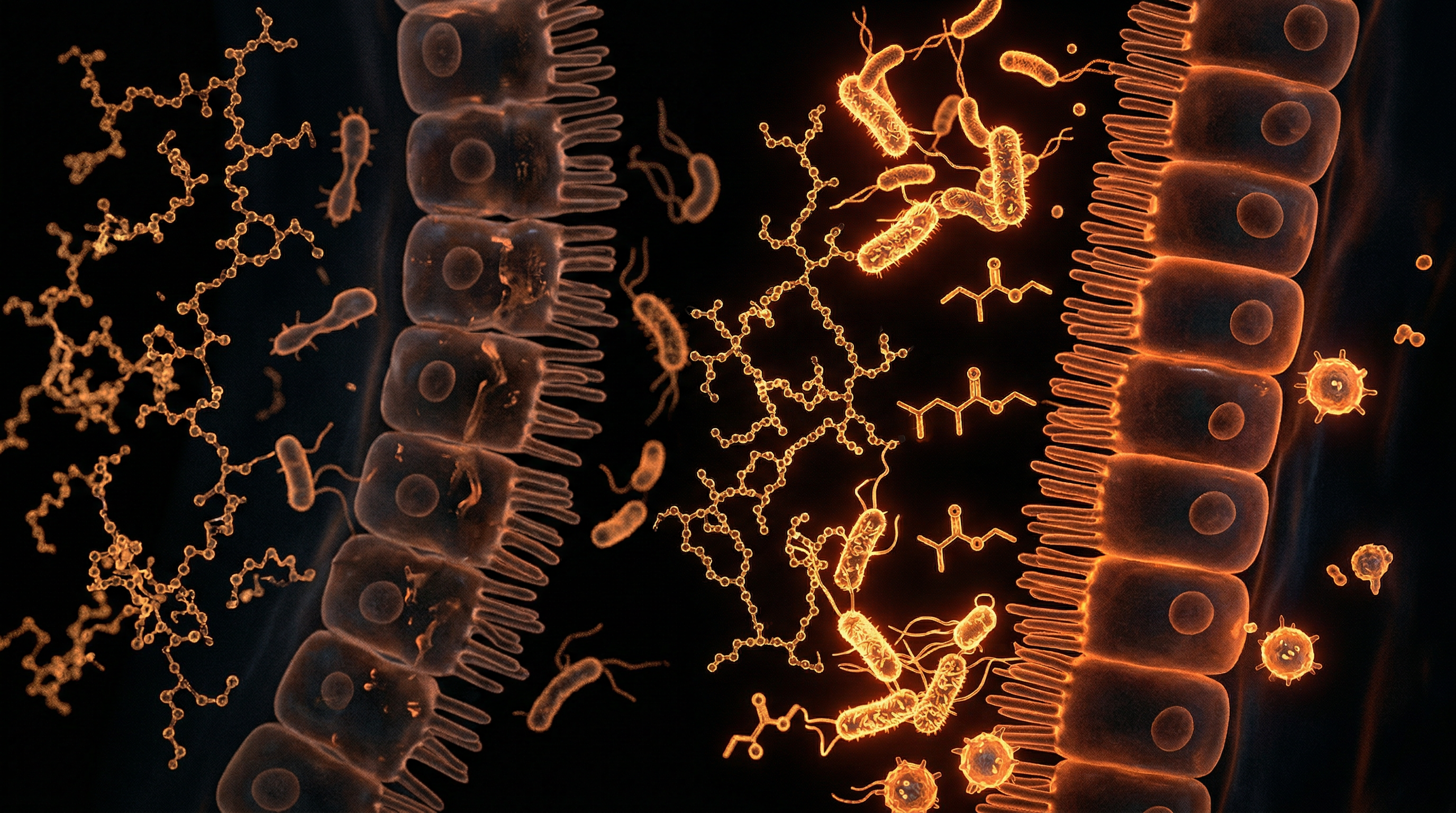
The primary victim of this dietary shift is the microbiome, the dense community of bacteria, archaea, fungi, and viruses residing primarily in the distal colon. The result is a state of chronic dysbiosis—a microbial imbalance that triggers systemic inflammation, compromises the intestinal barrier, and disrupts the metabolic signalling pathways that govern human health.
However, the solution lies in an ancient biological technology: fermentation. Fermented medicine—ranging from raw unpasteurised kefir to wild-fermented krauts—provides more than just "probiotics." It delivers a complex enzymatic toolkit and a suite of postbiotic metabolites capable of reversing the damage wrought by the industrial food complex. This article will dissect the mechanisms of this destruction and provide a rigorous scientific framework for restoration.
Fact: The UK has the highest rate of UPF consumption in Europe, leading to a corresponding rise in inflammatory bowel diseases (IBD) and metabolic syndrome, costing the NHS billions annually.
The Biology — How It Works
To understand the crisis, we must first understand the architecture of the gut. The human gastrointestinal tract is not merely a tube for digestion; it is a sophisticated bioreactor and the primary interface of our immune system.
The Symbiotic Contract
Human evolution has been underpinned by a contract with microbes. We provide a temperature-controlled environment and a steady supply of complex carbohydrates (fibre); in return, the microbes perform essential biochemical tasks that the human genome cannot. These include:
- Vitamin Synthesis: Producing B-vitamins (B12, Folate) and Vitamin K2.
- Immune Training: Educating T-cells to distinguish between pathogens and harmless proteins.
- Neurotransmitter Production: Generating up to 95% of the body’s serotonin and significant amounts of GABA and dopamine.
The Mucosal Barrier: The Body’s Frontier
The lining of the gut is only a single cell layer thick (the epithelium). To protect this fragile boundary, the body relies on a thick layer of mucus. This mucus is maintained by specific bacteria, such as Akkermansia muciniphila, which stimulate the production of mucin. In a healthy state, this barrier prevents undigested food particles, toxins, and pathogens from entering the bloodstream.
The Fermentation Paradigm
Fermentation is the anaerobic breakdown of carbohydrates by microorganisms. When we consume fermented foods, we are ingesting a "living matrix." Unlike sterile industrial food, fermented products are rich in organic acids (lactic, acetic), bacteriocins (natural antibiotics produced by "good" bacteria), and enzymes that pre-digest complex molecules, making them bioavailable to the human host.
Mechanisms at the Cellular Level
The damage caused by UPFs and the repair offered by fermentation occur at the molecular level, specifically involving the tight junction proteins and the Toll-like receptors (TLRs).
Disruption of the Tight Junctions
Ultra-processed ingredients, particularly emulsifiers and high-intensity sweeteners, act as detergents on the intestinal lining. They degrade the zonulin pathway, which regulates the "gates" between intestinal cells. When these gates remain open, a condition known as Intestinal Permeability (Leaky Gut) occurs. This allows Lipopolysaccharides (LPS)—endotoxins found on the cell walls of "bad" Gram-negative bacteria—to leak into the systemic circulation.
The Role of Short-Chain Fatty Acids (SCFAs)
The "currency" of a healthy gut is the production of Short-Chain Fatty Acids, primarily Butyrate, Propionate, and Acetate.
- Butyrate is the primary fuel source for colonocytes (colon cells). It induces apoptosis (programmed cell death) in cancerous cells and maintains the anaerobic environment of the gut.
- UPF diets, being devoid of fermentable fibres, lead to a "Butyrate famine," causing colonocytes to starve, lose their structural integrity, and become oxygenated, which allows pathogenic, oxygen-tolerant bacteria to flourish.
Enzymatic Restoration
Fermented foods act as a biological "software update." The enzymes present in raw, fermented liquids—such as proteases, lipases, and amylases—assist the pancreas in breaking down industrial residues. Furthermore, the lactic acid bacteria (LAB) found in ferments produce exopolysaccharides, which function as a protective biofilm, coating the damaged epithelium and allowing the underlying tissue to regenerate.
Environmental Threats and Biological Disruptors
The UK's dysbiosis crisis is not accidental; it is the result of a multi-pronged assault on the microbiome by environmental and industrial factors.
The Emulsifier Eradication
Common British UPFs, such as supermarket breads, "low-fat" yoghurts, and ready meals, are loaded with emulsifiers like Polysorbate 80 and Carboxymethylcellulose.
Scientific Callout: Research has demonstrated that emulsifiers directly erode the protective mucus layer, allowing bacteria to come into direct contact with the epithelial cells, triggering a massive inflammatory response.
Glyphosate Residues
As a senior researcher, I must highlight the impact of Glyphosate, the most widely used herbicide in UK agriculture. Glyphosate acts via the shikimate pathway—a metabolic route found in plants and bacteria, but not humans. For years, the industry claimed it was safe for human consumption for this reason. However, they omitted a crucial fact: our gut bacteria do have the shikimate pathway. Glyphosate acts as a potent antibiotic, selectively killing beneficial species like Bifidobacterium while allowing pathogens like Clostridium difficile to thrive.
The Sterile Food Fallacy
Modern UK food standards prioritise sterility over vitality. Through pasteurisation, irradiation, and ultra-high temperature (UHT) processing, we have removed the "biological noise" from our diet. This lack of microbial exposure leads to an "under-educated" immune system, contributing to the skyrocketing rates of allergies and asthma in the British population.
The Cascade: From Exposure to Disease
Dysbiosis is not a static state; it is a progressive cascade that ripples through every system in the body.
Stage 1: The Microbial Shift
The initial phase involves a loss of Alpha Diversity (the number of different species). UPFs feed a narrow group of "pro-inflammatory" bacteria. This shift often manifests as bloating, "brain fog," and altered bowel habits.
Stage 2: Metabolic Endotoxemia
As the gut becomes "leaky," LPS enters the blood. This triggers the liver and the adipose tissue to release inflammatory cytokines (IL-6, TNF-alpha). This is the root of insulin resistance. Even if a person is thin ("TOFI" – Thin Outside, Fat Inside), they can suffer from the metabolic consequences of a UPF-damaged gut.
Stage 3: The Gut-Brain Axis Collapse
The Vagus Nerve serves as a bi-directional motorway between the gut and the brain. In a state of dysbiosis, the signals sent to the brain are "threat signals." This manifests as:
- Anxiety and Depression: Due to reduced serotonin synthesis and increased neuroinflammation.
- Neurodegeneration: Emerging research links the accumulation of misfolded proteins in the gut to the development of Parkinson’s and Alzheimer’s diseases.
Stage 4: Autoimmunity
When the immune system is constantly exposed to "leaked" food proteins, it loses its ability to distinguish "self" from "non-self." This leads to the body attacking its own tissues, resulting in conditions like Hashimoto’s thyroiditis, rheumatoid arthritis, and psoriasis—all of which have reached record levels in the UK.
What the Mainstream Narrative Omits
The UK’s public health advice, largely influenced by the "Big Food" lobby, continues to focus on outdated metrics while ignoring the microbiome.
The "Calories In, Calories Out" Deception
The mainstream narrative persists in treating the human body as a simple furnace. This ignores the fact that the microbiome determines the caloric extraction rate. Two individuals can eat the same 500-calorie UPF muffin, but a dysbiotic individual may harvest 100 more calories from it due to the efficiency of their pathogenic bacteria, while also suffering systemic inflammation that slows their metabolism.
The "Fortified" Food Scam
Many UK cereals and breads are "fortified" with synthetic vitamins to replace what was lost during processing. However, the gut cannot utilise these synthetic isolates effectively without the co-factors found in whole foods. Furthermore, inorganic iron used in fortification has been shown to feed pathogenic bacteria in the gut, further exacerbating dysbiosis.
The Suppression of Fermentation Science
There is a distinct lack of funding for large-scale clinical trials on unpasteurised fermented foods. Because "wild-fermented" sauerkraut cannot be patented, it holds no interest for the pharmaceutical industry. Instead, the "gut health" market is flooded with expensive, shelf-stable probiotic pills, many of which contain strains that are dead before they reach the consumer or lack the necessary "prebiotic" substrate to survive in the gut.
The UK Context
The British landscape presents unique challenges to gut health that are not as prevalent in Mediterranean or Asian cultures.
The Chorleywood Bread Process
The UK’s bread is a primary offender. Introduced in 1961, the Chorleywood Process uses high-speed mixers and chemical oxidants to produce bread in a fraction of the time required for traditional fermentation. This process leaves the gluten and phytic acid largely intact and un-degraded, making British supermarket bread a major driver of gut inflammation compared to traditional European sourdough.
The Supermarket Dominance
The UK has one of the most concentrated supermarket sectors in the world. This "Big Four" dominance ensures that the British palate is conditioned for shelf-life and "palatability" (the Bliss Point) rather than nutrient density. The "supermarketisation" of the UK has effectively erased traditional British fermented foods—such as real farmhouse cheeses, small-batch ginger beer, and naturally pickled onions—replacing them with vinegar-soaked, pasteurised imitations.
The Antibiotic Over-Prescription
While the NHS has made strides in reducing antibiotic prescriptions, the UK’s history of heavy usage has left several generations with "extinction events" in their microbiomes. Key ancestral species have been wiped out, creating a vacuum that UPFs are all too happy to fill with opportunistic pathogens.
Protective Measures and Recovery Protocols
Reversing dysbiosis in a UPF-saturated environment requires a disciplined, biological approach. We must move beyond "dieting" and into Biological Restoration.
1. The "Remove" Phase: Neutralising UPFs
The first step is the absolute elimination of the "Big Three" gut destroyers:
- Industrial Seed Oils: (Rapeseed, Sunflower, Corn) which are pro-inflammatory and disrupt cell membrane integrity.
- Emulsifiers: Check labels for Lecithin, Polysorbates, and Gums.
- Artificial Sweeteners: Sucralose and Aspartame are potent metabolic disruptors.
2. The "Replace" Phase: Reintroducing the Enzymatic Toolkit
The recovery protocol centres on the daily consumption of The Big Four Ferments:
- Raw Kefir: Ideally made from A2 cow’s milk or goat’s milk. It contains up to 60 strains of bacteria and yeasts, far superior to any commercial yoghurt. It provides the lactase enzyme, allowing even the lactose-intolerant to heal.
- Wild-Fermented Sauerkraut: Must be unpasteurised (found in the fridge, not the shelf). It is a powerhouse of Lactobacillus plantarum, which is essential for repairing the gut lining and reducing LPS leakage.
- Traditional Kombucha: Rich in Gluconic Acid, which supports liver detoxification—crucial for clearing the systemic toxins released during dysbiosis.
- Apple Cider Vinegar (with 'The Mother'): Taken before meals to stimulate stomach acid (HCL), ensuring that proteins are properly broken down before they reach the microbiome.
3. The "Repopulate" Phase: Diversity through Plants
The UK-based American Gut Project found that individuals who consume at least 30 different plant species per week have significantly more diverse microbiomes. This includes herbs, spices, nuts, and seeds. In a "Protective Protocol," these plants provide the Prebiotic Fibre necessary to sustain the new microbial colonies introduced by fermented foods.
4. The Sourdough Shift
Switching from Chorleywood bread to Long-Fermentation Sourdough (minimum 24-hour ferment) is non-negotiable for the British consumer. The fermentation process breaks down the gluten proteins and neutralises phytic acid, turning a gut-irritant into a gut-supporter.
Protocol Callout: Start small. Introducing large amounts of fermented foods to a heavily dysbiotic gut can cause a "Healing Crisis" (Die-off reaction). Begin with one tablespoon of sauerkraut juice or kefir per day, increasing gradually over 21 days.
Summary: Key Takeaways
The UK’s health crisis is a crisis of the microbiome, driven by a food system that prioritises profit and shelf-life over biological compatibility. To reclaim our health, we must look past the mainstream nutritional advice and return to the microbial wisdom of our ancestors.
- UPF is a Biological Toxin: It is not "food" in the evolutionary sense; it is an industrial substrate that erodes the mucosal barrier and fuels systemic inflammation.
- Dysbiosis is the Root: From obesity and T2 Diabetes to depression and autoimmunity, the common denominator is a loss of microbial diversity and a "leaky" gut.
- Fermentation is the Antidote: Raw, living fermented foods provide the enzymes, organic acids, and microbial strains necessary to re-seal the gut and re-educate the immune system.
- The UK Must Transition: Moving away from the Chorleywood bread process and supermarket-centric diets toward local, fermented, and whole-food sources is the only viable path to saving the national health.
The restoration of the British gut is not merely a personal health choice; it is an act of biological resistance against an industrial system that has commodified our very physiology. Through the science of fermentation, we have the tools to reverse the damage and rebuild the holobiont from the inside out.
"References & Further Reading:"
- The British Gut Project (University of California San Diego / King's College London)
- NOVA Food Classification System (University of São Paulo)
- The Impact of Dietary Emulsifiers on the Gut Microbiota (Nature, 2015)
- Glyphosate’s Suppression of Cytochrome P450 Enzymes and Amino Acid Biosynthesis (Entropy, 2013)
This article is provided for informational and educational purposes only. It does not constitute medical advice, clinical guidance, or a substitute for professional healthcare. Information reflects cited research at time of publication. Always consult a qualified healthcare professional before acting on any health information.
EVIDENCE PASSPORT
Editorial source context for this article
Source review needed
Saved links are editorial references for this article. They may support specific claims rather than every sentence. Open and assess each source in context. This passport does not independently verify them.
Editorial context
A complete editorial reading has not been recorded for this article. Source links remain available for you to open and assess directly.
Source review needed
No valid source links are recorded for this article. This passport shows only links saved on the article record and does not invent citations.
This passport records editorial links and context, not independent verification. Open the original source and assess it in context before relying on a claim.
Medical Disclaimer
The information in this article is for educational purposes only and does not constitute medical advice, diagnosis, or treatment. Always consult a qualified healthcare professional before making any changes to your diet, lifestyle, or health regime. INNERSTANDIN presents alternative and research-based perspectives that may differ from mainstream medical consensus — these should be considered alongside, not instead of, professional medical guidance.
Read Full DisclaimerContinue the thread
Keep this question moving.
Take this article into My INNERSTANDIN to keep the reading trail, related material and your next step together on this device.
Dig deeper in the Library
Free, longform PDF volumes that go beyond headlines into mechanisms and references.