
Urban Air Quality: Pulmonary Biotransformation of Particulates
Updated May 2026
The lungs are not just for breathing; they possess a complex biotransformation system to handle inhaled pollutants. This article reviews how London's air quality taxes the pulmonary CYP450 system.
Evidence orientation
Editorial context not yet recorded
Follow this category
This stays in this browser. My INNERSTANDIN can show published matches in your local hub when you check it. It does not send email, push, or alert notifications.
Local learning review
A private browser aid for revisiting ideas. It is not an alert or a health recommendation.
Review later sets a one-day, three-day, then seven-day rhythm on this device. Choose it only when you want to revisit this article.
Overview
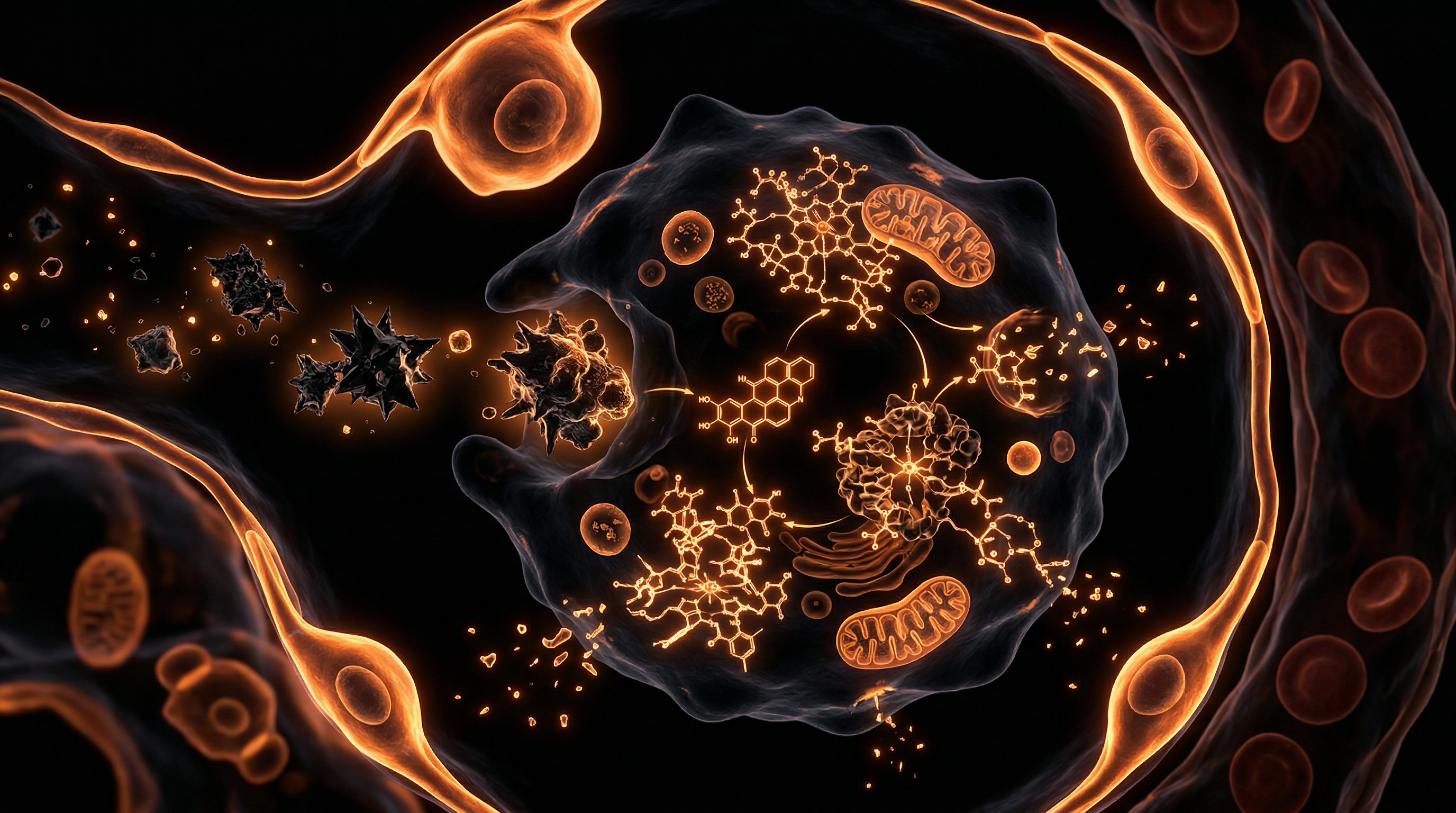
The prevailing public health discourse regarding urban air quality focuses primarily on mechanical obstruction and inflammatory responses—the idea that "dust" gets into the lungs and causes coughing or asthma. However, as a senior researcher at INNERSTANDING, I must assert that this is a primitive oversimplification. The human lung is not merely a pair of bellows for gas exchange; it is a sophisticated, metabolically active biotransformation organ.
In the context of the modern urban environment, specifically a high-density metropolis like London, the lungs function as the primary interface between the internal biological milieu and a soup of xenobiotic compounds. The pulmonary system possesses an intricate array of enzymes designed to chemically alter inhaled toxins. This process, known as biotransformation, is intended to render toxic substances water-soluble for excretion. Yet, in the face of unprecedented chemical complexity in our air, this system is being pushed to its evolutionary breaking point.
This article explores the "hidden" metabolic life of the lungs, specifically focusing on how the Cytochrome P450 (CYP450) system handles (and sometimes mishandles) particulates and gases. We will examine how the biological cost of living in an urban centre is not just measured in respiratory rate, but in the depletion of cellular resources and the accidental creation of "metabolic monsters"—toxic metabolites created by our own detoxification pathways.
Key Fact: The lungs receive 100% of the cardiac output, making them the most highly perfused organ in the body. This means that pollutants biotransformed in the lungs have immediate and direct access to the entire systemic circulation.
The Biology — How It Works
While the liver is traditionally viewed as the "detox hub" of the body, the lungs possess a formidable, albeit specialised, metabolic capacity. This is a survival necessity; the alveolar surface area is roughly the size of a tennis court, exposed to approximately 10,000 litres of air every day.
The Metabolic Players
The biotransformation of inhaled particulates occurs primarily in the epithelial cells of the airways. The two main cell types responsible are:
- Club Cells (formerly Clara cells): Located in the bronchioles, these cells are the primary site of xenobiotic metabolism in the lower respiratory tract. They contain high concentrations of smooth endoplasmic reticulum, where the CYP450 enzymes reside.
- Alveolar Type II Cells: These cells produce surfactant but also maintain a significant enzymatic toolkit to process inhaled lipophilic compounds.
Phase I and Phase II Reactions
Pulmonary biotransformation follows a two-stage process:
- Phase I (Modification): Enzymes, primarily from the Cytochrome P450 superfamily, add or expose a functional group (such as a hydroxyl group) on the pollutant. This is essentially an "activation" phase.
- Phase II (Conjugation): Enzymes like Glutathione S-transferases (GSTs) attach a large, water-soluble molecule (like glutathione) to the activated metabolite, allowing it to be safely flushed from the body.
The danger arises when Phase I is overactive or Phase II is sluggish. In an urban environment saturated with Polycyclic Aromatic Hydrocarbons (PAHs), the lungs often perform Phase I but lack the antioxidant reserves to complete Phase II, leaving highly reactive intermediates to roam free within the lung tissue.
Mechanisms at the Cellular Level
To understand how London’s air taxes our biology, we must look at the Aryl Hydrocarbon Receptor (AhR) pathway. This is the "smoke detector" of the cell.
The AhR Gateway
When you inhale soot from a diesel engine or wood-burning stove, you are inhaling PAHs. These carbon-based rings are lipophilic (fat-soluble) and slide easily through cell membranes. Once inside, they bind to the AhR in the cytoplasm.
This binding triggers the receptor to move into the nucleus, where it acts as a transcription factor, turning "on" the genes for CYP1A1 and CYP1B1. These enzymes are the "first responders" to urban pollution. Their job is to break down the PAHs.
The Bioactivation Paradox
Herein lies the biological tragedy of the modern urbanite. When CYP1A1 attempts to detoxify a common pollutant like Benzo[a]pyrene, it transforms it into an intermediate called BPDE (Benzo[a]pyrene-7,8-dihydrodiol-9,10-epoxide).
Important Callout: BPDE is significantly more toxic and carcinogenic than the original pollutant. Unless it is immediately neutralised by Glutathione, it binds to DNA, creating DNA adducts that lead to permanent mutations.
Redox Cycling and Oxidative Stress
Many particulates, particularly those containing transition metals (like iron, copper, and vanadium from brake dust), undergo redox cycling. As the lung's enzymes attempt to process these metals, they generate Reactive Oxygen Species (ROS)—superoxide radicals and hydrogen peroxide. This creates a state of chronic oxidative stress that exhausts the lung’s supply of Vitamin C and Glutathione, leaving the tissue vulnerable to further damage.
Environmental Threats and Biological Disruptors
The urban atmosphere is a complex chemical matrix. In the UK context, and specifically within the M25, the "threat profile" has shifted from the thick coal smoke of the 1950s to a more insidious invisible threat.
PM2.5: The Trojan Horse
Particulate Matter 2.5 (PM2.5) refers to particles smaller than 2.5 micrometres. These are small enough to bypass the mechanical filters of the nose and throat, reaching the deep alveoli. However, PM2.5 is not a single substance; it is a delivery vehicle. Its porous surface carries:
- Heavy Metals: Lead, Cadmium, and Nickel.
- Endocrine Disruptors: Phthalates and bisphenols adhered to dust.
- Biological Endotoxins: Fragments of bacteria and fungi.
The Nitrogen Dioxide (NO2) Impact
London consistently breaches legal limits for NO2. While not a particulate, NO2 acts as a catalyst for lipid peroxidation in the lung lining fluid. It "primes" the immune system, making the biotransformation pathways even more reactive to other pollutants.
Ultrafine Particles (UFPs)
Newer research focuses on UFPs (PM0.1). These particles are so small they behave like gases. They do not just sit in the lungs; they can translocate across the blood-air barrier, carrying their toxic load directly to the brain and heart, bypassing the pulmonary biotransformation system entirely or overwhelming it.
The Cascade: From Exposure to Disease
When the pulmonary biotransformation system is overwhelmed, a predictable cascade of biological decay begins.
- Enzymatic Induction & Saturation: The body ramps up CYP450 production. This requires immense energy (ATP) and nutrients.
- Glutathione Depletion: The "master antioxidant" is used up faster than it can be recycled. Without glutathione, Phase II biotransformation fails.
- Pro-inflammatory Signalling: Cells, sensing the presence of toxic intermediates, release cytokines like IL-6 and TNF-alpha.
- Systemic Inflammation: These cytokines enter the bloodstream. This explains why high-pollution days in London correlate with a spike in myocardial infarctions (heart attacks) and strokes—not just asthma attacks.
- Epigenetic Alterations: Chronic activation of the AhR pathway changes how genes are expressed, potentially "locking" the lungs into a state of permanent inflammation.
Statistic: Research suggests that long-term exposure to urban PM2.5 can reduce life expectancy by an average of 1.5 to 2 years, primarily through the cardiovascular consequences of pulmonary metabolic stress.
What the Mainstream Narrative Omits
Mainstream environmental reporting often treats air quality as a "one size fits all" issue. At INNERSTANDING, we dig deeper into the suppressed variables that dictate why one person thrives in London while another develops chronic illness.
Genetic Polymorphisms (The "Missing Link")
Regulatory bodies set "safe" limits based on the average person. However, a significant portion of the UK population carries polymorphisms in their detox genes.
- GSTM1 Null Genotype: Many people lack the gene to produce the primary enzyme that neutralises PAH metabolites. For these individuals, there is no "safe" level of urban air.
- CYP1A1 "Hyper-inducers": Some people have a genetic variant that makes their Phase I enzymes work too fast, creating a massive "bottleneck" of toxic intermediates.
The Synergy Effect
Toxicology usually tests one chemical at a time. In the real world, we inhale thousands simultaneously. The biotransformation of a plasticiser might be inhibited by the presence of a heavy metal, a phenomenon known as enzymatic inhibition. This means the "cocktail effect" of urban air is exponentially more toxic than the sum of its parts.
The Indoor Pollution Lie
We are told to stay indoors on high-pollution days. However, indoor air in urban flats can be up to ten times more polluted due to poor ventilation, off-gassing furniture (VOCs), and cooking fumes, which create a feedback loop with the outdoor pollutants entering through windows.
The UK Context
London provides a unique and troubling case study for pulmonary biotransformation. Despite the expansion of the Ultra Low Emission Zone (ULEZ), the biological burden on Londoners remains high, partly due to the city’s geography and infrastructure.
The "Canyon Effect"
London’s medieval street layout, combined with high-rise developments, creates "urban canyons." These trap pollutants at ground level, where pedestrians and cyclists are breathing. In these canyons, concentrations of NO2 and PM2.5 can be 500% higher than at rooftop monitors.
The London Underground: A Biological Hotspot
One of the most suppressed truths in UK public health is the air quality on the London Underground, specifically the deep-level lines (Northern, Central, Victoria).
- The dust on the Tube is rich in magnetite and iron from rail grinding and braking.
- Concentrations of PM2.5 can reach 300-800 µg/m³—massively exceeding WHO "safe" limits (5 µg/m³).
- This specific "Tube dust" is highly reactive in the pulmonary biotransformation system, causing intense oxidative stress in the alveolar macrophages.
The Thames Valley Trap
London sits in a geographical basin. During periods of "temperature inversion," cold air is trapped beneath a layer of warm air, acting as a lid that seals in all the city's emissions. During these periods, the pulmonary CYP450 systems of millions of people are simultaneously pushed into overdrive.
Protective Measures and Recovery Protocols
If we cannot immediately change the air we breathe, we must fortify the biological systems that process it. As a senior researcher, I suggest the following protocols based on enhancing biotransformation efficiency.
Nutritional Support for Biotransformation
- Nrf2 Activation: The Nrf2 pathway is the "master switch" for antioxidant production. Sulforaphane (found in broccoli sprouts) is the most potent natural activator. It "upregulates" Phase II enzymes, helping to clear the toxic intermediates produced by CYP1A1.
- Glutathione Precursors: Supplementing with N-Acetyl Cysteine (NAC) or Liposomal Glutathione provides the substrate necessary for Phase II conjugation.
- Selenium and Zinc: These are essential co-factors for antioxidant enzymes like glutathione peroxidase and superoxide dismutase.
Environmental Engineering
- HEPA and Activated Carbon: Standard HEPA filters catch particulates, but only activated carbon or zeolite can "scrub" the gaseous pollutants (NO2, VOCs) that trigger the AhR pathway.
- Nasal Breathing: The nose is the first line of biotransformation. The nasal mucosa contains its own set of CYP enzymes and produces Nitric Oxide, which helps neutralise certain pathogens and dilate airways for more efficient gas exchange.
Lifestyle Recovery
- Sauna Therapy: Some lipophilic pollutants that are not efficiently processed by the lungs can be excreted through the skin.
- Air Quality Apps: Use real-time data to avoid "hotspots" during exercise. Exercising in a "canyon" street increases your ventilatory rate, which means you are "turbo-charging" the delivery of toxins to your CYP450 system.
Summary: Key Takeaways
The relationship between a Londoner and their environment is a silent, microscopic chemical war. Understanding pulmonary biotransformation changes the narrative from "bad air" to "metabolic capacity."
- The Lungs are a Factory: They possess a complex system of CYP450 enzymes designed to biotransform inhaled chemicals.
- Bioactivation is the Real Danger: The body’s attempt to detoxify urban pollutants like PAHs often creates more toxic intermediates (like BPDE) that damage DNA.
- Individual Variability Matters: Genetic differences in enzymes like GSTM1 mean that some people are biologically "unfit" for high-pollution urban living.
- The Tube is a Toxic Reservoir: The London Underground represents one of the highest metabolic insults to the pulmonary system due to iron-rich PM.
- Support Phase II: To survive the urban "exposome," one must focus on upregulating Phase II conjugation and maintaining Glutathione levels to ensure that activated toxins are safely excreted.
In an era where urban air is a constant variable, our focus must shift to supporting the biotransformation pathways that have protected our species for millennia, but which are now facing an unprecedented chemical assault. We do not just breathe the air; we metabolise it. It is time we started treating our lungs with the metabolic respect they deserve.
This article is provided for informational and educational purposes only. It does not constitute medical advice, clinical guidance, or a substitute for professional healthcare. Information reflects cited research at time of publication. Always consult a qualified healthcare professional before acting on any health information.
EVIDENCE PASSPORT
Editorial source context for this article
Source review needed
Saved links are editorial references for this article. They may support specific claims rather than every sentence. Open and assess each source in context. This passport does not independently verify them.
Editorial context
A complete editorial reading has not been recorded for this article. Source links remain available for you to open and assess directly.
Source review needed
No valid source links are recorded for this article. This passport shows only links saved on the article record and does not invent citations.
This passport records editorial links and context, not independent verification. Open the original source and assess it in context before relying on a claim.
Medical Disclaimer
The information in this article is for educational purposes only and does not constitute medical advice, diagnosis, or treatment. Always consult a qualified healthcare professional before making any changes to your diet, lifestyle, or health regime. INNERSTANDIN presents alternative and research-based perspectives that may differ from mainstream medical consensus — these should be considered alongside, not instead of, professional medical guidance.
Read Full DisclaimerContinue the thread
Keep this question moving.
Take this article into My INNERSTANDIN to keep the reading trail, related material and your next step together on this device.
Explore this in the Body Map
See where this hits your biology. Interactive anatomy, threats, and protective protocols.
Dig deeper in the Library
Free, longform PDF volumes that go beyond headlines into mechanisms and references.