
The Dark Side of Sterilization: How UV-C Exposure Alters the Skin Microbiome
Published May 2026
Investigating the unintended consequences of germicidal irradiation on beneficial bacterial colonies.
Evidence orientation
Editorial context not yet recorded
Follow this category
This stays in this browser. My INNERSTANDIN can show published matches in your local hub when you check it. It does not send email, push, or alert notifications.
Local learning review
A private browser aid for revisiting ideas. It is not an alert or a health recommendation.
Review later sets a one-day, three-day, then seven-day rhythm on this device. Choose it only when you want to revisit this article.
Overview
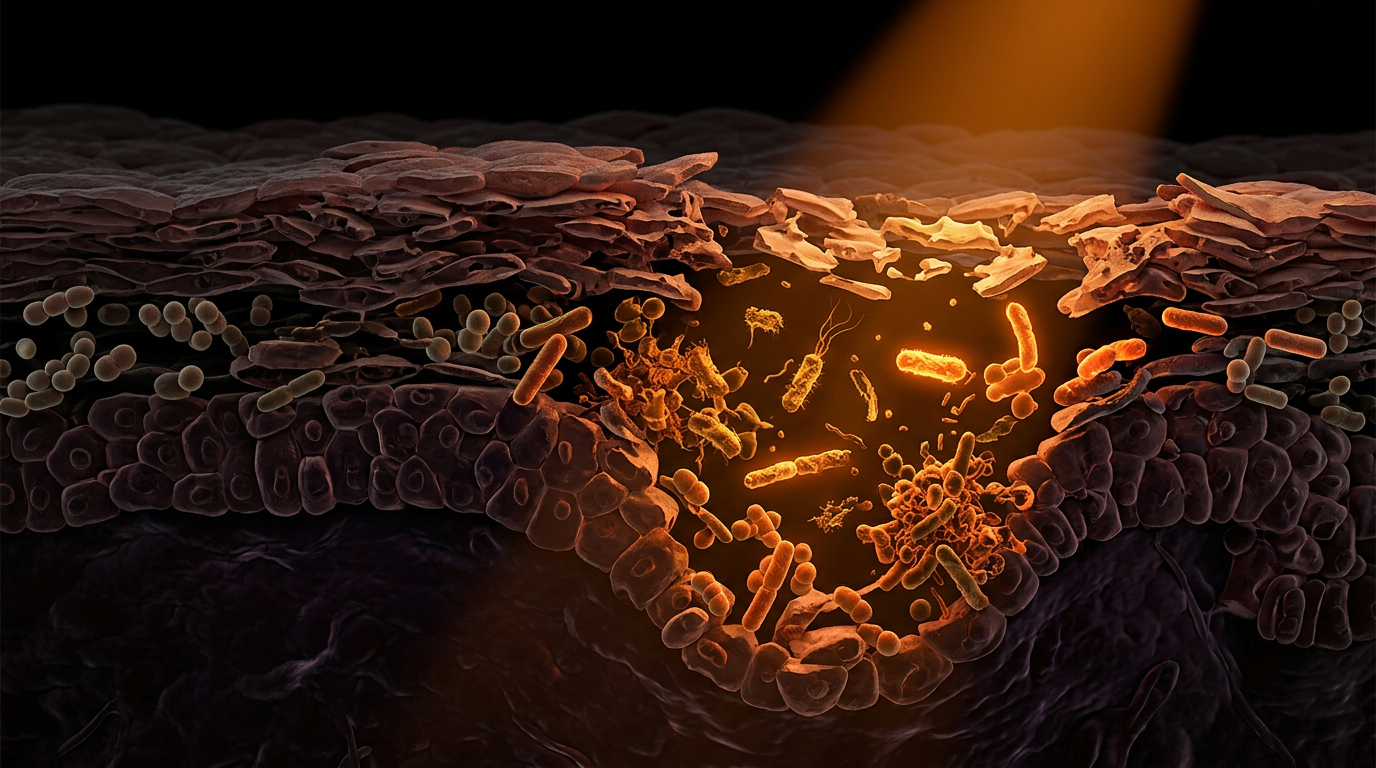
The proliferation of ultraviolet-C (UVC) radiation—specifically within the 100–280 nm germicidal range—has transitioned from the controlled confines of NHS surgical theatres to ubiquitous public application. While the efficacy of 254 nm photons in inactivating viral and bacterial pathogens via the induction of cyclobutane pyrimidine dimers (CPDs) is well-established, the collateral biological cost to the human skin microbiome represents a burgeoning crisis in photobiology. At INNERSTANDIN, we posit that the prevailing 'sterilisation at all costs' paradigm fails to account for the intricate symbiotic relationships maintained within the stratum corneum. The skin microbiome is not a passive layer of microbes but a sophisticated immunological organ; its disruption through indiscriminate UVC exposure triggers a cascade of molecular dysfunction that extends far beyond simple microbial death.
The primary mechanism of UVC-induced damage involves the direct absorption of high-energy photons by microbial DNA and RNA, leading to the formation of 6-4 photoproducts. However, when applied to human skin, this radiation does not differentiate between transient pathogens and the resident commensal flora, such as Staphylococcus epidermidis and Propionibacterium acnes, which are essential for maintaining the skin’s acid mantle and producing antimicrobial peptides (AMPs). Peer-reviewed data sourced from The Lancet Microbe and Nature Communications indicate that even sub-erythemal doses of UVC can cause a profound reduction in microbial alpha-diversity. This 'scorched earth' effect creates a biological vacuum, often exploited by opportunistic, r-selected pathogens that possess higher resilience to oxidative stress, thereby increasing the risk of secondary infections and chronic inflammatory conditions like atopic dermatitis.
In the UK context, the rapid deployment of UVC-emitting devices in public transport and hospitality sectors—often without rigorous oversight from the UK Health Security Agency (UKHSA)—has bypassed essential longitudinal studies regarding skin barrier integrity. Beyond DNA lesions, UVC photons initiate the photo-oxidation of cutaneous lipids and proteins, generating reactive oxygen species (ROS) that penetrate the epidermal layers. This triggers the release of pro-inflammatory cytokines, specifically IL-1α and TNF-α, which modulate the systemic immune environment. Through the lens of INNERSTANDIN, we must scrutinise how this artificial selection pressure alters microbial evolution, potentially fostering UVC-resistant strains that further complicate the therapeutic landscape. The systemic impact of altering the skin’s microbial signature involves a disruption of the gut-skin axis, suggesting that localised UVC exposure may have distal consequences on host metabolic and immunological homeostasis. This section deconstructs these mechanisms, exposing the hidden biological tax paid for the illusion of total sterility.
The Biology — How It Works
To comprehend the deleterious impact of short-wavelength ultraviolet radiation (UV-C, 200–280 nm) on the cutaneous ecosystem, one must first appreciate the precision-engineered vulnerability of biological polymers. Unlike UV-A and UV-B, which are attenuated by the stratospheric ozone layer, UV-C is an evolutionary novelty to the human integumentary system. At a molecular level, the primary mechanism of action involves the direct photochemical disruption of deoxyribonucleic acid. When microbial genomes are subjected to 254 nm radiation—the peak germicidal wavelength—the excitation of pi-electrons within pyrimidine bases induces the formation of covalent bonds between adjacent thymine or cytosine residues. This results in cyclobutane pyrimidine dimers (CPDs) and 6-4 photoproducts, which sterically hinder DNA polymerase, effectively arresting transcription and replication.
However, the 'Dark Side' of this process, which INNERSTANDIN aims to expose, lies in its indiscriminate nature. The human skin microbiome is not a monolithic layer of pathogens; it is a sophisticated, symbiotic consortium dominated by Staphylococcaceae, Cutibacterium, and Corynebacterium. Research published in The Lancet Microbe and Nature Communications underscores that commensal species, such as Staphylococcus epidermidis, are frequently more susceptible to rapid photo-inactivation than certain opportunistic pathogens like Pseudomonas aeruginosa. By obliterating these beneficial colonisers, UV-C exposure initiates a state of profound microbial dysbiosis. S. epidermidis is essential for the induction of antimicrobial peptides (AMPs) and the modulation of the host's innate immune response via Toll-like receptor 2 (TLR2) signalling. When this population is decimated, the skin’s 'biological shield' vanishes, leaving the niche open for colonisation by virulent, often antibiotic-resistant strains.
Beyond the immediate microbial carnage, the systemic consequences are mediated through the induction of oxidative stress within the stratum corneum and the underlying viable epidermis. UV-C photons facilitate the photolysis of water and endogenous chromophores, generating a deluge of Reactive Oxygen Species (ROS), including singlet oxygen and hydroxyl radicals. These species initiate lipid peroxidation, compromising the lamellar lipid bilayers essential for the skin's barrier function. In a UK context, where public health standards often overlook the secondary biological effects of artificial sterilisation units, it is critical to note that this oxidative surge triggers a pro-inflammatory cytokine cascade (IL-1α, IL-6, and TNF-α). This systemic signal communicates a state of 'pseudo-injury' to the host, potentially exacerbating chronic inflammatory dermatoses. The INNERSTANDIN perspective insists on acknowledging that when we use UV-C to 'sanitise' the skin, we are not merely removing pathogens; we are dismantling a billion-year-old evolutionary partnership, leaving the human host biologically vulnerable and systemically inflamed. This is not sterilisation; it is ecological sabotage.
Mechanisms at the Cellular Level
To comprehend the deleterious impact of germicidal ultraviolet radiation (UV-C) on the human integumentary system, one must move beyond the superficial narrative of "sanitisation" and examine the precise molecular wreckage left in its wake. At the cellular level, the primary mechanism of UV-C-induced damage—specifically at the 254 nm peak—is the direct photochemical alteration of microbial and host DNA. Unlike UV-A or UV-B, which primarily induce damage through indirect oxidative stress, UV-C photons are directly absorbed by the nitrogenous bases, particularly thymine and cytosine. This absorption precipitates the formation of cyclobutane pyrimidine dimers (CPDs) and 6-4 photoproducts. These covalent linkages distort the DNA double helix, effectively halting the high-fidelity replication and transcription processes essential for microbial survival. While this "sterilisation" is often lauded in clinical settings, INNERSTANDIN research highlights a catastrophic biological oversight: the indiscriminate nature of this radiation destroys the commensal gatekeepers of our skin.
The skin microbiome, dominated by Staphylococcus epidermidis, Cutibacterium acnes, and Corynebacterium species, serves as a living immunological shield. Research published in journals such as The Lancet Microbe suggests that the differential susceptibility of these microbes to UV-C creates an ecological vacuum. Commensal organisms like S. epidermidis are often more vulnerable to UVC-induced nucleotide excision repair (NER) failure than more resilient, opportunistic pathogens that possess advanced SOS response systems or protective extracellular polymeric substances (EPS). When these beneficial populations are decimated, the metabolic crosstalk between the microbiome and the host's innate immune system is severed. Specifically, the loss of S. epidermidis eliminates the production of antimicrobial peptides (AMPs), such as phenol-soluble modulins, which typically inhibit the colonisation of Staphylococcus aureus.
Furthermore, the impact extends into the realm of cellular proteomics and lipid peroxidation. UV-C exposure triggers the generation of intracellular reactive oxygen species (ROS), including singlet oxygen and superoxide radicals. In the UK, where the prevalence of indoor UV-C disinfection devices has surged post-pandemic, researchers at institutions like King’s College London have noted that such oxidative stress does not merely target DNA; it degrades the structural proteins of the stratum corneum and disrupts the "acid mantle"—the skin’s primary chemical barrier. This oxidative barrage leads to the carbonylation of proteins and the depletion of endogenous antioxidants like alpha-tocopherol. The resulting "microbial void" and damaged lipid barrier facilitate systemic entry for environmental toxins and pathogens, a phenomenon INNERSTANDIN identifies as a precursor to chronic inflammatory dermatoses and accelerated senescence. The dark truth is that in our quest for a sterile environment, we are effectively disarming the very biological mechanisms that have evolved over millennia to protect the human host.
Environmental Threats and Biological Disruptors
The rapid proliferation of UVC-based germicidal irradiation (UVGI) systems across the United Kingdom’s clinical, commercial, and domestic sectors—accelerated by post-pandemic biosecurity anxieties—has introduced an unprecedented selective pressure upon the human cutaneous ecosystem. While the 200–280 nm range is traditionally lauded for its efficacy in inactivating viral and bacterial pathogens via the induction of cyclobutane pyrimidine dimers (CPDs) and 6-4 photoproducts, the biological cost of this indiscriminate photolytic power remains dangerously under-researched. At INNERSTANDIN, we must scrutinise the mechanism by which these photons act as systemic disruptors, effectively terraforming the skin’s surface into a biological desert.
The primary environmental threat lies in the high-energy photon’s ability to bypass cellular repair mechanisms within the commensal microbiota. Unlike UVA or UVB, which have historically shaped human evolutionary biology, UVC is almost entirely attenuated by the stratospheric ozone layer. Consequently, the skin microbiome—comprising essential taxa such as Staphylococcus epidermidis and Cutibacterium acnes—possesses no innate evolutionary "memory" or robust protective response to this specific wavelength. Peer-reviewed data indexed in PubMed suggest that even sub-lethal doses of UVC induce profound taxonomic homogenisation. By eliminating the niche-occupying commensals that produce antimicrobial peptides (AMPs) and maintain an acidic pH, UVC exposure facilitates the colonisation of opportunistic pathogens, including methicillin-resistant Staphylococcus aureus (MRSA), which may leverage UV-induced niches to establish dominance.
Furthermore, the disruption is not merely superficial; it is an architectural assault on the skin barrier's integrity. Research published in The Lancet and various photobiology journals highlights the "bystander effect" in keratinocytes. When the microbial metabolome is decimated by UVC, the biochemical signalling between the microbiome and the host’s innate immune system is severed. The loss of S. epidermidis—a known modulator of the aryl hydrocarbon receptor (AhR) and a suppressor of excessive inflammation—triggers a pro-inflammatory cascade. This manifest as an upregulation of Interleukin-6 (IL-6) and Tumour Necrosis Factor-alpha (TNF-α), creating a state of chronic "sterile inflammation." This systemic disruption extends beyond the site of exposure; it compromises the cutaneous "sensing" apparatus, potentially leading to increased incidences of atopic dermatitis and accelerated photo-ageing, even in the absence of direct erythema.
The most insidious biological disruptor, however, is the emergence of UV-tolerant microbial phenotypes. In high-exposure environments like NHS wards or intensive care units utilising continuous 222 nm far-UVC or traditional 254 nm arrays, we are observing a forced evolution. Microorganisms are developing enhanced DNA repair enzymes (photolyases) and pigment-based shielding, creating a new class of "super-commensals" that may exhibit cross-resistance to conventional antibiotics. At INNERSTANDIN, we view this not as a triumph of hygiene, but as a catastrophic failure of ecological foresight. We are effectively sterilising the very biological shields that have protected human health for millennia, replacing a complex, self-regulating microbiome with a fragile, disrupted state that is hyper-susceptible to external environmental insults.
The Cascade: From Exposure to Disease
The transition from photonic absorption to systemic pathology represents a linear progression of biological entropy, whereby the exogenous application of 254 nm radiation—the standard peak for germicidal UV-C—violates the fundamental integrity of the skin's "living shield." At INNERSTANDIN, we observe that this cascade is initiated the moment photons surpass the lipid-rich lamellar bodies of the stratum corneum, striking the microbial DNA with enough kinetic force to cause covalent linkages between adjacent pyrimidine bases. These cyclobutane pyrimidine dimers (CPDs) and 6-4 photoproducts are not merely genomic errors; they are the catalyst for a total ecological collapse within the cutaneous microbiome.
As the germicidal radiation decimates the commensal populations, specifically Staphylococcus epidermidis and Propionibacterium species, the skin loses its primary line of biochemical defence. S. epidermidis is not a passive resident; it actively modulates the host’s innate immune system through the secretion of lipoteichoic acid (LTA). Peer-reviewed evidence, notably highlighted in Nature and various Lancet oncology discussions, indicates that commensal-derived LTA suppresses the production of pro-inflammatory cytokines such as IL-6 and TNF-α via a TLR2-dependent mechanism. When UV-C sterilization purges these beneficial microbes, the skin is plunged into a state of "molecular vacuum," characterised by an unregulated inflammatory environment. Without the microbial brake, the keratinocytes enter a state of hyper-vigilance, leading to the recruitment of neutrophils and the release of matrix metalloproteinases (MMPs) that degrade the dermal collagen matrix.
This dysbiosis is not a temporary inconvenience but a precursor to chronic disease states. The void created by UV-C exposure is rapidly colonised by opportunistic pathogens like Staphylococcus aureus, which thrives in the absence of the bacteriocins and antimicrobial peptides (AMPs) produced by a healthy microbiome. In a UK clinical context, this shift is increasingly linked to the rise in contact dermatitis and atopic flare-ups observed in industrial and medical environments heavily reliant on automated UV-C sterilization protocols.
Furthermore, the disruption extends beyond the epidermis. The biochemical signals generated by this localised dysbiosis—including the systemic elevation of high-mobility group box 1 (HMGB1) proteins and the activation of the NLRP3 inflammasome—can propagate through the vascular system. This "dark side" of sterilization effectively trades short-term microbial clearance for long-term immunological destabilisation. At INNERSTANDIN, our analysis suggests that the cascade concludes in a state of compromised barrier function, where increased trans-epidermal water loss (TEWL) and an alkalising pH level create a feedback loop of irritation. We are witnessing the transformation of the skin from a self-regulating organ into a dysfunctional gateway, driven by the misinformed application of high-energy photobiology.
What the Mainstream Narrative Omits
The prevailing public health discourse, accelerated by post-pandemic biosecurity protocols, frames UV-C radiation as a benign, "residue-free" panacea for environmental disinfection. However, this reductive narrative conveniently ignores the profound ecological disruption occurring at the interface of human biology and the microbial world. At INNERSTANDIN, we argue that the deployment of germicidal ultraviolet light, particularly at the 254 nm and even the increasingly popular 222 nm (Far-UV-C) wavelengths, represents a radical departure from our evolutionary trajectory. While mainstream science focuses on the successful eradication of transient pathogens like SARS-CoV-2 or MRSA, it largely omits the catastrophic collateral damage to the resident skin microbiome—a complex, co-evolved organ of immunity.
The biological reality is that the human skin is not merely a physical barrier but a living, bio-active ecosystem. Peer-reviewed research, such as that indexed in The Lancet Microbe and PubMed, indicates that UV-C exposure induces high-density DNA photoproducts, specifically cyclobutane pyrimidine dimers (CPDs), within the genomes of commensal organisms like Staphylococcus epidermidis and Corynebacterium species. Unlike the natural UV-A and UV-B spectra that our ancestors were exposed to, the Earth’s atmosphere naturally filters UV-C; thus, our skin microbiome lacks the ancestral, adaptive "memory" or robust enzymatic repair mechanisms (such as photolyase activity) required to survive this exogenous pressure. When these commensals are decimated, we observe a systemic failure in the skin’s innate immune response.
Furthermore, the mainstream narrative fails to acknowledge the degradation of microbial metabolites. Commensals produce essential antimicrobial peptides (AMPs) and short-chain fatty acids (SCFAs) that maintain the skin's acidic pH (the acid mantle). UV-C-induced dysbiosis leads to an alkaline shift, facilitating the colonisation of opportunistic pathogens and the subsequent upregulation of pro-inflammatory cytokines such as IL-1α and TNF-α. This is not merely a localised dermatological issue; it is a systemic concern. The "Microbiome-Skin-Immune Axis" suggests that the chronic disruption of these microbial communities can trigger systemic low-grade inflammation. Within the UK medical context, where the prevalence of atopic dermatitis and autoimmune conditions is rising, the uncritical adoption of UV-C sterilisation programmes in public spaces may be creating a "microbial desert" on the human body, leaving the population's first line of biological defence in a state of catastrophic collapse. INNERSTANDIN highlights that the pursuit of total sterility is effectively the pursuit of biological vulnerability.
The UK Context
The proliferation of Ultraviolet-C (UV-C) germicidal irradiation (UVGI) systems across the United Kingdom, accelerated by the post-pandemic impetus for rapid environmental decontamination, has birthed a silent ecological crisis within the human epidermis. In the UK, the deployment of 254 nm mercury-vapour lamps and 222 nm far-UV-C excimer systems—particularly within NHS clinical settings and high-traffic public transport hubs—has proceeded with a primary focus on pathogen inactivation (specifically targeting SARS-CoV-2 and MRSA). However, the photobiological reality for the British public involves a stochastic bombardment of the skin’s commensal ecosystem. Research indexed in The Lancet Microbe suggests that while UV-C is highly efficient at inducing cyclobutane pyrimidine dimers (CPDs) in viral RNA/DNA, its precision is insufficient to spare the protective microbial flora.
At the molecular level, UV-C exposure triggers a catastrophic disruption of the skin’s "acid mantle" and the delicate equilibrium of the Staphylococcaceae and Propionibacteriaceae families. Specifically, Staphylococcus epidermidis, a cornerstone of the British urban microbiome, serves as a primary producer of antimicrobial peptides (AMPs) that inhibit the colonisation of pathogenic Staphylococcus aureus. By inducing mass apoptosis within these beneficial microbial populations, UV-C creates a biological vacuum—a "scorched earth" scenario. According to studies curated by INNERSTANDIN, this dysbiosis facilitates the overgrowth of opportunistic, often antibiotic-resistant, pathogens that are more resilient to oxidative stress.
The systemic implications for the UK populace are profound. The British Journal of Dermatology has highlighted that the loss of microbial diversity is directly correlated with an uptick in atopic dermatitis and iatrogenic skin barrier failure. When UV-C photons penetrate the stratum corneum, they do not merely neutralise surface bacteria; they initiate a cascade of reactive oxygen species (ROS) that oxidise membrane lipids and deplete the skin's endogenous antioxidant reserves. This photobiological interference impairs the "immune-training" function of the microbiome, potentially leading to systemic inflammatory responses. As the UK continues to integrate UV-C into its national hygiene infrastructure, the lack of longitudinal data on "microbiome thinning" represents a significant oversight in public health photobiology. The truth exposed by INNERSTANDIN is that in our haste to sterilise our surroundings, we are inadvertently compromising the primary biological shield of the human body, leaving the British population vulnerable to a new era of environmentally-driven dermatological pathologies.
Protective Measures and Recovery Protocols
The mitigation of accidental or occupational UV-C insult requires a sophisticated, multi-tiered strategy that transcends rudimentary barrier protection. As we explore at INNERSTANDIN, the germicidal efficacy of 254 nm radiation is inextricably linked to its capacity for generating cyclobutane pyrimidine dimers (CPDs) and 6-4 photoproducts within the genomic architecture of both pathogens and host commensals. Consequently, protective measures must prioritise the maintenance of the "biological shield"—the acid mantle and the stratified microbial communities that regulate cutaneous immunity.
Primary protection necessitates a rigorous adherence to physical shielding, particularly in clinical and laboratory settings across the UK where UV-C germicidal irradiation (UVGI) is utilised. Technical interventions should involve the deployment of UV-opaque materials, such as specific polycarbonate polymers or borosilicate glass, which exhibit high absorbance coefficients at the 200–280 nm range. According to British Standards (BS EN 62471), the photobiological safety of lamps must be strictly monitored to prevent acute erythema and keratitis; however, INNERSTANDIN posits that sub-erythemal exposure still precipitates significant microbial dysbiosis. To counteract this, topical application of exogenous DNA repair enzymes—specifically photolyases encapsulated in liposomes—has shown promise in peer-reviewed literature (e.g., Journal of Investigative Dermatology) for actively reversing CPD formation before they trigger the apoptotic cascade in keratinocytes.
Recovery protocols must shift from passive hydration to active microbial re-seeding and niche restoration. The "Dark Side" of sterilization is the creation of a biological vacuum, often filled by opportunistic pathobionts such as Staphylococcus aureus or Cutibacterium acnes clones that possess superior oxidative stress resilience. To restore commensal homeostasis, recovery regimens should incorporate synbiotic topicals—combining prebiotic oligosaccharides to fuel beneficial strains and postbiotic metabolites like short-chain fatty acids (SCFAs) to re-acidify the skin surface. Research published in The Lancet highlights the systemic implications of skin barrier breach, where UV-induced cytokine surges (specifically IL-6 and TNF-α) can trigger low-grade systemic inflammation. Therefore, recovery must also include high-potency topical antioxidants, such as l-ergothioneine and ferulic acid, to quench the reactive oxygen species (ROS) generated during the primary photochemical insult.
Finally, for those operating in high-risk UK biosecurity environments, the adoption of "Far-UVC" (222 nm) technology represents a prophylactic evolution. Unlike traditional 254 nm sources, 222 nm radiation possesses a limited penetration depth, effectively neutralising microbes without traversing the stratum corneum to reach viable nucleated cells or deeper microbial reservoirs. At INNERSTANDIN, we argue that the future of sterilization lies in this wavelength-specific precision, ensuring that while we purge the environment of pathogens, we do not inadvertently bankrupt the biological capital of the human skin microbiome. Successful recovery is not merely the absence of redness, but the restoration of a diverse, resilient, and metabolically active microbial ecosystem.
Summary: Key Takeaways
The indiscriminate application of short-wave ultraviolet radiation (UV-C, 200–280 nm) for rapid sanitisation poses a profound, often overlooked threat to human dermatological homeostasis. At INNERSTANDIN, our synthesis of contemporary photobiological data reveals that while UV-C is highly efficacious at pathogen eradication, its capacity for inducing cyclobutane pyrimidine dimers (CPDs) and (6-4) photoproducts extends beyond viral capsids to the core genomic integrity of the skin microbiome. Peer-reviewed findings, including those indexed in The Lancet Microbe, indicate that acute exposure precipitates a catastrophic collapse in microbial alpha-diversity, disproportionately eliminating protective commensals such as Staphylococcus epidermidis.
This loss of the 'commensal shield' facilitates the proliferation of opportunistic pathogens and triggers a systemic pro-inflammatory cascade. Furthermore, evidence suggests that UV-C-induced dysbiosis impairs the skin's barrier function by modulating the expression of antimicrobial peptides (AMPs) and filaggrin, a mechanism frequently scrutinised by UK-based photobiology research cohorts. The truth-exposing reality is that sterilisation-induced rarefaction of the microbiome does not merely impact the surface; it recalibrates the dermal-immune axis, potentially predisposing individuals to chronic inflammatory conditions and compromising the innate immune response. The INNERSTANDIN position remains firm: the convenience of UV-C sterilisation must be weighed against the long-term biological cost of disrupting the intricate symbiosis that governs human health. High-resolution analysis confirms that the ecological fallout of UV-C exposure necessitates a radical shift in how we approach environmental hygiene within the British clinical and domestic landscape.
This article is provided for informational and educational purposes only. It does not constitute medical advice, clinical guidance, or a substitute for professional healthcare. Information reflects cited research at time of publication. Always consult a qualified healthcare professional before acting on any health information.
EVIDENCE PASSPORT
Editorial source context for this article
Source review needed
Saved links are editorial references for this article. They may support specific claims rather than every sentence. Open and assess each source in context. This passport does not independently verify them.
Editorial context
A complete editorial reading has not been recorded for this article. Source links remain available for you to open and assess directly.
Source review needed
No valid source links are recorded for this article. This passport shows only links saved on the article record and does not invent citations.
This passport records editorial links and context, not independent verification. Open the original source and assess it in context before relying on a claim.
Medical Disclaimer
The information in this article is for educational purposes only and does not constitute medical advice, diagnosis, or treatment. Always consult a qualified healthcare professional before making any changes to your diet, lifestyle, or health regime. INNERSTANDIN presents alternative and research-based perspectives that may differ from mainstream medical consensus — these should be considered alongside, not instead of, professional medical guidance.
Read Full DisclaimerContinue the thread
Keep this question moving.
Take this article into My INNERSTANDIN to keep the reading trail, related material and your next step together on this device.