Viral Latency and Neuroinflammation: Evaluating the Role of Persistent Herpesvirus Infections in Schizophrenia
Discuss this resourceUpdated August 2026
This article explores the neuro-immunological hypothesis of schizophrenia, specifically focusing on how latent herpesvirus infections trigger chronic neuroinflammation and disrupt brain homeostasis.
Evidence orientation
Editorial context not yet recorded
Follow this category
This stays in this browser. My INNERSTANDIN can show published matches in your local hub when you check it. It does not send email, push, or alert notifications.
Local learning review
A private browser aid for revisiting ideas. It is not an alert or a health recommendation.
Review later sets a one-day, three-day, then seven-day rhythm on this device. Choose it only when you want to revisit this article.

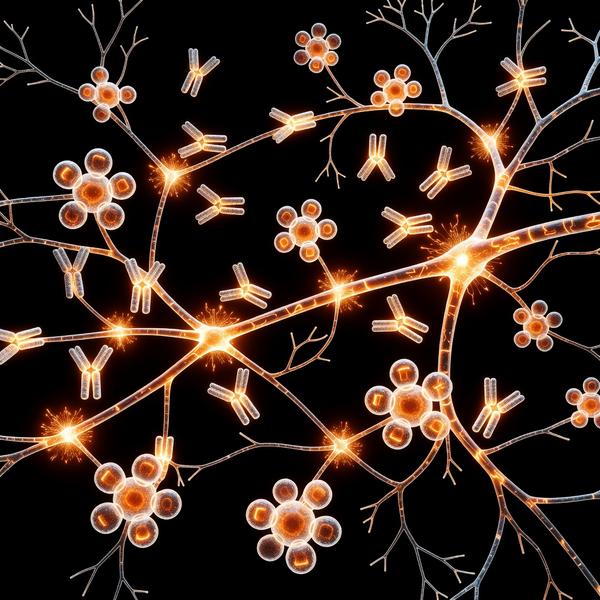
# Viral Latency and Neuroinflammation: Evaluating the Role of Persistent Herpesvirus Infections in Schizophrenia. The search for the root causes of schizophrenia has shifted from a purely dopaminergic perspective toward an integrative view of neuro-immunology. At INNERSTANDING, we analyze the complex interplay between chronic viral latency and psychiatric manifestations. ## The Herpesvirus Persistence Hypothesis. Herpesviruses, particularly Cytomegalovirus (CMV), Herpes Simplex Virus (HSV-1), and Epstein-Barr Virus (EBV), are masters of persistence.
Once acquired, they enter a state of dormancy within the host cells—often neurons or glial cells. In the context of schizophrenia, the concern is not merely an acute infection, but the 'hit-and-run' or 'persistent trigger' effect. ## Mechanisms of Neuroinflammation. When these viruses reactivate or maintain low-level replication, the immune system responds via the activation of microglia—the brain's resident immune cells. Chronic microglial activation results in the release of pro-inflammatory cytokines such as IL-6, TNF-alpha, and IL-1beta.
This sustained inflammatory environment disrupts the blood-brain barrier and alters the synaptic pruning process, a phenomenon frequently observed in schizophrenia patients. ## The Role of Kynurenine Pathway Dysregulation. Persistent viral infection forces the immune system to shift tryptophan metabolism away from serotonin production and toward the kynurenine pathway. This results in an accumulation of neurotoxic metabolites, specifically quinolinic acid. Quinolinic acid is a potent NMDA receptor agonist that induces excitotoxicity, directly contributing to the cognitive deficits and structural changes often labeled as schizophrenic pathology. ## Clinical Implications and Future Directions.
Understanding viral latency as a root-cause factor allows for a precision medicine approach. Emerging research suggests that evaluating antiviral sensitivity, combined with immunomodulatory strategies, could eventually complement conventional antipsychotic treatments. Addressing the biological 'terrain'—the systemic inflammation driven by hidden viral loads—is essential for long-term stabilization in complex mental health conditions.
This article is provided for informational and educational purposes only. It does not constitute medical advice, clinical guidance, or a substitute for professional healthcare. Information reflects cited research at time of publication. Always consult a qualified healthcare professional before acting on any health information.
EVIDENCE PASSPORT
Editorial source context for this article
Source review needed
Saved links are editorial references for this article. They may support specific claims rather than every sentence. Open and assess each source in context. This passport does not independently verify them.
Editorial context
A complete editorial reading has not been recorded for this article, and no source links are saved on its record.
Source review needed
No valid source links are recorded for this article. Supplementary research, where available, is listed separately below.
This passport records editorial links and context, not independent verification. Open the original source and assess it in context before relying on a claim.
Medical Disclaimer
The information in this article is for educational purposes only and does not constitute medical advice, diagnosis, or treatment. Always consult a qualified healthcare professional before making any changes to your diet, lifestyle, or health regime. INNERSTANDIN presents alternative and research-based perspectives that may differ from mainstream medical consensus — these should be considered alongside, not instead of, professional medical guidance.
Read Full DisclaimerContinue the thread
Keep this question moving.
Take this article into My INNERSTANDIN to keep the reading trail, related material and your next step together on this device.
Explore this in the Body Map
Explore related body structures and their educational pages in the interactive Body Map.
Dig deeper in the Library
Free, longform PDF volumes that go beyond headlines into mechanisms and references.
RABBIT HOLE
Follow the biological thread deeper