Maternal Immune Activation: Prenatal Inflammatory Programming and Adult Psychotic Susceptibility
Discuss this resourceUpdated August 2026
An in-depth exploration of how prenatal maternal immune activation shapes fetal neurodevelopment, establishing the biological foundations for adult-onset schizophrenia through systemic inflammatory pathways.
Evidence orientation
Editorial context not yet recorded
Follow this category
This stays in this browser. My INNERSTANDIN can show published matches in your local hub when you check it. It does not send email, push, or alert notifications.
Local learning review
A private browser aid for revisiting ideas. It is not an alert or a health recommendation.
Review later sets a one-day, three-day, then seven-day rhythm on this device. Choose it only when you want to revisit this article.
The Fetal-Neuroinflammatory Axis
Maternal Immune Activation (MIA) represents a critical paradigm shift in our understanding of neurodevelopmental disorders. For decades, the etiology of schizophrenia was viewed primarily through the lens of genetic predisposition. However, modern neuroimmunology suggests that the prenatal environment—specifically the maternal immune response—acts as a significant epigenetic and structural modulator of fetal brain development. At INNERSTANDING, we investigate how systemic inflammatory events during gestation create a "primed" state in the microglia, the brain's resident immune cells, which may persist into adulthood and manifest as psychotic vulnerability.
The Mechanism: Cytokine Cascades
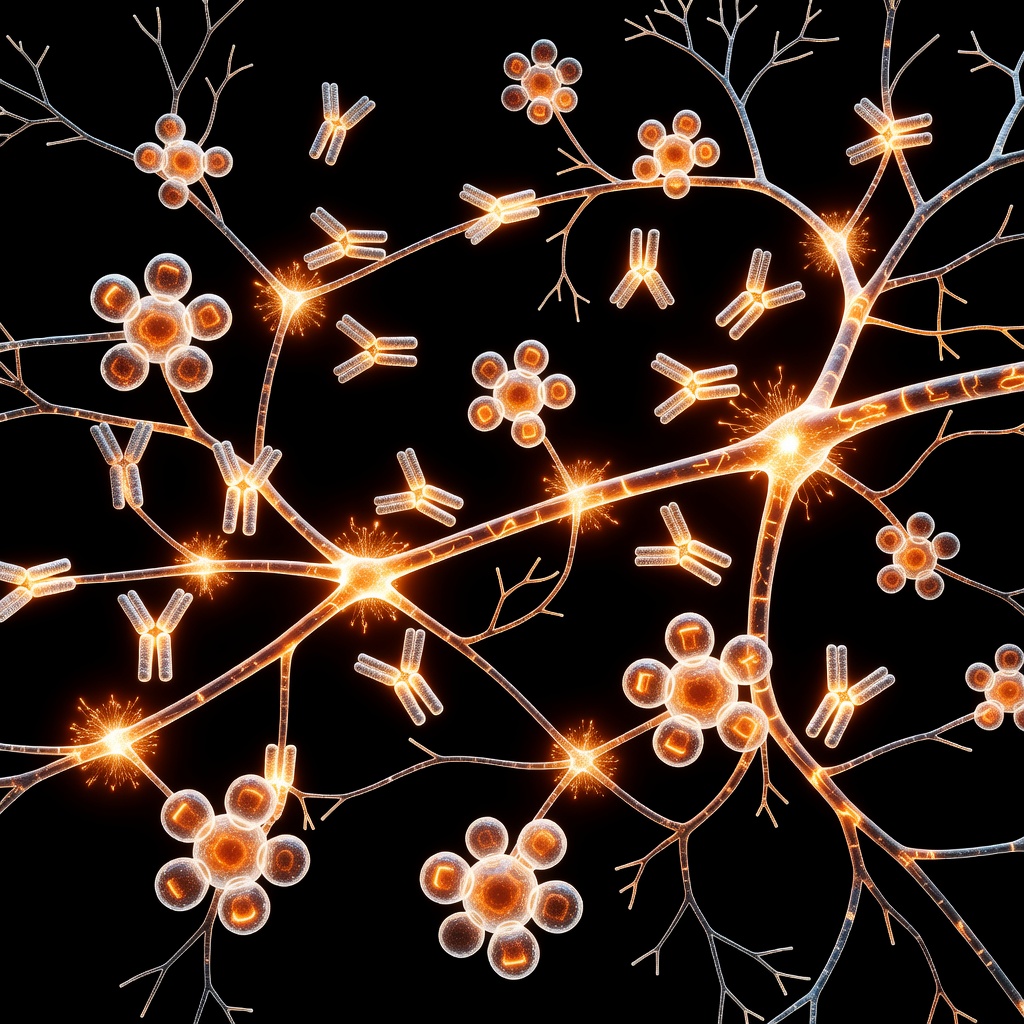
When a pregnant individual encounters infection, autoimmune distress, or significant chronic inflammation, the body releases pro-inflammatory cytokines such as IL-6, IL-17a, and TNF-alpha. While these are essential for fighting pathogens, their infiltration into the placental-fetal unit disrupts normal neurogenesis. IL-17a, specifically, has been shown in animal models to alter the cortical architecture of the developing fetus. By interfering with the migration of inhibitory interneurons, MIA induces a state of chronic excitability, creating a neural substrate prone to the dysregulated dopamine signaling characteristic of psychosis.
Microglial Priming and Synaptic Pruning
Microglia are not merely passive immune responders; they are the primary architects of synaptic refinement. MIA triggers a state of premature or hyper-vigilant microglial activation. In the developing brain, this causes an aberrant pruning of excitatory synapses. When the individual reaches late adolescence—a period of intensive synaptic remodeling—these primed microglia may over-prune the prefrontal cortex. This loss of connectivity, often described as "hypofrontality," is a hallmark physiological observation in patients with schizophrenia, leading to executive dysfunction and auditory processing deficits.
The Two-Hit Hypothesis
MIA is rarely the sole cause of psychosis; rather, it functions as the 'first hit' in a multi-stage process. This prenatal inflammatory programming reduces the threshold for subsequent stressors. Later events, such as adolescent cannabis use, social isolation, or chronic oxidative stress, act as the 'second hit.' Because the brain's baseline neuro-immune state is already altered due to prenatal conditions, these secondary stressors overwhelm the already fragile homeostatic mechanisms, ultimately tipping the neurobiology toward a psychotic break.
Clinical Implications and Future Directions
Understanding MIA moves the conversation away from "biochemical imbalance" and toward "developmental trajectory." If we can identify prenatal inflammatory markers or manage systemic health during gestation, we may have the potential to alter the risk profile for future generations. Current research into anti-inflammatory dietary patterns and the role of the maternal microbiome offers promising avenues for mitigation. At INNERSTANDING, we advocate for a holistic view: health is a longitudinal journey that begins in the womb. By addressing maternal inflammation, we are not just supporting the individual; we are protecting the neurodevelopmental architecture of the future.
This article is provided for informational and educational purposes only. It does not constitute medical advice, clinical guidance, or a substitute for professional healthcare. Information reflects cited research at time of publication. Always consult a qualified healthcare professional before acting on any health information.
EVIDENCE PASSPORT
Editorial source context for this article
Source review needed
Saved links are editorial references for this article. They may support specific claims rather than every sentence. Open and assess each source in context. This passport does not independently verify them.
Editorial context
A complete editorial reading has not been recorded for this article, and no source links are saved on its record.
Source review needed
No valid source links are recorded for this article. Supplementary research, where available, is listed separately below.
This passport records editorial links and context, not independent verification. Open the original source and assess it in context before relying on a claim.
Medical Disclaimer
The information in this article is for educational purposes only and does not constitute medical advice, diagnosis, or treatment. Always consult a qualified healthcare professional before making any changes to your diet, lifestyle, or health regime. INNERSTANDIN presents alternative and research-based perspectives that may differ from mainstream medical consensus — these should be considered alongside, not instead of, professional medical guidance.
Read Full DisclaimerContinue the thread
Keep this question moving.
Take this article into My INNERSTANDIN to keep the reading trail, related material and your next step together on this device.
Explore this in the Body Map
Explore related body structures and their educational pages in the interactive Body Map.
Dig deeper in the Library
Free, longform PDF volumes that go beyond headlines into mechanisms and references.
RABBIT HOLE
Follow the biological thread deeper