
Xenohormetic Signals: Phytochemicals and Longevity
Updated May 2026
Humans evolved to respond to stress signals in wild plants, which activate our own longevity pathways. The absence of these xenohormetic markers in modern British produce is accelerating the aging process.
Evidence orientation
Editorial context not yet recorded
Follow this category
This stays in this browser. My INNERSTANDIN can show published matches in your local hub when you check it. It does not send email, push, or alert notifications.
Local learning review
A private browser aid for revisiting ideas. It is not an alert or a health recommendation.
Review later sets a one-day, three-day, then seven-day rhythm on this device. Choose it only when you want to revisit this article.
Overview
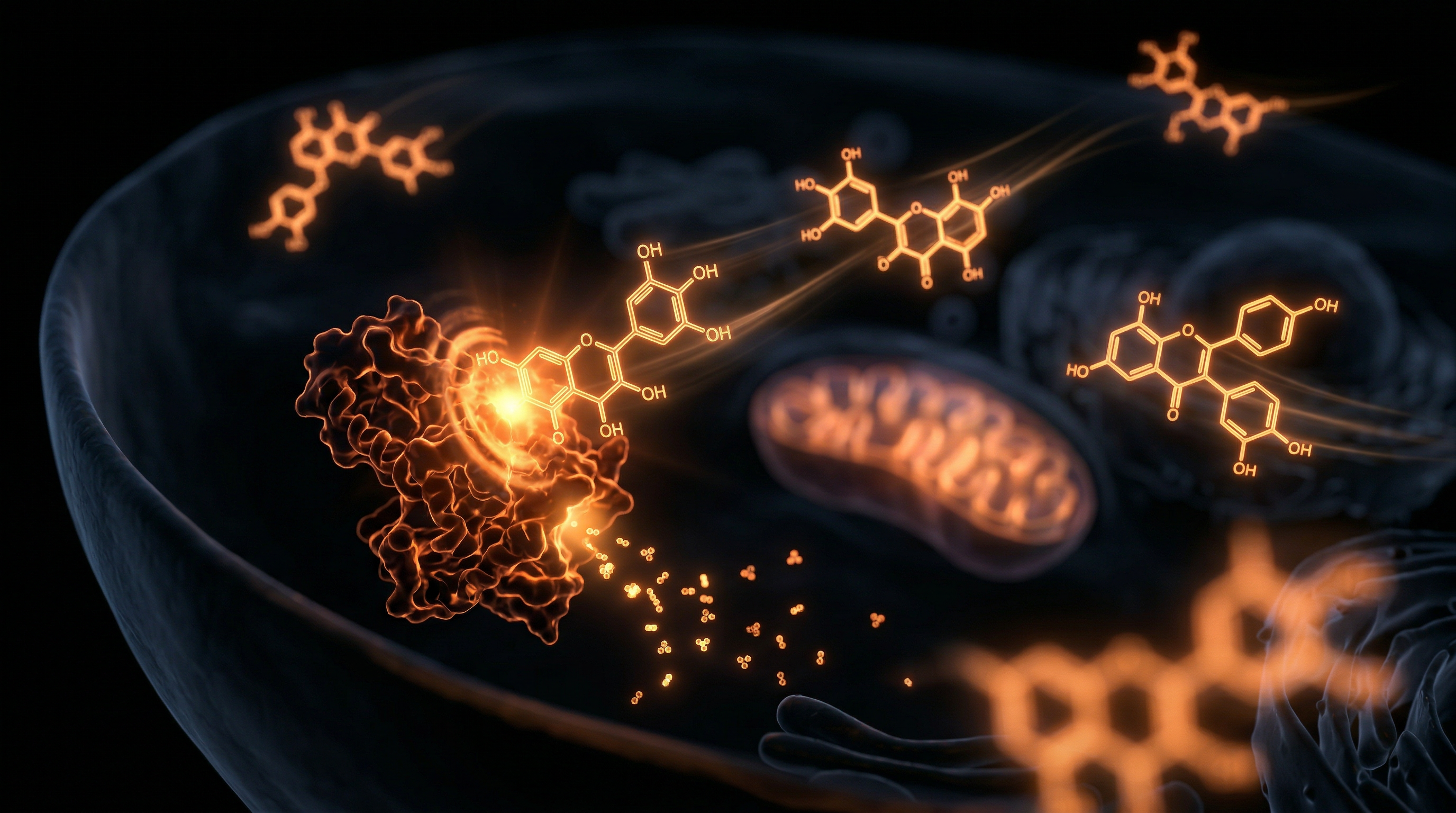
In the silent, subterranean theatre of evolutionary biology, a sophisticated form of inter-species communication has been operating for hundreds of millions of years. This is not a dialogue of sounds or gestures, but of molecular signals. It is known as xenohormesis. The term, derived from the Greek xenos (stranger/foreign) and hormesis (to excite or stimulate), describes a biological phenomenon where organisms—including humans—have evolved to sense and respond to chemical stress signals produced by other species, primarily plants.
As a senior researcher at INNERSTANDING, my objective is to peel back the layers of industrial obfuscation that have masked this vital biological truth. For millennia, the human genome did not exist in isolation. It was constantly "eavesdropping" on the environmental conditions of the flora it consumed. When a plant experiences drought, intense UV radiation, nutrient scarcity, or pest infestation, it synthesizes secondary metabolites—phytochemicals—to survive. These are the plant’s own defensive weapons and repair kits.
When we consume these stressed plants, our bodies interpret these molecules not merely as nutrients, but as a biological "early warning system." These signals inform our cells that the environment is becoming harsh, triggering an ancestral survival response that prioritises cellular repair, DNA stability, and metabolic efficiency over growth and reproduction. This is the essence of longevity.
However, the tragedy of the modern British diet is not just the presence of toxins, but the profound absence of these signals. By "optimising" agriculture for yield, sweetness, and uniformity, we have created a food system of "lazy" plants. These pampered, chemically protected crops do not experience stress; consequently, they do not produce the xenohormetic signals our genes expect. We are effectively living in a state of biological "deafness," where the lack of environmental cues is accelerating the ageing process and facilitating the rise of chronic degenerative diseases.
The Biology — How It Works
To understand xenohormesis, one must first understand the concept of hormesis itself. Hormesis is a biphasic dose-response where a low dose of a stressor (such as exercise, fasting, or cold) induces a beneficial, adaptive response in the organism, while a high dose would be toxic. Xenohormesis takes this a step further: we reap the benefits of the plant's stress without having to endure the stress ourselves.
The Evolutionary Eavesdropping Hypothesis
Throughout the Pleistocene and into the Holocene, our ancestors consumed wild-foraged vegetation. These plants were in a constant state of chemical warfare with their environment. A wild cabbage or an ancient berry was saturated with bitter, astringent compounds—polyphenols, alkaloids, and terpenoids.
From an evolutionary perspective, it was advantageous for heterotrophs (animals) to respond to these stress signals. If the plants in a region were producing high levels of drought-resistance molecules, it indicated an impending famine. The animals that could shift their metabolism into a "maintenance and repair" mode in response to those signals survived longer and reproduced more successfully.
"We are the descendants of the eavesdroppers. Our ancestors survived because their cells could read the chemical news reports written by the plants they ate."
The Principal Messengers: Phytochemicals as Ligands
The molecules involved in xenohormesis are not "vitamins" in the traditional sense; they are not required for basic biochemical reactions. Instead, they act as ligands or modulators that bind to specific receptors and enzymes within human cells.
- Resveratrol: Found in the skins of grapes and berries under fungal attack.
- Quercetin: Abundant in onions and apples exposed to high UV light.
- Sulforaphane: Produced by cruciferous vegetables when their tissues are damaged by chewing or insects.
- Curcumin: A potent polyphenol produced by the turmeric rhizome to combat soil-borne pathogens.
These molecules are the "molecular keys" that unlock the body's internal pharmacy.
Mechanisms at the Cellular Level
The magic of xenohormesis happens within the intricate signalling pathways of the cell. When these phytochemicals enter the bloodstream, they do not act as direct antioxidants (a common misconception), but rather as pro-oxidants or signalling modulators that activate the cell's endogenous defence systems.
The Sirtuin Pathway
The most well-studied mechanism of xenohormesis involves the Sirtuins (SIRT1-7), a family of NAD+-dependent deacetylases often referred to as "longevity genes." SIRT1, in particular, acts as a cellular guardian. When activated by molecules like resveratrol, SIRT1:
- Promotes DNA Repair: It recruits enzymes to fix double-strand breaks in the genetic code.
- Deacetylates PGC-1α: This triggers mitochondrial biogenesis, the creation of new, healthy mitochondria, enhancing energy production and reducing oxidative waste.
- Inhibits NF-κB: A primary driver of systemic inflammation.
The Nrf2/ARE Pathway
Many xenohormetic signals, particularly the isothiocyanates found in kale and broccoli, activate the Nrf2 (Nuclear factor erythroid 2-related factor 2) pathway. Nrf2 is the master regulator of the antioxidant response. Under normal conditions, Nrf2 is held in the cytoplasm by a protein called KEAP1. Phytochemicals cause the release of Nrf2, which then migrates to the nucleus and binds to the Antioxidant Response Element (ARE). This triggers the production of:
- Glutathione: The body’s master antioxidant.
- Superoxide Dismutase (SOD): An enzyme that neutralises the most damaging free radicals.
- Phase II Detoxification Enzymes: Which neutralise and eliminate environmental toxins.
Autophagy and mTOR
Longevity is a balance between mTOR (mammalian Target of Rapamycin), which drives growth and protein synthesis, and AMPK (AMP-activated protein kinase), which drives energy conservation and cellular cleaning. Xenohormetic signals typically inhibit mTOR and activate AMPK, inducing autophagy. Autophagy is the "self-eating" process where cells break down damaged organelles and misfolded proteins, recycling them for energy. This "cellular spring cleaning" is essential for preventing neurodegenerative diseases and muscle wasting.
Epigenetic Modulation
Perhaps the most profound impact of xenohormesis is epigenetic. Phytochemicals can influence DNA methylation and histone acetylation, essentially turning off "pro-ageing" genes and turning on "pro-longevity" genes. This means that while we cannot change our DNA sequence, the signals from wild plants allow us to change how our DNA is expressed.
Environmental Threats and Biological Disruptors
The contemporary world is hostile to xenohormesis. We have inadvertently created a biological "dead zone" in our food supply. The signals that our cells have relied upon for millions of years are being systematically erased by industrial practices.
The Cult of Yield and the "Lazy Plant"
Modern industrial agriculture is predicated on the removal of stress. We use synthetic fertilisers (NPK) to ensure the plant never lacks nutrients, irrigation to ensure it never thirsts, and pesticides to ensure it is never nibbled by an insect. From a production standpoint, this is efficient. From a biological standpoint, it is catastrophic.
Without stress, the plant has no reason to produce secondary metabolites. A supermarket tomato, grown in a temperature-controlled greenhouse with its roots in sterile rockwool, is chemically "mute." It contains the calories and the basic vitamins, but it is devoid of the xenohormetic signals (like lycopene and tomatine) found in its wild ancestors.
Key Fact: Studies have shown that organic and wild-type produce can contain between 20% and 60% more polyphenols than their conventionally grown counterparts.
Glyphosate and the Shikimate Pathway
The herbicide glyphosate (Roundup) is a direct disruptor of the xenohormetic potential of our food. Glyphosate works by inhibiting the shikimate pathway in plants and bacteria. This pathway is responsible for the synthesis of aromatic amino acids (phenylalanine, tyrosine, and tryptophan), which are the direct precursors to almost all xenohormetic polyphenols. By spraying our fields with glyphosate, we are not just killing weeds; we are chemically castrating the nutritional potential of our crops.
Atmospheric CO2 Dilution
Increasing levels of atmospheric CO2 are also playing a role. While higher CO2 can increase plant growth rate, it often leads to a "dilution effect." The plant accumulates more carbohydrates (sugars and starches) but fails to keep pace with the synthesis of minerals and phytochemicals. We are effectively eating "diluted" food.
The Cascade: From Exposure to Disease
What happens when a species evolved for constant xenohormetic input is suddenly deprived of it? We see a collapse of metabolic homeostasis, a phenomenon we are currently witnessing across the Western world, particularly in the United Kingdom.
The Rise of Inflammaging
Without the activation of SIRT1 and Nrf2 through plant signals, the body’s inflammatory response remains perpetually "on." This leads to inflammaging—a state of chronic, low-grade, systemic inflammation that accelerates the breakdown of tissues. Inflammaging is the common denominator in:
- Cardiovascular disease (arterial wall inflammation).
- Type 2 Diabetes (insulin receptor desensitisation).
- Alzheimer’s and Parkinson’s (neuroinflammation).
Mitochondrial Decay
In the absence of xenohormetic signals to trigger mitochondrial biogenesis, our "cellular power plants" become old, leaky, and inefficient. They produce more Reactive Oxygen Species (ROS) and less ATP. This energy deficit is felt most acutely in the brain and the heart, leading to brain fog, fatigue, and heart failure.
Loss of Proteostasis
Proteostasis is the ability of the cell to maintain the integrity of its proteins. Without regular "pulses" of xenohormetic stress to induce autophagy, damaged proteins accumulate. In the brain, these manifest as amyloid plaques and tau tangles. In the skin, they manifest as advanced glycation end-products (AGEs) and wrinkles. We are literally rotting from the inside because we lack the chemical "cleanup" signals from the plant kingdom.
What the Mainstream Narrative Omits
The mainstream nutritional establishment, largely funded by industrial food conglomerates and pharmaceutical interests, continues to focus on a reductionist view of nutrition. They speak of "Recommended Dietary Allowances" (RDAs) for vitamins and minerals—metrics designed merely to prevent acute deficiency diseases like scurvy or rickets.
The Myth of the Antioxidant
The mainstream media often portrays phytochemicals as simple antioxidants that "mop up" free radicals. This is scientifically inaccurate and dangerously simplistic. If phytochemicals were merely antioxidants, you would need to consume kilograms of them to have any effect on the trillions of free radicals produced by the body daily.
The truth that is suppressed is that these molecules are hormetic triggers. Their power lies in their ability to activate the body’s own antioxidant systems, which are millions of times more effective than any external vitamin. The industry prefers to sell you synthetic Vitamin C tablets rather than explaining that a bitter, wild-harvested dandelion leaf contains the complex signalling molecules that turn on your cellular repair machinery.
The Bioavailability Fallacy
Mainstream science often dismisses the importance of phytochemicals by claiming they have "low bioavailability." They argue that because only a small percentage of a compound like curcumin enters the blood, it must be useless. This ignores the fact that these molecules are designed to work at nanomolar concentrations. They are signals, not fuels. A tiny amount of a signal can trigger a massive cellular cascade. Furthermore, the interaction between the gut microbiome and these phytochemicals creates secondary metabolites that are often more bioactive than the original compound—a complexity that the "one-pill-one-effect" pharmaceutical model cannot accommodate.
The UK Context
The United Kingdom represents a unique and troubling case study in the loss of xenohormesis. As the first nation to industrialise, Britain was also the first to revolutionise its landscape in a way that severed the ancestral link between humans and wild plant signals.
The Depletion of British Soils
British soils have been farmed intensively for centuries. The post-WWII "Green Revolution" saw the introduction of massive amounts of synthetic nitrogen, phosphorus, and potassium. This has led to a catastrophic decline in soil microbial diversity.
Why does this matter for xenohormesis? Because many phytochemicals are produced by plants in response to interactions with mycorrhizal fungi and soil bacteria. In the absence of a healthy soil biome, the plant's "immune system" is never primed, and the resulting produce is xenohormetically "hollow."
"A 1991 study comparing UK government data from 1940 and 1991 found that the mineral content of copper, calcium, and iron in vegetables had declined by up to 76%. If the minerals are gone, the phytochemical signals are almost certainly gone too."
The Loss of the British Hedgerow
Historically, the British diet was supplemented by the "edges" of the farm—the hedgerows. These were reservoirs of wild biodiversity: hawthorn, sloe, rosehip, elderberry, and wild garlic. These plants are the epitome of xenohormetic powerhouses. The systematic removal of hedgerows to create larger fields for machinery has removed these vital medicinal signals from the reach of the average citizen.
The "Supermarket Effect" and Brexit
The UK’s reliance on imported produce from southern Europe and North Africa further compounds the issue. Fruit and vegetables are picked unripe so they can survive transport. Phytochemical synthesis often reaches its peak in the final stages of ripening on the vine or branch, triggered by the plant’s exposure to the sun and local pests. By the time a Spanish tomato reaches a shelf in Manchester, it is a biological "blank slate."
Protective Measures and Recovery Protocols
If the modern food system is failing to provide the signals we need for longevity, we must take deliberate action to reintroduce them. We must become "biological architects," designing a lifestyle that mimics the environmental stresses of our ancestors.
1. Sourcing "Stressed" Produce
- Choose Organic/Biodynamic: These plants are grown without synthetic "crutches" and are forced to develop their own chemical defences.
- Seek Bitter Flavours: Bitterness is the chemical signature of xenohormesis. Incorporate rocket (arugula), radicchio, dandelion greens, and bitter melon.
- The "Ugly" Fruit Rule: Choose the smaller, slightly scarred, or deeply coloured fruit. These are signs that the plant has fought off stressors and is rich in protective molecules.
2. Targeted Phytochemical Supplementation
While whole foods are ideal, the modern depletion is so severe that targeted supplementation can act as a "biological insurance policy." Look for "Xenohormetic Mimetic" stacks containing:
- Trans-Resveratrol: (preferably with fats to increase absorption).
- Pterostilbene: A more bioavailable relative of resveratrol found in blueberries.
- Sulforaphane (or Glucoraphanin): To activate the Nrf2 pathway.
- Fisetin: A potent senolytic found in strawberries that helps clear out "zombie" (senescent) cells.
3. Rewilding the Diet
Integrate wild-foraged foods. In the UK, this can include:
- Nettles: Rich in minerals and phytonutrients (must be blanched).
- Hawthorn Berries: Excellent for cardiovascular signalling.
- Seaweed: British coasts offer dulse and kelp, which provide unique halogenated polyphenols not found in land plants.
4. Hormetic Synchronisation
Xenohormesis works best when paired with physical hormesis. The signals from plants "prime" the system, but we must also provide the physical cues:
- Intermittent Fasting: Synergises with plant signals to activate SIRT1 and AMPK.
- Thermal Stress: Cold showers and saunas trigger heat-shock and cold-shock proteins that overlap with xenohormetic pathways.
- High-Intensity Interval Training (HIIT): Forces mitochondrial adaptation.
5. Supporting the Soil
If you have a garden, stop using synthetic fertilisers. Use seaweed-based fertilisers and compost to restore the microbial dialogue between the soil and your plants. Growing even a small amount of your own herbs (oregano, rosemary, thyme) in "harsh" outdoor conditions can provide more xenohormetic value than a fridge full of supermarket greens.
Summary: Key Takeaways
- Xenohormesis is an evolutionary feedback loop where humans use plant stress signals (phytochemicals) to activate their own survival and longevity circuits.
- Phytochemicals are not just antioxidants; they are complex signalling molecules that modulate gene expression, activate Sirtuins, and trigger autophagy.
- Industrial agriculture has "silenced" our food. By protecting plants from all stress, we have eliminated the molecules that tell our cells to stay young and resilient.
- The UK diet is particularly deficient due to centuries of soil depletion, the destruction of wild hedgerows, and a reliance on premature, imported produce.
- Longevity requires the reintroduction of "biological friction." We must seek out bitter, wild, and organic foods while utilising targeted supplements to bridge the xenohormetic gap.
- The absence of these signals is a primary driver of chronic disease. We are not just overfed; we are signal-deprived.
The path to longevity is not found in a state of comfort and abundance, but in the biological echoes of struggle. To live long and thrive, we must learn once again to listen to the silent chemical warnings of the plant world. We must embrace the bitter, the wild, and the stressed. Only then can we reactivate the ancient machinery of survival that lies dormant within our cells.
This article is provided for informational and educational purposes only. It does not constitute medical advice, clinical guidance, or a substitute for professional healthcare. Information reflects cited research at time of publication. Always consult a qualified healthcare professional before acting on any health information.
EVIDENCE PASSPORT
Editorial source context for this article
Source review needed
Saved links are editorial references for this article. They may support specific claims rather than every sentence. Open and assess each source in context. This passport does not independently verify them.
Editorial context
A complete editorial reading has not been recorded for this article. Source links remain available for you to open and assess directly.
Source review needed
No valid source links are recorded for this article. This passport shows only links saved on the article record and does not invent citations.
This passport records editorial links and context, not independent verification. Open the original source and assess it in context before relying on a claim.
Medical Disclaimer
The information in this article is for educational purposes only and does not constitute medical advice, diagnosis, or treatment. Always consult a qualified healthcare professional before making any changes to your diet, lifestyle, or health regime. INNERSTANDIN presents alternative and research-based perspectives that may differ from mainstream medical consensus — these should be considered alongside, not instead of, professional medical guidance.
Read Full DisclaimerContinue the thread
Keep this question moving.
Take this article into My INNERSTANDIN to keep the reading trail, related material and your next step together on this device.
Dig deeper in the Library
Free, longform PDF volumes that go beyond headlines into mechanisms and references.