
VOL. 02
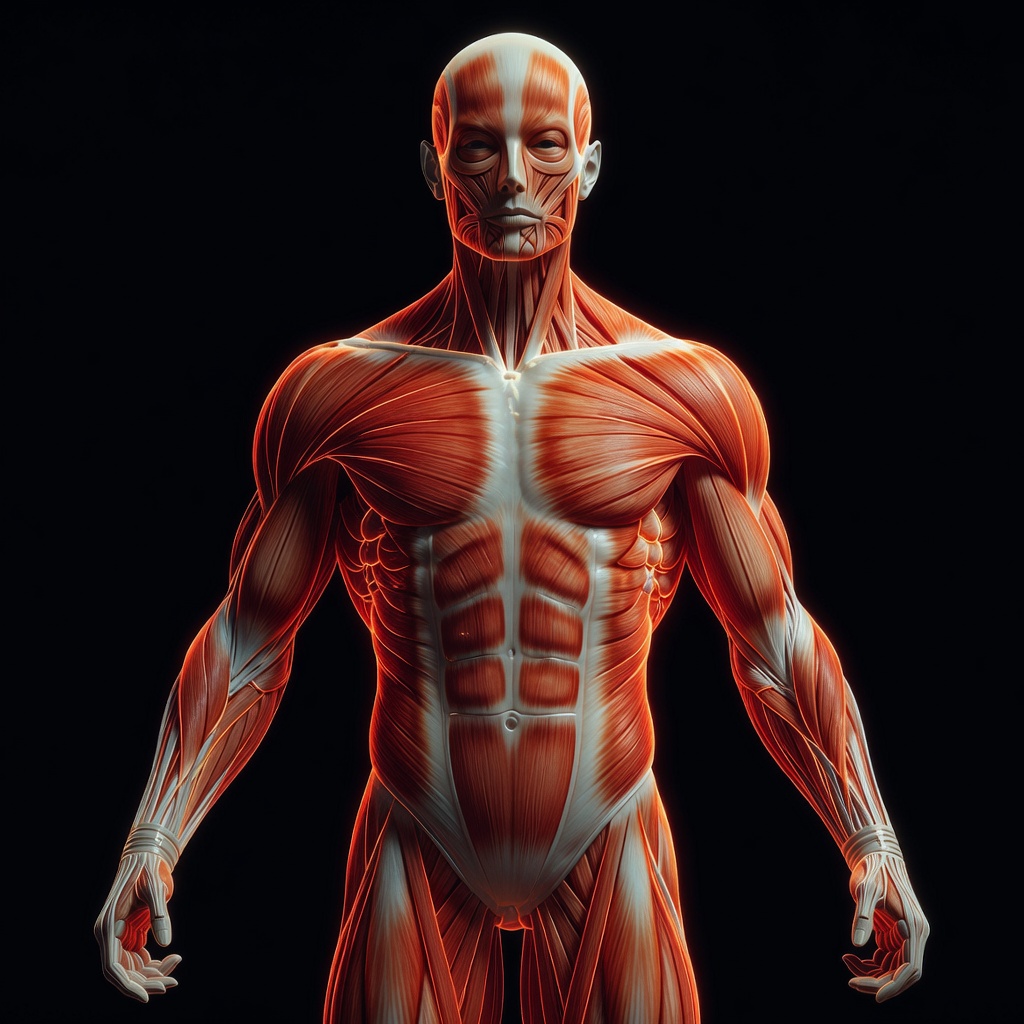
The Muscular System
Skeletal, Smooth & Cardiac Muscle
An exhaustive guide to every major muscle group — origin, insertion, action, innervation. Includes the ultrastructure of muscle fibre types, the neuromuscular junction, and the sliding filament mechanism in full detail.
CONTENTS
— WHAT'S INSIDE THIS VOLUME
Muscle Tissue Types
The Head & Neck Muscles
Trunk & Core Musculature
Upper Limb
Lower Limb
Diaphragm & Breathing Muscles
Pelvic Floor
Muscle Fibre Types & Performance
REFERENCE PLATES INCLUDED
This volume features 4 high-fidelity anatomical plates for visual reference.
FULL VOLUME CONTENT
INTRODUCTION
The Muscular System
Right now, as you read this, you are performing a miracle of orchestration. You might think you’re sitting still, but you’re actually a riot of controlled movement. Your eyes are flicking across these words thanks to precision-engineered motors thinner than a strand of silk. Your heart is slamming shut valves with the force of a heavy door.
Your gut is rippling like a slow-motion ocean wave to move breakfast along. Most people think of muscles as something you build at the gym, but that’s like looking at a Ferrari and only noticing the paint job. You are currently wrapped in over 600 distinct engines, each one a biological cable designed to do exactly one thing: pull. You aren't just living in your body; you are piloting a biological masterpiece of tension and force.
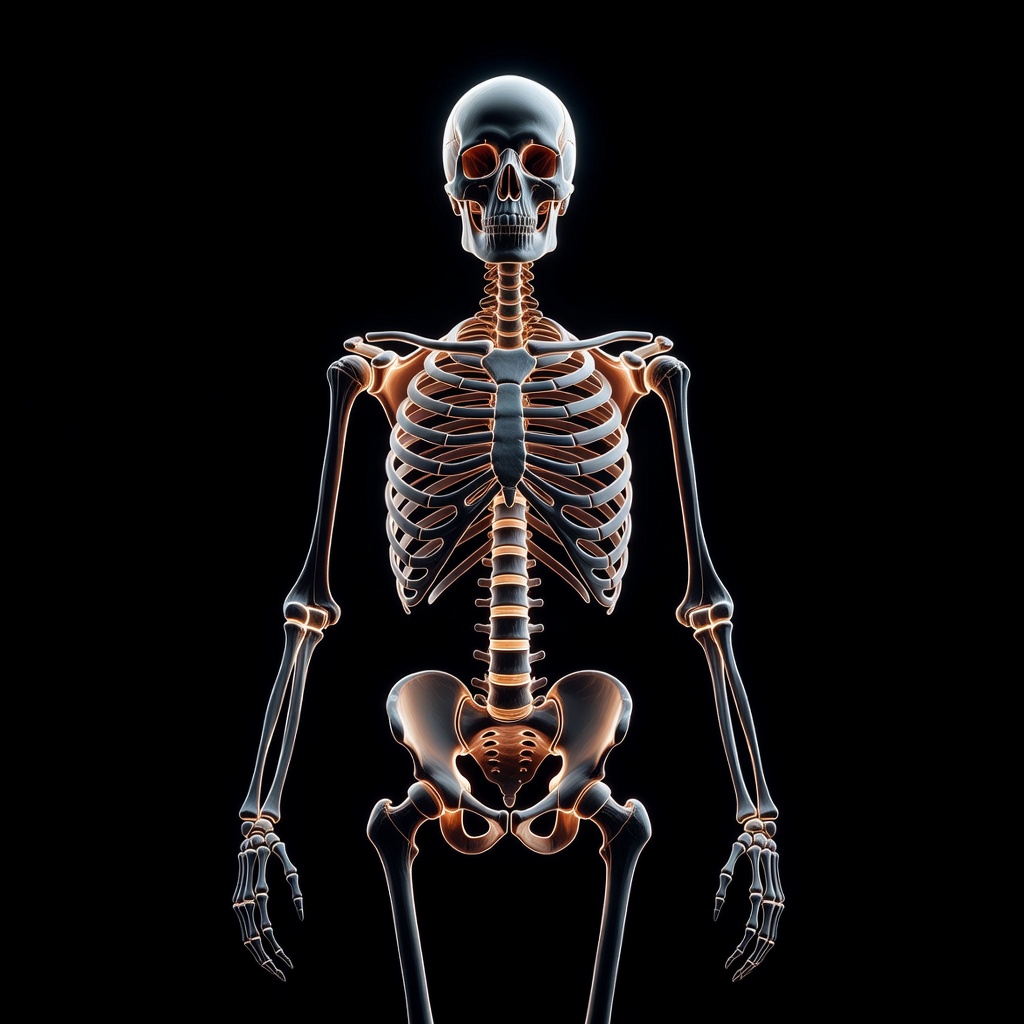
Think of your skeleton as a silent scaffold. On its own, it’s just a pile of lime and phosphate. It’s your muscles that turn that dead weight into a living, breathing, dancing machine. This isn’t just about strength; it’s about the sheer, breathtaking complexity of how you interact with the physical world.
Your muscles are the only reason your thoughts can become actions. Without them, you’d be a trapped ghost in a cage of bone. In the chapters ahead, we’re going to strip away the skin and look at the three distinct types of muscle that make you, you. We will meet the skeletal muscles—the voluntary workers that move your bones like a complex system of pulleys.
We will dive into the cardiac muscle, a unique, tireless tissue found nowhere else but your heart. And we will explore the smooth muscle, the silent, involuntary machinery that lines your gut and your arteries, working in the shadows to keep you alive without you ever having to ask. Long before you even had a face, your muscles were already busy building the foundation of your life. Around the third week of your development, your embryo formed a middle layer called the mesoderm—the middle-skin.
This layer didn't just sit there. It began to segment into little blocks called somites, which are the blueprints for your entire frame. These somites are the ancestors of almost every muscle you now use to walk, talk, and breathe. It’s a process of folding, migrating, and fusing that happens with the precision of high-end origami.
By the time you were born, the map was already drawn. Your muscles had already found their anchors on your bones and established their private lines of communication with your nervous system. It’s a story of incredible foresight. History wasn't always kind to our understanding of this.
For over a thousand years, the Western world followed the teachings of Galen, a Roman physician who thought muscles were essentially hollow bellows pumped full of 'pneuma' or animal spirits by the nerves. People literally believed you moved because you were being inflated from the inside like a balloon. It wasn't until the 17th century that we started to realise that muscles work by contracting—by getting shorter and thicker—rather than by being filled with mystical air. Even then, it took until the mid-20th century to truly grasp the sliding filament theory, the reality that your muscle fibres are actually microscopic rows of interlocking teeth that crawl over each other to create force.
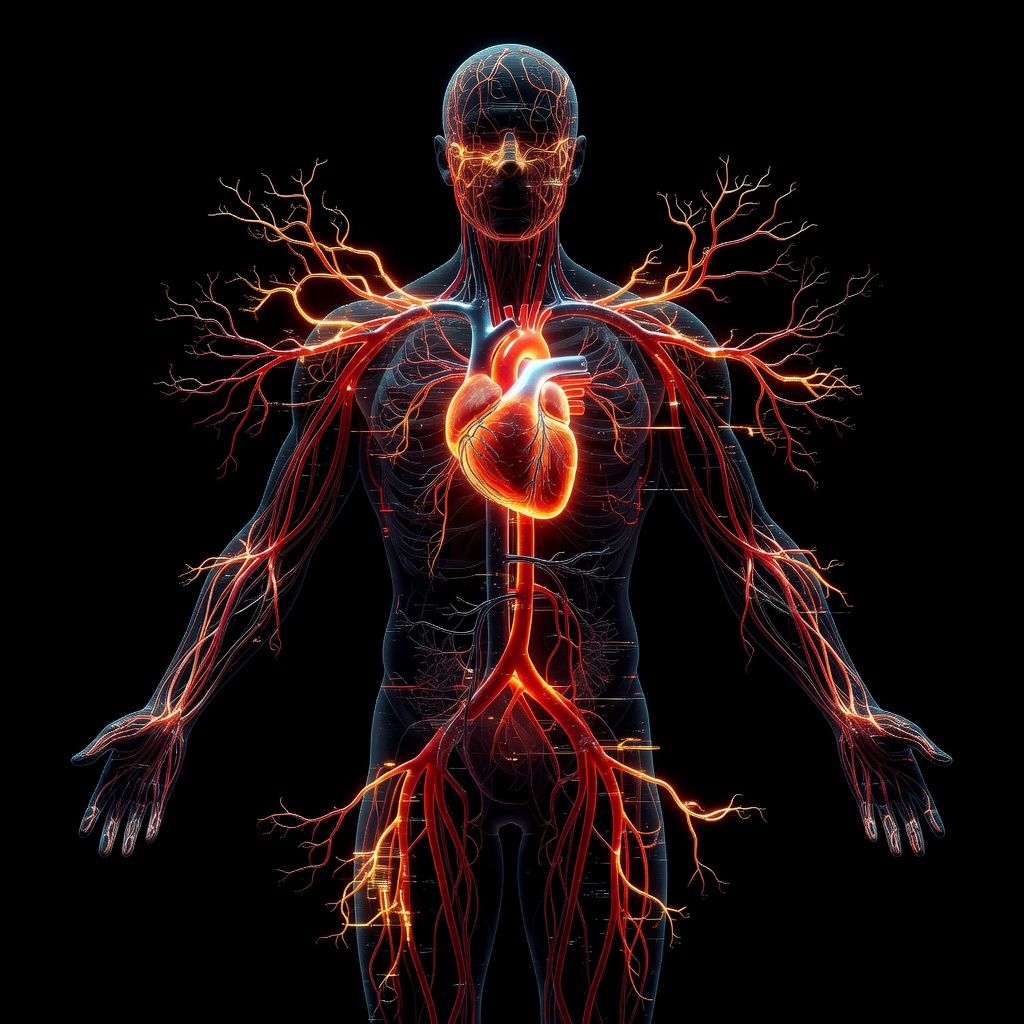
You are a mechanical marvel that took humanity millennia to even begin to comprehend. Your blood supply to these tissues is just as extraordinary. Every single muscle fibre is wrapped in a web of capillaries, tiny blood vessels so narrow that red blood cells have to squeeze through them in single file. This is the delivery service that brings oxygen and fuel to your engines and hauls away the waste.
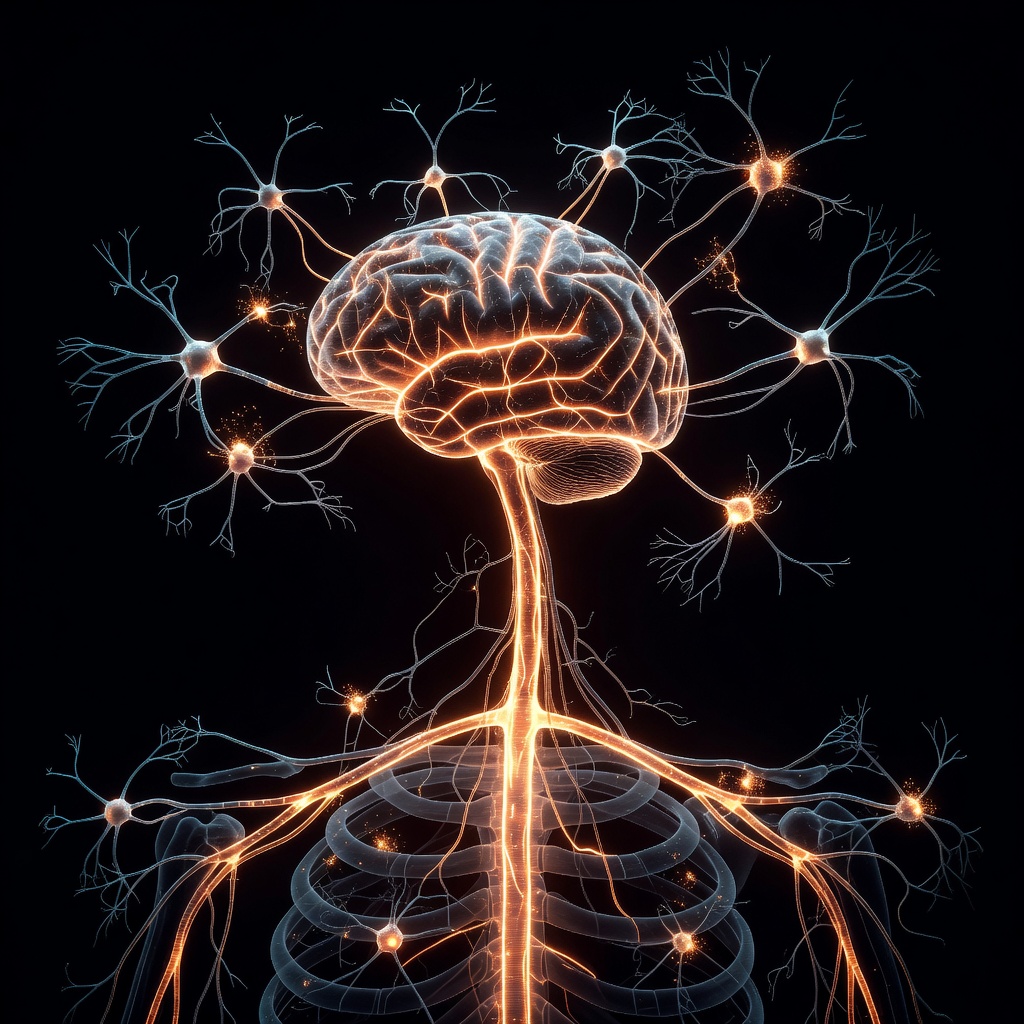
When you move, your body prioritises this flow, shunting blood toward the working tissue with incredible speed. And the nerves? Think of them as the electrical grid. Each muscle is wired directly into your brain and spinal cord.
Some nerves control thousands of fibres at once for heavy lifting, while others—like the ones in your fingers or around your eyes—control just a few, giving you the delicacy to thread a needle or play a piano. You are a symphony of electrical impulses and mechanical tension. By the time we’re finished here, you won’t just see your muscles as something to tone or stretch. You’ll see them as the high-performance machinery they truly are.
You’ll understand how your heart never gets tired, why your gut moves in waves, and how your tiniest flick of a finger is actually a massive coordinated effort of biological engineering. You are built for motion. It’s time you met the engines that drive you.
DOWNLOAD THIS VOLUME
This volume is compiled from peer-reviewed anatomy literature into a precision longform PDF. Generate once — it's then saved permanently in the INNERSTANDING library for instant re-download by all users.
PDF format · No wait time · Standardized Print Resolution