
VOL. 02
Neurophysiology
Action Potentials, Synapses & Neural Circuits
The electrochemical language of the nervous system — action potential generation and propagation, synaptic transmission across all neurotransmitter systems, neural circuit processing, sensory transduction, motor control, neuroplasticity, and the physiological basis of consciousness and sleep.
CONTENTS
— WHAT'S INSIDE THIS VOLUME
Resting Membrane Potential
Action Potential Generation & Propagation
Synaptic Transmission
Neurotransmitter Systems
Sensory Transduction & Coding
Motor Control Physiology
Neural Plasticity & Long-Term Potentiation
Sleep, Consciousness & Brain States
FULL VOLUME CONTENT
INTRODUCTION
Neurophysiology
Close your eyes for a split second. In that blink, a cascade of electrical fire raced from your brain to your eyelids at three hundred kilometres per hour. It’s faster than a Formula One car screaming down a straight. Right now, your head is home to the most complex machine in the known universe, and it’s powered by nothing more than salt and water.
You aren’t just thinking thoughts; you are orchestrating a biological symphony of trillions of tiny sparks. Most people go through their entire lives imagining their brain is a mysterious black box or a soft sponge. It’s neither. You are a walking, talking electrical grid.
But unlike the copper wires in your house, your wiring is alive. It grows. It adapts. It rewires itself while you sleep.
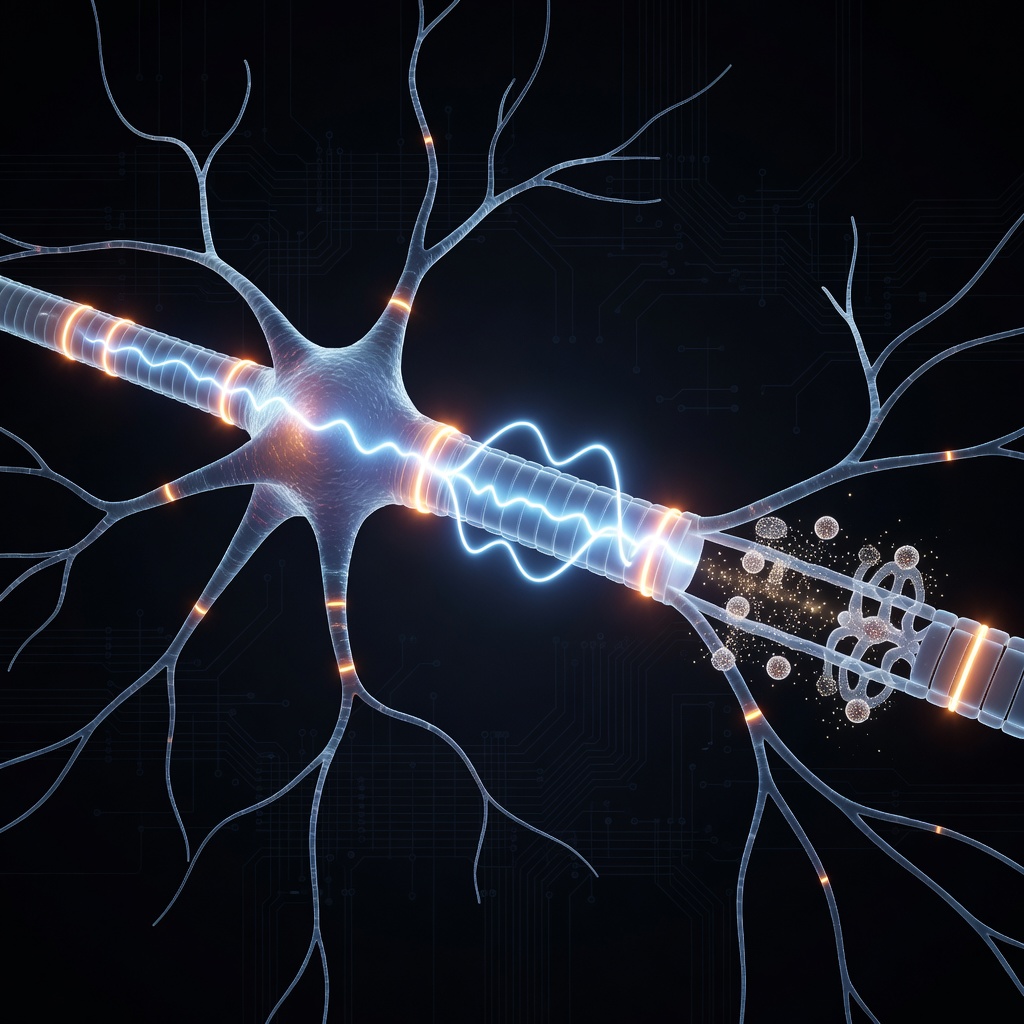
We call this neurophysiology, but really, it’s the study of how you become 'you'. You have about eighty-six billion neurons—nerve cells—packed into your skull. If you tried to count them all at a rate of one per second, you wouldn’t finish for nearly three thousand years. Each one of those cells is a miniature battery, holding a tiny electrical charge, waiting for the right moment to fire.
This is the action potential. It’s the fundamental heartbeat of your consciousness. It isn’t a continuous flow of juice like a battery-powered toy. Instead, it’s a precise, staccato pulse.
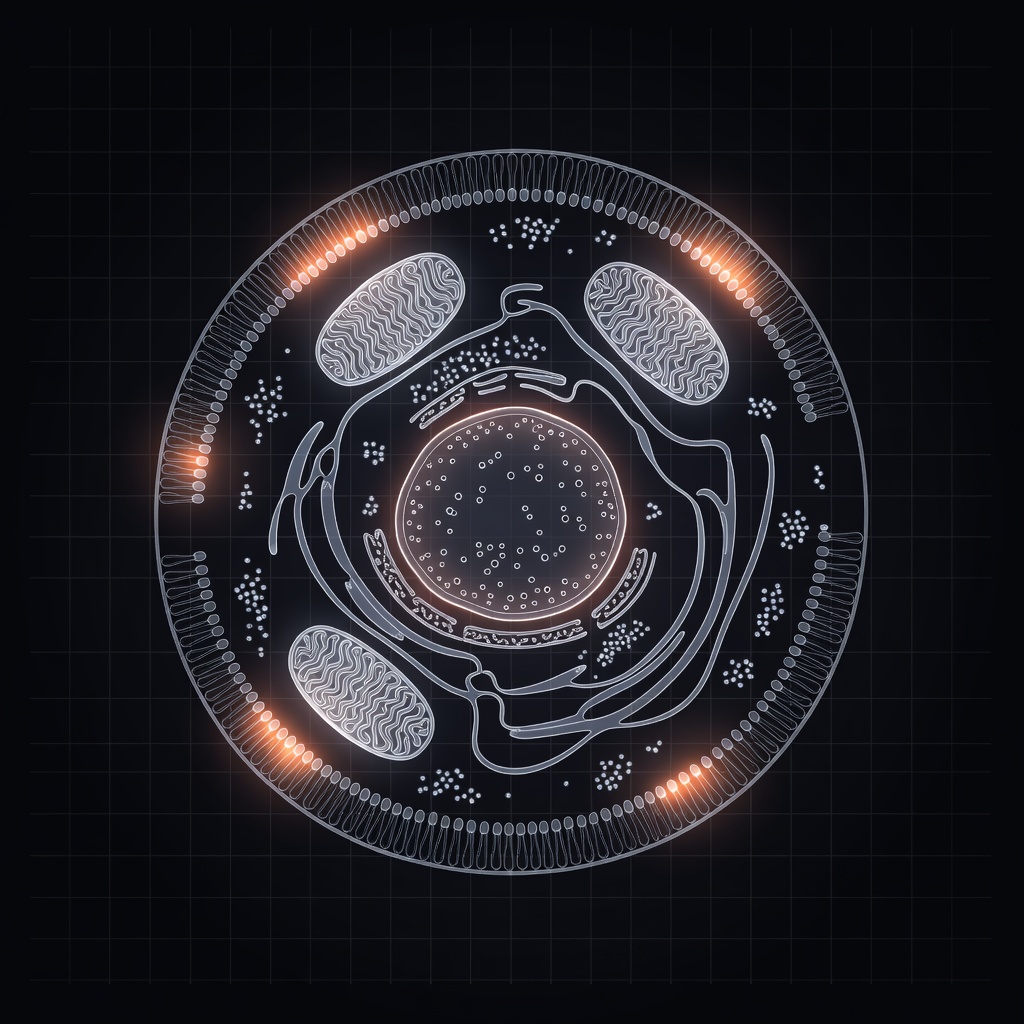
Imagine a line of billions of dominoes. When you decide to wiggle your toe, you aren't sending a physical object down your leg. You’re triggering a wave of falling dominoes that resets itself almost instantly. This wave is driven by ion channels—tiny, spring-loaded gates in your cell walls that let charged particles like sodium and potassium flood in and out.
It’s a rhythmic, chemical dance that happens in milliseconds. But the real magic occurs when that electrical wave reaches the end of the line. Your neurons don’t actually touch each other. There is a microscopic canyon between them called a synapse.
To get the message across, your brain has to convert that electrical spark into a chemical courier. You release neurotransmitters—specialised chemical keys—that float across the gap and unlock the next cell. It’s a breathtakingly fast hand-off, happening quadrillions of times every single day. We used to be completely wrong about this.
For over a thousand years, the brightest minds believed your nerves were hollow pipes. They thought 'animal spirits'—a sort of mystical, invisible vapour—flowed through these tubes to inflate your muscles like a pneumatic pump. It wasn’t until the late eighteenth century that Luigi Galvani noticed a dead frog’s leg twitching near an electrical spark and realised the truth. We aren't powered by vapours; we are bioelectric.
Even then, it took until the 1950s for us to truly see the machinery. Alan Hodgkin and Andrew Huxley used the giant nerve of a squid—thick enough to see with the naked eye—to finally measure how these ions move. They revealed that your thoughts are essentially a movement of salt. In the chapters ahead, we’re going to strip away the mystery.
We’ll look at how your cells build up their electrical charge and how they manage to reset themselves in the blink of an eye. You’ll see how these individual pulses aggregate into circuits, creating the feedback loops that allow you to catch a ball, remember a song, or feel a surge of joy. You’ll discover that your brain isn't a hard-wired computer, but a fluid, shifting landscape. Every time you learn something new, you are physically altering the gaps between your cells.
You are the architect of your own internal wiring. It’s time to meet the machine that makes you possible.
DOWNLOAD THIS VOLUME
This volume is compiled from peer-reviewed physiology literature into a precision longform PDF. Generate once — it's then saved permanently in the INNERSTANDING library for instant re-download by all users.
PDF format · No wait time · Standardized Print Resolution