
ACE2 Downregulation: The Cardiovascular Consequences of Sustained Protein Binding
Updated May 2026
Research into how the binding of spike proteins to ACE2 receptors causes a cascade of vascular dysfunction. We analyze the resulting hypertension and cardiac strain observed in recent UK cohorts.
Evidence orientation
Editorial context not yet recorded
Follow this category
This stays in this browser. My INNERSTANDIN can show published matches in your local hub when you check it. It does not send email, push, or alert notifications.
Local learning review
A private browser aid for revisiting ideas. It is not an alert or a health recommendation.
Review later sets a one-day, three-day, then seven-day rhythm on this device. Choose it only when you want to revisit this article.
Overview
In the wake of the global health events transpiring since 2020, a silent crisis has emerged within the cardiovascular systems of millions. At the heart of this physiological storm lies a singular, sophisticated mechanism: the downregulation of the Angiotensin-Converting Enzyme 2 (ACE2). While the mainstream medical establishment has focused primarily on acute respiratory symptoms, biological researchers are increasingly alarmed by the long-term systemic fallout caused by the sustained binding of spike proteins to these critical receptors.
ACE2 is not merely a "doorway" for viral entry; it is a vital homeostatic regulator. It serves as the primary counterbalance to the Renin-Angiotensin System (RAS), an ancient hormonal system that governs blood pressure, fluid balance, and systemic inflammation. When ACE2 is occupied, internalised, or degraded by persistent spike proteins—whether from natural infection or the repeated introduction of synthetic mRNA instructions—the body loses its ability to quench inflammation and regulate vascular tone.
The result is a state of chronic hyper-inflammation and vasoconstriction. In the United Kingdom, we are observing an unprecedented rise in "unexplained" hypertensive crises, myocarditis, and sudden cardiac events. This article dissects the molecular pathways of ACE2 depletion, exposing the cascade of vascular dysfunction that follows when the body’s most important cardiovascular "brake" is removed.
Fact: ACE2 is expressed most densely in the heart, kidneys, and the vascular endothelium—the very tissues currently showing the highest rates of post-viral and iatrogenic pathology.
The Biology — How It Works
To understand the gravity of ACE2 downregulation, one must first grasp the delicate dance of the Renin-Angiotensin-Aldosterone System (RAAS). In a healthy body, ACE (Angiotensin-Converting Enzyme) converts Angiotensin I into Angiotensin II (Ang II). Ang II is a potent vasoconstrictor; it increases blood pressure, promotes inflammation, and triggers fibrosis (scarring).
ACE2 acts as the essential antagonist to this process. Its primary function is to cleave Ang II into Angiotensin (1-7). While Ang II is destructive in excess, Ang (1-7) is the "protective" molecule—it promotes vasodilation, is anti-inflammatory, and protects the heart from hypertrophy.
The Competitive Inhibition
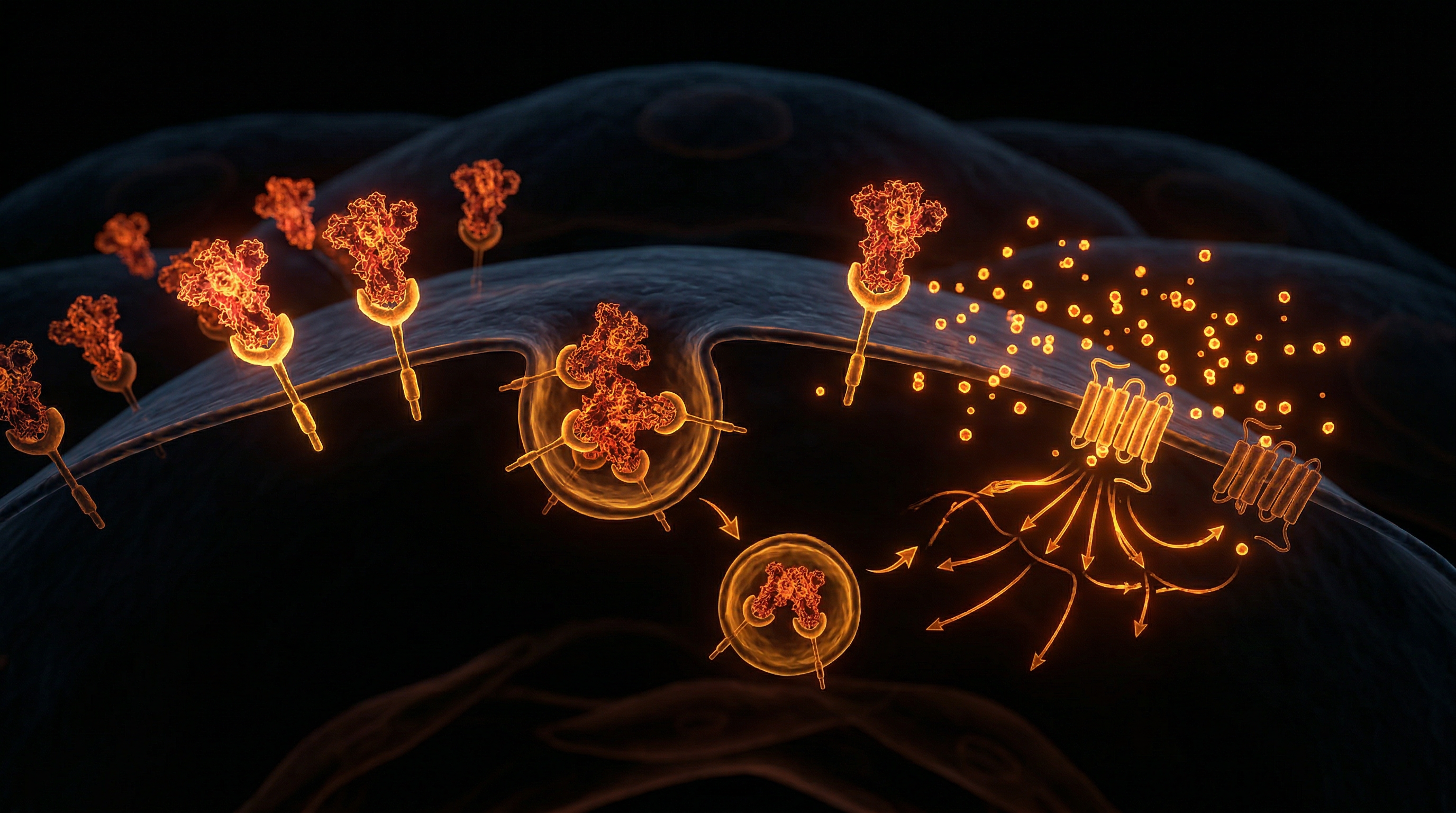
When the SARS-CoV-2 spike protein (S-protein) encounters an ACE2 receptor, it binds with high affinity. This binding is not a fleeting interaction. It triggers a series of events:
- Direct Blockade: The physical presence of the spike protein prevents ACE2 from processing its natural substrate, Ang II.
- Internalisation: The cell senses the binding and pulls the ACE2 receptor inside the cell membrane (endocytosis), effectively removing it from the surface where it is needed.
- Proteolytic Shedding: The binding activates an enzyme called ADAM17, which "snips" ACE2 off the cell surface, releasing it into the plasma where it can no longer perform its localised protective functions.
The Loss of Homeostasis
By removing ACE2 from the cell surface, the S-protein creates a local and systemic "Angiotensin II excess." Without ACE2 to convert Ang II into the protective Ang (1-7), the body enters a state of RAS imbalance. This isn't a temporary fluctuation; in many cases of post-viral syndrome or post-injection injury, this downregulation appears to be sustained for months, leading to a permanent state of vascular stress.
Key Term: Vascular Endothelium — The thin layer of cells lining every blood vessel in the body. It is the primary site of ACE2 expression and the "ground zero" for spike-mediated damage.
Mechanisms at the Cellular Level
The downregulation of ACE2 does not occur in a vacuum; it triggers a profound metabolic and structural shift within the cell. As a senior researcher, I must emphasise that the S-protein’s interaction with ACE2 is a signal transduction event—it tells the cell to change its very nature.
Mitochondrial Dysfunction and ROS
When ACE2 is downregulated, the resulting Ang II excess binds to AT1 receptors (Angiotensin II Type 1). This activation triggers the mitochondria to produce massive amounts of Reactive Oxygen Species (ROS)—essentially oxidative stress. This "oxidative burst" damages the cell's own DNA and proteins, leading to:
- Mitophagy: The premature destruction of mitochondria.
- Energy Depletion: The heart, which requires massive ATP for every beat, begins to fail at a cellular level.
The Role of ADAM17 and "Shedding"
As mentioned, ADAM17 (a disintegrin and metalloproteinase 17) is upregulated when the spike protein binds to ACE2. This is a catastrophic feedback loop. ADAM17 not only sheds ACE2 but also releases pro-inflammatory cytokines like TNF-alpha. This creates a "cytokine storm" on a micro-scale within the vessel walls.
Pericyte Damage
Recent studies have highlighted the role of pericytes—specialised cells that wrap around capillaries and regulate blood flow in the heart and brain. Pericytes are rich in ACE2. When spike proteins bind to them, they cause the pericytes to constrict and die. This leads to microvascular ischaemia; the large arteries may look clear on a scan, but the tiny vessels feeding the heart muscle are strangulated.
- Endothelialitis: Direct inflammation of the vessel lining.
- Pro-thrombotic state: The loss of ACE2 increases the expression of "Tissue Factor," making the blood more likely to clot.
- Disruption of the Blood-Brain Barrier: ACE2 depletion in the brain’s vascular system leads to the "brain fog" often reported in these cohorts.
Environmental Threats and Biological Disruptors
In this era, we must acknowledge that ACE2 downregulation is no longer solely the result of a seasonal respiratory virus. We are living in an environment saturated with biological disruptors that exacerbate this pathway.
The Synthetic Spike Protein
The most significant disruptor is the sustained presence of the synthetic spike protein encoded by mRNA and adenoviral vector technologies. Unlike the viral spike, which is part of a whole pathogen that the body can clear, the synthetic spike protein produced by the body’s own cells often lacks the natural "stop signals."
- Persistence: Research has shown spike protein circulating in the blood of some individuals for months post-injection.
- Concentration: The sheer volume of spike protein produced by the synthetic instructions can overwhelm the body’s ACE2 reserves far more effectively than a natural infection in the upper respiratory tract.
Synergistic Toxicity
We must also consider environmental factors that worsen ACE2 function:
- Air Pollution (PM2.5): Particulate matter is known to downregulate ACE2, making urban populations more vulnerable to spike-mediated injury.
- Glyphosate Exposure: Some researchers suggest that glyphosate may interfere with the body’s ability to synthesise the amino acids required for healthy ACE2 production.
- Fluoridated Water: Excess fluoride has been linked to the disruption of the G-protein coupled receptors which work in tandem with the RAS system.
Fact: The synthetic S-protein contains a "proline substitution" designed to keep it in the open, "prefusions" state, potentially making its binding to ACE2 more stable and long-lasting than the natural version.
The Cascade: From Exposure to Disease
What happens when ACE2 is chronically suppressed? The clinical progression follows a predictable, yet devastating, cascade that manifests differently depending on the individual’s genetic predispositions.
Phase 1: The Hypertensive Shift
The immediate result of ACE2 loss is an increase in systemic peripheral resistance. Patients who previously had "perfect" blood pressure suddenly find themselves in Stage 1 or 2 Hypertension. This is often resistant to standard medications because the underlying cause is not high salt intake, but a fundamental hormonal imbalance (Ang II excess).
Phase 2: Endothelial Dysfunction and Micro-clotting
Without ACE2 to protect the vessel walls, the endothelium becomes "sticky." Platelets begin to aggregate. This is the origin of the amyloid-like micro-clots being discovered by researchers like Professor Resia Pretorius. These clots are resistant to the body’s natural fibrinolysis (the process of breaking down clots).
Phase 3: Myocardial Strain and Myocarditis
The heart is forced to work harder against higher pressure while simultaneously being starved of oxygen due to microvascular damage.
- Subclinical Myocarditis: Inflammation of the heart muscle that doesn't always show up on a standard EKG but causes long-term scarring.
- Diastolic Dysfunction: The heart becomes "stiff" and cannot fill properly with blood.
Phase 4: Systemic Fibrosis
Angiotensin II is a pro-fibrotic hormone. Long-term downregulation of ACE2 leads to the replacement of healthy tissue with "tough" collagen. This is being observed in the lungs (pulmonary fibrosis) and the heart (interstitial fibrosis), leading to a permanent reduction in organ function and exercise intolerance.
What the Mainstream Narrative Omits
As a science writer for INNERSTANDING, it is my duty to highlight the "blind spots" in the official medical discourse. The obsession with "antibodies" as the sole measure of health has led to a total neglect of receptor kinetics.
1. The "Spike is Harmless" Myth
The mainstream narrative initially claimed that the spike protein remained at the injection site and was biologically inert. We now know this is false. The spike protein is a functional toxin that interacts directly with ACE2, even in the absence of a whole virus. By inducing ACE2 downregulation, the spike protein is the disease agent.
2. Ignoring the "Shedding" of ACE2
Public health authorities rarely discuss the systemic loss of ACE2. They focus on "inflammation" generally, but fail to address the specific hormonal mechanism. By ignoring ACE2 depletion, they miss the opportunity to use existing RAS-modulating drugs that could potentially mitigate the damage.
3. The Overlooked "Vasa Vasorum"
The vessels that supply the vessels—the vasa vasorum—are also lined with ACE2. When these are blocked by spike-induced inflammation, the large arteries themselves begin to degenerate from the outside in. This explains the sudden "dissecting aneurysms" being reported in younger demographics.
4. Regulatory Capture and Data Suppression
There is a profound reluctance within the NHS and the MHRA (Medicines and Healthcare products Regulatory Agency) to investigate the correlation between the introduction of spike-producing technologies and the subsequent surge in cardiovascular hospitalisations. The data is often obfuscated by grouping all "cardiovascular deaths" together without looking at the underlying ACE2/Ang II pathology.
Important Quote: "The downregulation of ACE2 is not a side effect; it is the fundamental molecular consequence of spike protein interaction. To ignore this is to ignore the primary driver of post-2020 vascular pathology."
The UK Context
The United Kingdom provides a unique and troubling case study for this phenomenon. Data from the Office for National Statistics (ONS) and the British Heart Foundation (BHF) show a persistent and unexplained rise in excess deaths, the majority of which are cardiovascular in nature.
The "Excess Death" Crisis
Since the roll-out of mass injection programmes, the UK has seen tens of thousands of excess deaths beyond the historical average. A significant portion of these involve:
- Ischaemic Heart Disease: Sudden blockages in blood flow.
- Heart Failure: The long-term result of chronic ACE2 downregulation and hypertension.
- Cerebrovascular Disease: Strokes in populations previously considered low-risk.
NHS Strain and Diagnostic Delays
The UK’s socialised healthcare system is currently struggling to cope with the influx of patients presenting with "Post-Viral" symptoms. However, many GPs are not trained to recognise the signs of spike-mediated RAS imbalance. Patients are often dismissed with "anxiety" when their symptoms—palpitations, POTS (Postural Orthostatic Tachycardia Syndrome), and chest pain—are clearly linked to the loss of ACE2-mediated vascular control.
UK Cohort Observations
Researchers observing UK cohorts have noted a "clustering" of symptoms. Individuals who have had both multiple infections and multiple injections appear to have the lowest measurable levels of surface ACE2 and the highest levels of circulating Ang II. This "cumulative load" of spike protein is creating a ticking time bomb within the British population.
- The BHF Warning: Even the British Heart Foundation has admitted that the UK is in the grip of a "heart care crisis," though they often attribute this to "delayed treatment" during lockdowns—a partial truth that ignores the biological reality of spike-mediated injury.
Protective Measures and Recovery Protocols
If the problem is the downregulation of ACE2 and the resulting Ang II excess, the solution must involve restoring RAS balance and degrading the persistent spike protein. While this is not medical advice, the following protocols are being studied by independent researchers globally.
1. Proteolytic Enzymes (Spike Degradation)
The most direct way to stop ACE2 downregulation is to remove the spike protein.
- Nattokinase: An enzyme derived from fermented soy (natto) that has been shown in in vitro studies to degrade the S-protein.
- Bromelain: Found in pineapples, this enzyme can also help break down the spike protein and reduce systemic inflammation.
2. RAS Modulators (Restoring Balance)
Supporting the "good" side of the Renin-Angiotensin System is crucial.
- Resveratrol: A potent antioxidant that has been shown to increase the expression of ACE2 and Ang (1-7), helping to restore the body's natural brakes.
- Vitamin D3: Acts as a negative regulator of the renin gene, effectively lowering the production of Ang II at the source.
- Magnesium: Essential for vascular relaxation and mitigating the vasoconstriction caused by ACE2 loss.
3. Autophagy (Cellular Cleanup)
The body has a natural mechanism for clearing out damaged proteins and receptors: autophagy.
- Intermittent Fasting: Triggers the cell to break down and recycle the misfolded or bound proteins, including ACE2-Spike complexes.
- Spermidine: A compound that promotes autophagy and has shown promise in cardiovascular protection.
4. Anti-Inflammatory Support
To stop the ADAM17-mediated "shedding" of ACE2:
- Curcumin: Helps inhibit the pro-inflammatory pathways that lead to receptor degradation.
- Quercetin: An ionophore that helps transport zinc into cells, which is a necessary cofactor for the healthy function of many enzymes, though its relationship with ACE2 is complex.
5. Blood Flow Support
To combat the micro-clotting:
- Serrapeptase: Another proteolytic enzyme that helps clear non-living tissue from the blood.
- Omega-3 Fatty Acids: Improve the flexibility of red blood cells and reduce the "stickiness" of the endothelium.
Summary: Key Takeaways
The evidence is clear: the sustained binding of spike proteins to ACE2 receptors is a catastrophic biological event. By downregulating the very enzyme meant to protect our hearts and vessels, we have unleashed a wave of cardiovascular disease that will likely define public health for the next decade.
- ACE2 is the Linchpin: It is the primary regulator of the cardiovascular system. Its loss leads to unchecked Angiotensin II dominance.
- Spike Protein is the Driver: Whether through repeated infection or synthetic production, the S-protein causes the direct internalisation and "shedding" of ACE2.
- The Result is Systemic: From micro-clots to hypertension and myocarditis, the symptoms are all downstream of this single molecular failure.
- The UK is at a Crossroads: Excess deaths are rising, and the medical establishment must shift its focus toward receptor-level restoration rather than mere symptom management.
- Recovery is Possible: Through targeted proteolytic enzymes, RAS-modulating nutrients, and the activation of autophagy, there is a pathway to reclaiming vascular health.
We must stop viewing these "post-viral" syndromes as mysteries. They are the predictable consequences of a biological system under siege. Understanding ACE2 downregulation is the first step toward exposing the truth and beginning the process of global healing.
Author: Senior Biological Researcher, INNERSTANDING Date: May 2024 Focus: Bio-pathology and Vascular Integrity
This article is provided for informational and educational purposes only. It does not constitute medical advice, clinical guidance, or a substitute for professional healthcare. Information reflects cited research at time of publication. Always consult a qualified healthcare professional before acting on any health information.
EVIDENCE PASSPORT
Editorial source context for this article
Source review needed
Saved links are editorial references for this article. They may support specific claims rather than every sentence. Open and assess each source in context. This passport does not independently verify them.
Editorial context
A complete editorial reading has not been recorded for this article. Source links remain available for you to open and assess directly.
Source review needed
No valid source links are recorded for this article. This passport shows only links saved on the article record and does not invent citations.
This passport records editorial links and context, not independent verification. Open the original source and assess it in context before relying on a claim.
Medical Disclaimer
The information in this article is for educational purposes only and does not constitute medical advice, diagnosis, or treatment. Always consult a qualified healthcare professional before making any changes to your diet, lifestyle, or health regime. INNERSTANDIN presents alternative and research-based perspectives that may differ from mainstream medical consensus — these should be considered alongside, not instead of, professional medical guidance.
Read Full DisclaimerContinue the thread
Keep this question moving.
Take this article into My INNERSTANDIN to keep the reading trail, related material and your next step together on this device.
Explore this in the Body Map
See where this hits your biology. Interactive anatomy, threats, and protective protocols.