
Acetylcholine: The Gatekeeper of Cognitive Focus and Muscle Command
Updated May 2026
Acetylcholine is a primary neurotransmitter essential for memory, attention, and the transmission of signals to muscles. Understanding its role helps optimize brain health and protect against age-related cognitive decline.
Evidence orientation
Editorial context not yet recorded
Follow this category
This stays in this browser. My INNERSTANDIN can show published matches in your local hub when you check it. It does not send email, push, or alert notifications.
Local learning review
A private browser aid for revisiting ideas. It is not an alert or a health recommendation.
Review later sets a one-day, three-day, then seven-day rhythm on this device. Choose it only when you want to revisit this article.
Overview
In the grand architecture of the human biological system, few molecules hold as much sovereign power as acetylcholine (ACh). It was the very first neurotransmitter to be identified, discovered in 1914 by Sir Henry Dale and later confirmed by Otto Loewi, yet even a century later, the mainstream medical establishment consistently fails to convey the sheer magnitude of its influence over our daily existence. Acetylcholine is not merely a chemical messenger; it is the gatekeeper of cognitive focus and the commander of muscular movement. Without it, the bridge between thought and action collapses, leaving the individual in a state of cognitive fragmentation and physical paralysis.
Operating within both the Central Nervous System (CNS) and the Peripheral Nervous System (PNS), acetylcholine acts as a master regulator. In the brain, it is the primary fuel for the "executive suite"—the prefrontal cortex—driving attention, memory encoding, and the ability to filter out environmental noise. In the body, it serves as the spark at the neuromuscular junction (NMJ), telling every voluntary muscle in the human frame when and how to contract. From the subtle flickering of your eyelids as you read this sentence to the complex neural firing required to solve a mathematical equation, acetylcholine is the invisible hand at work.
However, we are currently witnessing a silent assault on this critical pathway. Modern environmental toxins, pharmaceutical over-reliance, and a fundamental shift in the Western diet have created a "cholinergic crisis." The UK, in particular, faces a burgeoning epidemic of cognitive decline and neurodegenerative diseases that are inextricably linked to the depletion or disruption of acetylcholine. As we peel back the layers of mainstream health advice, we find a gaping hole where the understanding of cholinergic tone should be. This article serves as the definitive guide to reclaiming this vital neurotransmitter, exposing the threats to its stability, and providing the biological blueprint for cognitive and physical optimization.
CRITICAL DATA: Research suggests that up to 90% of the population in developed nations may be deficient in choline, the essential precursor to acetylcholine, leading to a "hidden" epidemic of cognitive impairment and metabolic dysfunction.
##
##
The Biology — How It Works
To understand the power of acetylcholine, one must first understand its synthesis and its dual-system utility. Unlike many other neurotransmitters that are derived directly from single amino acids (like serotonin from tryptophan), acetylcholine is synthesised through a unique biochemical marriage between a lipid-related nutrient, choline, and a metabolic byproduct of cellular respiration, acetyl-coenzyme A (acetyl-CoA).
The Synthesis Pathway
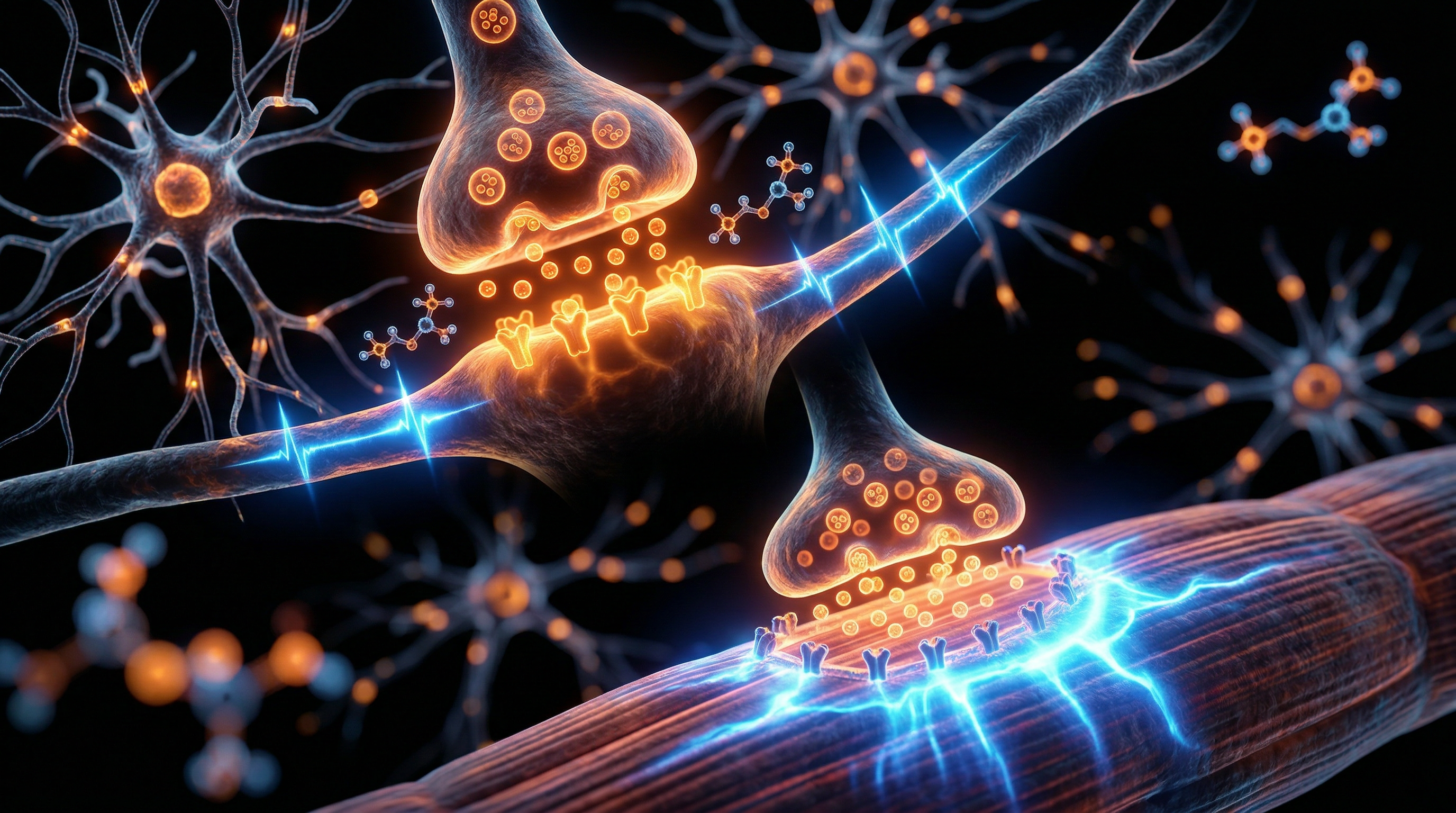
The assembly of acetylcholine occurs within the axon terminals of cholinergic neurons. The enzyme responsible for this union is Choline Acetyltransferase (ChAT). This enzyme takes the acetyl group from acetyl-CoA (sourced from the mitochondria) and attaches it to the choline molecule (sourced from the diet or recycled from the synaptic cleft).
This process is highly dependent on mitochondrial health. If the "power plants" of your cells are sluggish, acetyl-CoA production drops, and consequently, your brain’s ability to manufacture its primary focus chemical is severely compromised. This is why metabolic health is, fundamentally, brain health.
The Two Master Receptors
Once acetylcholine is released into the synaptic cleft—the microscopic gap between neurons—it must find a "lock" to fit into. These locks are the receptors, and in the cholinergic system, they are divided into two distinct classes:
- Nicotinic Receptors (nAChRs): These are fast-acting, ionotropic receptors. When ACh binds to them, they immediately open channels for ions like sodium and calcium to flood the cell. These are found predominantly at the neuromuscular junction and in specific brain regions responsible for rapid cognitive processing and "arousal" (in the neurological sense).
- Muscarinic Receptors (mAChRs): These are slower, G-protein-coupled receptors. They modulate the "tone" of the nervous system. These receptors are the primary drivers of the Parasympathetic Nervous System (PSNS)—the "rest and digest" mode that counteracts the stress of the sympathetic "fight or flight" response.
The Termination of the Signal
Crucially, the signal must be turned off as quickly as it is turned on. This is achieved by the enzyme Acetylcholinesterase (AChE). This enzyme is one of the fastest in the known biological world; it can hydrolyse (break down) approximately 25,000 molecules of acetylcholine per second. It splits ACh back into its original components—choline and acetate. The choline is then sucked back up into the neuron via a High-Affinity Choline Uptake (HACU) transporter to be reused.
This cycle—synthesis, release, reception, and degradation—is a miracle of biological efficiency. However, as we shall see, this very efficiency is the target of modern chemical and environmental interference.
##
##
Mechanisms at the Cellular Level
At the microscopic scale, acetylcholine operates with a precision that rivals the most advanced computing systems. Its role in the neuromuscular junction and the hippocampus (the brain's memory centre) highlights its status as a foundational biological command-and-control molecule.
The Neuromuscular Junction (NMJ)
In the periphery, every movement you make is a "cholinergic event." When a motor neuron decides to fire, it releases a flood of acetylcholine into the NMJ. The ACh molecules cross the gap and bind to nicotinic receptors on the sarcolemma (the muscle cell membrane). This binding triggers a massive influx of sodium, leading to a "depolarisation" that eventually causes the release of calcium within the muscle fibre, resulting in a contraction.
BIOLOGICAL TRUTH: Without sufficient acetylcholine, or if the receptors are blocked by toxins, the muscle cannot receive the signal to contract. This is the mechanism behind both the lethal effects of certain snake venoms and the debilitating fatigue of Myasthenia Gravis.
Cognitive Focus and the Prefrontal Cortex
In the brain, acetylcholine does not just transmit signals; it tunes them. In the prefrontal cortex, ACh increases the "signal-to-noise ratio." It dampens the firing of neurons that are irrelevant to the task at hand while amplifying the signals of neurons involved in focused attention. This is why, when you are "in the zone," your brain is literally bathed in acetylcholine.
Long-Term Potentiation (LTP) and Memory
The hippocampus, the region responsible for forming new memories, is densely packed with cholinergic fibres. Acetylcholine is a primary driver of Long-Term Potentiation (LTP)—the process by which synaptic connections are strengthened through repeated use. When you learn a new skill or memorise a piece of information, ACh is the catalyst that "inks" the memory into your neural circuitry. This is why the loss of cholinergic neurons is the hallmark of Alzheimer's disease; when the "ink" runs dry, the memories can no longer be recorded or retrieved.
The Vagus Nerve Connection
Acetylcholine is the primary neurotransmitter of the Vagus Nerve, the longest nerve of the autonomic nervous system. The Vagus nerve regulates heart rate, digestion, and the immune response. By releasing ACh, the Vagus nerve sends a "calm down" signal to the heart (lowering heart rate) and a "stop" signal to the inflammatory response. This makes acetylcholine the body’s most potent endogenous anti-inflammatory chemical.
##
##
Environmental Threats and Biological Disruptors
The cholinergic system, while robust, is under constant siege from the modern environment. Many of the substances we are exposed to daily act as Anticholinergics—chemicals that either block acetylcholine receptors or inhibit its production and release.
Organophosphates and Pesticides
One of the most direct assaults on the cholinergic system comes from organophosphate pesticides, widely used in industrial agriculture. These chemicals were originally developed as nerve agents (like Sarin). They work by permanently binding to and inhibiting Acetylcholinesterase (AChE).
When AChE is inhibited, acetylcholine cannot be broken down. It builds up in the synapse, leading to "cholinergic crisis"—overstimulation of the nervous system that can lead to tremors, respiratory failure, and death. While agricultural levels are lower than weaponised levels, chronic low-dose exposure through food and water leads to what researchers call "sub-clinical neurotoxicity," manifesting as brain fog, anxiety, and loss of motor coordination.
Heavy Metals: Aluminium and Mercury
The UK's industrial past and modern environmental exposures have left many with a significant body burden of heavy metals. Aluminium, in particular, has been shown to interfere with the synthesis of acetylcholine and increase the activity of AChE, leading to a rapid depletion of ACh levels in the brain. Similarly, Mercury binds to the thiol groups on enzymes like ChAT, effectively shutting down the production of the neurotransmitter.
The "Anticholinergic Burden" of Pharmaceuticals
The mainstream medical system often treats symptoms in isolation, ignoring the systemic "anticholinergic burden" of common drugs. Many over-the-counter (OTC) and prescription medications have potent anticholinergic side effects. These include:
- Antihistamines (e.g., Diphenhydramine)
- Tricyclic Antidepressants
- Statins (which can interfere with the synthesis of the acetyl-CoA needed for ACh)
- Bladder control medications
- Certain sleep aids
STATISTICAL ALERT: Research published in the Journal of the American Medical Association (JAMA) found that long-term use of common anticholinergic medications is linked to a 50% increased risk of developing dementia.
Fluoride and the Brain
Despite being promoted as a "dental health" measure, Fluoride is a known neurotoxin that can cross the blood-brain barrier. Studies have indicated that fluoride exposure can decrease the density of nicotinic acetylcholine receptors in the brain, effectively "muting" the brain's ability to respond to its own focus signals.
##
##
The Cascade: From Exposure to Disease
When the cholinergic system is chronically disrupted, the body enters a cascade of decline. This is not a sudden event but a slow erosion of biological integrity that eventually manifests as "unexplained" chronic illness or "age-related" decline.
The Alzheimer’s Connection
The "Cholinergic Hypothesis" of Alzheimer's disease suggests that the primary cause of cognitive decline is the progressive loss of cholinergic neurons in the Basal Forebrain. As these neurons die, the brain loses its ability to sustain focus and encode memory. While the mainstream focuses almost exclusively on "amyloid plaques," these plaques may actually be a symptom rather than the cause, with cholinergic failure being the true driver of the pathology.
Sarcopenia and Physical Frailty
In the ageing population, the breakdown of the Neuromuscular Junction leads to Sarcopenia—the loss of muscle mass and strength. This isn't just about "not lifting weights." It is a neurological failure. When the motor neurons can no longer effectively deliver acetylcholine to the muscles, the muscle fibres atrophy from lack of stimulation. Physical frailty is, at its core, a failure of cholinergic communication.
Autonomic Dysregulation
Because ACh is the driver of the parasympathetic nervous system, its depletion leads to a state of Sympathetic Dominance. This is a state of "permanent stress." Symptoms include:
- Tachycardia (high resting heart rate)
- Chronic constipation (lack of peristalsis driven by ACh)
- High blood pressure
- Chronic systemic inflammation (due to the failure of the "cholinergic anti-inflammatory pathway")
Myasthenia Gravis and Autoimmunity
In this autoimmune condition, the body’s immune system mistakenly produces antibodies that block or destroy nicotinic acetylcholine receptors at the NMJ. This results in profound muscle weakness, starting with the eyes and face and progressing to the limbs and respiratory muscles. It is a stark example of what happens when the "command" signal of ACh is interrupted.
##
##
What the Mainstream Narrative Omits
The conversation around brain health is often steered toward "serotonin" for mood or "dopamine" for motivation. While these are important, the omission of acetylcholine from the general public discourse is nothing short of a biological scandal.
The Choline Gap
The Food Standards Agency (FSA) and other global bodies have set "Adequate Intake" levels for choline, but these levels are often based on preventing liver damage (fatty liver), not on optimizing brain function. Furthermore, the push toward "plant-based" diets has exacerbated the choline crisis. The most bioavailable and concentrated sources of choline are animal-derived: eggs (specifically the yolks), beef liver, and fish. By demonising these nutrient-dense foods for decades due to flawed cholesterol science, the mainstream narrative has effectively starved the population of the building blocks for their own neurotransmitters.
The Statin Connection
Statins are among the most prescribed drugs in the UK. Their mechanism is to inhibit the HMG-CoA reductase enzyme to lower cholesterol. However, this same pathway is involved in the production of Acetyl-CoA. By aggressively lowering this pathway, statins can inadvertently reduce the availability of the "acetyl" component needed to create acetylcholine. This explains the frequently reported "statin brain fog" and cognitive "glitches" experienced by patients—side effects that are often dismissed as "ageing" by GPs.
The Impact of Modern "Fast-Food" Fats
Acetylcholine synthesis and receptor sensitivity depend on the health of the neuronal membrane, which is made of phospholipids. The consumption of processed seed oils (rich in Omega-6 and often rancid) instead of healthy saturated and Omega-3 fats leads to "stiff" or "leaky" membranes. This impairs the function of the High-Affinity Choline Uptake transporter, meaning that even if you have enough choline, your neurons cannot effectively pull it in to make ACh.
ALARMING REALITY: The move away from traditional British diets rich in offal and eggs toward highly processed, grain-based convenience foods has coincided almost perfectly with the meteoric rise in neurodegenerative diseases across the UK.
##
##
The UK Context
In the United Kingdom, the state of cholinergic health is particularly precarious due to specific agricultural practices, regulatory oversights, and historical events.
The Legacy of the Salisbury Incident
The 2018 Novichok poisoning in Salisbury brought the lethal power of the cholinergic system into the public eye, albeit briefly. Novichok is a "fourth-generation" nerve agent designed to inhibit acetylcholinesterase with extreme potency. While this was a targeted attack, it served as a grim reminder of how fundamental AChE is to life. The survival of the victims depended on the rapid administration of Atropine (which blocks ACh receptors to prevent overstimulation) and Oximes (to attempt to unbind the nerve agent from the enzyme).
UK Agriculture and Pesticide Runoff
The Environment Agency has frequently reported on the presence of neonicotinoids and organophosphates in British waterways. Despite bans on certain chemicals, the persistence of these substances in the soil and their leaching into the water supply means that the British public is subject to a constant, low-level "cholinergic dampening." The River Wye and other major arteries have shown significant chemical contamination that affects not just the local ecosystem, but the very water table used for irrigation.
The NHS and the "Dementia Tsunami"
The NHS is currently bracing for a "dementia tsunami," with projections suggesting over 1 million people in the UK will have dementia by 2025. Yet, the standard of care remains largely reactive. The primary drugs prescribed for Alzheimer's—such as Donepezil (Aricept)—are acetylcholinesterase inhibitors. They work by stopping the breakdown of what little acetylcholine the patient has left. However, this is a "late-stage" intervention. There is no systemic NHS programme focused on pre-emptive cholinergic optimization through diet and environmental toxin reduction.
Water Fluoridation in Britain
Unlike much of mainland Europe, parts of the UK still undergo mandatory water fluoridation. Regions like the West Midlands and parts of the North East have fluoride added to their tap water. For residents in these areas, the risk of fluoride-induced disruption of nicotinic receptors is a persistent, government-mandated biological hurdle.
##
##
Protective Measures and Recovery Protocols
Reclaiming your cholinergic sovereignty requires a multi-pronged approach: providing the raw materials, protecting the enzymes, and optimizing the receptors.
Dietary Foundations: The "Choline Load"
The first step is to aggressively reintroduce choline-rich foods. This is the "INNERSTANDING" protocol for cholinergic health:
- Pasture-Raised Eggs: The yolk is the richest source of phosphatidylcholine. Aim for 2-4 eggs daily.
- Organic Beef Liver: A powerhouse of B-vitamins and choline. Consuming liver once a week provides a massive biological "reset."
- Cruciferous Vegetables: Broccoli and cauliflower contain modest amounts of choline and, more importantly, support the liver’s ability to process the toxins that block ACh.
Targeted Supplementation
When diet is not enough—especially in the face of cognitive decline or high-stress environments—specific "nootropics" (cognitive enhancers) can bridge the gap.
- Alpha-GPC: A highly bioavailable form of choline that easily crosses the blood-brain barrier. It has been shown to increase growth hormone levels and enhance power output in athletes by strengthening the NMJ signal.
- CDP-Choline (Citicoline): Not only provides choline but also uridine, which helps repair neuronal membranes and upregulate ACh receptors.
- Huperzine-A: A natural acetylcholinesterase inhibitor derived from club moss. It acts as a "gentle" version of pharmaceutical AChE inhibitors, allowing ACh to linger longer in the synapse.
- Acetyl-L-Carnitine (ALCAR): Provides the "acetyl" group for ACh synthesis and supports mitochondrial health, ensuring the energy is there to drive the process.
Environmental Detoxification
- Water Filtration: Use a high-quality filter (Reverse Osmosis or specialized activated alumina) to remove fluoride and pesticide residues from drinking water.
- Organic Preference: Prioritize organic produce for the "Dirty Dozen"—those fruits and vegetables most likely to be contaminated with organophosphate pesticides.
- Avoid "The Burden": Work with a knowledgeable practitioner to review medications. If you are taking a "first-generation" antihistamine for sleep, consider natural alternatives like magnesium or glycine that do not have the anticholinergic "tax" on your brain.
Lifestyle and Vagal Tone
- Cold Exposure: Short bursts of cold water (cold showers) stimulate the Vagus nerve, triggering a release of acetylcholine that helps recalibrate the parasympathetic system.
- Deep Diaphragmatic Breathing: "Belly breathing" stimulates the Vagus nerve and has been shown to increase ACh-driven relaxation markers.
- Nasal Breathing: Switching from mouth breathing to nasal breathing (especially during sleep) helps maintain the autonomic balance necessary for cholinergic health.
##
##
Summary: Key Takeaways
The importance of acetylcholine cannot be overstated. It is the chemical currency of your consciousness and the electrical spark of your physical autonomy.
- Acetylcholine is the primary neurotransmitter for memory, focus, and muscle contraction. It is the bridge between the mind and the body.
- The system is under assault from organophosphate pesticides, heavy metals, and a wide array of common pharmaceutical drugs that carry a heavy "anticholinergic burden."
- The mainstream narrative ignores the "Choline Gap." By discouraging the consumption of traditional animal fats and eggs, modern dietary advice has contributed to a nationwide decline in cognitive health.
- The UK context is unique, with specific threats from water fluoridation, agricultural runoff, and a healthcare system that treats cholinergic failure only when it reaches the stage of dementia.
- Optimization is possible. Through a diet rich in bioavailable choline, targeted supplementation with Alpha-GPC and ALCAR, and rigorous environmental detoxification, you can protect your "cholinergic tone" and ensure cognitive focus and muscle command well into your later years.
At INNERSTANDING, we believe that biological truth is the first step toward sovereignty. Acetylcholine is the gatekeeper. It is time you took control of the gate.
This article is provided for informational and educational purposes only. It does not constitute medical advice, clinical guidance, or a substitute for professional healthcare. Information reflects cited research at time of publication. Always consult a qualified healthcare professional before acting on any health information.
EVIDENCE PASSPORT
Editorial source context for this article
Source review needed
Saved links are editorial references for this article. They may support specific claims rather than every sentence. Open and assess each source in context. This passport does not independently verify them.
Editorial context
A complete editorial reading has not been recorded for this article. Source links remain available for you to open and assess directly.
Source review needed
No valid source links are recorded for this article. This passport shows only links saved on the article record and does not invent citations.
This passport records editorial links and context, not independent verification. Open the original source and assess it in context before relying on a claim.
Medical Disclaimer
The information in this article is for educational purposes only and does not constitute medical advice, diagnosis, or treatment. Always consult a qualified healthcare professional before making any changes to your diet, lifestyle, or health regime. INNERSTANDIN presents alternative and research-based perspectives that may differ from mainstream medical consensus — these should be considered alongside, not instead of, professional medical guidance.
Read Full DisclaimerContinue the thread
Keep this question moving.
Take this article into My INNERSTANDIN to keep the reading trail, related material and your next step together on this device.
Explore this in the Body Map
See where this hits your biology. Interactive anatomy, threats, and protective protocols.
Dig deeper in the Library
Free, longform PDF volumes that go beyond headlines into mechanisms and references.