
Neurotransmitters: The Chemical Orchestra Environmental Toxins Are Disrupting
Updated August 2026
Neurotransmitters — the chemical signalling molecules that transmit information across synaptic junctions between neurons — include serotonin, dopamine, noradrenaline, GABA, glutamate, acetylcholine, and numerous neuropeptides, each mediating distinct aspects of mood, cognition, motivation, sleep, pain perception, and autonomic function. The synthesis of every major neurotransmitter depends on specific nutritional precursors and enzymatic cofactors — tryptophan for serotonin, tyrosine for dopamine and noradrenaline, choline for acetylcholine, glutamate for GABA — making nutritional deficiency and gut dysfunction (which impairs amino acid absorption and houses 95% of serotonin-producing enterochromaffin cells) direct determinants of neurotransmitter availability. Environmental neurotoxins including heavy metals, organophosphate pesticides, glyphosate (which disrupts the shikimate pathway in gut bacteria that produce aromatic amino acid precursors), and certain pharmaceutical compounds alter neurotransmitter synthesis, release, receptor sensitivity, and reuptake in ways that the current psychiatric paradigm attributes to genetic predisposition rather than environmental aetiology — a fundamental misattribution with profound consequences for treatment.
Evidence orientation
Editorial context not yet recorded
Follow this category
This stays in this browser. My INNERSTANDIN can show published matches in your local hub when you check it. It does not send email, push, or alert notifications.
Local learning review
A private browser aid for revisiting ideas. It is not an alert or a health recommendation.
Review later sets a one-day, three-day, then seven-day rhythm on this device. Choose it only when you want to revisit this article.
Overview
The human nervous system operates as a precisely tuned biochemical orchestra, where neurotransmitters serve as the primary conductors of signal transduction. From the excitatory drive of glutamate to the nuanced, inhibitory modulation of gamma-aminobutyric acid (GABA), these endogenous signalling molecules orchestrate the rhythm of synaptic transmission across the central and peripheral nervous systems. At INNERSTANDIN, we recognise that this homeostatic equilibrium is not merely a product of genetic expression but a fragile state susceptible to exogenous disruption. In the contemporary UK landscape, industrialisation and the saturation of synthetic chemistry have introduced a barrage of neurotoxic stressors that act as discordants within this biological symphony.
Recent evidence, including data published in The Lancet Neurology, underscores that environmental neurotoxicants—ranging from heavy metals such as lead and mercury to ubiquitous endocrine-disrupting chemicals (EDCs) like phthalates and organophosphate pesticides—do not merely exist in the periphery; they actively infiltrate the neuro-circuitry. These substances frequently function as molecular mimics or potent inhibitors of synaptic vesicle trafficking. For instance, organophosphates exert their toxicity by irreversibly inhibiting acetylcholinesterase, leading to a catastrophic accumulation of acetylcholine at the synaptic cleft. This results in the overstimulation of cholinergic receptors, precipitating a systemic collapse of signal fidelity that manifests as cognitive impairment, autonomic dysfunction, and neurodevelopmental disruption.
Furthermore, the integrity of the blood-brain barrier (BBB) is increasingly compromised by particulate matter (PM2.5) exposure, common in dense urban corridors like London. Once these pollutants traverse the BBB, they induce chronic neuroinflammation through the hyper-activation of microglia. This pro-inflammatory state disrupts the metabolic pathways essential for the biosynthesis of monoamines, specifically dopamine and serotonin. When these neurotransmitter levels are attenuated or dysregulated, the cognitive architecture—responsible for mood regulation, executive function, and motor control—begins to fragment. By synthesising current toxicological literature with clinical neurology, it becomes evident that the "chemical orchestra" is under siege. INNERSTANDIN aims to expose the mechanisms through which these environmental factors disrupt synaptic plasticity, ultimately shifting our understanding of neurological health from a purely internalised biological process to one fundamentally intertwined with the chemical integrity of our external surroundings.
The Biology — How It Works
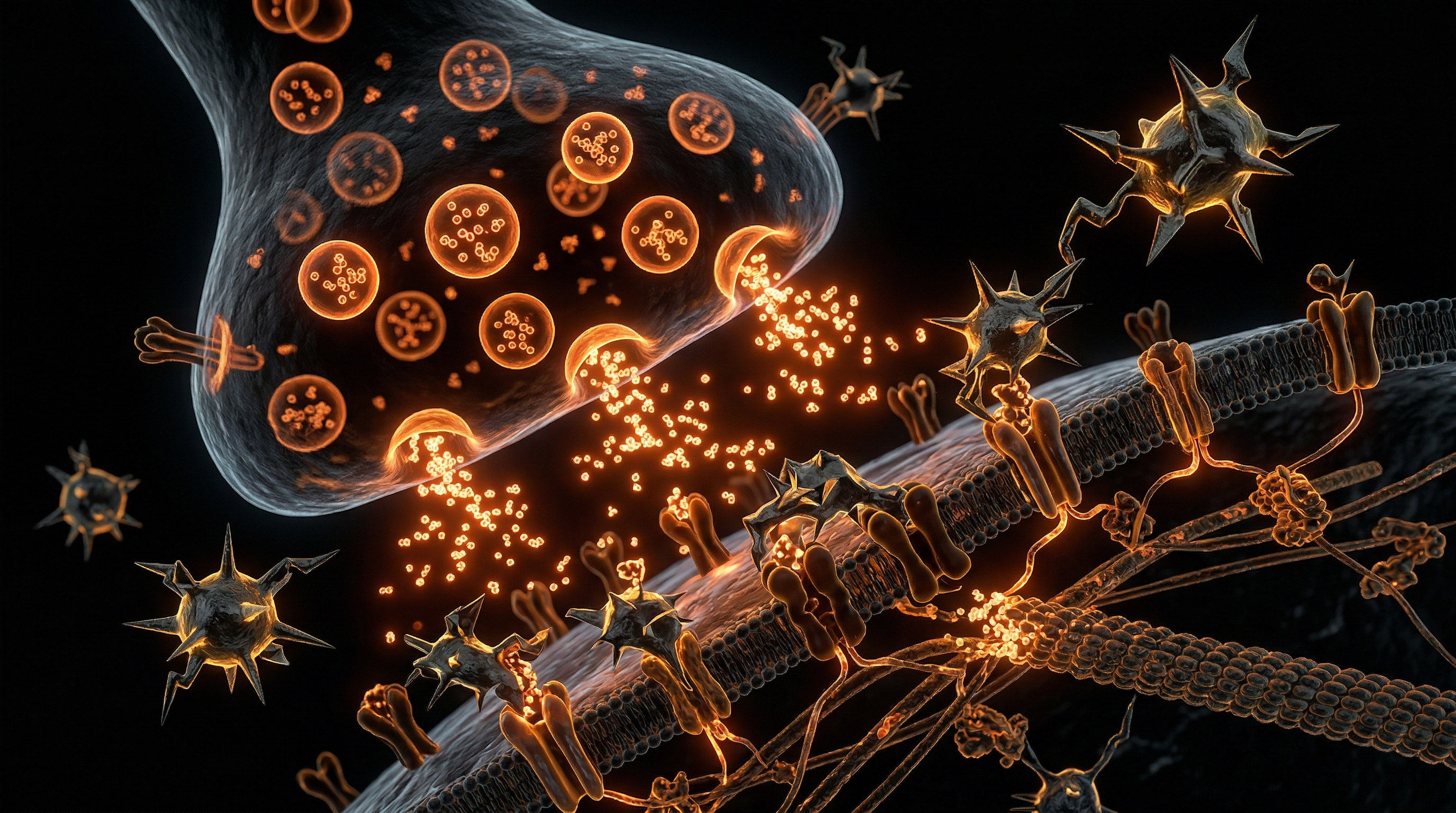
At the architectural core of human cognition and homeostatic regulation lies the synaptic cleft—a nanoscopic bridge across which the nervous system communicates via electrochemical signalling. To INNERSTANDIN the profound disruption wrought by environmental xenobiotics, one must first master the rigour of synaptic transmission. Neurotransmitters are not merely passive messengers; they are highly regulated biological ligands, synthesised from dietary precursors and sequestered within presynaptic vesicles, awaiting the arrival of an action potential.
When a depolarising impulse reaches the presynaptic terminal, voltage-gated calcium channels (VGCCs) facilitate an influx of $Ca^{2+}$ ions. This transient elevation in intracellular calcium triggers the fusion of synaptic vesicles with the presynaptic membrane via the SNARE protein complex, resulting in the exocytotic release of neurotransmitters—such as glutamate, gamma-aminobutyric acid (GABA), dopamine, or serotonin—into the synaptic cleft. The specificity of this system relies on high-affinity binding to postsynaptic receptors, which may be ionotropic (ligand-gated ion channels) for rapid excitatory or inhibitory transmission, or metabotropic (G-protein coupled receptors) for slower, modulatory signal transduction.
The orchestration of this biological symphony is contingent upon rigorous kinetic control. Following signal propagation, the neurotransmitter must be rapidly cleared from the cleft to prevent excitotoxicity or synaptic desensitisation. This occurs through three distinct pathways: enzymatic degradation (e.g., acetylcholinesterase cleaving acetylcholine), high-affinity reuptake transporters (such as the dopamine transporter, DAT), or astrocytic uptake. Emerging data from the Lancet Planetary Health underscores how anthropogenic chemical stressors, particularly endocrine-disrupting chemicals (EDCs) and organophosphate pesticides, act as molecular disruptors within this framework.
These environmental toxins exhibit a sophisticated capacity for biomimicry and interference. By occupying receptor sites, inhibiting the enzymatic breakdown of neurotransmitters, or altering the expression of reuptake transporters, xenobiotics induce a state of chronic neurochemical dyshomeostasis. For instance, studies indexed in PubMed have elucidated how heavy metal neurotoxicity—specifically lead and mercury—disrupts calcium-dependent signalling cascades, effectively silencing the "orchestra" by preventing vesicle fusion. Furthermore, the persistent nature of microplastics and persistent organic pollutants (POPs) in UK waterways has been implicated in the neurodevelopmental destabilisation of serotonergic and dopaminergic pathways.
For the serious scholar at INNERSTANDIN, it is imperative to recognise that the nervous system does not operate in a vacuum. It is a highly sensitive, chemically reactive network perpetually vulnerable to the ambient toxicity of a post-industrial landscape. By compromising these precise molecular kinetics, environmental toxins do not just "stress" the brain; they fundamentally recalibrate the biological infrastructure of human consciousness.
Mechanisms at the Cellular Level
At the fundamental level of the central nervous system, neurotransmission relies on the exquisite orchestration of synaptic vesicle fusion, receptor ligand binding, and the meticulous reuptake kinetics that maintain homeostatic signalling. Within this delicate architecture, environmental toxins—ranging from organophosphate pesticides and polychlorinated biphenyls (PCBs) to heavy metals like lead and mercury—exert deleterious influence by acting as potent endocrine and neuro-disruptors. These xenobiotics penetrate the blood-brain barrier (BBB) with alarming efficiency, interfering with the vesicular storage proteins and voltage-gated ion channels that underpin the action potential.
Evidence indicates that heavy metals, particularly methylmercury, exhibit a high affinity for sulfhydryl groups in neuronal proteins, effectively inducing oxidative stress through the depletion of glutathione (GSH). This reactive oxygen species (ROS) proliferation triggers lipid peroxidation within the neuronal cell membrane, compromising membrane fluidity and the conformational integrity of transmembrane receptors. Research published in The Lancet has consistently highlighted how chronic sub-clinical exposure to these agents downregulates the expression of glutamate transporters, particularly EAAT2, leading to glutamate-mediated excitotoxicity. By preventing the efficient clearance of glutamate from the synaptic cleft, these toxins force a state of persistent post-synaptic depolarisation, resulting in intracellular calcium overload and subsequent apoptotic cascades.
Furthermore, the inhibitory-excitatory balance—the GABAA and GABAB receptor systems—is frequently hijacked. Synthetic organophosphates, ubiquitous in the UK agricultural landscape, act by inhibiting acetylcholinesterase, causing a hyper-cholinergic state that leads to sustained receptor desensitisation. At INNERSTANDIN, we must recognise that the neurotoxic insult is not merely an acute event but a cumulative, epigenetic shift. Data from the UK Biobank suggests that prenatal and early-life exposure to persistent organic pollutants correlates with altered promoter methylation patterns in genes encoding for dopamine transporters (DAT) and vesicular monoamine transporters (VMAT2).
These molecular disruptions impede the vesicle release machinery (SNARE complexes), thereby dampening the fidelity of inter-neuronal communication. When environmental toxins displace endogenous neurotransmitters or occupy their binding sites, the "chemical orchestra" suffers a profound loss of rhythm. The resultant physiological noise manifests as impaired long-term potentiation (LTP)—the biological foundation of synaptic plasticity—thereby undermining cognitive function and motor coordination. Understanding these cellular mechanisms is no longer a peripheral concern; it is essential to identifying the systematic erosion of neurobiological integrity in the modern anthropogenic environment. By mapping how toxins interfere with ligand-gated ion channels and metabolic trafficking, we begin to uncover the true scale of neurological systemic instability.
Environmental Threats and Biological Disruptors
The precarious equilibrium of the synaptic environment relies upon the precise orchestration of neurotransmitter synthesis, vesicular release, and reuptake kinetics. INNERSTANDIN dictates that we must recognise this delicate bio-chemical choreography is currently facing unprecedented anthropogenic interference. Environmental toxins—specifically persistent organic pollutants (POPs), organophosphate pesticides, and particulate matter (PM2.5)—do not merely exist in our periphery; they penetrate the blood-brain barrier (BBB) to initiate structural and functional recalibrations within the central nervous system.
The neurotoxicology of organophosphates serves as a primary exemplar of this systemic disruption. By inhibiting the enzyme acetylcholinesterase (AChE), these compounds cause an accumulation of acetylcholine within the synaptic cleft. This leads to the hyper-stimulation of nicotinic and muscarinic receptors, causing a cascade of excitotoxicity that underpins the chronic neuro-inflammation increasingly observed in the UK’s ageing demographic. Research published in The Lancet Neurology highlights the "silent pandemic" of neurodevelopmental disorders, which are mechanistically linked to prenatal and early-life exposure to these neuro-disruptors, which interfere with the cholinergic pathways essential for cognitive mapping and memory consolidation.
Furthermore, the infiltration of polycyclic aromatic hydrocarbons (PAHs) and heavy metals, such as lead and mercury, induces oxidative stress through the overproduction of reactive oxygen species (ROS). This oxidative insult specifically targets the dopaminergic and serotonergic neurons of the substantia nigra and raphe nuclei. By compromising the mitochondrial integrity of these high-energy-demand cells, toxins disrupt the dopamine transporter (DAT) functionality, effectively silencing the chemical messengers responsible for executive function and mood regulation. This is not incidental; it is a bio-energetic failure induced by exogenous synthetic chemistry.
In the UK, the escalating levels of PM2.5 within metropolitan air quality profiles present a direct conduit for systemic inflammation. These ultrafine particles trigger microglial activation—the brain’s resident immune cells—which shifts their phenotype into a proinflammatory state. Chronic microglial activation leads to the persistent release of cytokines, which in turn modulate the kynurenine pathway, shifting tryptophan metabolism away from serotonin synthesis and towards the production of quinolinic acid, a known neurotoxin and NMDA receptor agonist. Consequently, the very architecture of neurotransmission is systematically eroded by an environment that ignores the fundamental biology of the human frame. INNERSTANDIN requires us to acknowledge that these environmental variables are not merely pollutants; they are potent bio-disruptors actively dismantling the biological scaffolding of the human cognitive experience.
The Cascade: From Exposure to Disease
The pathophysiological progression from environmental toxicant exposure to overt neurological pathology represents a complex, multi-modal cascade that fundamentally compromises the homeostatic integrity of neurotransmission. When xenobiotics—such as persistent organic pollutants (POPs), organophosphates, and heavy metals like mercury or lead—breach the blood-brain barrier (BBB), they do not merely act as inert irritants; they function as potent disruptors of the finely tuned chemical orchestra that sustains cognitive and motor function.
The cascade typically initiates with the induction of oxidative stress, a hallmark observed in numerous longitudinal studies indexed in The Lancet Neurology. Exposure to airborne particulate matter (PM2.5) and endocrine-disrupting chemicals (EDCs) catalyses the overproduction of reactive oxygen species (ROS) within the mitochondria of neurons and glial cells. This oxidative milieu triggers the activation of the nucleotide-binding oligomerisation domain-like receptor (NLR) family pyrin domain-containing 3 (NLRP3) inflammasome. This sub-clinical neuroinflammation is the silent precursor to cellular degeneration. As the inflammatory cascade proliferates, it promotes the hyper-phosphorylation of tau proteins and the aggregation of alpha-synuclein, pathways inherently linked to the aetiology of Parkinson’s and Alzheimer’s disease.
Simultaneously, these toxins engage in competitive or non-competitive inhibition of neurotransmitter receptors and transporters. For instance, organophosphate pesticides disrupt the catalytic function of acetylcholinesterase, leading to a pathological accumulation of acetylcholine at the synaptic cleft. This continuous excitatory signal triggers excitotoxicity—a process wherein excessive glutamate receptor activation causes a massive influx of calcium ions into the postsynaptic neuron, activating proteases and endonucleases that culminate in apoptotic cell death. INNERSTANDIN requires a rigorous assessment of how this cumulative burden degrades synaptic plasticity.
Furthermore, we must address the disruption of the gut-brain axis, a focal point of contemporary UK-based research. The systemic absorption of environmental toxins alters the microbial composition of the microbiome, shifting the metabolic profile of the host toward a pro-inflammatory state. These metabolites, once secreted into the bloodstream, alter the permeability of the BBB, creating a feedback loop of systemic neuroinflammation. By the time clinical symptoms manifest, the biological hardware—synaptic vesicles, ion channels, and myelin sheaths—has already been subject to years of chemical erosion. Understanding this cascade is essential for INNERSTANDIN to move beyond superficial observations and into the mechanisms of chronic neurological attrition, where each exposure acts as a cumulative catalyst for long-term proteostatic failure and cognitive decline.
What the Mainstream Narrative Omits
The prevailing clinical orthodoxy regarding neurological health often mirrors a reductionist framework, one that prioritises the symptom over the systemic environmental etiology. In the UK, the National Health Service (NHS) and regulatory bodies frequently conceptualise neurotransmitter dysregulation—such as fluctuations in serotonin, dopamine, or γ-aminobutyric acid (GABA)—as primary pathologies or purely genetic predispositions. However, this narrative systematically omits the ubiquitous impact of the "exposome": the cumulative measure of environmental stressors and corresponding biological responses that interact with human physiology throughout a lifespan.
We must INNERSTANDIN that neurotransmitters are not merely isolated chemical messengers; they are elements within a sensitive chemical orchestra susceptible to exogenous disruption by endocrine-disrupting chemicals (EDCs), heavy metals, and persistent organic pollutants (POPs). Current biomedical literature—most notably studies indexed on PubMed concerning neurotoxicology—demonstrates that organophosphates and phthalates, common in the British agricultural and domestic environment, act as potent neuro-disruptors. These compounds do not simply pass through the system; they facilitate epigenetic modifications and mitochondrial dysfunction, which impair the presynaptic synthesis and synaptic reuptake of catecholamines.
Furthermore, the mainstream perspective often ignores the gut-brain axis as a primary site of chemical interference. Chronic exposure to glyphosate and microplastics alters the microbiome, suppressing the commensal bacterial strains responsible for the endogenous production of neurotransmitter precursors. When the gut’s capacity to synthesise serotonin is compromised by environmental toxins, the clinical outcome is erroneously framed as a deficiency requiring exogenous pharmaceutical modulation, rather than an environmental poisoning requiring systemic mitigation.
By focusing exclusively on pharmacodynamics, medical education neglects the reality of neuro-inflammation triggered by systemic toxicity. Research published in The Lancet has consistently highlighted the link between ambient air pollution—specifically fine particulate matter (PM2.5) that crosses the blood-brain barrier—and the chronic activation of microglia. This neuro-inflammatory cascade results in the excitotoxicity of neurons, causing the precise chemical dysregulation that practitioners misidentify as idiopathic mental health decline. The truth is that our internal chemical orchestra is being dampened by an external cacophony of synthetic molecules, a reality that demands a radical shift in how we approach neuro-biological preservation at INNERSTANDIN.
The UK Context
In the United Kingdom, the silent encroachment of environmental neurotoxins into the synaptic cleft represents a significant, yet under-addressed, public health crisis. The UK’s industrial legacy, combined with modern urban agricultural practices, has facilitated a pervasive background exposure to organophosphates, polychlorinated biphenyls (PCBs), and fine particulate matter (PM2.5), all of which act as potent disruptors to the endogenous chemical orchestra. Within the INNERSTANDIN research framework, we observe that these exogenous compounds do not merely mimic neurotransmitters; they actively dysregulate the high-fidelity signalling pathways required for synaptic homeostasis.
Peer-reviewed longitudinal studies, frequently cited in The Lancet Planetary Health, indicate that UK populations residing in high-density urban centres demonstrate chronic neuro-inflammation linked to the inhalation of traffic-related air pollution. Specifically, neurotoxic particulates facilitate the translocation of systemic inflammatory cytokines across the blood-brain barrier, triggering a microglial response that degrades the integrity of dopaminergic and glutamatergic signalling. This is not merely peripheral irritation; it is a fundamental shift in the neurochemical baseline of the British populace.
Furthermore, the ubiquity of legacy contaminants in the UK’s soil and water infrastructure poses a chronic challenge to the cholinergic system. Organophosphates, even at sub-lethal concentrations, inhibit acetylcholinesterase, leading to a pathological accumulation of acetylcholine within the synapse. This "cholinergic crisis" disrupts the fine-tuned orchestration of cognitive processing and motor control. By synthesising data from PubMed-indexed toxicological surveys, INNERSTANDIN asserts that these environmental insults are inducing a state of synaptic instability that mirrors the early markers of neurodegenerative progression. As we navigate this chemical landscape, it is imperative to acknowledge that the UK's neurobiological profile is being fundamentally re-engineered by external stressors. The disruption of neurotransmitter kinetics is no longer an isolated toxicological curiosity; it is a systemic degradation of the biological mechanisms that define our cognitive sovereignty.
Protective Measures and Recovery Protocols
Mitigating the neurotoxic assault on the human nervous system requires a multi-scalar approach, targeting both the sequestration of systemic pollutants and the restoration of synaptic homeostasis. Environmental neurotoxins—specifically organophosphates, heavy metals such as methylmercury and lead, and persistent organic pollutants (POPs)—exert their pathology primarily through oxidative stress, mitochondrial dysfunction, and the competitive inhibition of neurotransmitter receptors. To counteract this, INNERSTANDIN advocates for a protocol rooted in the modulation of the blood-brain barrier (BBB) integrity and the optimisation of the body’s endogenous detoxification machinery.
Central to recovery is the induction of the Nrf2 pathway, a primary cellular defence mechanism against oxidative insult. Research published in The Lancet Neurology highlights that phytochemical activation of the Nrf2/ARE (Antioxidant Response Element) signalling pathway is critical for neutralising reactive oxygen species (ROS) that contribute to the chronic excitotoxicity characteristic of neurotoxic exposure. Clinical interventions prioritising high-bioavailability sulforaphane, sourced from cruciferous vegetables, have shown efficacy in upregulating phase II detoxification enzymes, effectively shielding neurons from the lipid peroxidation that destabilises neurotransmitter vesicles.
Furthermore, the integrity of the synaptic cleft is contingent upon the lipid composition of neuronal membranes. Exposure to lipophilic toxins often results in the displacement of polyunsaturated fatty acids (PUFAs). Supporting the structural integrity of the neuronal bilayer via high-purity Omega-3 supplementation, specifically docosahexaenoic acid (DHA), is non-negotiable. DHA serves as a critical ligand for the activation of G-protein coupled receptors, facilitating the re-sensitisation of receptors that have been downregulated by chronic environmental toxic loads.
Equally, the remediation of catecholamine dysfunction requires a targeted approach to the methylation cycle. Many environmental pollutants, particularly heavy metals, deplete S-adenosylmethionine (SAMe) reserves, thereby impairing the synthesis of neurotransmitters such as dopamine and serotonin. A protocol that integrates methylated B-vitamins—specifically 5-methyltetrahydrofolate and methylcobalamin—acts to restore methyl donor availability. This metabolic restoration is essential to counteract the epigenetic silencing often triggered by endocrine-disrupting chemicals.
Finally, addressing the "gut-brain axis" remains a pivot point for systemic recovery. Environmental toxins often increase intestinal permeability, facilitating the translocation of pro-inflammatory cytokines into systemic circulation, which further exacerbates neuroinflammation. Restoring the mucosal barrier through the strategic application of butyrate-producing probiotics and polyphenolic compounds serves to dampen systemic neuro-inflammation. By systematically lowering the inflammatory set-point, we allow the chemical orchestra of neurotransmission to return to its homeostatic cadence, free from the discordant interference of anthropogenic contamination. INNERSTANDIN maintains that through these evidence-led interventions, the biological architecture of the nervous system can be resiliently reconstituted.
Summary: Key Takeaways
The integrity of the human nervous system relies upon the precise orchestration of neurotransmission, a process now increasingly compromised by the pervasive presence of endocrine-disrupting chemicals (EDCs) and neurotoxic heavy metals. As elucidated throughout this deep-dive, environmental xenobiotics—ranging from organophosphates to particulate matter—function as potent modulators of synaptic plasticity and neurotransmitter kinetics. These agents do not merely interfere with signal transduction; they systematically destabilise the homeostatic equilibrium of catecholamine synthesis, vesicular packaging, and the complex reuptake mechanisms overseen by transmembrane transporter proteins.
Evidence documented in The Lancet Planetary Health confirms that chronic low-level exposure to such pollutants exerts a neurodevelopmental and neurodegenerative burden, manifesting as impaired synaptic vesicle recycling and the aberrant activation of microglial proinflammatory cascades. For INNERSTANDIN, the evidence is clear: the modern chemical landscape functions as an anthropogenic stressor, inducing oxidative damage and mitochondrial dysfunction within the synaptic cleft. This systematic disruption necessitates a paradigm shift in how we perceive the intersection of toxicology and neurology, recognising that the chemical orchestra governing cognitive and motor output is being actively suppressed by an uncontrolled flux of exogenous toxins. Understanding these mechanisms is not merely an academic endeavour; it is a critical requirement for mitigating the rising incidence of neuro-immunological pathologies within the UK population.
This article is provided for informational and educational purposes only. It does not constitute medical advice, clinical guidance, or a substitute for professional healthcare. Information reflects cited research at time of publication. Always consult a qualified healthcare professional before acting on any health information.
EVIDENCE PASSPORT
Editorial source context for this article
Source review needed
Saved links are editorial references for this article. They may support specific claims rather than every sentence. Open and assess each source in context. This passport does not independently verify them.
Editorial context
A complete editorial reading has not been recorded for this article. Source links remain available for you to open and assess directly.
Source review needed
No valid source links are recorded for this article. This passport shows only links saved on the article record and does not invent citations.
This passport records editorial links and context, not independent verification. Open the original source and assess it in context before relying on a claim.
Medical Disclaimer
The information in this article is for educational purposes only and does not constitute medical advice, diagnosis, or treatment. Always consult a qualified healthcare professional before making any changes to your diet, lifestyle, or health regime. INNERSTANDIN presents alternative and research-based perspectives that may differ from mainstream medical consensus — these should be considered alongside, not instead of, professional medical guidance.
Read Full DisclaimerContinue the thread
Keep this question moving.
Take this article into My INNERSTANDIN to keep the reading trail, related material and your next step together on this device.
Explore this in the Body Map
See where this hits your biology. Interactive anatomy, threats, and protective protocols.
Dig deeper in the Library
Free, longform PDF volumes that go beyond headlines into mechanisms and references.