
Agricultural Pesticides and the Interference of Hormonal Signaling
Updated May 2026
Modern agriculture relies heavily on pesticides that can act as potent endocrine disruptors. This article investigates how chemicals like glyphosate and atrazine interfere with steroidogenesis and the gut-endocrine axis.
Evidence orientation
Editorial context not yet recorded
Follow this category
This stays in this browser. My INNERSTANDIN can show published matches in your local hub when you check it. It does not send email, push, or alert notifications.
Local learning review
A private browser aid for revisiting ideas. It is not an alert or a health recommendation.
Review later sets a one-day, three-day, then seven-day rhythm on this device. Choose it only when you want to revisit this article.
Overview
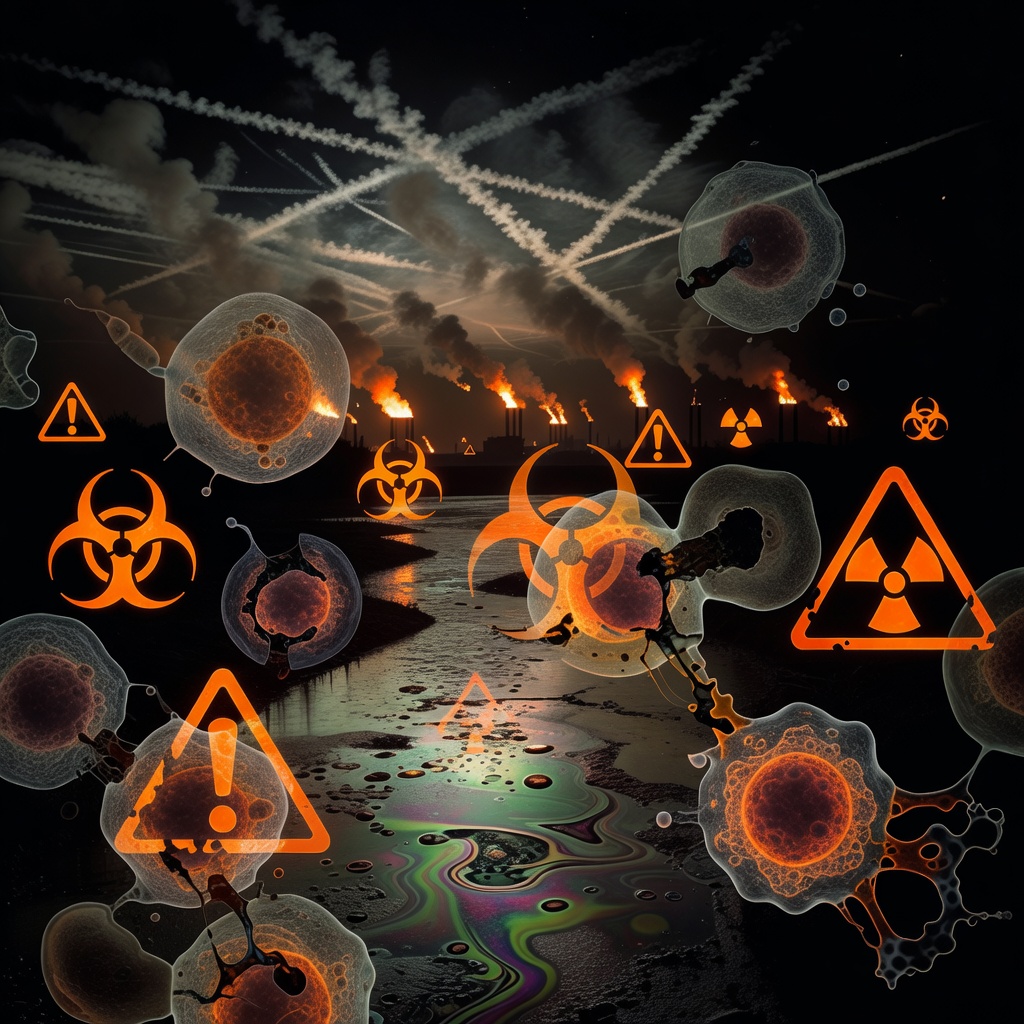
We exist within a silent, invisible, and pervasive chemical storm. While the modern world celebrates the efficiency of industrial agriculture and the abundance of the supermarket shelf, a darker biological reality is unfolding beneath the surface of our collective health. For decades, the global food system has been predicated on the intensive use of synthetic chemicals designed to kill—herbicides to clear weeds, insecticides to vanish pests, and fungicides to halt decay. However, the biological arrogance of assuming these compounds only affect their target species has led to one of the greatest public health crises of the 21st century: the systemic dismantling of the human endocrine system.
The endocrine system is the body’s master conductor. It is a sophisticated network of glands and organs that use hormones as chemical messengers to coordinate everything from our metabolism and growth to our sleep cycles, stress responses, and reproductive capabilities. These hormones operate in infinitesimal concentrations—often measured in parts per trillion—meaning that even the slightest interference can throw the entire biological orchestra into discord. Agricultural pesticides are not merely external contaminants; they are potent Endocrine Disrupting Chemicals (EDCs) that hijack these delicate signalling pathways.
At INNERSTANDING, we refuse to accept the sanitised corporate narrative that these chemicals are "safe when used as directed." The science tells a different story—one of steroidogenesis interference, the destruction of the gut-endocrine axis, and the permanent alteration of the human hormonal blueprint. This article explores the harrowing mechanisms by which modern agriculture compromises our biological integrity, focusing on the two most pervasive threats in our environment: glyphosate and atrazine. By understanding the molecular subversion taking place within our cells, we can begin the necessary journey of protection and recovery.
According to data from the UK’s Pesticide Action Network, residues of up to 122 different pesticides were found in the UK’s most popular food items, with many samples containing "cocktails" of multiple endocrine-disrupting chemicals in a single serving.
##
The Biology — How It Works
To grasp the magnitude of pesticide interference, one must first understand the elegance of hormonal signalling. Hormones are produced by glands such as the thyroid, adrenals, pancreas, and gonads, and are released into the bloodstream to seek out specific receptors on target cells. Think of this as a "lock and key" mechanism. When the hormone (the key) fits into the receptor (the lock), it triggers a cascade of intracellular events that tell the cell to grow, divide, produce a protein, or die.
Agricultural pesticides interfere with this process through three primary modes of action: mimicry, blocking, and epigenetic modification.
The HPA and HPG Axes
The two most critical pathways affected by pesticides are the Hypothalamic-Pituitary-Adrenal (HPA) axis and the Hypothalamic-Pituitary-Gonadal (HPG) axis. The HPA axis governs our response to stress and the regulation of cortisol, while the HPG axis controls our reproductive health, including the production of oestrogen, progesterone, and testosterone.
When an individual is exposed to pesticides like organophosphates or triazines, these chemicals can cross the blood-brain barrier and interfere with the hypothalamus. The hypothalamus then sends incorrect signals to the pituitary gland, which in turn fails to properly regulate the thyroid or the gonads. This systemic failure results in "hormonal "noise," where the body can no longer distinguish between its own internal signals and the chemical interference from the environment.
Steroidogenesis: The Birth of Hormones
All steroid hormones are derived from a single precursor: cholesterol. The process of converting cholesterol into hormones like cortisol or testosterone is known as steroidogenesis. This process occurs primarily within the mitochondria of cells and relies on a series of highly specific enzymes, most notably the Cytochrome P450 (CYP450) family.
Pesticides are particularly insidious because they are often "lipophilic"—meaning they are fat-soluble. They easily penetrate the fatty membranes of our cells and accumulate in adipose tissue. Once inside, they directly inhibit or overstimulate the enzymes responsible for steroidogenesis. For example, if a pesticide inhibits the enzyme 17β-hydroxysteroid dehydrogenase, the body’s ability to produce testosterone is crippled. Conversely, if it overstimulates aromatase, the body begins rapidly converting testosterone into oestrogen, leading to a state of oestrogen dominance that fuels reproductive cancers and metabolic dysfunction.
Research has demonstrated that exposure to certain pesticides can alter the expression of the StAR (Steroidogenic Acute Regulatory) protein, which is the rate-limiting step in hormone production. Without StAR, cholesterol cannot enter the mitochondria, effectively "starving" the body of its ability to produce life-sustaining hormones.
##
Mechanisms at the Cellular Level
The interference of pesticides is not limited to simple receptor blocking; it occurs at the most fundamental levels of cellular machinery. When we consume pesticide residues on our food or breathe them in from the air, these molecules interact with our DNA and our cellular signalling proteins in ways that traditional toxicology—which focuses on "the dose makes the poison"—completely fails to account for.
Non-Monotonic Dose-Response
The most dangerous myth perpetuated by regulatory bodies is that low-level exposure is harmless. In the world of endocrine disruption, we observe non-monotonic dose-response curves. This means that a chemical may have a more profound disruptive effect at a very low dose (comparable to natural hormone levels) than it does at a high dose. Pesticides behave like "false signals." At low concentrations, the body’s receptors are highly sensitive and "listen" to the chemical, leading to massive physiological changes. This is why "safe" limits set by the Food Standards Agency (FSA) are often biologically irrelevant.
Receptor Agonism and Antagonism
Many pesticides act as Xenoestrogens. These are foreign substances that mimic the shape of natural 17β-estradiol. When these xenoestrogens bind to oestrogen receptors (ERα and ERβ), they trigger the receptor as if a natural hormone had arrived, but they often stay bound for longer, sending a continuous, "loud" signal to the cell to proliferate. This is a primary driver in the development of endometriosis, polycystic ovary syndrome (PCOS), and breast cancer.
On the other hand, some pesticides are Anti-androgens. They bind to testosterone receptors but do not activate them; instead, they simply sit in the "lock" so that the body’s real testosterone cannot get in. This "competitive inhibition" is why we are seeing a catastrophic decline in male fertility and sperm quality across the Western world.
Epigenetic Tagging and Transgenerational Damage
Perhaps the most terrifying mechanism is epigenetic modification. Pesticides can cause the addition of methyl groups to the DNA or modify histone proteins, which essentially "turns off" or "turns on" genes related to hormonal health. Crucially, these epigenetic tags can be passed down to offspring.
If a pregnant woman is exposed to endocrine-disrupting pesticides, the chemical affects not only her, but her developing foetus and the germ cells (future eggs or sperm) within that foetus. This means that the chemical choices made by industrial agriculture today are potentially "programming" the hormonal health of our grandchildren and great-grandchildren.
- DNA Methylation: Silencing of genes responsible for hormone receptor density.
- Histone Modification: Altering the "packaging" of DNA, making certain hormonal genes inaccessible.
- MicroRNA Interference: Disrupting the small RNA molecules that regulate how much hormone is actually produced by a cell.
##
Environmental Threats and Biological Disruptors
While there are thousands of approved pesticides, two compounds stand out for their sheer volume of use and their documented ability to devastate human endocrine function: Glyphosate and Atrazine.
Glyphosate: The Microbiome and Beyond
Glyphosate is the active ingredient in Roundup and is the most widely used herbicide in the world. For years, the manufacturer claimed it was "safe" for humans because its mechanism—the shikimate pathway—is only found in plants and bacteria. This was a half-truth that ignored a fundamental component of human biology: our gut microbiome.
Our gut bacteria do use the shikimate pathway to produce essential aromatic amino acids (phenylalanine, tyrosine, and tryptophan). Tryptophan is the direct precursor to serotonin, and tyrosine is the precursor to dopamine and thyroid hormones (T3 and T4). When we consume glyphosate-sprayed grains, legumes, and oils, we are effectively taking a slow-acting antibiotic that decimates our beneficial gut flora.
- The Gut-Endocrine Axis: 90% of the body's serotonin is produced in the gut. By disrupting the microbiome, glyphosate indirectly causes a collapse in the endocrine signals that regulate mood, appetite, and the circadian rhythm.
- Cytochrome P450 Inhibition: Glyphosate has been shown to inhibit the CYP450 enzymes in the liver. These enzymes are vital for detoxifying oestrogen. When they are inhibited, oestrogen recirculates in the blood, leading to oestrogen dominance.
- Chelation of Minerals: Glyphosate is a potent chelator, meaning it binds to minerals like manganese, zinc, and magnesium. These minerals are co-factors for enzymes that produce hormones. Zinc, for instance, is essential for testosterone production and thyroid function.
Atrazine: The Oestrogen Factory
Atrazine is a herbicide used primarily on maize (corn). Although it is banned in the European Union, its persistence in the environment and its presence in imported food remains a significant concern. Atrazine is perhaps the most potent aromatase inducer ever studied.
Aromatase is the enzyme that converts androgens (like testosterone) into oestrogens. Research by Dr. Tyrone Hayes demonstrated that atrazine exposure at levels below what is found in drinking water could "chemically castrate" male frogs, turning them into fully functional females. In humans, this same mechanism drives the "feminisation" of the male endocrine system and the over-estrogenisation of women, contributing to early-onset puberty and reproductive disorders.
The Environment Agency has previously detected atrazine in several UK groundwater sources, despite the ban, due to its incredible persistence and "leaching" capabilities from historic use and atmospheric transport.
##
The Cascade: From Exposure to Disease
The disruption of hormonal signalling is not an abstract biological event; it manifests as the "modern plagues" that the NHS is currently struggling to manage. When the endocrine system is compromised, the failure ripples through every other physiological system.
Metabolic Syndrome and Obesity
We have been told for decades that obesity is simply a matter of "calories in vs. calories out." This is a reductionist lie. Many pesticides are Obesogens. They interfere with the hormonal signals that govern fat storage and hunger, such as leptin and insulin.
By binding to PPARγ (Peroxisome Proliferator-Activated Receptor gamma), chemicals like organotins and certain herbicides can trigger the body to create more fat cells and store more lipids within those cells. Furthermore, pesticides disrupt the thyroid gland, the body's metabolic thermostat. A suppressed thyroid leads to a lowered basal metabolic rate, making weight loss nearly impossible regardless of diet or exercise.
Thyroid Dysfunction
The thyroid gland is highly sensitive to halogenated pesticides. Because iodine (essential for thyroid hormone) is a halogen, many pesticides containing chlorine or bromine can "mimic" iodine and take its place in the thyroid gland. This leads to Hypothyroidism or Hashimoto's Thyroiditis, an autoimmune condition. Symptoms include chronic fatigue, brain fog, hair loss, and cold intolerance—all of which are reaching epidemic proportions in the UK.
Reproductive Failure and Developmental Issues
The most direct "hit" from endocrine-disrupting pesticides is on the reproductive system.
- In Men: Decline in testosterone levels, increased rates of cryptorchidism (undescended testes), and a 50% drop in sperm counts over the last 40 years.
- In Women: Increased rates of PCOS, which is characterised by elevated androgens and insulin resistance, and endometriosis, driven by the xenoestrogenic "cocktail effect."
- In Children: Exposure in utero is linked to lower IQ, ADHD, and autism spectrum disorders. The brain is an endocrine organ, and the fine-tuning of the foetal brain depends entirely on the mother’s thyroid and steroid hormone balance.
##
What the Mainstream Narrative Omits
If the science is so clear, why is the public not being warned with the same urgency as they are for other health threats? The answer lies in regulatory capture and the deliberate obfuscation of complex science by the agrochemical industry.
The Myth of "Safe Residues"
The government sets "Maximum Residue Limits" (MRLs) for individual pesticides. However, these limits are based on adult toxicity and do not account for:
- The Cocktail Effect: We are never exposed to just one chemical. We are exposed to dozens simultaneously. Studies have shown that chemicals which are "safe" at a certain level individually can become highly toxic when combined, as they compete for the same detoxification pathways in the liver.
- Windows of Vulnerability: An MRL that might be "safe" for a 90kg man is catastrophic for a 2-gram foetus during a critical window of organ development.
- Endocrine Saturation: Because hormones work at such low levels, the "dose" required to disrupt them is much lower than the "dose" required to cause immediate poisoning symptoms.
Inert Ingredients are Not Inert
Pesticide formulations include "adjuvants" or "inert ingredients" like POEA (polyethoxylated tallow amine), which are added to help the active ingredient penetrate the waxy surface of plants. These "inert" chemicals are often more toxic than the active ingredient itself and can make the endocrine-disrupting effects of the pesticide significantly worse by increasing its uptake into human cells. Regulatory bodies often only test the "active" ingredient, ignoring the synergy of the full commercial product.
The Transgenerational Debt
The mainstream narrative focuses on the individual's health. It ignores the epigenetic inheritance discussed earlier. By allowing these chemicals into the food chain, we are effectively borrowing health from future generations to pay for cheap, industrialised calories today. This is a biological debt that will manifest as increasing rates of chronic disease in every subsequent generation.
##
The UK Context
Post-Brexit, the UK's regulatory landscape for pesticides has undergone significant shifts. While the UK initially retained many EU standards, there is ongoing pressure to diverge in favour of "trade flexibility."
The Role of the HSE and DEFRA
In the UK, the Health and Safety Executive (HSE) and the Department for Environment, Food & Rural Affairs (DEFRA) are responsible for pesticide regulation. Critics argue that the UK's "Expert Committee on Pesticides" (ECP) is often too close to industry interests. For example, several "emergency authorisations" have been granted for neonicotinoids—pesticides known to be devastating to bees and potentially disruptive to human hormonal health—despite previous bans.
Contamination of UK Waterways
The Environment Agency monitors pesticide levels in British rivers. Their data consistently shows that agricultural run-off is a primary source of water pollution. Many UK rivers contain levels of pesticides that exceed "environmental quality standards." This is particularly concerning because traditional water treatment facilities are not always equipped to filter out complex endocrine disruptors like glyphosate or metaldehyde (used in slug pellets).
The "Dirty Dozen" in British Supermarkets
The Pesticide Action Network UK produces an annual report based on government testing data. Consistently, produce sold in major UK supermarkets like Tesco, Sainsbury's, and ASDA contains residues of "highly hazardous pesticides."
- Strawberries and Grapes: Often contain the highest variety of pesticide residues.
- Bread and Grains: High levels of glyphosate due to the practice of "desiccation"—spraying the crop just before harvest to dry it out.
- Root Vegetables: These absorb systemic pesticides directly from the soil.
A recent UK government testing programme found that 95% of conventional strawberries sampled contained residues of multiple pesticides, with some samples containing up to 10 different chemicals.
##
Protective Measures and Recovery Protocols
While the systemic issue requires political and industrial change, individuals can take immediate steps to protect their endocrine systems and support the body’s natural detoxification pathways.
Dietary Shift: The Organic Imperative
The single most effective way to reduce pesticide load is to switch to certified organic produce (look for the Soil Association logo in the UK). Organic farming prohibits the use of synthetic herbicides and insecticides. If a 100% organic diet is not financially feasible, prioritise organic for the "Dirty Dozen" and buy "Clean Fifteen" items conventionally.
Supporting the Gut-Endocrine Axis
Since glyphosate targets the gut microbiome, restoration is key.
- Fermented Foods: Incorporate unpasteurised sauerkraut, kefir, and kimchi to repopulate beneficial bacteria.
- Prebiotic Fibres: Consume garlic, onions, and leeks to feed the "good" bacteria that help break down toxins.
- Humic and Fulvic Acids: These natural compounds can help bind to glyphosate in the gut and prevent its absorption.
Enhancing Liver Detoxification
The liver is the primary site for hormone metabolism and pesticide clearance.
- Phase I and II Support: The liver needs specific nutrients to convert fat-soluble pesticides into water-soluble waste. This includes Sulphur (from cruciferous vegetables), Glutathione (the master antioxidant), and B Vitamins.
- Calcium D-Glucarate: This supplement helps the liver "flush" out excess oestrogen and xenoestrogens by inhibiting the enzyme beta-glucuronidase, which would otherwise "un-package" toxins and allow them to re-enter the bloodstream.
- Milk Thistle and Dandelion Root: Traditional herbal supports that increase bile flow and protect hepatocytes from chemical damage.
Water Filtration
Standard carbon filters (like basic jugs) are often insufficient for removing all pesticide residues. To truly protect your hormonal health, invest in a Reverse Osmosis (RO) system or a high-quality multi-stage filter that is specifically rated to remove herbicides and "forever chemicals" (PFAS).
Lifestyle Interventions
- Sweat: Use infrared saunas or intense exercise to mobilise pesticides stored in adipose tissue and excrete them through the skin.
- Avoid Plastic: Many pesticides are enhanced by the presence of phthalates and BPA found in plastic packaging. Store food in glass or stainless steel.
- Iodine Optimisation: Ensure adequate iodine intake (from seaweed or clean supplementation) to protect the thyroid from being hijacked by halogenated pesticides.
##
Summary: Key Takeaways
The interference of agricultural pesticides with human hormonal signalling is not a peripheral concern; it is a fundamental assault on our biological identity. By acting as "molecular saboteurs," these chemicals disrupt the very messengers that define our growth, our vitality, and our future.
- Steroidogenesis Hijack: Pesticides inhibit the enzymes needed to create hormones from cholesterol, leading to a "starvation" of the endocrine system.
- The Oestrogen Trap: Through aromatase induction and xenoestrogenic mimicry, pesticides drive a state of oestrogen dominance, fuels reproductive cancers and infertility.
- The Microbiome Collapse: Glyphosate’s destruction of the gut-endocrine axis leads to a collapse in neurotransmitters and metabolic regulation.
- Regulatory Failure: The UK’s reliance on "safe limits" ignores the non-monotonic dose-response of endocrine disruptors and the synergistic "cocktail effect."
- Transgenerational Impact: Epigenetic changes caused by today’s exposure can be passed down for generations, making this a matter of ancestral health.
- Action is Possible: Through organic consumption, targeted detoxification, and rigorous water filtration, we can shield ourselves from the chemical storm and reclaim our hormonal sovereignty.
The path forward requires a radical "Innerstanding" of our relationship with the environment. We cannot have healthy humans on a poisoned planet. The preservation of our endocrine system is the first step in the preservation of our species.
This article is provided for informational and educational purposes only. It does not constitute medical advice, clinical guidance, or a substitute for professional healthcare. Information reflects cited research at time of publication. Always consult a qualified healthcare professional before acting on any health information.
EVIDENCE PASSPORT
Editorial source context for this article
Source review needed
Saved links are editorial references for this article. They may support specific claims rather than every sentence. Open and assess each source in context. This passport does not independently verify them.
Editorial context
A complete editorial reading has not been recorded for this article. Source links remain available for you to open and assess directly.
Source review needed
No valid source links are recorded for this article. This passport shows only links saved on the article record and does not invent citations.
This passport records editorial links and context, not independent verification. Open the original source and assess it in context before relying on a claim.
Medical Disclaimer
The information in this article is for educational purposes only and does not constitute medical advice, diagnosis, or treatment. Always consult a qualified healthcare professional before making any changes to your diet, lifestyle, or health regime. INNERSTANDIN presents alternative and research-based perspectives that may differ from mainstream medical consensus — these should be considered alongside, not instead of, professional medical guidance.
Read Full DisclaimerContinue the thread
Keep this question moving.
Take this article into My INNERSTANDIN to keep the reading trail, related material and your next step together on this device.
Explore this in the Body Map
See where this hits your biology. Interactive anatomy, threats, and protective protocols.
Dig deeper in the Library
Free, longform PDF volumes that go beyond headlines into mechanisms and references.