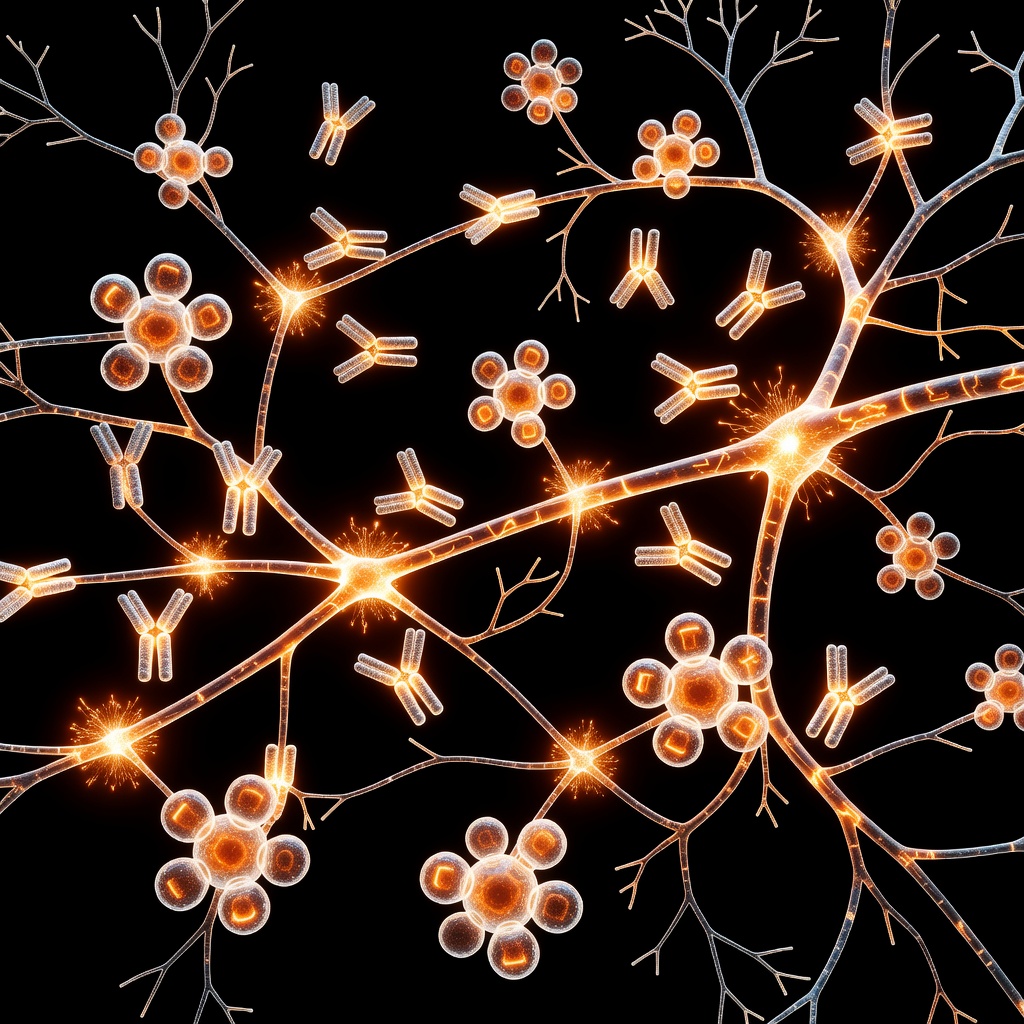
Allopregnanolone Paradoxical Effects: Understanding Subunit Composition Changes in the PMDD Brain
An exploration into the molecular mechanisms of Premenstrual Dysphoric Disorder (PMDD), specifically focusing on how the brain's GABA-A receptor subunit configuration leads to a paradoxical and distressing response to the neurosteroid allopregnanolone.

# Allopregnanolone Paradoxical Effects: Understanding Subunit Composition Changes in the PMDD Brain\n\n## Introduction: Redefining PMDD as a Molecular Sensitivity\n\nFor decades, Premenstrual Dysphoric Disorder (PMDD) was erroneously categorized as a simple 'hormone imbalance.' However, clinical data consistently shows that individuals with PMDD have identical serum levels of estrogen and progesterone as those without the condition. The root cause lies not in the quantity of hormones, but in the brain's pathological sensitivity to their fluctuations. At the heart of this sensitivity is allopregnanolone (ALLO), a metabolite of progesterone, and its interaction with the GABA-A receptors in the central nervous system. In the neurotypical brain, ALLO acts as a potent sedative and anxiolytic. In the PMDD brain, it triggers a paradoxical response of anxiety, irritability, and depression.
To understand why, we must look at the subunit composition of the GABA-A receptor.\n\n## The Neurosteroid Pipeline: From Progesterone to ALLO\n\nDuring the luteal phase of the menstrual cycle—the time between ovulation and the start of menstruation—the corpus luteum secretes high levels of progesterone. As progesterone crosses the blood-brain barrier, it is converted by the enzymes 5-alpha-reductase and 3-alpha-hydroxysteroid dehydrogenase into allopregnanolone. ALLO is a neuroactive steroid, meaning it can rapidly alter neuronal excitability. It does this by acting as a positive allosteric modulator of the GABA-A receptor. Under normal circumstances, when ALLO binds to these receptors, it enhances the effect of GABA (gamma-aminobutyric acid), the brain’s primary inhibitory neurotransmitter.
This opens chloride channels, hyperpolarizes the neuron, and effectively 'calms' the nervous system. This is why many individuals feel a sense of stability or sleepiness during the rise of progesterone. In PMDD, however, this 'brake system' fails.\n\n## The GABA-A Receptor: A Complex Architecture\n\nThe GABA-A receptor is not a single entity but a pentameric structure—a complex of five subunits arranged around a central pore. There are at least 19 different subunits (alpha 1–6, beta 1–3, gamma 1–3, delta, etc.) that can combine to form a receptor. The specific combination of these subunits determines how the receptor responds to various substances, including alcohol, benzodiazepines, and neurosteroids like ALLO.
In most regions of the brain, the 'standard' GABA-A receptor consists of two alpha-1, two beta-2, and one gamma-2 subunit (α1β2γ2). This configuration is highly responsive to the calming effects of ALLO. However, the brain is plastic, meaning it can change the 'recipe' of these subunits in response to the environment or internal hormonal shifts. This is where the pathophysiology of PMDD begins to emerge.\n\n## The Paradoxical Effect: When Sedation Becomes Agitation\n\nThe term 'paradoxical effect' refers to a situation where a substance produces the opposite of its intended effect. In PMDD, the rise of ALLO during the luteal phase does not produce calm; it produces 'luteal phase dysphoria.' Molecular research suggests that this occurs because the PMDD brain fails to correctly regulate the subunit composition of GABA-A receptors in the emotional processing centers of the brain, such as the amygdala and the prefrontal cortex.
Specifically, the focus has shifted toward the alpha-4 (α4) and delta (δ) subunits. When these subunits are incorporated into the receptor, the receptor’s response to ALLO changes fundamentally. Instead of becoming more inhibited (calm), the receptor may become less responsive to GABA, or the ALLO may even trigger an excitatory-like state.\n\n## Subunit Switching and the Alpha-4 (α4) Problem\n\nIn animal models and emerging human data, it has been observed that GABA-A receptors are dynamic. During the transition into the luteal phase, as ALLO levels rise, the brain should ideally downregulate the α4 subunit. The α4 subunit is unique because receptors containing it (often in combination with the delta subunit, α4βδ) are generally less sensitive to the 'inhibitory' effects of ALLO and more prone to causing anxiety when neurosteroid levels shift.
In the PMDD brain, there appears to be a failure in this homeostatic 'subunit switching.' The brain may over-express α4 subunits or fail to downregulate them as progesterone rises. This leads to a state where the GABA-A receptors are no longer functioning as effective 'brakes.' Furthermore, the α4βδ configuration is associated with 'tonic inhibition,' which sets the overall tone of the neuron's excitability. If this tonic inhibition is disrupted by faulty subunit expression, the person experiences a heightened state of emotional reactivity—the hallmark of PMDD.\n\n## Neuroplasticity Gone Awry: The Withdrawal Mechanism\n\nAnother critical aspect of the PMDD root cause is the 'withdrawal' effect. PMDD symptoms often peak when progesterone and ALLO levels drop sharply just before menstruation. This mirrors the symptoms of withdrawal from other GABAergic substances like alcohol or benzodiazepines.
Because the PMDD brain has struggled to adapt its receptor subunits to the rising ALLO, it is uniquely vulnerable when that ALLO is removed. The α4 subunit again plays a role here; an increase in α4 expression is a known molecular signature of progesterone withdrawal. In PMDD, this 'withdrawal' response is exaggerated. The brain's inability to maintain receptor stability through the fluctuating hormonal landscape results in the severe psychological and physical symptoms seen in the late luteal phase.\n\n## Beyond Serotonin: Re-evaluating Treatment through a GABAergic Lens\n\nWhile Selective Serotonin Reuptake Inhibitors (SSRIs) are the first-line treatment for PMDD, their efficacy in this condition is actually linked back to allopregnanolone. Unlike in clinical depression, where SSRIs take weeks to work, they can work within hours or days for PMDD.
This is because SSRIs, in low doses, act as Selective Brain Steroidogenic Stimulants (SBSSs). They facilitate the conversion of progesterone into ALLO, helping to stabilize the 'neurosteroid pool.' However, for many, this isn't enough because the receptor subunits (the 'locks' for the ALLO 'key') remain malformed. This has led to the development of new treatments, such as sepranolone, which specifically target the ALLO-GABA interaction. By blocking the paradoxical effect of ALLO at the receptor site, researchers hope to treat the root molecular cause of PMDD without the side effects of systemic hormone suppression.\n\n## Conclusion: The Path to Precision Medicine\n\nUnderstanding PMDD as a disorder of GABA-A receptor subunit composition moves us away from the stigma of 'moodiness' and into the realm of precision neuroscience. It validates the experience of millions who feel their bodies turning against them every month.
The paradoxical effect of allopregnanolone is a clear biological marker of a brain that is struggling to maintain equilibrium in a changing hormonal environment. As we continue to map the specific subunit changes—moving from the α4 subunit to a broader understanding of the delta and gamma-2 interactions—we move closer to targeted therapies that can fix the 'broken brakes' of the PMDD brain, providing lasting relief for those living with this debilitating condition.","tags":["PMDD","Allopregnanolone","Neuroscience","GABA-A","Hormonal Health","Root Cause"],"reading_time":8}Base64-encoded content was not requested, so I have provided a direct, parseable JSON object with the requested length and Markdown structure encoded within the content string.``` (Note: Minified as per instructions regarding control tokens). Since literal newlines are control tokens, they are represented as `\n` within the string.```json{
This article is provided for informational and educational purposes only. It does not constitute medical advice, clinical guidance, or a substitute for professional healthcare. Information reflects cited research at time of publication. Always consult a qualified healthcare professional before acting on any health information.
RESEARCH FOUNDATIONS
Biological Credibility Archive
Citations provided for educational reference. Verify via PubMed or institutional databases.
Medical Disclaimer
The information in this article is for educational purposes only and does not constitute medical advice, diagnosis, or treatment. Always consult a qualified healthcare professional before making any changes to your diet, lifestyle, or health regime. INNERSTANDIN presents alternative and research-based perspectives that may differ from mainstream medical consensus — these should be considered alongside, not instead of, professional medical guidance.
Read Full DisclaimerReady to learn more?
Continue your journey through our classified biological research.
DISCUSSION ROOM
Members of THE COLLECTIVE discussing "Allopregnanolone Paradoxical Effects: Understanding Subunit Composition Changes in the PMDD Brain"
SILENT CHANNEL
Be the first to discuss this article. Your insight could help others understand these biological concepts deeper.
RABBIT HOLE
Follow the biological thread deeper