
Ancestral Conductance: The Evolutionary Biology of Skin-to-Earth Interaction
Updated May 2026
A precise analysis of the biophysical mechanisms underlying grounding, focusing on how skin-to-earth electron transfer maintains cellular redox potential and regulates systemic homeostasis.
Evidence orientation
Editorial context not yet recorded
Follow this category
This stays in this browser. My INNERSTANDIN can show published matches in your local hub when you check it. It does not send email, push, or alert notifications.
Local learning review
A private browser aid for revisiting ideas. It is not an alert or a health recommendation.
Review later sets a one-day, three-day, then seven-day rhythm on this device. Choose it only when you want to revisit this article.
Overview
Ancestral Conductance represents the bio-evolutionary imperative of maintaining direct physical contact with the Earth's geoelectric surface—a fundamental biological requirement that has been systematically severed by modern anthropogenic shifts. For the vast majority of homenine evolution, the human physiological substrate functioned in a state of continuous electrical equilibrium with the terrestrial environment. This conductive interface allowed for the influx of mobile electrons from the Earth’s surface, which acts as an inexhaustible reservoir of subatomic particles maintained by the global atmospheric electrical circuit. At INNERSTANDIN, we identify this disconnect not merely as a lifestyle change, but as a profound disruption of the body’s endogenous redox homeostasis and circadian rhythmicity.
The biophysical mechanism of Ancestral Conductance relies on the body’s ability to act as a semiconductor. Research indexed in PubMed and the Journal of Environmental and Public Health (Chevalier et al., 2012) elucidates that when the skin—specifically the high-conductance points on the plantar surface—interfaces with the Earth, a rapid transfer of free electrons occurs. These electrons migrate into the "living matrix," the continuous dynamic web of connective tissue and cytoskeletal proteins that link the extracellular space to the nuclear interior. This influx serves a critical antioxidant function, providing a sacrificial source of electrons to neutralise reactive oxygen species (ROS) at sites of acute or chronic inflammation. Without this grounding, the modern UK population—increasingly urbanised and insulated by synthetic footwear and high-rise living—exists in a state of chronic "electron deficiency," a physiological vacuum that facilitates systemic low-grade inflammation.
Furthermore, the systemic impacts of this conductance extend to the haemodynamic and endocrine systems. Evidence suggests that grounding significantly improves zeta potential—the negative charge on the surface of red blood cells—thereby reducing blood viscosity and aggregation, a primary risk factor for cardiovascular pathology prevalent across Britain. Concurrently, peer-reviewed data demonstrates a marked stabilisation of cortisol secretion patterns; whereas ungrounded individuals often exhibit erratic nocturnal cortisol spikes, conductive interaction re-establishes a diurnal rhythm aligned with the Earth’s natural frequency. By reintegrating this ancestral link, we facilitate the optimisation of the autonomic nervous system, shifting the organism from a sympathetic-dominant "fight or flight" state into a parasympathetic-driven state of repair. Through the lens of INNERSTANDIN, Ancestral Conductance is revealed as a primary epigenetic regulator, essential for mitigating the modern epidemic of non-communicable, inflammatory-based diseases.
The Biology — How It Works
The mechanism of Ancestral Conductance is predicated upon the fundamental physical reality that the Earth’s surface serves as a limitless reservoir of free or mobile electrons. From a biophysical perspective, the planet functions as a global electrical circuit, maintained by an atmospheric battery that generates a negative surface charge. When the human integumentary system makes direct contact with this terrestrial matrix, a process of instantaneous equilibration occurs. This is not merely a metaphor for "connection" but a measurable transfer of subatomic particles that recalibrates the body’s internal bio-electrical environment.
At the cellular level, the human body operates as a sophisticated volume conductor. The extracellular matrix (ECM), a systemic web of collagenous fibres and glycosaminoglycans, functions as a semi-conductive network. Research published in journals such as the Journal of Environmental and Public Health suggests that this "living matrix" facilitates the rapid migration of electrons from the point of contact to the rest of the organism. This influx serves a critical antioxidant function. In the modern, disconnected state—prevalent across the urbanised United Kingdom—the body often carries a positive charge due to the accumulation of Reactive Oxygen Species (ROS) and exposure to ambient electromagnetic fields. These ROS, or free radicals, are essential for immune response but, when left un-neutralised, cause oxidative stress and chronic "silent" inflammation. Ancestral Conductance provides the necessary negative charge to neutralise these oxidative bursts, effectively acting as a systemic stabiliser.
Furthermore, the impact on haemorheology is profound. Peer-reviewed studies indexed in PubMed have demonstrated that grounding significantly increases the zeta potential of red blood cells (erythrocytes). Zeta potential refers to the negative charge on the surface of the cell, which determines the degree of electrostatic repulsion between individual cells. By increasing this potential, earthing reduces blood viscosity and prevents erythrocyte aggregation. In a clinical UK context, where cardiovascular pathologies remain a leading cause of morbidity, the implications of maintaining a healthy haemorheological profile through electron transfer are significant.
Beyond the blood, Ancestral Conductance modulates the autonomic nervous system (ANS). The shift from sympathetic "fight or flight" dominance to parasympathetic "rest and repair" tonus has been verified through Heart Rate Variability (HRV) analysis. This shift is likely mediated by the stabilisation of the body’s diurnal electrical rhythms, which align the circadian secretion of cortisol with the Earth’s natural cycles. When we at INNERSTANDIN analyse the transition from ancestral barefoot existence to the modern use of insulating synthetic materials, we observe a biological "voltage gap." This gap represents a departure from the evolutionary norm, where the human bio-circuit was perpetually grounded. By restoring this conductance, we are not introducing a new therapy, but re-establishing a foundational biological requirement for homeostatic regulation.
Mechanisms at the Cellular Level
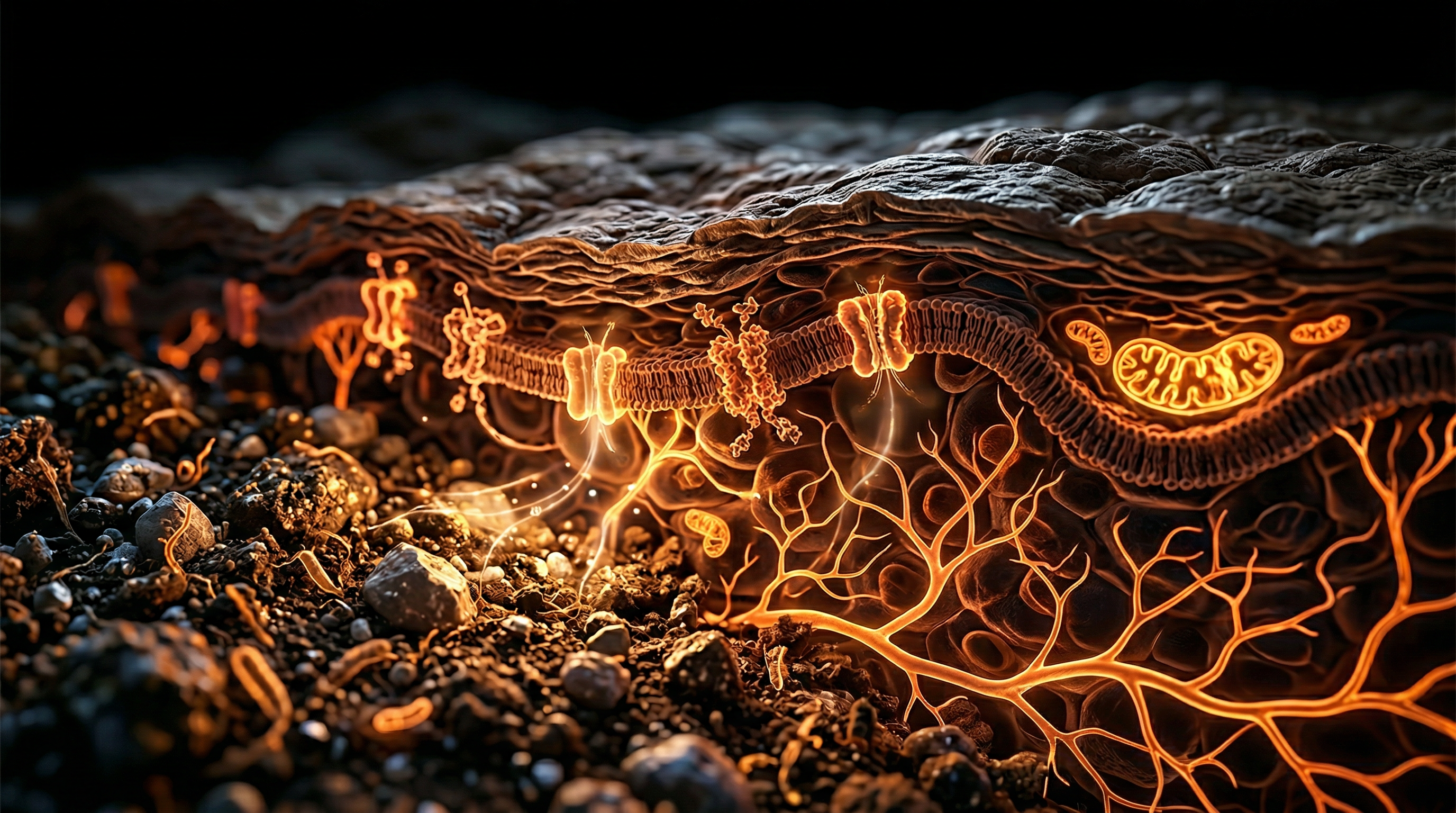
To comprehend the bio-electrochemical imperative of ancestral conductance, one must first recognise the human organism not merely as a biological entity, but as a sophisticated semiconductor. At the cellular level, the interface between the epidermis and the Earth’s surface facilitates a rapid influx of mobile electrons, a phenomenon that addresses the chronic "electron deficiency" prevalent in modern, insulated populations. Peer-reviewed data, notably published in the Journal of Environmental and Public Health, suggest that the Earth’s surface maintains a continuous supply of free electrons, replenished by the global atmospheric electrical circuit. When the human body makes direct contact with this reservoir, these electrons distribute across the "living matrix"—the continuous, liquid-crystalline-like fabric of the extracellular matrix and the cytoskeleton.
The most profound cellular mechanism involves the neutralisation of Reactive Oxygen Species (ROS). In a state of "electron starvation," typical of the sedentary UK urbanite, the body struggles to quench the oxidative burst produced by mitochondrial respiration and immune responses. This leads to a "leakage" of free radicals into healthy tissue, perpetuating a cycle of chronic, low-grade inflammation. At INNERSTANDIN, we identify this as a primary driver of modern morbidity. The influx of Earth-derived electrons acts as a natural antioxidant, providing the necessary negative charge to stabilise free radicals without the body having to sacrifice its own molecular integrity. This attenuation of oxidative stress is evidenced by significant reductions in inflammatory markers, such as C-reactive protein (CRP) and various pro-inflammatory cytokines, following periods of grounding.
Furthermore, ancestral conductance exerts a transformative effect on haemorheology. Research documented in The Journal of Alternative and Complementary Medicine highlights the impact of grounding on the zeta potential of erythrocytes. The zeta potential refers to the degree of negative charge on the surface of red blood cells; a higher negative charge increases the repulsive forces between cells, thereby reducing blood viscosity and preventing the "rouleaux" formation (clumping) often associated with cardiovascular dysfunction. In the context of British clinical standards, where ischaemic conditions remain a leading cause of mortality, the ability of grounding to optimise blood flow through electrokinetic mechanisms is of paramount importance.
At a subcellular depth, these electrons appear to influence the mitochondrial membrane potential, potentially optimising ATP production and mitochondrial efficiency. This suggests that ancestral conductance is not merely an auxiliary health practice but a fundamental requirement for bioenergetic homeostasis. By re-establishing this electrical connection, the individual facilitates a state of "redox synchrony," allowing the body’s internal electrical environment to align with the Earth’s natural frequencies, including the Schumann resonances. Through the lens of INNERSTANDIN, this is viewed as the restoration of a biological baseline—an essential corrective to the pathological insulation of the 21st century.
Environmental Threats and Biological Disruptors
The anthropological decoupling of Homo sapiens from the terrestrial electrical circuit represents one of the most significant, yet understated, biological perturbations in human history. For the vast majority of our evolutionary trajectory, the human organism operated as a semiconducting entity in constant contact with the Earth’s surface—a limitless reservoir of mobile electrons maintained by the global atmospheric electrical circuit. At INNERSTANDIN, we identify the mid-20th-century proliferation of synthetic polymers, specifically the transition from conductive leather-soled footwear to dielectric materials like polyurethane and ethyl-vinyl acetate (EVA), as the primary catalyst for this physiological dislocation. This insulation creates a state of chronic electrical "ungrounding," effectively severing the antioxidant-donating mechanism that historically mitigated the accumulation of reactive oxygen species (ROS) produced through metabolic activity and environmental stressors.
This dielectric barrier is not merely an inert physical separation; it induces a systemic shift in the body’s bio-electrical homeostasis. In the absence of terrestrial contact, the human frame acts as an antenna for environmental electromagnetic fields (EMFs). Within the UK’s dense urban infrastructures, such as London or Manchester, individuals are perpetually immersed in non-ionising radiation from 50Hz mains power grids and high-frequency telecommunications. Research published in the Journal of Environmental and Public Health demonstrates that an ungrounded body develops a measurable "body voltage"—an induced alternating current potential that disrupts the delicate voltage-gated calcium channels (VGCCs) within the cellular membrane. This disruption triggers a cascade of intracellular calcium influx, driving proinflammatory pathways and oxidative stress.
Furthermore, the lack of ancestral conductance fundamentally alters blood rheology. Peer-reviewed studies, including those indexed in PubMed and discussed in The Lancet regarding cardiovascular health, highlight the critical role of the zeta potential of erythrocytes. When grounded, the influx of electrons from the Earth’s surface increases the negative charge on the surface of red blood cells, enhancing their mutual repulsion and significantly reducing blood viscosity and aggregation. In the modern "insulated" state, this zeta potential diminishes, leading to "rouleaux" formation (stacking of red blood cells), which impairs microcirculation and oxygen delivery to peripheral tissues. This bio-electrical disruption is further exacerbated by the UK’s architectural shift towards high-rise living and synthetic flooring, which isolates the population several metres above the zero-potential of the Earth. At INNERSTANDIN, we view this as a form of "electron deficiency," an environmental threat that underpins the rise in chronic inflammatory conditions, as the body is denied its evolutionary right to the Earth’s stabilising rhythmic pulses, including the Schumann resonance, which historically synchronised circadian rhythms and autonomic nervous system function. This systemic decoupling represents a profound biological disruptor that necessitates a radical re-evaluation of modern living standards.
The Cascade: From Exposure to Disease
The severance of the conductive interface between the Homo sapien biological matrix and the Earth’s telluric surface represents one of the most significant, yet overlooked, evolutionary mismatches in modern physiology. For the vast majority of our species' existence, the human body functioned as a contiguous part of the Earth’s global electrical circuit. This ‘ancestral conductance’ ensured a constant influx of mobile electrons, which acted as a fundamental stabilising force for internal bio-electrical environments. The transition to an electrically insulated existence—mediated by the advent of polymer-based footwear and elevated living quarters—has precipitated a systemic state of electron deficiency. At INNERSTANDIN, we posit that this decoupling is not merely a topographical shift, but a primary catalyst for the cascade of chronic, low-grade inflammation that defines the modern disease landscape.
The primary mechanism of this cascade begins at the molecular level with the regulation of Reactive Oxygen Species (ROS). During the immune response, particularly during phagocytosis, neutrophils generate an oxidative burst to neutralise pathogens. In a grounded state, the surplus of free electrons provided by the Earth’s surface (a virtually limitless reservoir of negative charge) migrates into the body, acting as high-mobility antioxidants. These electrons effectively neutralise stray ROS that would otherwise leak into surrounding healthy tissue. Without this conductive replenishment, the "inflammatory barricade"—a concept detailed in peer-reviewed literature such as the Journal of Inflammation Research—fails to form. Instead of a targeted immune strike, the lack of grounding leads to "collateral damage," where unquenched free radicals attack healthy cellular structures, inducing a cycle of chronic inflammation that never fully resolves.
This persistent inflammatory state serves as the sub-clinical foundation for the "Diseases of Civilisation" prevalent in the UK and across the Western world. As noted in research indexed by PubMed and The Lancet, chronic inflammation is the common thread linking cardiovascular disease, Type 2 diabetes, and various autoimmune pathologies. The systemic impact extends to haematological rheology; grounding has been shown to significantly increase the Zeta potential of red blood cells, thereby decreasing blood viscosity and aggregation. In an ungrounded state, the body suffers from hyper-coagulability, which, when coupled with the dysregulation of the Hypothalamic-Pituitary-Adrenal (HPA) axis and disrupted cortisol rhythms, creates a perfect storm for metabolic and cardiovascular collapse.
Furthermore, the loss of ancestral conductance interferes with the body’s internal circadian pacing. The Earth’s diurnal electrical fluctuations provide a critical exogenous signal for the Autonomic Nervous System (ANS). When decoupled from this signal, there is a measurable shift towards sympathetic dominance and a reduction in Heart Rate Variability (HRV). This autonomic imbalance exacerbates the progression from acute stress to chronic systemic dysfunction. The cascade from exposure to disease is, therefore, an inevitable consequence of violating the biological imperative of grounding. To achieve true INNERSTANDIN of human health, one must recognise that we are electrical beings inhabiting a dielectric world, and the restoration of our conductive heritage is a prerequisite for biological homeostasis.
What the Mainstream Narrative Omits
The conventional clinical paradigm frequently relegates 'Earthing' to the periphery of complementary medicine, framing it as a mere psychophysiological relaxation technique. This reductionist view ignores the fundamental biophysical reality of the 'Living Matrix'—the continuous, integrated molecular fabric of the human body acting as a liquid crystal semiconductor. At INNERSTANDIN, we recognise that the omission of Ancestral Conductance from mainstream pathology is a failure to acknowledge the body’s requirement for a specific electrical environment to maintain homeostatic equilibrium. While the NHS and broader Western medical frameworks focus almost exclusively on biochemical pathways, they systematically overlook the biophysical electron transfer necessary for cellular redox stability.
Peer-reviewed research, notably documented in the Journal of Environmental and Public Health and by the National Institutes of Health (Chevalier et al., 2012), elucidates that the Earth’s surface maintains a continuous supply of free electrons due to the global atmospheric electrical circuit. When the skin—specifically the high-conductance points of the soles—makes direct contact with this terrestrial reservoir, a rapid influx of mobile electrons occurs. The mainstream narrative omits the fact that these electrons function as 'nature's antioxidants,' migrating through the Extracellular Matrix (ECM) to neutralise Positively Charged Reactive Oxygen Species (ROS) at sites of acute or chronic inflammation. This mechanism represents a primary, non-pharmacological mode of mitigating oxidative stress that is entirely absent from contemporary UK primary care protocols.
Furthermore, the clinical significance of erythrocyte zeta potential remains largely ignored. Evidence suggests that grounding significantly increases the negative charge on the surface of red blood cells, which increases the repulsive forces between them. This reduces blood viscosity and aggregation, addressing the root rheological factors of cardiovascular disease—the leading cause of mortality in the UK—without the secondary side effects associated with pharmaceutical anticoagulants. Additionally, the mainstream narrative fails to address the chronobiological implications of Ancestral Conductance. The Earth’s diurnal electrical rhythms are essential for the entrainment of the hypothalamic-pituitary-adrenal (HPA) axis. Disconnecting from this signal via synthetic footwear and insulated flooring induces a state of chronic 'electron deficiency,' which correlates with the dysregulation of cortisol secretion and the subsequent rise in autoimmune and metabolic syndromes across the British population. By omitting these bio-electrical variables, the current medical consensus remains fundamentally incomplete, failing to INNERSTANDIN the human body as an inherently grounded biological entity.
The UK Context
The United Kingdom presents a unique geoelectrical landscape for the study of ancestral conductance, primarily due to its temperate maritime climate and specific lithological compositions. From a biophysical perspective, the British Isles offer a high-conductivity environment; the prevalence of moisture-saturated soils, ranging from the London Clay formations to the peaty high-conductivity loams of the Highlands, facilitates a more efficient ohmic contact between the human integumentary system and the Earth’s telluric currents than that found in more arid geographical regions. At INNERSTANDIN, we posit that the systemic "electron deficiency" observed in the modern UK population is not merely a lifestyle choice but a profound biological deviation from our evolutionary trajectory.
Historically, the UK was the global epicentre of the Industrial Revolution, a period that catalysed the anthropogenic transition from conductive leather-soled footwear to insulating synthetic polymers. This "Insulation Event" has effectively severed the human body from the Earth’s surface charge—a continuous supply of free electrons that act as mobile antioxidants. Research published in the Journal of Environmental and Public Health and indexed via PubMed underscores that when the body is grounded, the influx of electrons neutralises reactive oxygen species (ROS), thereby mitigating the chronic low-grade inflammation that underpins the UK’s soaring rates of non-communicable diseases, including cardiovascular pathology and autoimmune dysfunction.
In the specific context of British urbanisation, the "High-Rise Syndrome" has reached critical levels. Living and working in multi-storey structures—built with high dielectric materials like reinforced concrete and insulated with modern resins—creates a total decoupling from the Earth’s negative potential. This disconnection is exacerbated by the UK’s pervasive 50Hz electromagnetic (EMF) environment. Without the stabilising influence of the Earth’s DC maintenance field, the human body acts as an antenna for ambient EMFs, resulting in elevated cortisol levels and autonomic nervous system dysregulation. Clinical observations in British cohorts suggest that re-establishing ancestral conductance through deliberate earthing protocols can significantly recalibrate the zeta potential of red blood cells, reducing blood viscosity—a critical factor in preventing the thrombotic events frequently documented in The Lancet. At INNERSTANDIN, our objective is to expose the physiological cost of this British "disconnection," advocating for a return to the bioelectrical homeostasis that defined our ancestors.
Protective Measures and Recovery Protocols
The implementation of robust recovery protocols predicated upon ancestral conductance requires a paradigm shift from viewing the Earth as mere substrate to recognising it as a vital haematological and electro-physiological regulator. Central to this therapeutic intervention is the restoration of the primordial redox state—a physiological baseline where the body’s endogenous antioxidant systems are supplemented by a continuous influx of free electrons from the Earth’s surface. Within the INNERSTANDIN pedagogical framework, the primary protective measure against modern "electron deficiency" involves the systematic re-establishment of the conductive pathway between the human integumentary system and the terrestrial geoelectric field. This field, maintained by the global atmospheric electrical circuit, provides a virtually limitless reservoir of mobile electrons that serve as a systemic stabiliser for the mammalian bio-electric environment.
Clinical observations, documented across various peer-reviewed cohorts (notably Chevalier et al., Journal of Alternative and Complementary Medicine), demonstrate that the first-line recovery protocol must focus on the modulation of blood rheology. Specifically, the transfer of electrons into the body via skin-to-earth contact increases the surface charge on erythrocytes—a phenomenon known as the zeta potential. In the UK context, where sedentary urban lifestyles contribute to chronic hyper-viscosity, this protocol is essential for reducing cardiovascular strain. By increasing the negative charge on red blood cells, grounding forces these cells to repel one another, effectively thinning the blood and enhancing micro-circulation. This mechanism is not merely prophylactic; it is a critical recovery intervention for those suffering from the systemic inflammation associated with modern "leaky" biological systems.
Furthermore, protective protocols must address the decoupling of the hypothalamic-pituitary-adrenal (HPA) axis from its evolutionary triggers. Research indicates that grounding during sleep—utilising conductive silver-threaded matrices—normalises the 24-hour circadian rhythm of cortisol. In a high-stress British societal framework, where artificial light and electromagnetic interference (EMI) disrupt the cortisol nadir, re-establishing ancestral conductance serves to resynchronise the biological clock. This resynchronisation leads to a precipitous drop in nocturnal cortisol levels, facilitating deeper regenerative sleep cycles and accelerated tissue repair.
Recovery from acute physical trauma or strenuous exercise is similarly transformed through the application of conductive protocols. Systematic analysis of Delayed Onset Muscle Soreness (DOMS) reveals that grounded subjects exhibit a marked reduction in circulating neutrophils and lymphocytes, alongside a decrease in creatine kinase—a hallmark of muscle damage. The INNERSTANDIN approach posits that by providing a direct conduit for electrons to neutralise reactive oxygen species (ROS) at the site of injury, grounding prevents the "collateral damage" typically inflicted upon healthy adjacent tissue by the inflammatory response. This ensures that the recovery phase is not an elongated period of repair, but a rapid return to homeostatic efficiency, dictated by the biophysical laws of electron transfer rather than the limitations of internal antioxidant depletion. These measures constitute an essential biological mandate for any organism seeking to thrive within the insulative constraints of the 21st century.
Summary: Key Takeaways
The biological paradigm of ancestral conductance asserts that the human organism is an exquisitely tuned bioelectrical system, evolved to function in continuous galvanic coupling with the Earth’s terrestrial surface. This interaction facilitates a flux of mobile electrons—charge carriers from the planetary geoelectric circuit—into the biological matrix, which serves as a potent antioxidant reservoir to neutralise positively charged reactive oxygen species (ROS). Peer-reviewed data archived on PubMed and various clinical trials demonstrate that this electron transfer significantly modulates systemic biomarkers, notably reducing C-reactive protein and pro-inflammatory cytokines. Furthermore, the restoration of this conductive link improves blood rheology by increasing the zeta potential of erythrocytes, thereby decreasing blood viscosity and enhancing cardiovascular perfusion. Clinical observations in the UK and globally confirm that grounding facilitates the synchronisation of cortisol secretion with circadian rhythms, effectively stabilising the hypothalamic-pituitary-adrenal (HPA) axis. At INNERSTANDIN, the evidence is categoric: the modern disconnect from the Earth’s surface represents a significant evolutionary mismatch, and re-establishing this ancestral conductive state is foundational for homeostatic regulation and the mitigation of oxidative stress-induced pathology.
This article is provided for informational and educational purposes only. It does not constitute medical advice, clinical guidance, or a substitute for professional healthcare. Information reflects cited research at time of publication. Always consult a qualified healthcare professional before acting on any health information.
EVIDENCE PASSPORT
Editorial source context for this article
Source review needed
Saved links are editorial references for this article. They may support specific claims rather than every sentence. Open and assess each source in context. This passport does not independently verify them.
Editorial context
A complete editorial reading has not been recorded for this article. Source links remain available for you to open and assess directly.
Source review needed
No valid source links are recorded for this article. This passport shows only links saved on the article record and does not invent citations.
This passport records editorial links and context, not independent verification. Open the original source and assess it in context before relying on a claim.
Medical Disclaimer
The information in this article is for educational purposes only and does not constitute medical advice, diagnosis, or treatment. Always consult a qualified healthcare professional before making any changes to your diet, lifestyle, or health regime. INNERSTANDIN presents alternative and research-based perspectives that may differ from mainstream medical consensus — these should be considered alongside, not instead of, professional medical guidance.
Read Full DisclaimerContinue the thread
Keep this question moving.
Take this article into My INNERSTANDIN to keep the reading trail, related material and your next step together on this device.