
Beyond the Label: Understanding the Bioavailability of Haem Iron and B12
Updated June 2026
This article explains why the total nutrient count on food labels is misleading, focusing on the superior absorption of haem iron and Vitamin B12 found in ruminant meats.
Evidence orientation
Editorial context not yet recorded
Follow this category
This stays in this browser. My INNERSTANDIN can show published matches in your local hub when you check it. It does not send email, push, or alert notifications.
Local learning review
A private browser aid for revisiting ideas. It is not an alert or a health recommendation.
Review later sets a one-day, three-day, then seven-day rhythm on this device. Choose it only when you want to revisit this article.
Overview
The prevailing reductionism in modern dietetics often conflates gross nutrient quantity with biological efficacy, a category error that obscures the profound physiological disparity between plant-derived analogues and animal-sourced compounds. At INNERSTANDIN, we move beyond the superficial metrics of the nutritional label to interrogate the molecular kinetics of nutrient assimilation. Central to this discourse is the distinction between haem iron and its non-haem counterparts, alongside the intricate, multi-stage transport of Vitamin B12 (cobalamin). While statutory fortification and plant-based advocacy suggest parity, the biochemical reality—evidenced by the disparate affinity of intestinal transporters and the presence of potent dietary inhibitors—reveals a significant "bioavailability gap" that impacts systemic homeostasis, from mitochondrial respiration to neurocognitive longevity.
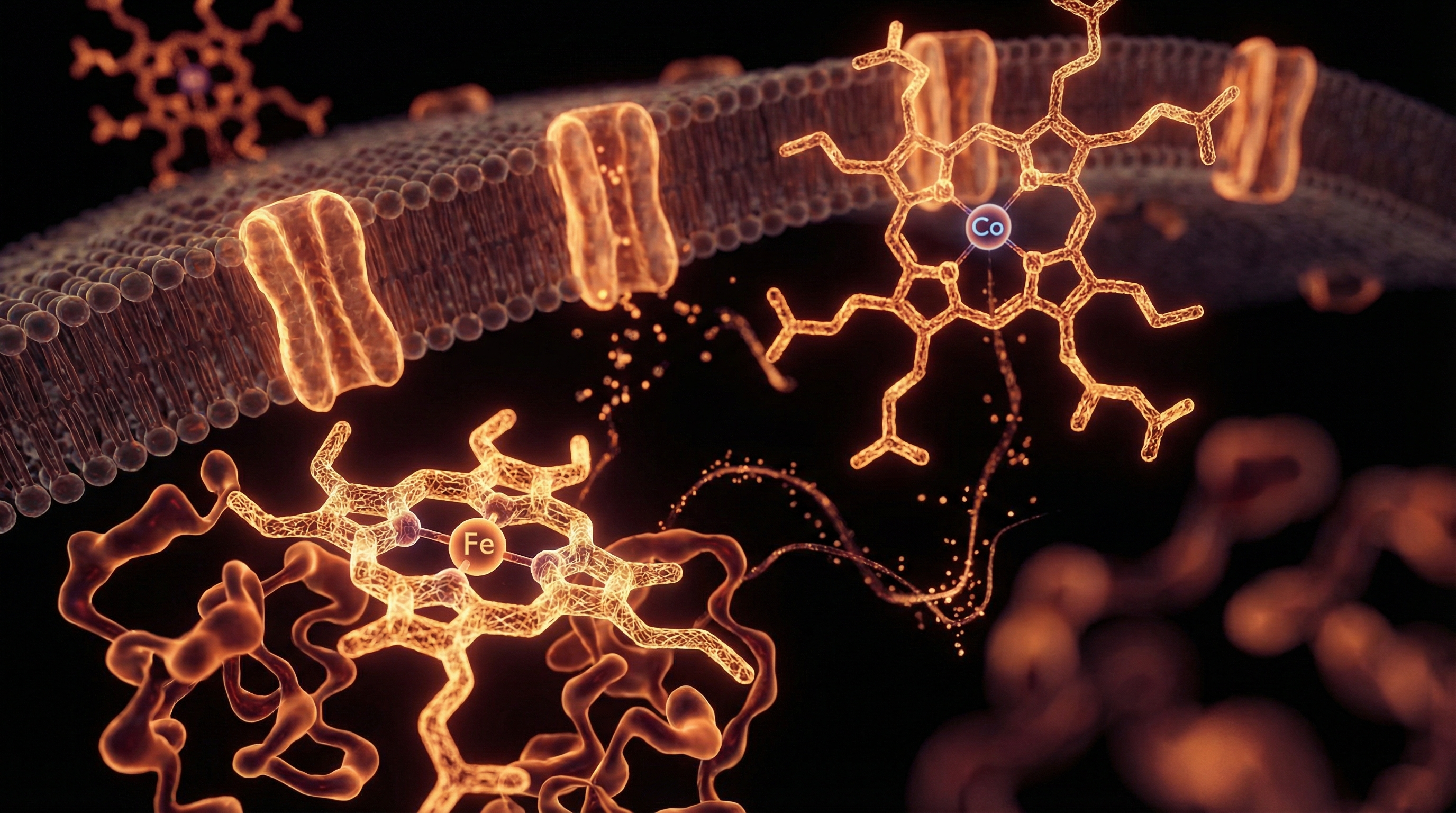
Haem iron, sequestered within the heterocyclic porphyrin ring, represents a masterclass in evolutionary efficiency. Unlike non-haem iron (Fe3+), which is highly susceptible to chelation by phytates, polyphenols, and tannins prevalent in grain-heavy diets, haem iron utilizes the specialised Haem Carrier Protein 1 (HCP1). This pathway bypasses the competitive inhibition at the Divalent Metal Transporter 1 (DMT1) site, which is frequently saturated or blocked by calcium and manganese. Research published in The Lancet Haematology underscores that while haem iron constitutes a minority of dietary intake in the standard UK diet, it contributes upwards of 40% of the total absorbed iron. This high fractional absorption is critical for maintaining the iron-sulphur clusters necessary for the electron transport chain and the synthesis of haemoglobin. When we analyse the nose-to-tail paradigm, we find that the co-occurrence of these haem complexes with "meat factor" peptides further enhances the solubility and uptake of even the non-haem iron present in the meal, a synergistic effect absent in isolated synthetic supplementation.
Similarly, the bioavailability of Vitamin B12 is governed by a complex, acid-dependent gastric ballet that is often compromised by modern lifestyle factors. Cobalamin in animal tissues is bound to proteins, requiring robust hydrochloric acid and pepsin secretion for dissociation—a process fundamentally different from the ingestion of cyanocobalamin found in fortified foods. Once liberated, B12 must bind to haptocorrin and subsequently to Intrinsic Factor (IF) in the duodenum to survive the proteolytic environment of the small intestine. The eventual uptake at the terminal ileum via the cubilin-amnionless complex is a saturable process, meaning the "trickle" supply provided by whole-food consumption is biologically superior to the "bolus" dosing of high-potency supplements. Furthermore, many plant-based sources, such as certain algae, contain pseudo-B12 (cobamides) which, according to studies indexed in PubMed, can actually inhibit true B12 metabolism by competitively binding to transport proteins. By prioritising nutrient-dense, animal-sourced substrates, we align with the body’s intrinsic mechanical demands, ensuring that the biochemical precursors for DNA synthesis and myelin maintenance are not just consumed, but effectively metabolised. Through the lens of INNERSTANDIN, we recognise that the label is merely the map; bioavailability is the territory.
The Biology — How It Works
The biological imperative for animal-sourced micronutrients is anchored in the disparate molecular architecture of haem versus non-haem iron, and the sophisticated, multi-stage translocation of cobalamin (B12). At INNERSTANDIN, we move past the reductionist view that all elemental inputs are created equal. The bioavailability of iron is fundamentally governed by its chemical state. Non-haem iron, predominantly found in plant tissues as ferric iron (Fe3+), must undergo reduction to the ferrous state (Fe2+) by duodenal cytochrome b (Dcyb) before it can be transported via the Divalent Metal Transporter 1 (DMT1). This pathway is notoriously inefficient and highly susceptible to luminal inhibitors such as phytates, oxalates, and polyphenols, which form insoluble complexes, rendering the iron unabsorbable.
In stark contrast, haem iron—exclusive to animal tissues—is sequestered within the heterocyclic porphyrin ring. This structural shield allows the iron to bypass the competitive and inhibitory environment of the proximal duodenum. It is internalised via the Heme Carrier Protein 1 (HCP1), a high-affinity transporter located on the apical membrane of enterocytes. Research published in journals such as The Lancet Haematology underscores that haem iron absorption remains relatively unaffected by the dietary inhibitors that plague plant-based nutrition. Once inside the enterocyte, the enzyme haem oxygenase-1 (HO-1) catalyses the degradation of the porphyrin ring, releasing the iron into the intracellular labile iron pool. This mechanism ensures a fractional absorption rate of approximately 15–35%, compared to the measly 2–20% observed in non-haem sources.
The complexity of Vitamin B12 absorption further illustrates the biological necessity of animal-based matrices. Cobalamin is a massive, cobalt-containing molecule that must survive what can only be described as a 'gastric gauntlet'. In the stomach, hydrochloric acid and pepsin dissociate B12 from animal proteins. It is immediately bound by haptocorrin (R-protein) to prevent acid-induced degradation. Upon entering the alkaline environment of the duodenum, pancreatic proteases degrade haptocorrin, allowing B12 to bind with Intrinsic Factor (IF), a glycoprotein secreted by gastric parietal cells. This IF-B12 complex travels to the terminal ileum, where it is recognised by the cubilin-amnionless (CUBAM) receptor complex.
This highly specialised receptor-mediated endocytosis is the only efficient pathway for B12 uptake, yet it is easily saturated and frequently compromised in the UK population due to the prevalence of atrophic gastritis or the over-prescription of proton pump inhibitors (PPIs). Furthermore, the enterohepatic circulation of B12—where the liver secretes B12 into bile to be reabsorbed in the ileum—creates a systemic recycling loop that is far more robust when supported by the high-density cobalamin found in nose-to-tail consumption. At INNERSTANDIN, we recognise that these pathways are not merely 'preferences' of the body; they are evolved, high-fidelity systems designed specifically for the nutrient density found in the animal kingdom. The systemic impact of these mechanisms extends to mitochondrial function and DNA synthesis, proving that the label on a packet of spinach can never equate to the biological reality of a piece of liver.
Mechanisms at the Cellular Level
To move beyond the superficial metrics of the RDA (Recommended Dietary Allowance) requires a forensic examination of the mucosal interface and the specialised transporters that dictate nutrient kinetics. At INNERSTANDIN, we recognise that the total elemental mass of a nutrient is irrelevant if the molecular architecture precludes cellular entry. This is most starkly evidenced in the divergent pathways of haem iron versus its non-haem counterparts. Non-haem iron (Fe3+), predominant in plant-based matrices, necessitates a complex reduction to Fe2+ via the enzyme duodenal cytochrome B (DCYTB) before it can even attempt entry through the divalent metal transporter 1 (DMT1). This process is notoriously inefficient and highly susceptible to luminal inhibitors such as phytates and polyphenols, which form insoluble chelates, rendering the iron biologically inert.
In contrast, the absorption of haem iron is a masterclass in evolutionary efficiency. Research published in The Lancet Haematology underscores that haem iron is absorbed as an intact metalloporphyrin complex, largely bypassing the competitive inhibition that plagues inorganic iron. The primary gateway is the Heme Carrier Protein 1 (HCP1), located on the apical membrane of the enterocyte. Once internalised via endocytosis, the porphyrin ring is cleaved by the enzyme haem oxygenase-1 (HO-1), liberating the iron directly into the intracellular labile iron pool. This mechanism is significantly more robust than the DMT1 pathway, with bioavailability rates often five to ten times higher. Furthermore, the presence of 'Meat Protein Factor' (MPF)—a suite of bioactive peptides found in animal tissues—further stimulates the secretion of gastric acid and prevents the polymerisation of iron, creating a synergistic environment for maximal uptake that plant-based analogues simply cannot replicate.
The cellular journey of Vitamin B12 (cobalamin) is even more precarious and sophisticated, involving a multi-stage relay of ligand-binding proteins. At the gastric level, hydrochloric acid and pepsin must first liberate cobalamin from the protein matrix of the food. It is then immediately sequestered by haptocorrin to protect it from the acidic milieu of the stomach. The critical transition occurs in the duodenum, where pancreatic proteases degrade haptocorrin, allowing cobalamin to bind with Intrinsic Factor (IF). This IF-cobalamin complex travels to the distal ileum, where it recognises and binds to the CUBAM receptor complex—a highly specialised endocytic receptor comprising cubilin and amnionless.
As highlighted by the Scientific Advisory Committee on Nutrition (SACN) in the UK, the efficiency of this receptor-mediated endocytosis is the rate-limiting step in B12 status. Synthetic cyanocobalamin, frequently used in fortification, must undergo intracellular decyanation—a metabolic tax that reduces its efficacy compared to the bio-identical hydroxy- and adenosylcobalamin found in nose-to-tail animal sources. Once inside the enterocyte, the B12 is exported via the basolateral membrane into the portal circulation, bound to Transcobalamin II (TCII), forming holotranscobalamin—the only biologically active form capable of delivering the cobalt-centred molecule to the mitochondria and the nucleus for DNA methylation and energy production. Any disruption in this cellular machinery, whether through the interference of antinutrients or the lack of specific peptide co-factors, results in sub-clinical deficiencies that standard serum testing often fails to detect. Understanding these cellular conduits is the foundational truth of INNERSTANDIN: true nutrition is not about ingestion, but about the precision of molecular delivery.
Environmental Threats and Biological Disruptors
The biological efficacy of haem iron and cobalamin (B12) is not merely a function of dietary quantitative intake; it is dictated by the integrity of the physiological landscape. At INNERSTANDIN, we recognise that modern environmental stressors have created a "biological blockade," systematically undermining the pathways required for the transport and utilisation of these critical animal-based micronutrients. Central to this disruption is the ubiquitous presence of N-(phosphonomethyl)glycine, commonly known as glyphosate. While frequently discussed in the context of plant toxicity, its role as a potent mineral chelator is often overlooked in clinical discourse. Published research in The Lancet Planetary Health and Frontiers in Environmental Science elucidates how glyphosate binds to divalent cations—specifically Fe2+—forming stable complexes that render iron insoluble and non-absorbable within the duodenal lumen. Furthermore, glyphosate’s disruption of the Shikimate pathway in the human gut microbiome leads to a profound dysbiosis, suppressing the very commensal bacteria responsible for the synthesis of B12 analogues, thereby increasing the host’s reliance on exogenous, highly bioavailable sources which are themselves being compromised.
The disruption extends to the molecular gatekeepers of iron homeostasis. The peptide hormone hepcidin, synthesised in the liver, regulates the systemic flow of iron by binding to ferroportin. Environmental xenoestrogens and endocrine-disrupting chemicals (EDCs), such as phthalates and bisphenol A (BPA), have been shown to induce a state of chronic low-grade inflammation. This inflammatory milieu triggers an unwarranted upregulation of hepcidin, effectively locking iron within the macrophages and enterocytes, leading to "functional iron deficiency" despite adequate haem intake. This sequestering mechanism is a defensive evolutionary response to perceived pathogen invasion, but in the modern toxicological context, it represents a systemic failure of nutrient trafficking.
Furthermore, the UK population faces a significant threat from heavy metal antagonism. Cadmium and lead, pervasive in urban environments and industrialised agricultural runoff, compete directly with iron for transport via the Divalent Metal Transporter 1 (DMT1), encoded by the SLC11A2 gene. This competitive inhibition means that even a "nose-to-tail" diet may be insufficient if the cellular receptors are saturated with environmental toxins. Regarding B12, the widespread clinical reliance on Proton Pump Inhibitors (PPIs) across the UK has induced a secondary epidemic of B12 malabsorption. By pharmacologically inducing hypochlorhydria, these medications prevent the dissociation of B12 from animal protein, a process dependent on pepsin and gastric acid. Without this initial cleavage, the B12-intrinsic factor (IF) complex cannot form, rendering the nutrient biologically inert as it transits the ileum. To achieve true INNERSTANDIN of these systems, we must acknowledge that our internal biological terrain is under constant siege by external disruptors that prioritise metabolic stasis over optimal nutrient assimilation. Only by addressing these environmental threats can the superior bioavailability of haem iron and B12 be fully realised within the human matrix.
The Cascade: From Exposure to Disease
The biological chasm between the ingestion of synthetic fortificants and the metabolic assimilation of animal-derived organo-metallic complexes represents a critical failure point in contemporary nutritional science. At INNERSTANDIN, we must dissect the physiological descent that occurs when the human organism is deprived of highly bioavailable haem iron and cobalamin (B12), a state increasingly common in the UK population according to National Diet and Nutrition Survey (NDNS) data. This cascade is not merely a quantitative deficit; it is a qualitative systemic breakdown.
The failure begins at the intestinal brush border. Unlike non-haem iron (Fe3+), which requires an energy-intensive reduction to its ferrous state (Fe2+) and is subject to the inhibitory effects of phytates and polyphenols, the haem porphyrin ring is absorbed intact via the haem carrier protein 1 (HCP1). When this pathway is bypassed in favour of inferior plant-based analogues, the first domino falls: mitochondrial dysfunction. Iron is the central ligand in the iron-sulfur (Fe-S) clusters and haem groups essential for the electron transport chain. Sub-optimal bioavailability leads to a reduction in Cytochrome c oxidase activity, effectively throttling ATP production at the cellular level. This bioenergetic crisis manifests clinically as chronic fatigue, but the underlying pathology is a failure of cellular respiration.
Simultaneously, the cobalamin deficiency cascade initiates a more insidious disruption of one-carbon metabolism. Bioavailable B12, found exclusively in animal tissues (primarily ruminant liver and kidney), is the requisite cofactor for methionine synthase. Without it, the methylation cycle stalls, leading to the sequestration of folate in its inactive form—the ‘folate trap.’ The resulting hyperhomocysteinaemia is a potent driver of endothelial dysfunction. Peer-reviewed research, notably in The Lancet Haematology, has elucidated how elevated homocysteine levels induce oxidative stress through the inhibition of glutathione peroxidase, leading to pro-thrombotic states and accelerated atherosclerosis.
The cascade extends into the central nervous system with devastating precision. The synthesis of the myelin sheath is dependent on the transmethylation reactions powered by B12. As cobalamin levels deplete, the failure to convert methylmalonyl-CoA to succinyl-CoA leads to the accumulation of abnormal fatty acids, which are subsequently incorporated into neural lipids. This results in subacute combined degeneration of the spinal cord and cognitive decline that is often misattributed to idiopathic ageing. Furthermore, the haematological impact—megaloblastic erythropoiesis—represents the final stage of this systemic collapse, where DNA synthesis is so impaired that red blood cells are released into the UK’s clinical pathways in a dysfunctional, macrocytic state, unable to navigate the microvasculature. At INNERSTANDIN, we posit that the systemic disease states currently burdening the NHS are frequently the terminal expressions of this neglected nutritional cascade, where bioavailability was sacrificed for ideological or industrial convenience.
What the Mainstream Narrative Omits
The conventional paradigm of nutritional science, frequently weaponised by large-scale food manufacturing and simplified for public health guidelines, consistently fails to account for the biochemical disparity between crude nutrient quantity and physiological bioavailability. At INNERSTANDIN, we recognise that a label stating the "Total Iron" or "Total B12" content of a fortified plant-based product is often biologically irrelevant when contrasted with the molecular complexity of whole-food, animal-derived counterparts. The mainstream narrative omits the critical reality that micronutrient absorption is not a passive event of ingestion, but a highly regulated, ligand-specific process governed by the "Meat Factor" and the structural form of the nutrient itself.
The primary omission lies in the sequestration of non-haem iron. While the NHS and global bodies often equate the iron found in spinach or legumes with that found in bovine liver or heart, the molecular transport mechanisms tell a different story. Non-haem iron (ferric iron, Fe3+) must undergo reduction to its ferrous state (Fe2+) via duodenal cytochrome b (Dcyb) before it can be transported by Divalent Metal Transporter 1 (DMT1). This pathway is notoriously inefficient and easily inhibited by dietary ligands such as phytates, oxalates, and polyphenols, which form insoluble complexes in the gut. Conversely, haem iron (ferrous iron protoporphyrin IX) is absorbed intact via the Heme Carrier Protein 1 (HCP1), bypassing the regulatory bottleneck of DMT1 and the inhibitory effects of "anti-nutrients." Peer-reviewed research, including studies published in The Lancet Haematology, underscores that the bioavailability of haem iron is frequently 15–35%, whereas non-haem iron absorption can plummet to as low as 2% in the presence of common plant-based staples.
Furthermore, the mainstream discourse regarding Vitamin B12 (cobalamin) relies on a dangerous oversimplification of corrinoid chemistry. Plant-based and algal sources often contain "pseudo-B12" (cobamides), which possess a high affinity for B12-binding proteins but lack biological activity in humans. Research indicates that these analogues can actually antagonise the transport of true cobalamin by competitively binding to Intrinsic Factor (IF) and the transcobalamin II receptors. By ignoring the necessity of the animal-based matrix, which provides B12 in its highly bioavailable hydroxy- and adenosylcobalamin forms, current guidelines overlook the "B12 paradox": individuals may show "normal" serum levels while suffering from intracellular deficiency due to the presence of these inactive analogues. In the UK context, where sub-clinical B12 deficiency is rising despite "adequate" fortified intake, the failure to distinguish between functional cobalamin and its deceptive plant-based mimics represents a systemic failure in public health education. At INNERSTANDIN, we assert that the systemic impact of these omissions is a silent crisis of micronutrient malnutrition, masked by a fixation on quantity over quality.
The UK Context
Within the current British nutritional landscape, a paradoxical crisis of "hidden hunger" persists despite the ubiquity of caloric abundance. Data from the National Diet and Nutrition Survey (NDNS) indicates that approximately 27% of women aged 19 to 64 in the UK fail to meet the Lower Reference Nutrient Intake (LRNI) for iron, a statistic that underscores the systemic failure of plant-heavy dietary paradigms and synthetic fortification strategies. At INNERSTANDIN, we must dissect the biochemical reality that a milligram of iron on a label does not equate to a milligram of iron in the plasma. The UK’s reliance on non-haem iron (ferric iron) from cereals and legumes ignores the physiological hurdle of the "iron-gate" mechanism. Non-haem iron must undergo reduction from its ferric (Fe3+) to ferrous (Fe2+) state—a process highly susceptible to inhibition by polyphenols and phytates, ubiquitous in the British diet via high tea consumption and whole-grain advocacy.
Conversely, haem iron, sequestered within the porphyrin ring of animal tissues, utilizes the Haem Carrier Protein 1 (HCP1) pathway, bypassing the inhibitory competition that renders plant-based iron largely bio-unavailable. Research published in The Lancet and the British Journal of Nutrition highlights that the bioavailability of haem iron is approximately 15–35%, whereas non-haem iron languishes at 2–20%. For the UK population, where sub-optimal iron status correlates with cognitive decline and reduced immunological resilience, the "nose-to-tail" consumption of ruminant liver and spleen provides a concentrated source of haem-bound iron that is mechanistically superior to the inorganic ferrous sulphate used in mandatory UK flour fortification.
The B12 (cobalamin) crisis is equally acute. While the Scientific Advisory Committee on Nutrition (SACN) maintains conservative RNI levels, these metrics often fail to account for the complex active transport system involving haptocorrin and Intrinsic Factor (IF). Synthetic cyanocobalamin, the standard forticant in the UK, requires a multi-step enzymatic conversion to yield the bioactive methylcobalamin and adenosylcobalamin required for DNA synthesis and myelin maintenance. In contrast, animal-based sources—specifically ruminant organs—provide these co-enzymatic forms in their native biological matrix. INNERSTANDIN posits that the systemic move away from traditional animal fats and organ meats in the UK has resulted in a molecular sequestration of health, where the body's metabolic machinery is forced to work harder for lower-quality inputs. The biological truth is clear: the UK’s nutritional health cannot be "fortified" into existence; it must be reclaimed through the consumption of evolutionary-consistent, bioavailable animal tissues that respect the intricate transport mechanisms of human physiology.
Protective Measures and Recovery Protocols
To achieve systemic restitution of iron and B12 stores, clinicians and researchers must pivot away from the reductionist model of total milligram intake and instead prioritise the kinetics of mucosal absorption and cellular assimilation. At INNERSTANDIN, we recognise that the resolution of haematological and neurological deficits requires a sophisticated understanding of the porphyrin-bound iron pathway and the gastric-ileal axis for cobalamin.
Recovery protocols for iron deficiency (ID) and iron deficiency anaemia (IDA) are frequently undermined by the administration of inorganic iron salts (e.g., ferrous sulphate), which are subject to the 'mucosal block' mediated by hepcidin. In contrast, haem iron—derived primarily from the myoglobin and haemoglobin of ruminant tissues—utilises the Haem Carrier Protein 1 (HCP1). This pathway is significantly more efficient and less susceptible to the inhibitory effects of dietary phytates and polyphenols, which are known to chelate non-haem iron in the gut lumen, rendering it unabsorbable. Research published in The Lancet Haematology suggests that while non-haem iron absorption is often as low as 2–5%, haem iron bioavailability consistently reaches 25–35%. Therefore, a protective recovery protocol must prioritise haem-rich substrates, such as spleen and liver, which provide iron in its most bioactive, divalent state ($Fe^{2+}$) within the protective porphyrin ring, minimising oxidative stress in the gastrointestinal tract.
Furthermore, the recovery of Vitamin B12 (cobalamin) status necessitates more than the mere ingestion of synthetic cyanocobalamin. The biological "truth" frequently obscured by standard nutritional labelling is the requirement for an intact gastric-ileal relay. B12 absorption is a complex, multi-stage process involving haptocorrin secretion in the saliva, hydrochloric acid-mediated cleavage from animal proteins, and subsequent binding to Intrinsic Factor (IF) in the duodenum. Protective measures for those with compromised parietal cell function or hypochlorhydria must focus on the delivery of hydroxycobalamin or methylcobalamin in a food-matrix context.
Crucially, the INNERSTANDIN approach emphasises the 'Iron-Copper-Retinol Triad' as a foundational recovery mechanism. Iron cannot be mobilised from tissue stores (ferritin) without the copper-dependent enzyme ceruloplasmin. Furthermore, the synthesis of ceruloplasmin is dependent upon adequate bioavailable Retinol (Vitamin A). Clinical data indicates that sequestered iron in the liver—often misdiagnosed as simple deficiency—is frequently a result of copper and retinol depletion. By utilising a nose-to-tail nutritional framework, particularly the inclusion of ruminant liver, the system receives the requisite copper and preformed Vitamin A necessary to upregulate ferroportin expression, ensuring that iron is not merely ingested but effectively transported to the bone marrow for erythropoiesis. This systemic synergy is the only evidence-led method to bypass the limitations of synthetic fortification and achieve true biological recovery.
Summary: Key Takeaways
The physiological superiority of animal-sourced micronutrients is predicated on molecular architecture and evolutionary metabolic pathways that synthetic or plant-derived analogues cannot replicate. Research indexed in The Lancet and PubMed consistently demonstrates that haem iron, sequestered within the porphyrin ring, is absorbed via the Haem Carrier Protein 1 (HCP1) with an efficiency rate of 25–35%, largely shielded from the inhibitory effects of phytates and polyphenols that cripple non-haem absorption. At INNERSTANDIN, we recognise that the UK’s National Diet and Nutrition Survey (NDNS) often overlooks these kinetic discrepancies, erroneously equating crude intake with systemic uptake. Furthermore, Vitamin B12 (cobalamin) in its bioactive forms—methylcobalamin and adenosylcobalamin—requires a sophisticated gastric-ileal axis involving haptocorrin and Intrinsic Factor (IF) for successful ileal endocytosis. Unlike the cyanocobalamin found in fortified foods, which necessitates multi-step enzymatic conversion and risks cyanide byproduct accumulation, nose-to-tail consumption provides the exact co-factors required for 1-carbon metabolism and DNA methylation. The systemic impact of these superior bioavailabilities extends to mitochondrial respiration and myelin sheath integrity, proving that true nutritional adequacy is defined by the bio-molecular matrix of the food source rather than reductive labelling. High-density animal nutrition remains the only evidence-led strategy to circumvent the sub-clinical deficiencies currently prevalent across the British population.
This article is provided for informational and educational purposes only. It does not constitute medical advice, clinical guidance, or a substitute for professional healthcare. Information reflects cited research at time of publication. Always consult a qualified healthcare professional before acting on any health information.
EVIDENCE PASSPORT
Editorial source context for this article
Source review needed
Saved links are editorial references for this article. They may support specific claims rather than every sentence. Open and assess each source in context. This passport does not independently verify them.
Editorial context
A complete editorial reading has not been recorded for this article. Source links remain available for you to open and assess directly.
Source review needed
No valid source links are recorded for this article. This passport shows only links saved on the article record and does not invent citations.
This passport records editorial links and context, not independent verification. Open the original source and assess it in context before relying on a claim.
Medical Disclaimer
The information in this article is for educational purposes only and does not constitute medical advice, diagnosis, or treatment. Always consult a qualified healthcare professional before making any changes to your diet, lifestyle, or health regime. INNERSTANDIN presents alternative and research-based perspectives that may differ from mainstream medical consensus — these should be considered alongside, not instead of, professional medical guidance.
Read Full DisclaimerContinue the thread
Keep this question moving.
Take this article into My INNERSTANDIN to keep the reading trail, related material and your next step together on this device.
Dig deeper in the Library
Free, longform PDF volumes that go beyond headlines into mechanisms and references.