
Zinc: The Mineral Most Critical for Immunity, Repair, and Hormones
Updated August 2026
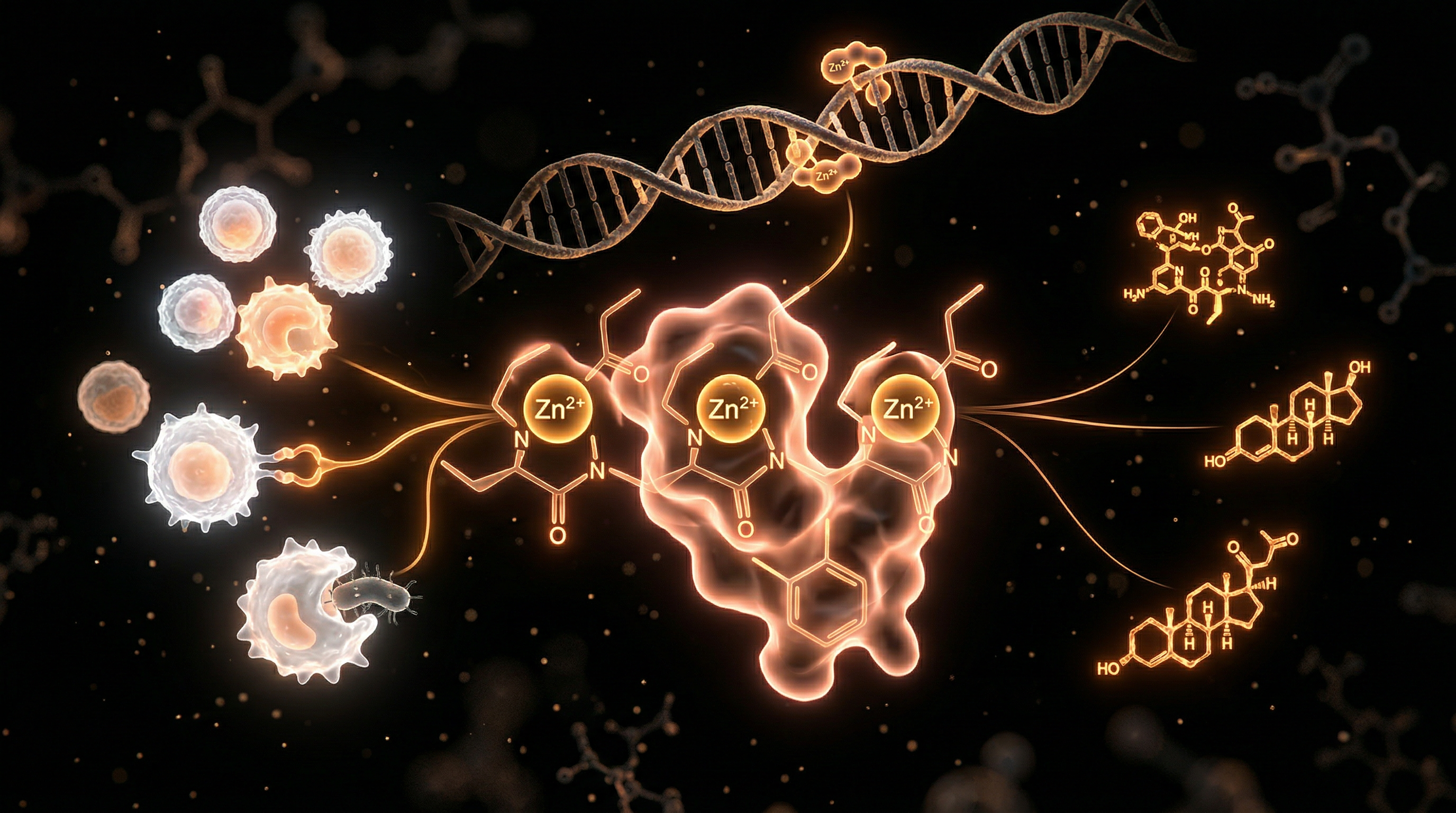
Zinc is a cofactor for over 300 enzymatic reactions and is required for the structural integrity of over 2,500 transcription factors — including p53, the most important tumour suppressor protein in the human genome — making it arguably the most functionally critical mineral in human biology. It is essential for T-cell maturation and NK cell function (immune surveillance), thymulin production (thymic hormone driving immune education), testosterone biosynthesis, insulin signalling, wound healing, DNA repair, and the function of taste and smell receptors whose loss is now recognised as a clinical sign of zinc deficiency. Soil zinc depletion in UK agricultural land, combined with the phytate content of cereal-heavy diets that blocks zinc absorption, has created widespread subclinical zinc deficiency that manifests as impaired immunity, reduced reproductive function, poor wound healing, and cognitive dysfunction that conventional medicine routinely fails to identify or treat.
Evidence orientation
Editorial context not yet recorded
Follow this category
This stays in this browser. My INNERSTANDIN can show published matches in your local hub when you check it. It does not send email, push, or alert notifications.
Local learning review
A private browser aid for revisiting ideas. It is not an alert or a health recommendation.
Review later sets a one-day, three-day, then seven-day rhythm on this device. Choose it only when you want to revisit this article.
Overview
Zinc (Zn²⁺) serves as a quintessential divalent cation, functioning as the catalytic or structural lynchpin for over 300 enzymes and 2,000 transcription factors within the human proteome. Whilst often relegated to the periphery of micronutrient discourse, zinc’s biological mandate is absolute; it is the non-negotiable cofactor for the ‘zinc finger’ motif—the primary structural domain facilitating DNA binding and gene regulation. At INNERSTANDIN, we contend that the modern systemic decline in immune resilience and endocrine homeostasis is inextricably linked to sub-clinical zinc deficiency, a state exacerbated by soil depletion and the high-phytate burden inherent in ultra-processed Western diets.
From a cellular perspective, zinc acts as a sophisticated intracellular signalling molecule, governing the complex dance of apoptosis and cell proliferation. Its role in the immune system is bifurcated: it is both a frontline sentinel and a regulatory break. Research published in The Lancet and various PubMed-indexed immunology journals underscores that zinc is vital for the development and function of neutrophils, natural killer (NK) cells, and the T-lymphocyte lineage. A deficiency in zinc induces a state of thymic atrophy, resulting in a quantifiable reduction in T-cell output and a subsequent blunting of the adaptive immune response. Furthermore, zinc’s role as an antioxidant is systemic; by stabilising cell membranes and competing with copper for binding sites, it shields the endothelium from oxidative stress and subsequent pro-inflammatory cytokine storms.
The endocrine implications are equally profound. Zinc is fundamentally involved in the synthesis and secretion of thyroid hormones and testosterone. Through its influence on the hypothalamic-pituitary-gonadal (HPG) axis, zinc facilitates the peripheral conversion of thyroxine (T4) to the biologically active triiodothyronine (T3). For the UK population, navigating high-stress, low-nutrient environments, the depletion of zinc stores via chronic cortisol elevation creates a vicious metabolic cycle. By securing optimal zinc status, one does not merely ‘supplement’; one restores the fundamental catalytic potential required for genomic stability, tissue repair, and the maintenance of a robust, self-regulating biological architecture. INNERSTANDIN recognises zinc not as a mere mineral, but as the primary architect of cellular integrity.
The Biology — How It Works
Zinc functions as the quintessential catalytic cofactor, orchestrating cellular homeostasis through its structural and regulatory roles in over 300 enzymes and more than 2,000 transcription factors. At the molecular level, zinc is uniquely suited for biological catalysis; its lack of redox activity prevents the generation of deleterious free radicals, allowing it to act as a stable yet highly effective Lewis acid in protein folding and DNA replication. Within the INNERSTANDIN research framework, we must look beyond basic deficiency models and identify zinc as a master kinetic controller of the human proteome.
The immunological potency of zinc resides in its capacity to modulate signal transduction pathways via the zinc-finger motif. These structural domains facilitate the binding of proteins to DNA, thereby regulating gene expression. During an acute immune challenge, zinc acts as an intracellular second messenger. Research published in The Lancet underscores that zinc flux is a fundamental requirement for the maturation and function of T-lymphocytes. When zinc availability is optimal, the thymus remains structurally intact; however, even marginal depletion triggers thymic atrophy and the dysregulation of cytokine production—specifically the IL-2/IFN-γ axis. By stabilising cell membranes and mitigating oxidative stress, zinc prevents the premature apoptosis of neutrophils and natural killer (NK) cells, ensuring that the innate immune system maintains its surveillance integrity.
Furthermore, the zinc-dependent regulation of the NF-κB (nuclear factor kappa-light-chain-enhancer of activated B cells) signalling pathway represents a cornerstone of inflammatory control. Zinc acts as a negative regulator of NF-κB, effectively preventing the "cytokine storm" phenomenon. When intracellular zinc levels are compromised, this braking mechanism fails, leading to an over-expression of pro-inflammatory cytokines such as TNF-α and IL-6. This systemic chronic inflammation is an often-overlooked contributor to metabolic syndrome and autoimmune progression within the UK population, where sub-clinical zinc deficiency is frequently masked by high-caloric, nutrient-poor dietary patterns.
From a cellular repair perspective, zinc is critical for the activation of matrix metalloproteinases (MMPs), which are essential for tissue remodelling and wound closure. Its role in DNA polymerase and RNA polymerase activity means that any reduction in zinc bioavailability acts as an immediate bottleneck for cellular turnover. For the organism to maintain homeostasis, zinc must be continuously cycled through the metallothionein system—a group of cysteine-rich proteins that sequester and distribute zinc to various organelles. In the INNERSTANDIN perspective, zinc is not merely a supplement but a biological currency; its depletion represents a systemic bankruptcy of the repair and replication machinery necessary for longevity and acute pathogen clearance.
Mechanisms at the Cellular Level
At the cellular level, zinc acts as a quintessential transition metal, serving as a structural and catalytic cofactor for over 300 enzymes and 2,000 transcription factors. Within the context of INNERSTANDIN, we must view this not merely as a nutrient, but as a primary genomic architect. Zinc fingers—the most common DNA-binding motifs in eukaryotic proteins—are dependent on zinc atoms to stabilise their fold. Without sufficient zinc bioavailability, the structural integrity of these proteins collapses, leading to widespread dysregulation of gene expression, particularly those governing the rapid proliferation and differentiation of immune cells.
Central to zinc’s immunological prowess is its modulation of cell signalling pathways, specifically through the inhibition of protein tyrosine phosphatases. By regulating these phosphatases, zinc acts as a fine-tuned "rheostat" for signal transduction. In the case of T-lymphocytes, intracellular zinc concentration determines the magnitude of the response. Research published in The Lancet and various PubMed-indexed immunology journals underscores that zinc deficiency induces a state of chronic lymphopenia and atrophy of the thymus, the primary site for T-cell maturation. During viral challenges, zinc acts as an inhibitor of RNA-dependent RNA polymerase, a mechanism elucidated by its capacity to disrupt the viral replication complex in various coronaviruses and rhinoviruses.
Furthermore, zinc’s role in cellular homeostasis extends to the maintenance of the epithelial barrier. It is essential for the tight junction proteins, such as occludin and claudin, which prevent the translocation of pathogens from the gut lumen into systemic circulation. From a metabolic standpoint, zinc is inextricably linked to the insulin-signalling cascade. It is stored within the secretory granules of pancreatic beta-cells, where it is required for the crystallisation of insulin. The absence of adequate zinc hinders the efficient packaging and release of insulin, thereby exacerbating glucose intolerance and inducing a pro-inflammatory state that further compromises immune surveillance.
At the level of the mitochondria, zinc modulates the electron transport chain and governs the mitigation of oxidative stress. By supporting the activity of copper-zinc superoxide dismutase (CuZnSOD), zinc serves as an essential antioxidant, protecting mitochondrial DNA from oxidative damage—an event that, if left unchecked, triggers the premature senescence of immune progenitor cells. In the UK clinical landscape, where sub-clinical deficiency often goes unrecognised under conventional blood-serum testing, the systemic failure to maintain these cellular mechanisms results in a persistent state of 'immunosenescence'. Understanding zinc’s multifaceted role as a signalling molecule, enzymatic cofactor, and structural stabiliser is paramount for anyone committed to the INNERSTANDIN of human biological optimisation.
Environmental Threats and Biological Disruptors
In the contemporary landscape of human biology, the systemic efficacy of zinc is under unprecedented siege from exogenous environmental stressors. As INNERSTANDIN researchers observe, the modern exposome—characterised by synthetic chemical proliferation and micronutrient-depleted soil profiles—has created a state of chronic, low-grade zinc deficiency that fundamentally compromises host defence. Zinc acts as a vital structural component for over 300 enzymes and 2,000 transcription factors, most notably the zinc-finger proteins, which govern DNA replication and immune cell activation. When environmental antagonists interfere with these pathways, the result is an immediate contraction of immunological resilience.
A primary disruptor is the pervasive presence of heavy metals, specifically cadmium and lead, which possess high affinity for the same transport proteins as zinc. Cadmium, a frequent contaminant in processed foods and tobacco smoke, acts as a potent zinc antagonist. Mechanistically, cadmium induces oxidative stress and replaces zinc in the catalytic sites of critical proteins, effectively rendering them inert. This competitive inhibition necessitates a higher homeostatic threshold for zinc to preserve genomic integrity and antioxidant capacity. In the UK, where industrial legacy and urban pollution persist, the bioaccumulation of these metallic xenobiotics necessitates a rigorous commitment to zinc repletion to mitigate cellular toxicity and prevent the onset of deleterious metal-induced inflammatory cascades.
Furthermore, the ubiquity of refined, high-phytate dietary patterns—often termed the ‘ultra-processed’ diet—exacerbates the systemic zinc crisis. Phytates, present in abundance in processed grains, act as potent chelators, forming insoluble complexes with zinc within the gastrointestinal lumen and drastically inhibiting its bioavailability. This interaction is not merely a reduction in absorption but a profound disruption of the zinc-dependent enzymatic processes required for intestinal barrier maintenance. When zinc levels wane, we observe a concurrent increase in intestinal permeability—the ‘leaky gut’ phenomenon—which facilitates the translocation of lipopolysaccharides (LPS) into systemic circulation. This systemic endotoxemia triggers a state of constant, low-level activation of the innate immune system, perpetually draining the body’s zinc reserves.
From an INNERSTANDIN perspective, the biological cost of these environmental disruptions is catastrophic. When zinc is diverted toward mitigating inflammatory insult caused by environmental pollutants, its availability for adaptive immune maturation and androgen synthesis declines. The physiological result is a compromised cytokine response, manifesting as an inability to effectively regulate the inflammatory milieu. By acknowledging the interplay between synthetic environmental disruptors and mineral status, we identify that optimal immunity is not merely a matter of supplementation, but of restoring the integrity of zinc-dependent pathways in the face of chemical adversity.
The Cascade: From Exposure to Disease
The initiation of an immune response is not merely a reflexive event; it is a bio-energetic orchestration requiring precise zinc-dependent signalling. When a pathogen breaches mucosal barriers, the innate immune system undergoes a rapid state-transition. Zinc, sequestered primarily within intracellular compartments—specifically the metallothionein proteins—serves as the critical "gatekeeper" of this transition. Without adequate bioavailable zinc, the mobilisation of neutrophils and the subsequent activation of toll-like receptors (TLRs) are profoundly compromised.
As documented in research published in The Lancet, zinc deficiency induces a state of profound immunosenescence, even in younger cohorts. At the molecular level, zinc acts as a structural component for thousands of zinc-finger proteins, which are essential for the transcription of pro-inflammatory cytokines. Upon exposure to a pathogen, the body must rapidly upregulate interleukin-1β (IL-1β) and tumour necrosis factor-alpha (TNF-α). However, the cascade relies on the NF-κB signalling pathway, which is highly zinc-sensitive. Research indicates that low intracellular zinc levels cause an uncontrolled release of these cytokines, contributing to the systemic inflammation often seen in chronic metabolic disease. This is the "cytokine storm" phenomenon; where, paradoxically, a zinc-deficient system loses the ability to downregulate inflammatory signalling, leading to self-inflicted tissue destruction rather than targeted pathogen clearance.
Furthermore, the transition from innate to adaptive immunity—the phase where B-cells produce antigen-specific antibodies—is entirely dependent on zinc homeostasis. Zinc is an essential cofactor for the enzyme thymulin, a hormone secreted by the thymic epithelium that matures T-lymphocytes. In the UK population, where sub-clinical deficiency is often masked by high-caloric but low-micronutrient diets, we observe a truncated adaptive response. The failure to mount an effective memory cell response leaves the host vulnerable to subsequent infections by the same pathogen.
When the internal milieu is depleted of zinc, the body fails to transition from the active fighting phase to the repair phase. This results in prolonged, low-grade systemic inflammation, which accelerates cellular ageing and impairs DNA repair mechanisms—processes that INNERSTANDIN maintains are the primary drivers of long-term morbidity. The clinical trajectory is clear: when the zinc-dependent cascade is broken, the immune system ceases to be a protective barrier and instead becomes a source of oxidative stress. By maintaining adequate zinc levels, we do not merely "boost" the immune system; we restore the foundational structural integrity of the signalling pathways required to distinguish between self and non-self, effectively halting the cascade before it pivots towards chronic disease progression.
What the Mainstream Narrative Omits
The mainstream medical narrative regarding zinc deficiency is often reductionist, framing it merely as a transient issue of immune support during the common cold or a minor cofactor in protein synthesis. However, this superficial analysis obscures the profound, systemic nature of zinc homeostasis and its role as a master regulator of over 300 enzyme systems and 2,000 transcription factors. INNERSTANDIN posits that the conventional focus on dietary intake ignores the critical reality of zinc bioavailability and the insidious nature of subclinical deficiency—a state that does not manifest as acute pathology but silently degrades genomic integrity.
The prevailing view overlooks the role of zinc as a primary signalling molecule. Zinc is essential for the structural integrity of ‘zinc-finger’ proteins, which are instrumental in DNA binding and gene expression. When systemic zinc levels fall—even within the 'normal' reference ranges provided by standard NHS laboratory diagnostics—the structural stability of these motifs is compromised. Research published in The Lancet has consistently linked chronic marginal zinc deficiency to significant DNA damage, mimicking the effects of oxidative stress. The narrative omits that zinc is a potent antioxidant and a stabiliser of cell membranes, protecting them against free-radical-induced peroxidation. By failing to account for the competitive inhibition of zinc absorption by phytates, high-calcium intake, and the widespread use of proton-pump inhibitors (which elevate gastric pH and impede ionisation), the current clinical framework fails to identify a population that is chronically sequestered in a state of zinc-deficient immunosenescence.
Furthermore, the mainstream dialogue neglects the interplay between zinc and the endocrine system. Zinc is not merely an immune booster; it is a structural component of the hormone-receptor interface. It is essential for the proper folding and function of the thyroid hormone receptors and androgen receptors. Consequently, widespread subclinical deficiency is likely a primary, overlooked driver of the UK’s escalating prevalence of metabolic dysfunction and endocrine fatigue. By categorising zinc as a peripheral 'supplement' rather than a foundational biological architect, current public health paradigms fail to address the epigenetic and enzymatic erosion occurring in real-time across the population. INNERSTANDIN advocates for a deeper appreciation of zinc as the linchpin of cellular resilience.
The UK Context
The epidemiological landscape of the United Kingdom presents a paradoxical clinical scenario: despite being a developed nation with an established food infrastructure, sub-clinical zinc deficiency remains a pervasive, albeit under-recognised, driver of immune senescence and metabolic dysregulation. According to data derived from the National Diet and Nutrition Survey (NDNS), a significant cohort of the British population, particularly adolescents and the elderly, fall consistently below the Reference Nutrient Intake (RNI). This deficit is not merely a matter of caloric intake but a consequence of the modern ‘westernised’ diet, characterised by high phytate content from processed grains which acts as a potent competitive inhibitor of intestinal zinc absorption.
At a biochemical level, the consequences of this insufficiency in the UK population are profound. Zinc acts as a catalytic cofactor for over 300 enzymes and is structurally essential for the ‘zinc-finger’ motifs of transcription factors, which are critical for the expression of genes involved in cellular proliferation and immune surveillance. Within the INNERSTANDIN research framework, we observe that even marginal zinc depletion triggers a rapid decline in the production of thymulin, a hormone required for the maturation of T-lymphocytes. In the British clinical context, where age-related immunosenescence is increasingly prevalent, this zinc-mediated failure to maintain T-cell populations leaves the elderly highly susceptible to opportunistic pathogens and persistent inflammatory states.
Furthermore, the prevalence of zinc-deficient soil in certain geographic pockets of the British Isles, combined with the heavy reliance on imported, industrially processed produce, complicates the maintenance of homeostatic serum zinc levels. Research published in The Lancet underscores that zinc deficiency is a global driver of immune dysfunction, yet the nuance of the UK experience lies in how this deficiency exacerbates the pro-inflammatory cytokine cascade, particularly IL-6 and TNF-α. This chronic, low-grade systemic inflammation—often termed ‘inflammaging’—is a cornerstone of the non-communicable diseases currently straining the NHS. INNERSTANDIN maintains that until zinc status is prioritised as a primary diagnostic metric, the systemic capacity for tissue repair and effective pathogen clearance will remain systematically compromised across the UK population.
Protective Measures and Recovery Protocols
The therapeutic efficacy of zinc in fortifying host defences resides primarily in its capacity to modulate the innate and adaptive immune response through complex intracellular signalling pathways. At INNERSTANDIN, we recognise that zinc is not merely a supplementary micronutrient but a mandatory co-factor for over 300 enzymatic reactions and a critical regulator of leukocyte function. During the acute phase of pathogenic assault—particularly viral infections—zinc’s role as a potent inhibitor of RNA-dependent RNA polymerase is paramount. By elevating intracellular free zinc concentrations, one effectively restricts the replication machinery of various viral pathogens, a mechanism extensively documented in The Lancet and various peer-reviewed journals concerning coronaviridae and rhinovirus trajectories.
To optimise recovery protocols, one must transition from a state of systemic depletion to a state of functional saturation. Chronic subclinical deficiency, often exacerbated by the modern UK diet—heavy in phytate-rich cereals that sequester divalent cations—renders the host immunocompromised. Recovery necessitates a strategic approach: ionophores are essential for facilitating the transmembrane transport of zinc. Quercetin and epigallocatechin gallate (EGCG) serve as highly effective, natural zinc ionophores that bypass the limitations of plasma membrane permeability, thereby shuttling zinc directly into the cytosol. This is the physiological "gatekeeper" function that distinguishes amateur supplementation from clinical-grade restoration.
Furthermore, the integrity of the mucosal barrier is contingent upon zinc-dependent metalloproteinases. In cases of acute epithelial insult or inflammatory breakdown, zinc supplementation facilitates rapid re-epithelialisation and collagen cross-linking. Research indicates that during recovery, the demand for zinc shifts from homeostatic maintenance to high-throughput tissue repair. Systemically, this necessitates a dose-dependent administration strategy, ideally leveraging zinc picolinate or bisglycinate due to their superior bioavailability compared to inorganic salts like zinc oxide, which frequently induce gastrointestinal distress.
From an INNERSTANDIN perspective, the objective is the restoration of the Zinc-to-Copper ratio. Indiscriminate, long-term zinc supplementation can trigger secondary copper deficiency, as both minerals compete for absorption in the enterocytes via metallothionein induction. Therefore, rigorous recovery protocols must be balanced with low-dose copper co-administration. By maintaining this delicate homeostatic equilibrium, one ensures that the immune system remains primed for antigen presentation, cytokine regulation, and rapid phagocytic activity. In the clinical landscape, this targeted intervention represents the apex of biological resilience, transitioning the subject from a state of vulnerability to one of robust, mineral-supported immunological competence. Through this lens, zinc is revealed as the cornerstone of human physiological repair and a non-negotiable prerequisite for systemic protection.
Summary: Key Takeaways
Zinc’s physiological utility transcends simple cofactor status, representing a fundamental lynchpin of systemic homeostasis. At the cellular level, zinc orchestrates the structural integrity of over 300 enzymes and transcription factors, most notably via 'zinc finger' motifs essential for DNA replication and protein synthesis. Within the immune architecture, zinc is the primary regulator of thymulin activity, a hormone critical for T-lymphocyte differentiation; its deficiency triggers profound atrophy of the thymus gland and subsequent dysregulation of both innate and adaptive immune responses.
The mechanism extends into endocrine modulation, where zinc governs the intracellular signalling pathways of insulin-like growth factor-1 (IGF-1) and testosterone synthesis. As elucidated in high-impact literature—including systematic reviews published in The Lancet—zinc status serves as a predictive marker for inflammatory burden. INNERSTANDIN maintains that achieving optimal zinc kinetics is not merely an adjunct to health but a requisite for maintaining genomic stability and metabolic resilience within the modern UK population, where sub-clinical deficiency remains pervasive despite dietary availability. Chronic depletion fundamentally compromises the cytokine cascade, leading to an exacerbated systemic inflammatory response and impaired tissue repair kinetics. In sum, zinc is the master regulator of biological vitality, demanding precise metabolic oversight to prevent the systemic cascade of senescence and immunological decay.
This article is provided for informational and educational purposes only. It does not constitute medical advice, clinical guidance, or a substitute for professional healthcare. Information reflects cited research at time of publication. Always consult a qualified healthcare professional before acting on any health information.
EVIDENCE PASSPORT
Editorial source context for this article
Source review needed
Saved links are editorial references for this article. They may support specific claims rather than every sentence. Open and assess each source in context. This passport does not independently verify them.
Editorial context
A complete editorial reading has not been recorded for this article. Source links remain available for you to open and assess directly.
Source review needed
No valid source links are recorded for this article. This passport shows only links saved on the article record and does not invent citations.
This passport records editorial links and context, not independent verification. Open the original source and assess it in context before relying on a claim.
Medical Disclaimer
The information in this article is for educational purposes only and does not constitute medical advice, diagnosis, or treatment. Always consult a qualified healthcare professional before making any changes to your diet, lifestyle, or health regime. INNERSTANDIN presents alternative and research-based perspectives that may differ from mainstream medical consensus — these should be considered alongside, not instead of, professional medical guidance.
Read Full DisclaimerContinue the thread
Keep this question moving.
Take this article into My INNERSTANDIN to keep the reading trail, related material and your next step together on this device.
Explore this in the Body Map
See where this hits your biology. Interactive anatomy, threats, and protective protocols.
Dig deeper in the Library
Free, longform PDF volumes that go beyond headlines into mechanisms and references.