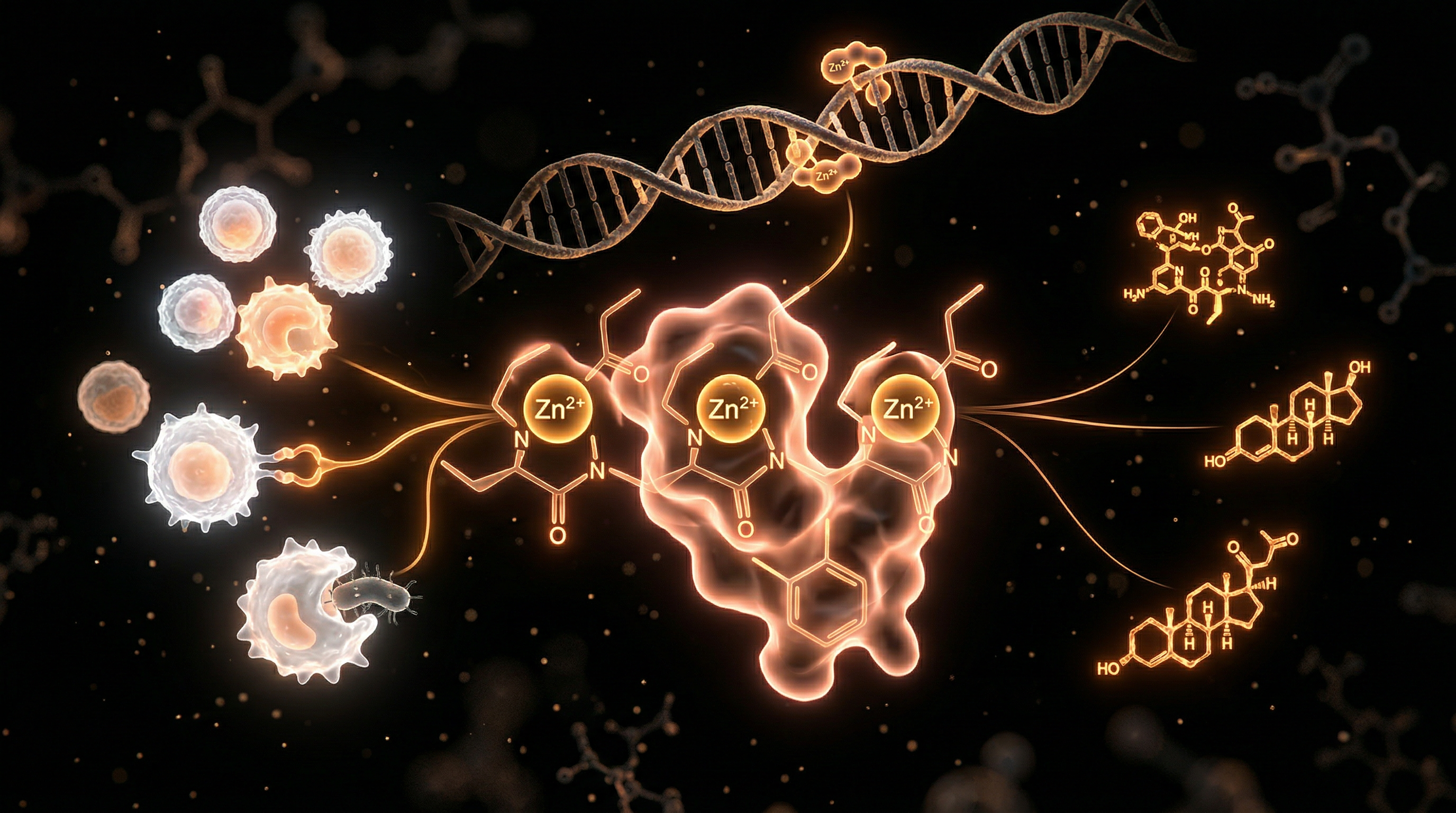
Zinc: The Mineral Most Critical for Immunity, Repair, and Hormones
Zinc is a cofactor for over 300 enzymatic reactions and is required for the structural integrity of over 2,500 transcription factors — including p53, the most important tumour suppressor protein in the human genome — making it arguably the most functionally critical mineral in human biology. It is essential for T-cell maturation and NK cell function (immune surveillance), thymulin production (thymic hormone driving immune education), testosterone biosynthesis, insulin signalling, wound healing, DNA repair, and the function of taste and smell receptors whose loss is now recognised as a clinical sign of zinc deficiency. Soil zinc depletion in UK agricultural land, combined with the phytate content of cereal-heavy diets that blocks zinc absorption, has created widespread subclinical zinc deficiency that manifests as impaired immunity, reduced reproductive function, poor wound healing, and cognitive dysfunction that conventional medicine routinely fails to identify or treat.