
Bioavailability of Heme vs Non-Heme Iron in UK Diets
Updated May 2026
Understanding the absorption disparity between animal and plant iron sources is crucial for the UK's growing vegetarian demographic. This article breaks down the molecular mechanisms of divalent metal transporter 1.
Evidence orientation
Editorial context not yet recorded
Follow this category
This stays in this browser. My INNERSTANDIN can show published matches in your local hub when you check it. It does not send email, push, or alert notifications.
Local learning review
A private browser aid for revisiting ideas. It is not an alert or a health recommendation.
Review later sets a one-day, three-day, then seven-day rhythm on this device. Choose it only when you want to revisit this article.
Overview
In the current landscape of British public health, we find ourselves at a critical crossroads where ideological shifts in dietary habits are colliding violently with the immutable laws of human biochemistry. As a senior researcher for INNERSTANDING, I have observed a disturbing trend: the systematic de-prioritisation of nutritional density in favour of sustainability narratives that, while well-intentioned, often ignore the bio-molecular reality of human nutrient acquisition. Nowhere is this more evident than in the "Iron Crisis" currently gripping the United Kingdom.
Iron is not merely a mineral; it is the fundamental conduit for oxygen and the primary driver of cellular respiration. However, the mainstream discourse surrounding iron often treats it as a monolithic entity. "If you need iron, eat spinach," says the conventional wisdom. This article serves as a rigorous scientific exposé on why that advice is not only reductive but biologically deceptive.
The disparity between Heme (derived from animal tissue) and Non-Heme (derived from plants and fortified foods) iron is the difference between biological efficiency and metabolic struggle. While the UK sees a skyrocketing demographic of vegetarians and vegans—upwards of 14% of the population by recent estimates—we are simultaneously witnessing a silent epidemic of Iron Deficiency Anaemia (IDA) and subclinical iron depletion.
Key Fact: The bioavailability of heme iron from animal sources is estimated at 15–35%, whereas non-heme iron from plant sources possesses a bioavailability as low as 2–10%, depending on the presence of various inhibitory factors.
To understand why the British population is increasingly lethargic, cognitively "foggy", and immunologically compromised, we must look past the labels and into the gut lumen, where the struggle for iron absorption occurs. This is an investigation into the molecular mechanisms of Divalent Metal Transporter 1 (DMT1) and the systemic failure of the modern plant-centric diet to meet the evolutionary requirements of the human body.
The Biology — How It Works
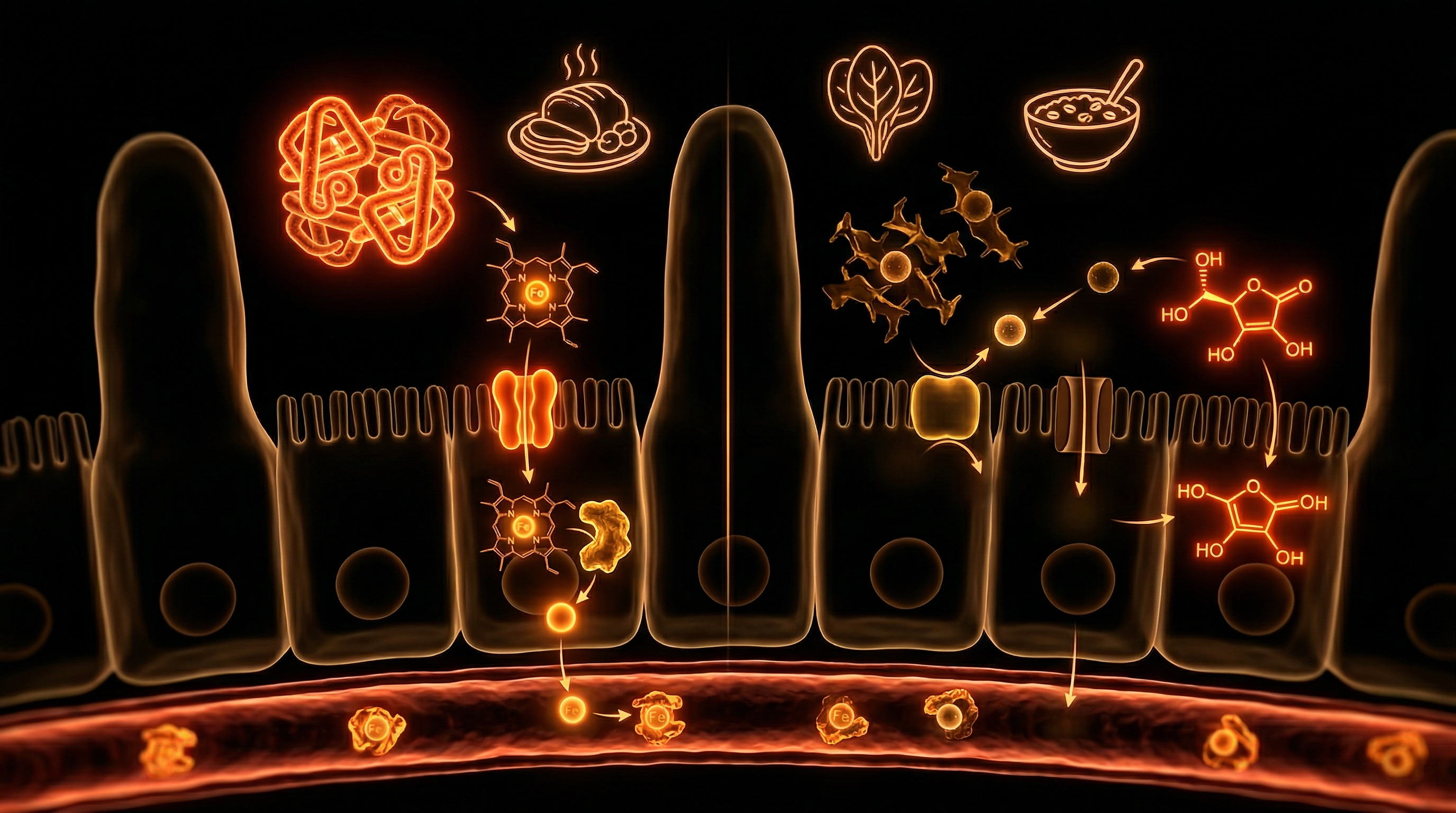
To grasp the disparity in absorption, we must first categorise the two primary forms of iron found in the British diet. At the molecular level, these two forms exist in different chemical states and are handled by entirely different transport systems within the enterocyte (the absorptive cell of the small intestine).
Heme Iron: The Biological Gold Standard
Heme iron is found exclusively in animal-derived foods such as beef, lamb, venison, and oily fish—staples of the traditional British diet that have been increasingly sidelined. Chemically, heme iron is Ferrous Iron (Fe2+) contained within a protoporphyrin IX ring.
- Solubility: It remains soluble at the alkaline pH of the small intestine.
- Protection: The porphyrin ring acts as a protective "shield," preventing the iron from interacting with dietary inhibitors like phytates or tannins.
- Direct Entry: The body possesses specific receptors and transporters (like HCP1) designed to uptake the entire heme molecule intact.
Non-Heme Iron: The Fragile Alternative
Non-Heme iron constitutes the entirety of iron found in plants (kale, spinach, legumes) and the synthetic iron used in the UK’s mandatory flour fortification programme. Most non-heme iron exists in the Ferric (Fe3+) state.
- Solubility Issues: Ferric iron is highly insoluble at the pH of the duodenum.
- The Reduction Requirement: To be absorbed, Fe3+ must be reduced to the Fe2+ (ferrous) state by enzymes like duodenal cytochrome B (Dcytb). This process is energy-dependent and easily disrupted.
- Vulnerability: Because it is "naked" iron (not shielded by a heme ring), it is highly reactive and readily binds to other compounds in the gut, forming unabsorbable complexes.
Callout: In the UK, bread is legally required to be fortified with iron. However, the industry often uses electrolytic iron or ferrous sulphate, which have significantly lower absorption rates compared to the iron found in a grass-fed steak.
Mechanisms at the Cellular Level
The "gatekeeper" of iron absorption in the human body is the Divalent Metal Transporter 1 (DMT1). To truly understand the deficiency crisis, we must look at the microscopic battleground of the intestinal brush border membrane.
The DMT1 Pathway
DMT1 is a protein that spans the membrane of the enterocyte. It is the primary vehicle for non-heme iron. However, DMT1 is not an exclusive transporter; it is a "generalist." It transports various divalent metals, including lead, cadmium, zinc, and copper.
When a British citizen consumes a plant-based meal high in non-heme iron, the following must occur:
- The Ferric (Fe3+) iron must be released from the food matrix through gastric acid.
- It must be reduced to Ferrous (Fe2+) by the Dcytb enzyme at the apical membrane.
- DMT1 then shuttles the Fe2+ into the cell.
The Competition Factor: Because DMT1 is a shared pathway, if the meal is also high in calcium (e.g., a fortified plant milk) or if the individual has been exposed to environmental heavy metals, the DMT1 transporters become saturated. The non-heme iron is literally "crowded out," leaving it to pass through the digestive tract unabsorbed, where it can ironically feed pathogenic gut bacteria.
The HCP1 and HRG-1 Pathway (The Heme Advantage)
In contrast, heme iron largely bypasses the DMT1 bottleneck. Research has identified Heme Carrier Protein 1 (HCP1) and Heme Responsive Gene-1 (HRG-1) as the dedicated porters for heme.
- Heme iron is taken into the enterocyte as a complete organometallic complex.
- Once inside, an enzyme called Heme Oxygenase-1 (HO-1) breaks the ring and releases the iron directly into the intracellular pool.
- This process is up to 10 times more efficient than the DMT1 pathway and is significantly less affected by the pH of the stomach or the presence of anti-nutrients.
The Ferroportin Export
Regardless of the source, once iron is inside the enterocyte, it must be exported into the bloodstream via Ferroportin—the only known iron exporter in humans. This process is tightly regulated by Hepcidin, a hormone produced by the liver. When systemic inflammation is high (a common trait in the modern UK lifestyle), Hepcidin levels rise, "locking" the ferroportin gates and preventing iron from entering the blood, leading to "anaemia of chronic inflammation" despite adequate intake.
Environmental Threats and Biological Disruptors
The narrative that a "balanced diet" provides enough iron is a dangerous oversimplification. In the 21st century, the UK diet is saturated with Biological Disruptors that specifically target the non-heme iron pathway, making plant-based iron almost impossible to utilise effectively.
Phytic Acid: The Anti-Nutrient King
Phytic acid (phytate) is the primary storage form of phosphorus in seeds, grains, and legumes. In the gut, phytate acts as a potent chelator. It binds to non-heme iron, forming an insoluble precipitate that the DMT1 transporter cannot recognise.
- The Modern Shift: Traditional bread-making involved long fermentation (sourdough), which neutralised phytates. Modern, fast-tracked British bread production leaves phytates intact, further inhibiting the iron added via fortification.
Polyphenols and Tannins
The British love for tea and coffee is a hidden driver of iron deficiency. Tannins and certain polyphenols bind to non-heme iron.
- The "Tea Effect": Consuming a cup of black tea with a meal can reduce non-heme iron absorption by up to 60-90%. Crucially, tea has zero effect on the absorption of heme iron from animal sources.
The Glyphosate Factor
As a researcher for INNERSTANDING, I must highlight the role of agricultural chemicals. Glyphosate, the world’s most widely used herbicide (frequently used on UK wheat and pulse crops), was originally patented as a chelator. It is designed to bind to minerals. When glyphosate residues enter the human gut, they may interfere with the solubility of non-heme iron and disrupt the gut microbiome, which is essential for maintaining the acidic environment required for iron reduction.
The PPI Epidemic
The UK has one of the highest rates of Proton Pump Inhibitor (PPI) prescriptions for acid reflux. By suppressing stomach acid, these drugs prevent the cleavage of non-heme iron from plant fibres and inhibit the reduction of Fe3+ to Fe2+. For a vegetarian on PPIs, iron absorption is effectively nil.
The Cascade: From Exposure to Disease
When iron bioavailability is compromised, the body doesn't just "slow down"—it begins a systemic cascade of cellular failure. This is not merely about "tiredness"; it is about the degradation of the human biological engine.
Mitochondrial Dysfunction
The most critical role of iron is within the Electron Transport Chain (ETC) in the mitochondria. Iron-sulfur clusters are the "spark plugs" of ATP (energy) production.
- When iron levels drop, cells switch to less efficient anaerobic metabolism.
- This manifests as chronic fatigue, exercise intolerance, and "brain fog."
- In the UK, millions are diagnosed with "Chronic Fatigue Syndrome" without a rigorous investigation into their heme-iron status.
The Cognitive Decline
The brain is a high-energy organ. Iron is a cofactor for Tyrosine Hydroxylase, the rate-limiting enzyme for the production of Dopamine.
- Low Iron = Low Dopamine. This results in depression, lack of motivation, and Restless Leg Syndrome (RLS).
- In children, iron deficiency during the "critical windows" of brain development leads to irreversible IQ loss and behavioural issues—a looming crisis for the "Generation Vegan" being raised in the UK today.
Immune Compromise
Iron is required for the "oxidative burst" used by white blood cells to kill pathogens. Paradoxically, while the body needs iron for immunity, many pathogens also crave iron. The body’s response to infection is to hide iron (via Hepcidin). If an individual is already baseline deficient due to a low-bioavailability diet, their immune system is effectively disarmed before the fight begins.
Statistic: According to the NHS, approximately 1 in 10 women in the UK suffer from anaemia, but when we look at "Iron Depletion" (low ferritin), the numbers climb to nearly 25-30% of women of childbearing age.
What the Mainstream Narrative Omits
The public is being misled by a "Carbon-Neutral" dietary agenda that treats all calories and nutrients as equal. This is a scientific fallacy. The mainstream narrative, pushed by corporate interests and some government bodies, omits three "Suppressed Truths" about iron:
1. The "Plant-Iron" Equivalence Myth
Public health guidelines often suggest a daily intake of 14.8mg of iron for women. They fail to mention that this figure assumes a "mixed diet." If that iron is coming from plant sources, the requirement should technically be doubled or tripled to account for the 5-10% absorption rate. By ignoring bioavailability, the government is setting plant-based citizens up for guaranteed deficiency.
2. The Dangers of "Unbound" Non-Heme Iron
Because non-heme iron is poorly absorbed, large amounts of it remain in the colon. Here, it undergoes the Fenton Reaction, producing hydroxyl radicals—the most reactive and damaging free radicals known to biology. This causes oxidative stress to the gut lining and promotes the growth of pathogenic bacteria like E. coli and Salmonella, which possess specialised mechanisms (siderophores) to steal this iron. Heme iron, being more efficiently absorbed in the upper GI tract, does not pose this same risk to the lower gut.
3. The Failure of Fortification
The UK's mandatory fortification of white flour with "iron powder" is a "tick-box" exercise in public health. Studies show that the iron used is often so poorly bioavailable that it contributes almost nothing to the systemic iron stores of the population, yet allows manufacturers to claim their products are "High in Iron" on the packaging. This is a deception of the highest order.
The UK Context: A Nation in Depletion
The United Kingdom represents a unique case study in iron deficiency. Historically, the British diet was rich in "offal"—liver, kidneys, and heart—which are the most concentrated sources of heme iron and its essential cofactors (B12, Copper, Vitamin A).
The Rise of the "Ultra-Processed" Vegan
The modern UK vegan diet is rarely the "whole food" ideal. It is dominated by ultra-processed meat alternatives (UPFs) made from soy protein isolates, pea proteins, and industrial seed oils. These products are high in phytates and often fortified with the cheapest, least absorbable forms of non-heme iron.
The NDNS Data
The National Diet and Nutrition Survey (NDNS) has consistently shown a downward trend in iron intake among British teenagers.
- Over 50% of girls aged 11 to 18 in the UK have iron intakes below the Lower Reference Nutrient Intake (LRNI).
- This is happening simultaneously with the cultural "war on red meat," driven by environmental taxes and media narratives. We are trading the neurological health of a generation for "carbon credits."
The GP Gap
Most UK GPs are trained to look at Haemoglobin levels. However, haemoglobin is the last marker to drop. An individual can have near-zero Ferritin (stored iron) and be suffering from severe cognitive and physical symptoms, yet be told their blood test is "normal." This "subclinical" deficiency is the true UK epidemic.
Protective Measures and Recovery Protocols
For those seeking to reclaim their biological vitality within the UK context, a strategy based on molecular reality rather than dietary dogma is required. If one chooses to abstain from meat, or simply wants to optimise their current health, the following protocols are essential.
1. Reintroducing "The Meat Factor"
Science has identified a phenomenon known as the "Meat Factor." Adding even a small amount of animal protein (meat or fish) to a meal of plants significantly increases the absorption of the non-heme iron from those plants.
- Action: If you eat lentils, pair them with a small amount of minced beef or lamb to "unlock" the plant iron via the stimulation of gastric secretions and the provision of specific amino acids that keep iron soluble.
2. Strategic Vitamin C (Ascorbic Acid)
Vitamin C is the most potent enhancer of non-heme iron absorption. It works by:
- Reducing Fe3+ to Fe2+.
- Forming a soluble chelate with iron that prevents it from binding to phytates.
- Protocol: A minimum of 75mg of Vitamin C (the amount in a large orange or a portion of bell peppers) must be consumed simultaneously with the iron source.
3. The "Inhibitor Gap"
To protect the DMT1 pathway, one must create a "clear window" for iron absorption.
- Protocol: Avoid tea, coffee, and high-calcium foods (dairy or fortified milks) for at least 2 hours before and after a high-iron meal. This simple change can increase absorption by 300%.
4. Sourcing and Preparation
If consuming grains and legumes, traditional British methods of preparation must be resurrected.
- Soaking and Sprouting: Activates the enzyme phytase, which breaks down phytic acid.
- Sourdough Fermentation: The only way to make wheat-based iron even remotely accessible to the human body.
5. Targeted Supplementation (The Heme Option)
When deficiency is present, standard NHS-prescribed ferrous sulphate often causes "gut havoc" (constipation and nausea) because of its poor absorption and high oxidative potential.
- Recovery: Seek out Heme Iron Polypeptide (HIP) supplements. These use the HCP1 pathway, are absorbed at rates 10x higher than synthetic iron, and do not cause the gastrointestinal side effects associated with non-heme salts.
Summary: Key Takeaways
The biological disparity between heme and non-heme iron is an immutable fact of human physiology that no amount of dietary "re-imagining" can alter. As the UK moves further away from its traditional nutrient-dense diet, the biological cost is becoming apparent in our schools, our workplaces, and our hospitals.
- Heme Iron is the superior, highly bioavailable form of iron that utilizes the efficient HCP1 pathway and is shielded from dietary inhibitors.
- Non-Heme Iron relies on the competitive and easily disrupted DMT1 pathway, with absorption rates often falling below 5% in the presence of tea, coffee, or grains.
- The DMT1 Transporter is the cellular bottleneck. It is easily saturated and inhibited by the very "staples" of a plant-based diet, such as phytates and calcium.
- The Mainstream Narrative fails to account for bioavailability, leading to a "hidden hunger" where citizens are over-fed but mineral-starved.
- Environmental Toxins like glyphosate and the over-prescription of PPIs are exacerbating the iron crisis by further degrading the body's ability to process non-heme sources.
To understand the health of a nation, one must understand its iron status. If the UK is to avoid a future of cognitive decline and chronic fatigue, we must re-evaluate our relationship with animal-derived heme iron and acknowledge the profound limitations of the plant-based alternative. True "innerstanding" begins with the recognition that our biology is not a social construct—it is a chemical reality that demands the highest quality of elemental fuel.
This article is provided for informational and educational purposes only. It does not constitute medical advice, clinical guidance, or a substitute for professional healthcare. Information reflects cited research at time of publication. Always consult a qualified healthcare professional before acting on any health information.
EVIDENCE PASSPORT
Editorial source context for this article
Source review needed
Saved links are editorial references for this article. They may support specific claims rather than every sentence. Open and assess each source in context. This passport does not independently verify them.
Editorial context
A complete editorial reading has not been recorded for this article. Source links remain available for you to open and assess directly.
Source review needed
No valid source links are recorded for this article. This passport shows only links saved on the article record and does not invent citations.
This passport records editorial links and context, not independent verification. Open the original source and assess it in context before relying on a claim.
Medical Disclaimer
The information in this article is for educational purposes only and does not constitute medical advice, diagnosis, or treatment. Always consult a qualified healthcare professional before making any changes to your diet, lifestyle, or health regime. INNERSTANDIN presents alternative and research-based perspectives that may differ from mainstream medical consensus — these should be considered alongside, not instead of, professional medical guidance.
Read Full DisclaimerContinue the thread
Keep this question moving.
Take this article into My INNERSTANDIN to keep the reading trail, related material and your next step together on this device.
Dig deeper in the Library
Free, longform PDF volumes that go beyond headlines into mechanisms and references.