
Bioavailability Superiority: Heme Iron vs Synthetic Fortification
Updated May 2026
Examines why heme iron is more absorbable than inorganic additives found in UK flour. It details the cellular pathways for superior mineral uptake.
Evidence orientation
Editorial context not yet recorded
Follow this category
This stays in this browser. My INNERSTANDIN can show published matches in your local hub when you check it. It does not send email, push, or alert notifications.
Local learning review
A private browser aid for revisiting ideas. It is not an alert or a health recommendation.
Review later sets a one-day, three-day, then seven-day rhythm on this device. Choose it only when you want to revisit this article.
Overview
In the modern landscape of nutritional science, a grand deception has been woven into the very fabric of our daily bread. For decades, public health authorities in the United Kingdom and globally have championed the cause of "mandatory fortification," presenting it as a benevolent shield against widespread mineral deficiencies. However, as a senior biological researcher at INNERSTANDING, my investigation into the molecular reality of iron metabolism reveals a starkly different narrative.
The crisis of anaemia remains unresolved despite decades of intervention. The reason is fundamental: the human body is not a mechanical vessel into which any form of an element can be poured with the expectation of utility. We are biological entities evolved over aeons to recognise and utilise nutrients in specific, complex organic matrices.
This article examines the profound physiological chasm between Heme Iron—the biologically "pre-packaged" iron found in animal tissues—and the inorganic, synthetic iron salts and powders mandated by the UK’s Bread and Flour Regulations. We will move beyond the superficial metrics of "total iron content" to explore the intricate cellular gateways that dictate whether a mineral becomes the spark of life or a catalyst for oxidative decay. The "fortification" of our food supply with industrial-grade iron is not merely an ineffective solution; it is a biological disruptor that ignores the foundational principles of bioavailability and evolutionary biology.
The Biology — How It Works
To understand the superiority of heme iron, one must first grasp the duality of iron in the diet. Iron exists in two primary forms: Heme (bound to a porphyrin ring) and Non-Heme (free inorganic iron).
The Porphyrin Shield
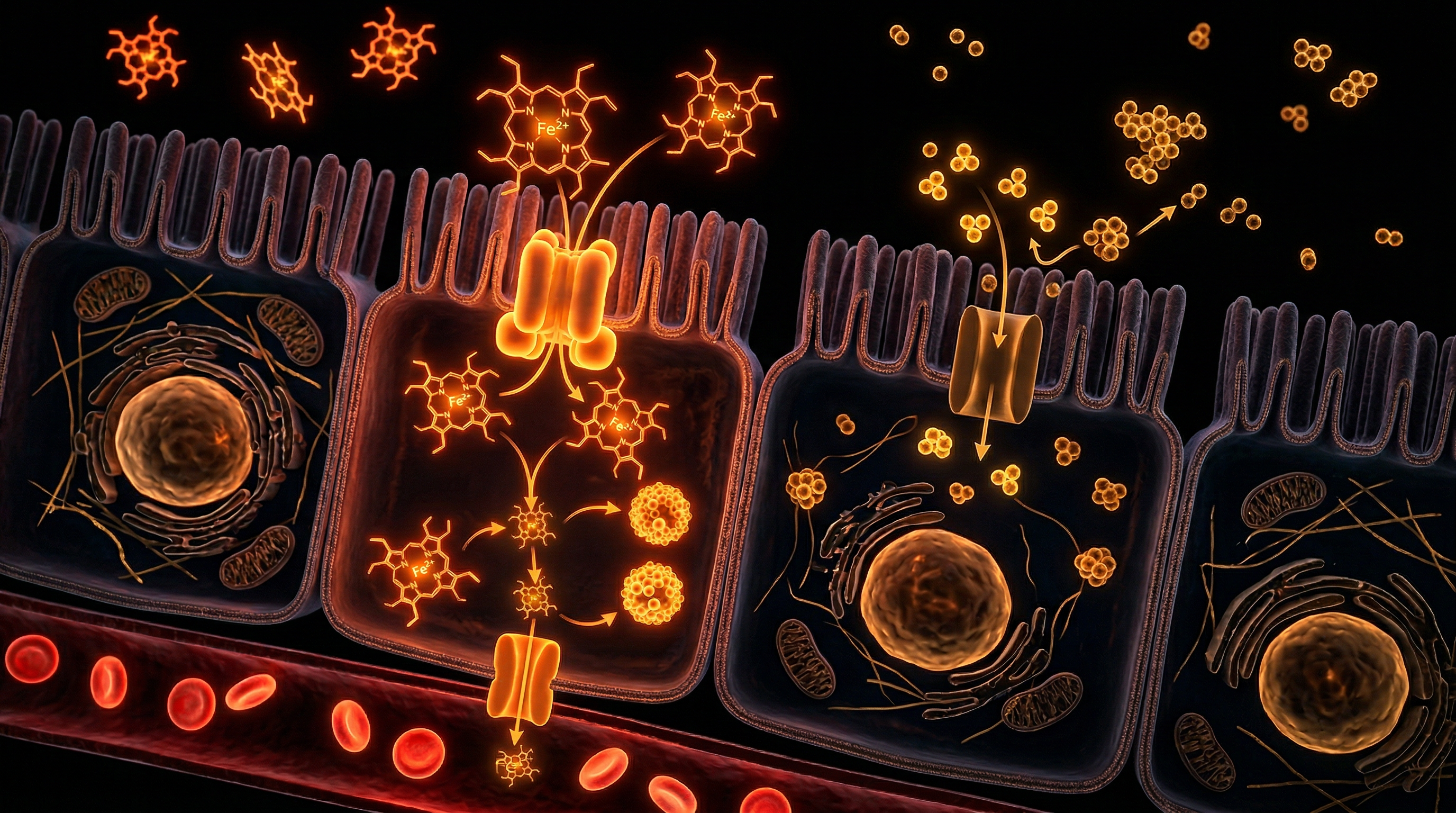
Heme iron is found exclusively in animal-sourced foods—specifically red meat, liver, and blood. In this form, the iron atom ($Fe^{2+}$) is sequestered within a porphyrin ring. This structure is not merely a container; it is a biological "stealth suit." Because the iron is shielded, it does not interact prematurely with other dietary components in the digestive tract. It remains soluble throughout the varying pH levels of the stomach and small intestine.
The Inorganic Struggle
In contrast, the non-heme iron used in fortification (such as ferrous sulphate or electrolytic iron powder) is "naked." Its absorption is precarious and heavily dependent on the chemical environment of the gut. For inorganic iron to be absorbed, it must be in a soluble form. However, at the near-neutral pH of the duodenum, most synthetic iron salts precipitate out of solution, becoming biologically unavailable and remaining in the intestinal lumen to wreak havoc on the microbiome.
Fact: The absorption rate of heme iron is remarkably consistent at 15–35%, whereas non-heme iron absorption can plummet to as low as 2% depending on the presence of inhibitory substances.
The Valence State Dilemma
The human body primarily absorbs iron in the ferrous ($Fe^{2+}$) state. Most synthetic additives are provided in the ferric ($Fe^{3+}$) state or as metallic powders that must be oxidised by gastric acid. This conversion process is energy-intensive and often incomplete, leading to a surplus of unabsorbed metallic particles that irritate the mucosal lining.
Mechanisms at the Cellular Level
The superiority of heme iron is most evident at the "border control" of the human body: the enterocyte (the intestinal absorptive cell).
The VIP Entrance: HCP1
Heme iron possesses its own dedicated transport protein, known as Heme Carrier Protein 1 (HCP1). This pathway is highly efficient. When you consume a piece of ruminant liver, the heme molecule is taken up as a whole unit. Once inside the enterocyte, the enzyme heme oxygenase gently releases the iron for systemic use.
This dedicated pathway avoids the "traffic jam" experienced by synthetic iron. Because the iron is shielded within the porphyrin ring until it is safely inside the cell, it does not compete with other minerals for entry.
The Bottleneck: DMT1
Non-heme iron—the kind found in UK fortified flour—must travel through the Divalent Metal Transporter 1 (DMT1). This is a crowded, non-specific gateway. DMT1 is responsible for the uptake of various divalent metals, including zinc, copper, and manganese.
- Competitive Inhibition: When the gut is flooded with synthetic iron, it "chokes" the DMT1 transporters, preventing the absorption of other critical minerals.
- The Solubility Gate: Non-heme iron must be reduced to $Fe^{2+}$ by an enzyme called duodenal cytochrome b (Dcytb) before it can even approach DMT1. This enzyme requires Vitamin C as a cofactor. Without sufficient acidity and antioxidants, the synthetic iron simply cannot pass.
The Mucosal Block and Hepcidin
The body regulates iron uptake through a hormone called hepcidin, produced by the liver. When iron stores are high, hepcidin increases, shutting down the "exit door" of the enterocyte (ferroportin).
However, synthetic fortification creates a physiological paradox. Because the absorption of inorganic iron is so poor, the gut is often exposed to high concentrations of unabsorbed iron, which triggers inflammatory signals. These signals can inappropriately elevate hepcidin, effectively "locking" what little iron was absorbed inside the intestinal cells, leading to a state of functional iron deficiency despite high intake.
Environmental Threats and Biological Disruptors
The failure of synthetic fortification is exacerbated by the modern dietary and environmental landscape. We are not consuming these additives in a vacuum; we are consuming them alongside potent "anti-nutrients" and chemical disruptors.
The Phytic Acid Trap
The UK mandates the fortification of white flour. This presents a supreme biological irony. Cereal grains naturally contain phytic acid (phytates). Phytates are strong chelators; they bind to divalent minerals like iron, forming insoluble complexes that the human body cannot break down.
- When synthetic iron is added to flour, the phytates in the grain immediately bind to the "naked" iron.
- The very vehicle used to "cure" deficiency contains the substance that prevents the cure from working.
- Heme iron is immune to this. Because it is shielded by the porphyrin ring, phytates cannot bind to the iron atom, allowing it to pass through the phytate-heavy environment of a meal unscathed.
The Role of Glyphosate
Modern industrial wheat production relies heavily on glyphosate, used both as a herbicide and a desiccant. Research indicates that glyphosate acts as a powerful mineral chelator. It binds to minerals in the soil and within the plant, making them unavailable. When glyphosate residues enter the human gut, they further disrupt the delicate mineral balance, potentially sequestering synthetic iron and preventing its interaction with the DMT1 transporter.
Polyphenols and Tannins
While often lauded as "healthy antioxidants," the tannins in tea, coffee, and certain plant foods are potent inhibitors of non-heme iron. A single cup of tea can reduce the absorption of synthetic iron by up to 90%. Heme iron, once again, remains largely unaffected by these dietary inhibitors, maintaining its high bioavailability regardless of what else is on the plate.
The Cascade: From Exposure to Disease
What happens to the 80–98% of synthetic iron that is not absorbed? This is where the narrative of "safe fortification" collapses. Unabsorbed iron is not inert; it is a highly reactive transition metal that acts as a catalyst for destruction in the colon.
The Fenton Reaction and Oxidative Stress
In the aqueous environment of the gut, unabsorbed ferrous iron reacts with hydrogen peroxide (a byproduct of cellular metabolism) to produce the hydroxyl radical—the most reactive and damaging free radical known to biology.
Scientific Equation: $Fe^{2+} + H2O2 \rightarrow Fe^{3+} + \cdot OH + OH^-$
This is the Fenton Reaction. The resulting hydroxyl radicals attack the lipid membranes of the gut lining, leading to:
- Lipid Peroxidation: Destruction of cellular integrity.
- Increased Intestinal Permeability: Commonly known as "Leaky Gut."
- DNA Damage: Direct mutagenic potential to the colonic epithelium.
Feeding the Pathogens
The human gut microbiome is a theatre of resource competition. Beneficial bacteria, such as Lactobacillus and Bifidobacterium, generally require very little iron. However, virulent pathogens—including E. coli, Salmonella, and Clostridium difficile—are "siderophilic" (iron-loving).
By flooding the colon with unabsorbed synthetic iron, we are essentially providing "high-octane fuel" for pathogenic overgrowth. This leads to dysbiosis, which has been linked to everything from Irritable Bowel Syndrome (IBS) to systemic autoimmune conditions and neuroinflammation.
Systemic Iron Overload and Tissue Calcification
While the body struggles to get synthetic iron into the blood, it can occasionally "bypass" regulatory mechanisms through a process called paracellular transport if the gut lining is damaged. This "rogue" iron does not travel safely bound to transferrin. Instead, it circulates as Non-Transferrin Bound Iron (NTBI). NTBI is highly toxic; it deposits in the liver, heart, and endocrine organs, contributing to insulin resistance and cardiovascular "stiffening."
What the Mainstream Narrative Omits
The insistence on synthetic fortification by governmental bodies is rarely questioned in the mainstream press. However, when we look beneath the surface, the motivations appear more economic and political than biological.
The Cost of "Efficiency"
Heme iron concentrates, derived from animal blood or tissues, are expensive to produce and stabilise in processed food. In contrast, iron filings and industrial waste byproducts (like ferrous sulphate) are incredibly cheap. For a massive industrial grain processor, the choice is driven by the bottom line. The "public health" mandate provides the legal cover for using these low-grade additives.
The Plant-Based Bias
There is a growing ideological push toward "plant-based" nutrition, often framed as a solution for both health and the environment. This narrative intentionally downplays the "Bioavailability Gap." By claiming that "iron is iron," proponents of this shift ignore the fact that one would need to consume kilograms of spinach to match the absorbable iron in a small serving of lamb's liver.
The Suppression of the "Nose-to-Tail" Tradition
For centuries, human cultures prioritised blood sausage, liver, spleen, and bone marrow. These are the most concentrated sources of heme iron and its essential cofactors (Vitamin A, Copper, B12). The mainstream narrative has pathologised these ancestral foods, labelling them as "high in cholesterol" or "unrefined," while simultaneously promoting fortified, ultra-processed cereals as a "healthy start to the day."
The UK Context
The United Kingdom represents a unique case study in the failure of the fortification model. The Bread and Flour Regulations 1998 mandate that all wheat flour (except wholemeal) must be fortified with calcium carbonate, iron, thiamine, and niacin.
The "Iron Filings" Reality
In the UK, much of the iron added to flour is reduced iron or electrolytic iron. This is essentially finely ground metallic iron.
Fact: If you crush a standard UK fortified breakfast cereal and move a strong magnet through the slurry, you can physically extract the iron particles. This is the material the UK government considers a suitable replacement for the heme iron found in animal tissues.
The Failure of the Strategy
Despite these mandates, the UK’s National Diet and Nutrition Survey (NDNS) consistently shows that:
- Approximately 25% of women in the UK have low iron stores.
- Iron deficiency anaemia remains the leading nutritional deficiency in the country.
- Rates of digestive distress and inflammatory bowel conditions are at an all-time high.
The UK strategy is equivalent to trying to fix a crumbling brick wall by throwing bags of dry cement at it. The material is there, but it is not integrated, it is not functional, and it is largely causing a mess on the floor.
Protective Measures and Recovery Protocols
As a senior researcher, I advocate for a return to biological reality. If you have been raised on a diet of fortified grains and are suffering from the symptoms of iron dysregulation (fatigue, brain fog, digestive issues), a strategic "re-biologising" of your intake is required.
1. Prioritise the "Nose-to-Tail" Approach
The most bioavailable form of iron on the planet is found in the spleen and liver of ruminant animals (beef, lamb, bison). These organs provide heme iron alongside Ceruloplasmin (the copper-binding protein required for iron metabolism).
- Protocol: Incorporate 100g of organic grass-fed liver per week, or utilise high-quality desiccated organ supplements if the taste is a barrier.
2. Elimination of Inhibitors
To allow your body to heal from the oxidative stress of synthetic iron:
- Remove Fortified Grains: Opt for organic wholemeal (though still high in phytates), or better yet, ancestral starches like tubers and fruit.
- The Tea/Coffee Buffer: Never consume tea or coffee within 2 hours of a meal containing heme iron.
3. Enhance Natural Chelation and Gut Repair
If you have a history of high intake of fortified foods, you must clear the "bio-sludge" of unabsorbed iron from your system.
- Lactoferrin: A natural protein found in colostrum and raw dairy that "mops up" free iron in the gut and delivers it safely to cells.
- Glycine: Found in bone broth, glycine supports the production of the body's own heme and protects the gut lining from oxidative damage.
4. Strategic Vitamin C
While heme iron doesn't need Vitamin C for absorption, Vitamin C acts as a "sacrificial antioxidant" in the gut, preventing the Fenton reaction from occurring with any residual non-heme iron present in the meal.
Summary: Key Takeaways
The evidence is overwhelming: Heme iron is the gold standard of human mineral nutrition. Its structural complexity is not a flaw, but a sophisticated biological design that ensures efficient uptake while protecting the organism from oxidative harm.
- Superior Uptake: Heme iron utilizes the HCP1 transporter, bypassing the competitive and inefficient DMT1 pathway used by synthetic additives.
- Porphyrin Protection: The heme structure shields iron from dietary inhibitors like phytates (in flour) and tannins (in tea), ensuring it reaches the blood.
- Toxic Residue: Synthetic iron (ferrous sulphate, iron powder) remains largely unabsorbed, fueling pathogenic bacteria and triggering the Fenton reaction in the colon.
- The UK Failure: Mandatory fortification in the UK uses low-grade industrial iron that fails to solve deficiency while potentially contributing to the rise in chronic inflammatory gut conditions.
- The Solution: True iron status is restored through the consumption of animal-based, nose-to-tail nutrition, which provides iron in the form our DNA has recognized for millions of years.
The path to vitality does not lie in the industrial laboratory or the mandated fortification of processed sludge. It lies in the recognition of our biological heritage and the rejection of inorganic substitutes for the vital sparks of life. Heme is not just a nutrient; it is the molecule of oxygenation, energy, and existence. To settle for anything less is to accept a state of perpetual, sub-clinical decay.
This article is provided for informational and educational purposes only. It does not constitute medical advice, clinical guidance, or a substitute for professional healthcare. Information reflects cited research at time of publication. Always consult a qualified healthcare professional before acting on any health information.
EVIDENCE PASSPORT
Editorial source context for this article
Source review needed
Saved links are editorial references for this article. They may support specific claims rather than every sentence. Open and assess each source in context. This passport does not independently verify them.
Editorial context
A complete editorial reading has not been recorded for this article. Source links remain available for you to open and assess directly.
Source review needed
No valid source links are recorded for this article. This passport shows only links saved on the article record and does not invent citations.
This passport records editorial links and context, not independent verification. Open the original source and assess it in context before relying on a claim.
Medical Disclaimer
The information in this article is for educational purposes only and does not constitute medical advice, diagnosis, or treatment. Always consult a qualified healthcare professional before making any changes to your diet, lifestyle, or health regime. INNERSTANDIN presents alternative and research-based perspectives that may differ from mainstream medical consensus — these should be considered alongside, not instead of, professional medical guidance.
Read Full DisclaimerContinue the thread
Keep this question moving.
Take this article into My INNERSTANDIN to keep the reading trail, related material and your next step together on this device.
Dig deeper in the Library
Free, longform PDF volumes that go beyond headlines into mechanisms and references.