
Botanical Synergism: The Entourage Effect vs Isolated Synthetics
Updated May 2026
Modern pharmacological reductionism is critiqued by comparing isolated compounds to whole-plant medicines. We reveal why the UK medical model struggles with the complex chemistry of ancient herbalism.
Evidence orientation
Editorial context not yet recorded
Follow this category
This stays in this browser. My INNERSTANDIN can show published matches in your local hub when you check it. It does not send email, push, or alert notifications.
Local learning review
A private browser aid for revisiting ideas. It is not an alert or a health recommendation.
Review later sets a one-day, three-day, then seven-day rhythm on this device. Choose it only when you want to revisit this article.
Overview
For over a century, the Western medical establishment has operated under the shadow of a single, reductionist dogma: the "Silver Bullet" theory. This paradigm posits that for every ailment, there is a singular molecular target, and for every target, there must be an isolated, highly purified, and ideally synthetic chemical compound to hit it. This is the foundation of modern pharmacology—a discipline built upon the extraction, isolation, and synthesis of "Active Pharmaceutical Ingredients" (APIs). However, as we witness a global surge in chronic illness, iatrogenic harm, and antibiotic resistance, this reductive approach is facing a quiet but profound crisis of legitimacy.
At INNERSTANDING, we investigate the systems that govern our biological reality. When we look at the history of healing, we see a stark contrast to the modern lab. For millennia, humanity relied on Botanical Synergism—the use of whole-plant medicines containing hundreds, if not thousands, of bioactive secondary metabolites. These compounds do not act in isolation; they function as a biological "orchestra." This phenomenon, known in contemporary research as the Entourage Effect, suggests that the therapeutic efficacy of a plant is greater than the sum of its individual parts.
The modern pharmaceutical industry has deliberately distanced itself from this complexity. Why? Because complexity is difficult to patent, impossible to standardise to a singular variable, and resistant to the commodification required by the global market. By stripping away the "chaperone" molecules that nature evolved alongside potent alkaloids, the medical-industrial complex has created a class of drugs that are often hyper-potent but biologically discordant. This article explores the biological chasm between whole-plant synergy and isolated synthetics, exposing the mechanisms that the mainstream narrative has worked tirelessly to obscure, particularly within the rigid confines of the United Kingdom’s regulatory framework.
The Biology — How It Works
To understand botanical synergism, one must first view the plant not as a passive source of raw material, but as a sophisticated bio-chemical factory. Plants evolved secondary metabolites—terpenes, flavonoids, alkaloids, and polyphenols—not for our benefit, but for their own survival. These compounds serve as defence mechanisms against UV radiation, pathogens, and herbivores.
In a whole-plant preparation, these compounds exist in a state of dynamic equilibrium. When ingested by a human, this complex mixture interacts with our physiology through multiple pathways simultaneously. This is known as poly-pharmacology.
The Entourage Effect Defined
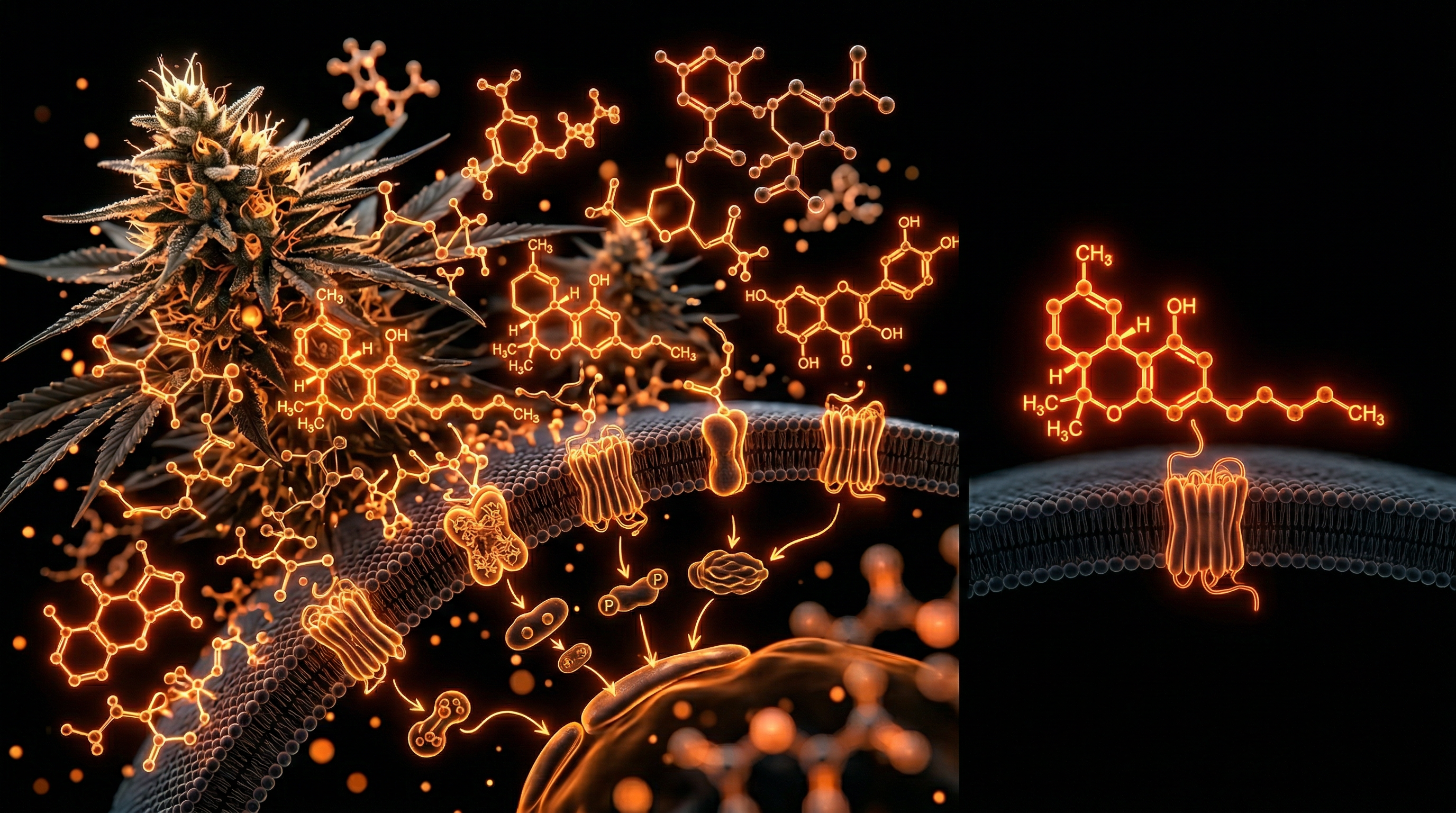
The term "Entourage Effect" was first coined in 1998 by S. Ben-Shabat and Raphael Mechoulam to describe the synergistic interplay within the cannabis plant. They discovered that non-psychoactive cannabinoids increased the activity of the primary psychoactive compound, THC. However, this principle applies to the entire botanical kingdom.
Key Statistic: Research into Artemisia annua (Sweet Wormwood) has shown that the whole-leaf extract is up to 36 times more effective at clearing malaria parasites from the blood than an equivalent dose of pure, isolated artemisinin.
Synergistic Modes of Action
There are four primary ways botanical synergism manifests in the body:
- Multi-target effects: Different compounds hit different receptors that all contribute to the same physiological outcome (e.g., five different compounds in Valerian root all modulating the GABA system via different mechanisms).
- Pharmacokinetic enhancement: "Helper" molecules that do not have a direct effect on the disease themselves but improve the absorption or decrease the degradation of the primary active compound.
- Neutralisation of toxicity: Secondary metabolites that buffer or mitigate the side effects of the primary alkaloid (e.g., the tannins in tea that moderate the "jittery" effects of caffeine).
- Resistance circumvention: In the case of anti-microbial plants, the presence of multiple compounds makes it mathematically impossible for a pathogen to develop a resistance mutation to all of them simultaneously.
Mechanisms at the Cellular Level
At the microscopic scale, the difference between a synthetic isolate and a botanical complex is the difference between a sledgehammer and a master key.
Multi-Target Ligands and Receptor Affinity
Modern drugs are designed as high-affinity ligands. They bind incredibly tightly to a specific receptor, often staying there long after the physiological signal should have ended. This leads to "receptor down-regulation," where the body, sensing an overstimulation, actually removes receptors from the cell membrane. This is the root of drug tolerance and withdrawal.
Whole-plant medicines, conversely, often consist of many low-affinity ligands. These compounds "tickle" the receptors rather than smashing them. Because they are hitting multiple types of receptors (e.g., serotonin, dopamine, and opioid receptors simultaneously but gently), they achieve a therapeutic effect without triggering the body's compensatory shutdown mechanisms.
P-Glycoprotein Inhibition
One of the most profound cellular mechanisms of synergy involves P-glycoprotein (P-gp). P-gp is a "pump" on the cell membrane that identifies foreign chemicals and ejects them before they can take effect. This is a primary cause of drug resistance. Many plants contain specific flavonoids that inhibit these P-gp pumps. In a whole-plant extract, one compound "distracts" or disables the pump, allowing the medicinal compounds to enter the cell unhindered. When you isolate the "active" compound and deliver it as a synthetic pill, the P-gp pumps work at full capacity to eject it, necessitating higher—and more toxic—doses to achieve the same result.
The Role of Secondary Metabolites: Terpenes and Flavonoids
For decades, terpenes (the aromatic oils in plants) and flavonoids (the pigments) were dismissed as "inert" or merely organoleptic. We now know they are potent biological modulators.
- Terpenes can alter the permeability of the blood-brain barrier, allowing larger molecules to pass through that would otherwise be blocked.
- Flavonoids act as powerful antioxidants that prevent the oxidative stress often caused by the metabolism of potent alkaloids.
In a synthetic drug, these "assistants" are absent. The body is forced to process a "naked" chemical, often resulting in hepatic (liver) stress and systemic inflammation.
Environmental Threats and Biological Disruptors
The efficacy of botanical synergism is predicated on the chemical density of the plant. However, we are living in an era of unprecedented environmental degradation that is stripping plants of their "entourage."
Soil Depletion and the Loss of Complexity
The "Great Thinning" of our nutritional and medicinal landscape is a direct result of industrial agriculture. Plants synthesise secondary metabolites in response to environmental stressors—microbial diversity in the soil, insect pressure, and mineral availability.
- Monocropping and the use of NPK (Nitrogen, Phosphorus, Potassium) fertilisers create plants that look "healthy" but are chemically hollow.
- Without a rich soil microbiome (mycorrhizal fungi), plants cannot take up the trace minerals required to build complex flavonoids and terpenes.
Glyphosate and the Shikimate Pathway
The widespread use of glyphosate (Roundup) is a direct biological disruptor of botanical medicine. Glyphosate inhibits the shikimate pathway, a metabolic route found in plants and bacteria but not in humans. The mainstream narrative uses this fact to claim glyphosate is "safe."
Exposing the Truth: The shikimate pathway is the very mechanism through which plants produce essential aromatic amino acids and the majority of their medicinal polyphenols. By blocking this pathway, glyphosate residues not only kill "weeds" but functionally lobotomise the medicinal potential of the crops and herbs that survive.
Furthermore, glyphosate destroys the human gut microbiome (which uses the shikimate pathway), the very system required to metabolise and activate plant compounds. If the gut is damaged by environmental toxins, the most potent botanical synergy will fail to "unlock" within the body.
The Cascade: From Exposure to Disease
The shift from whole-plant medicine to isolated synthetics has initiated what we term the Iatrogenic Cascade. This is a sequence of biological failures triggered by the "reductionist intervention."
Stage 1: The Bio-Incompatibility Event
When a synthetic isolate (such as a statin or a synthetic corticosteroid) enters the system, the body perceives it as a xenobiotic (a substance foreign to life). Because the "buffer" compounds from the parent plant are missing, the drug binds with high affinity to its target but also creates "off-target" effects. For example, a drug meant for the heart may inadvertently bind to receptors in the liver or brain.
Stage 2: Metabolic Exhaustion
The liver's Cytochrome P450 enzyme system is forced into overdrive to detoxify the isolated compound. Unlike whole plants, which often contain compounds that induce or support these enzymes, synthetics tend to inhibit them. This creates a bottleneck. Toxins begin to circulate longer, leading to systemic oxidative stress.
Stage 3: The Symptom Substitution
The "side effect" of the first drug is then "treated" with a second synthetic drug.
- A patient takes an isolated NSAID for pain.
- The NSAID causes gastric lining erosion (because it lacks the protective mucilage found in the original plant source).
- The patient is then prescribed a Proton Pump Inhibitor (PPI) to protect the stomach.
- The PPI causes malabsorption of B12 and magnesium, leading to depression and muscle cramps.
- The patient is then prescribed an SSRI.
This is the Modern Paradigm: a cascade of synthetic interventions required because we refused to acknowledge the wisdom of the whole plant.
What the Mainstream Narrative Omits
The suppression of botanical synergism is not an accident of history; it is a structural necessity of the pharmaceutical business model. There are three primary "blind spots" the mainstream narrative refuses to address:
1. The Patentability Problem
Under international law, you cannot patent a "product of nature." You cannot own the rights to the Dandelion or the Elderberry. To create a multi-billion dollar asset, a company must isolate a single molecule, modify it slightly to create a "new-to-nature" chemical, and then patent that specific structure. The entire pharmaceutical R&D system is incentivised to find the "one thing" that can be owned, even if the "ten things" working together in the plant are safer and more effective.
2. The Standardization Trap
Mainstream regulatory bodies (like the FDA and MHRA) demand "standardisation." This sounds scientific, but it is a trap. It requires a herbal product to be measured by a single "active marker."
- If a St. John's Wort extract is standardised to Hypericin, the manufacturer may use harsh chemical extractions to maximise that one compound, discarding the hyperforin and flavonoids that actually contribute to the anti-depressant effect and reduce photosensitivity.
- The result is a "plant-based" product that behaves like a synthetic drug, losing the synergistic safety profile of the original herb.
3. The Myth of the "Active Ingredient"
The term "Active Ingredient" is a reductionist lie. In many of the world's most powerful medicines, there is no single active ingredient. In Ginseng, the ginsenosides work in a push-pull relationship: some are stimulatory, while others are sedative. They "buffer" each other to create an adaptogenic effect (homeostasis). If you isolate the stimulatory ginsenoside, you get a drug that causes hypertension and anxiety. The "medicine" is the relationship between the molecules, not the molecules themselves.
The UK Context
The United Kingdom presents a unique and particularly restrictive landscape for botanical medicine. While countries like Germany and Switzerland have integrated herbalism into their state-funded healthcare models (recognising "Phytotherapy" as a valid medical discipline), the UK has moved in the opposite direction.
The MHRA and the THR Scheme
In the UK, the Medicines and Healthcare products Regulatory Agency (MHRA) governs the sale of herbal medicines. Since 2011, under the Traditional Herbal Medicines Registration (THR) scheme, many potent herbal remedies have been removed from the shelves or restricted.
- To get a THR mark, a producer must pay tens of thousands of pounds per product.
- Small-scale, high-quality herbalists are priced out of the market.
- The result: the "herbal" products available in UK high street pharmacies are often low-potency, highly processed, and lack the complex chemistry of professional-grade tinctures.
The NICE Guidelines and the Evidence Gap
The National Institute for Health and Care Excellence (NICE) sets the standard for what the NHS will prescribe. Their "Evidence-Based Medicine" (EBM) framework is heavily biased toward the Randomised Controlled Trial (RCT).
- The RCT is designed to test one variable (one drug) against a placebo.
- Botanical synergism, by definition, involves hundreds of variables.
- Because you cannot perform a standard RCT on a "shifting" botanical complex in the same way you can on a static synthetic molecule, the UK medical establishment dismisses herbalism as "lacking evidence," despite thousands of years of human clinical use.
Callout: In the UK, medical doctors receive an average of less than 20 hours of nutritional education and almost zero education in phytotherapy during their entire five-year degree. The British medical model is functionally illiterate in the language of plant chemistry.
The Brexit Impact
Since leaving the EU, the UK has faced additional hurdles in sourcing high-quality organic botanicals from Europe. This has led to an influx of lower-quality raw materials from regions with fewer environmental controls, further compromising the "entourage" of products available to the British public.
Protective Measures and Recovery Protocols
In a world dominated by synthetic isolates and environmental disruptors, how does one return to the principle of botanical synergism? Recovery requires a three-pronged approach: Sourcing, Activation, and Depurative Support.
1. Moving Beyond the "High Street" Supplement
To experience true synergism, you must avoid "standardised" isolates.
- Seek "Full Spectrum" Extracts: Look for tinctures or extracts that use dual-extraction methods (water and alcohol) to ensure both polar and non-polar compounds are preserved.
- Priority on Organic/Wildcrafted: Given the threat of glyphosate to the shikimate pathway, only organic botanicals can guarantee the presence of a full flavonoid profile.
- The "Whole Plant" Rule: Whenever possible, use the whole herb (e.g., ground Turmeric root with its natural oils and curcuminoids) rather than an isolated "Curcumin" pill. If using Curcumin, it must be combined with piperine (black pepper) and a fat—a classic example of culinary synergism.
2. Restoring the Biological "Unlock" (The Gut)
Synergy does not happen in the bottle; it happens in the gut.
- Repair the Microbiome: The "Entourage" requires microbial enzymes to break down complex glycosides into their active forms.
- Eliminate Disruptors: Remove glyphosate-sprayed grains and chlorinated water, which act as "botanical silencers" in your internal ecosystem.
3. The Protocol for Synthetic Detoxification
If you are transitioning from a synthetic-heavy regime (under medical supervision) to a more natural approach, your liver requires support to clear the "naked" metabolites.
- *Milk Thistle (Silybum marianum):* An archetypal synergistic plant. Its complex of silymarin flavonolignans protects liver cells from synthetic oxidative damage.
- *Nettle Root (Urtica dioica):* Helps to "uncouple" synthetic hormones and drugs from Sex Hormone Binding Globulin (SHBG), allowing the body to clear them more efficiently.
- Glutathione Precursors: Use sulphur-rich botanicals (Garlic, Cruciferous vegetables) to provide the raw materials for the body’s master antioxidant, which is often depleted by synthetic drug use.
4. The "Herbaceous Diet"
Instead of viewing herbs as "pills in a bottle," they should be integrated as "information" for the body. The British tradition of the "Kitchen Garden" was a biological necessity. Consuming small amounts of various bitter herbs (Dandelion greens, Arugula, Chicory) daily keeps the liver's detoxification pathways "primed" and ready to process more complex medicinal compounds when needed.
Summary: Key Takeaways
The war between botanical synergism and isolated synthetics is not just a scientific debate; it is a fundamental conflict between two worldviews. One sees the body as a machine to be hacked; the other sees it as an ecosystem to be nourished.
- Synergy is the Rule, Not the Exception: In nature, no compound works alone. The "Entourage Effect" is the biological standard for efficacy and safety.
- Reductionism Breeds Toxicity: By isolating "active" compounds, the pharmaceutical industry removes the natural buffers and "guide" molecules, leading to the high rate of side effects seen in modern medicine.
- The Patent Motive: The drive for "Silver Bullets" is fuelled by the inability to patent whole-plant complexes. This has led to a "Standardisation Trap" that compromises herbal quality.
- Environmental Integrity Matters: Soil health and the absence of pesticides (like glyphosate) are prerequisites for medicinal plant complexity.
- The UK System is Rigged: Through the MHRA and NICE, the UK medical model systematically excludes botanical complexity in favour of synthetic commodification.
- Reclaiming Health: True recovery involves returning to full-spectrum, organic plant medicines and restoring the internal microbiome necessary to unlock their power.
As we move deeper into the 21st century, the limitations of the synthetic paradigm are becoming impossible to ignore. The future of medicine lies not in the next "blockbuster" isolate, but in our ability to reconnect with the sophisticated, multi-dimensional chemistry of the botanical world. It is time to move past the "Silver Bullet" and embrace the "Orchestra."
This article is provided for informational and educational purposes only. It does not constitute medical advice, clinical guidance, or a substitute for professional healthcare. Information reflects cited research at time of publication. Always consult a qualified healthcare professional before acting on any health information.
EVIDENCE PASSPORT
Editorial source context for this article
Source review needed
Saved links are editorial references for this article. They may support specific claims rather than every sentence. Open and assess each source in context. This passport does not independently verify them.
Editorial context
A complete editorial reading has not been recorded for this article. Source links remain available for you to open and assess directly.
Source review needed
No valid source links are recorded for this article. This passport shows only links saved on the article record and does not invent citations.
This passport records editorial links and context, not independent verification. Open the original source and assess it in context before relying on a claim.
Medical Disclaimer
The information in this article is for educational purposes only and does not constitute medical advice, diagnosis, or treatment. Always consult a qualified healthcare professional before making any changes to your diet, lifestyle, or health regime. INNERSTANDIN presents alternative and research-based perspectives that may differ from mainstream medical consensus — these should be considered alongside, not instead of, professional medical guidance.
Read Full DisclaimerContinue the thread
Keep this question moving.
Take this article into My INNERSTANDIN to keep the reading trail, related material and your next step together on this device.