
Cataracts: Investigating the Glycation and Oxidation of the Crystalline Lens
Updated May 2026
Understanding the biochemical changes that turn a clear lens opaque, focusing on protein cross-linking and glycation. We discuss the roles of UV exposure and dietary antioxidants in slowing lens degradation.
Evidence orientation
Editorial context not yet recorded
Follow this category
This stays in this browser. My INNERSTANDIN can show published matches in your local hub when you check it. It does not send email, push, or alert notifications.
Local learning review
A private browser aid for revisiting ideas. It is not an alert or a health recommendation.
Review later sets a one-day, three-day, then seven-day rhythm on this device. Choose it only when you want to revisit this article.
Overview
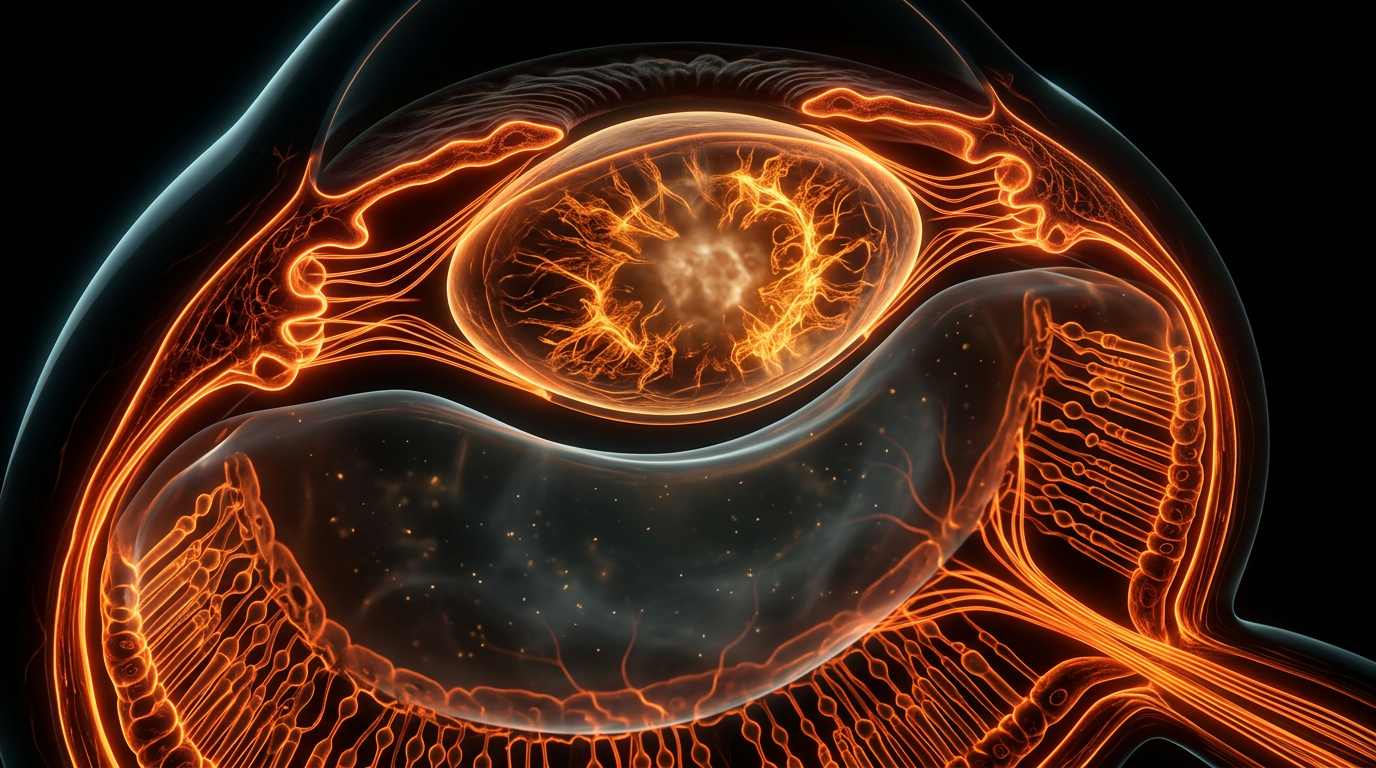
The human eye is often described as a window to the soul, but from a biological perspective, it is a masterpiece of precision engineering. At the heart of this optical system lies the crystalline lens—a transparent, biconvex structure responsible for refracting light and focusing it onto the retina. For the better part of our lives, this lens remains perfectly clear, flexible, and efficient. However, for millions of people worldwide, and an increasing number of individuals in the United Kingdom, this clarity is slowly replaced by a milky opacity known as a cataract.
Cataracts are the leading cause of blindness globally. In the UK, cataract surgery is the most common elective surgical procedure performed by the NHS, with over 450,000 operations carried out annually. Yet, the mainstream medical narrative frequently presents cataracts as an unavoidable "wear and tear" consequence of ageing—a mechanical failure that can only be resolved with a scalpel.
At INNERSTANDING, we believe this perspective is fundamentally flawed. Cataracts are not merely a byproduct of birthdays; they are the end-stage manifestation of specific, preventable biochemical disruptions. To truly understand cataracts, we must look beyond the macro-level cloudiness and investigate the molecular battleground within the lens. This investigation focuses on the two primary culprits: glycation and oxidation. By understanding how these processes interact to cross-link proteins and destroy lens transparency, we can move from reactive surgery to proactive biological preservation.
The Biology — How It Works
To understand why a lens turns opaque, one must first understand how it achieves the miracle of transparency in the first place. The crystalline lens is a unique tissue, perhaps one of the most specialised in the human body.
A Tissue Without Blood
Unlike almost every other organ, the mature lens is entirely avascular. It has no blood vessels to deliver oxygen or nutrients directly. This is a design necessity; blood vessels would obstruct the path of light. Instead, the lens relies on the aqueous humour—the fluid in the anterior chamber of the eye—to provide nourishment and remove waste through slow diffusion. This lack of direct blood supply makes the lens particularly vulnerable to metabolic imbalances and slow to recover from oxidative stress.
The Crystallin Proteins
The lens is composed of roughly 35% protein and 65% water. The majority of these proteins are known as crystallins ($\alpha$, $\beta$, and $\gamma$). These proteins are packed so densely and arranged so precisely that they create a uniform refractive index, allowing light to pass through without scattering.
FACT: The proteins in the centre of your lens (the nucleus) are as old as you are. Unlike other proteins in the body that are regularly recycled and replaced, crystallins must remain stable and soluble for a lifetime.
The Maintenance of Solubility
Transparency depends entirely on these crystallins remaining in a soluble, unaggregated state. This is maintained by $\alpha$-crystallin, which acts as a "molecular chaperone." Its job is to bind to slightly damaged or unfolded proteins to prevent them from clumping together. However, this chaperone system has a finite capacity. Once the $\alpha$-crystallin is "used up" or overwhelmed by damaged proteins, the lens begins the irreversible slide toward opacity.
Mechanisms at the Cellular Level
The transition from a clear lens to a cataractous one is a journey of molecular "rusting" and "sugar-coating." At the cellular level, the two dominant mechanisms are non-enzymatic glycation and oxidative stress.
1. Protein Glycation: The Maillard Reaction in the Eye
Glycation occurs when a sugar molecule (like glucose or fructose) bonds to a protein or lipid molecule without the controlling action of an enzyme. In the kitchen, this is known as the Maillard reaction—the browning of meat or bread. In the eye, this "browning" happens inside your lens.
When glucose levels are chronically elevated, or when the body’s ability to process sugars is compromised, glucose molecules attach to the amino groups of the crystallin proteins. This initial stage creates what is known as a Schiff base, which then rearranges into a more stable Amadori product.
Over time, these products undergo further complex reactions to become Advanced Glycation End-products (AGEs). These AGEs are catastrophic for lens health because they create permanent, covalent cross-links between protein strands. This turns the once-flexible protein matrix into a rigid, yellow-brown, opaque tangle.
2. Oxidative Stress and the Fenton Reaction
While glycation "sugars" the proteins, oxidation "burns" them. The lens is constantly exposed to Reactive Oxygen Species (ROS). Under normal conditions, the lens is armed with high concentrations of Glutathione (GSH), the body’s master antioxidant, to neutralise these threats.
In a cataractous lens, glutathione levels are depleted. This allows free radicals to attack the thiol groups of crystallin proteins. This results in the formation of disulphide bridges—another form of cross-linking that causes proteins to aggregate. Furthermore, the presence of trace metals like iron or copper can trigger the Fenton reaction, generating the highly destructive hydroxyl radical, which causes immediate and severe damage to the lens fibre membranes.
3. The Loss of Chaperone Function
As glycation and oxidation progress, the molecular chaperone $\alpha$-crystallin becomes modified itself. Once $\alpha$-crystallin is glycated, it loses its ability to prevent other proteins from clumping. This represents the "tipping point" in cataract development; once the chaperone system fails, protein aggregation accelerates exponentially.
Environmental Threats and Biological Disruptors
While the internal biochemistry is the direct cause of cataracts, several external factors accelerate these processes, acting as catalysts for lens degradation.
UV Radiation: The Photo-Oxidative Insult
The lens acts as a filter, absorbing much of the ultraviolet (UV) radiation that enters the eye to protect the retina. However, this protection comes at a cost. UV light, particularly UVA, triggers the degradation of the amino acid tryptophan within the lens. This produces "kynurenines," which are yellow-coloured pigments that further sensitise the lens to light, creating a vicious cycle of photo-oxidation.
FACT: Prolonged exposure to UV radiation without protection can increase the rate of protein oxidation in the lens by up to 400%, significantly accelerating the onset of nuclear cataracts.
Dietary Sugars and Seed Oils
The modern Western diet is a primary driver of lens pathology. High intake of refined carbohydrates and fructose leads to systemic "glycaemic variability." Even in non-diabetics, frequent blood sugar spikes increase the rate of lens protein glycation.
Furthermore, the consumption of industrial seed oils (high in Omega-6 polyunsaturated fats) increases the systemic burden of lipid peroxidation. When these unstable fats break down, they produce byproducts like 4-hydroxynonenal (4-HNE), which is known to directly modify lens proteins and inhibit the enzymes responsible for maintaining lens clarity.
Pharmaceutical Triggers
Certain medications are notorious for inducing cataracts. The most prominent are corticosteroids. Whether taken orally, inhaled for asthma, or applied as eye drops, steroids alter the electrolytic balance of the lens and interfere with the sodium-potassium pump, leading to "posterior subcapsular cataracts," which can develop much faster than age-related types.
The Cascade: From Exposure to Disease
The path to a cataract is rarely a sudden event; it is a cumulative cascade of biological insults. It typically follows this progression:
- Phase I: Antioxidant Depletion. Factors like smoking, poor diet, or excessive UV exposure begin to drain the lens's reservoir of glutathione. The lens remains clear, but its "buffer" against damage is gone.
- Phase II: Micro-Modifications. Small-scale glycation and oxidation begin. Crystallin proteins start to unfold slightly. The $\alpha$-crystallin chaperones step in to bind these proteins, maintaining transparency but using up their finite supply.
- Phase III: Phase Separation. As damaged proteins accumulate and chaperones are exhausted, the proteins begin to undergo "phase separation." They no longer form a uniform medium but start to cluster into microscopic droplets.
- Phase IV: Aggregation and Light Scattering. These droplets grow into large aggregates. When these aggregates reach a size greater than the wavelength of visible light (roughly 400-700 nm), they begin to scatter light rather than let it pass through.
- Phase V: Clinical Opacity. The scattering becomes so intense that the lens appears cloudy to an observer. The patient experiences glare, reduced contrast sensitivity, and eventually, a total loss of functional vision.
FACT: By the time a cataract is visible to an optician during a standard slit-lamp exam, the underlying biochemical damage (cross-linking) has likely been progressing for over a decade.
What the Mainstream Narrative Omits
The mainstream medical establishment views cataracts through a lens of "inevitability" and "intervention." This narrative serves a specific purpose, but it ignores critical biological truths.
The Inevitability Myth
We are told that if we live long enough, everyone gets a cataract. This is biologically inaccurate. There are documented cases of centenarians with perfectly clear lenses. Cataracts are not an age-related certainty; they are a metabolic consequence of lived environment and nutrition. By framing it as "inevitable," the system discourages individuals from taking preventative measures in their 30s and 40s.
The Surgery-First Industrial Complex
In the UK, the focus is almost entirely on "wait and see." Patients are told their cataract isn't "ripe" enough for surgery, so they should wait until their vision is sufficiently impaired. There is almost no discussion of metabolic intervention to slow the progression. Why? Because cataract surgery is a highly profitable, high-throughput "conveyor belt" within the healthcare system.
The Neglect of the Gut-Eye Axis
Mainstream ophthalmology rarely looks below the neck. However, emerging research suggests a profound "gut-eye axis." Systemic inflammation, often originating from a compromised gut microbiome (leaky gut), releases pro-inflammatory cytokines that can reach the aqueous humour, accelerating oxidative stress within the lens. The lens is not an isolated vacuum; it is a reflection of systemic metabolic health.
FACT: Research indicates that individuals with metabolic syndrome or Type 2 Diabetes develop cataracts on average 15-20 years earlier than those with healthy insulin sensitivity.
The UK Context
The United Kingdom faces a unique set of challenges regarding lens health. The British climate, lifestyle, and healthcare structure all play a role in the prevalence of this condition.
The NHS Waiting List Crisis
Following the pandemic, NHS waiting lists for ophthalmology have reached record highs. Many British seniors are living for years with deteriorating vision, which leads to secondary issues like falls, social isolation, and depression. This "reactive" model is failing the population. If a fraction of the resources spent on surgery were diverted into public health education regarding glycation and antioxidant status, the burden on the NHS would decrease significantly.
The "Grey Skies" Misconception
Many Britons believe that because the UK is often overcast, they do not need to worry about UV damage. This is a dangerous fallacy. UVA rays penetrate through clouds and are present year-round. Furthermore, the British tendency toward a "tea and biscuits" culture—high in refined flour and sugar—provides the perfect substrate for the protein glycation discussed earlier.
Vitamin D and Light Exposure
Paradoxically, while UV can damage the lens, a total lack of natural light exposure can disrupt circadian rhythms and systemic health. The UK's northern latitude means many are Vitamin D deficient. Vitamin D is a potent modulator of inflammation; its deficiency has been linked in some studies to a higher risk of various eye diseases, including cataracts.
Protective Measures and Recovery Protocols
At INNERSTANDING, we advocate for a "Biology-First" approach. While surgery is a miraculous backup, the goal should be the preservation of the native lens.
1. The Anti-Glycation Protocol
To stop the "browning" of your lens, you must manage your blood glucose.
- Low-Glycaemic Eating: Prioritise whole foods that don't cause insulin spikes.
- Benfotiamine: This fat-soluble form of Vitamin B1 is a powerhouse for blocking the pathways that lead to AGE formation. It has been shown to protect against sugar-induced damage in both the nerves and the eyes.
- Carnosine: This dipeptide is a natural "sacrificial" molecule. It allows sugars to bind to it instead of your lens proteins. N-acetylcarnosine (NAC) eye drops have been used in various trials to actually reverse some of the early-stage protein cross-linking.
2. The Antioxidant Fortress
The lens needs a constant supply of specific nutrients to maintain its glutathione levels.
- Vitamin C: The concentration of Vitamin C in the aqueous humour is typically 20 to 30 times higher than in the blood—if your intake is sufficient. It is the primary shield against UV-induced oxidation.
- L-Glutathione Precursors: Supplementing with N-acetylcysteine (NAC), Glycine, and Glutamine can help the body synthesise its own glutathione.
- Lutein and Zeaxanthin: These carotenoids are famous for macular health, but they also accumulate in the lens, where they act as internal "sunglasses," filtering out harmful blue and UV light.
3. Lifestyle and Environmental Shielding
- High-Quality Polarised Sunglasses: Ensure they have 100% UVA/UVB protection. This is non-negotiable, even on cloudy British days.
- Smoking Cessation: Smoking is perhaps the single most significant modifiable risk factor for cataracts. It introduces massive amounts of heavy metals (like cadmium) and free radicals directly into the bloodstream, which quickly find their way to the lens.
- Blue Light Mitigation: In our modern world, excessive exposure to artificial blue light from screens (especially at night) can contribute to retinal and lens stress. Using "orange" tinted blue-blockers in the evening can help maintain the eye's oxidative balance.
FACT: Clinical studies have shown that individuals with the highest intake of Vitamin C have a 33% lower risk of cataract progression over a 10-year period compared to those with the lowest intake.
4. The Role of Hydration and Electrolytes
Since the lens lacks blood vessels, it depends on the "pumping" action of ions to move water and nutrients in and out. Dehydration or an imbalance of sodium and potassium can cause the lens to swell or become distressed. Ensuring adequate intake of trace minerals (magnesium, potassium, and selenium) is essential for the cellular pumps that keep the lens clear.
Summary: Key Takeaways
Cataracts are not an unavoidable fate; they are a biological signal of systemic metabolic distress and cumulative oxidative burden. The crystalline lens is a remarkable, long-lived structure that requires specific conditions to maintain its transparency.
- Transparency is about solubility: When crystallin proteins are damaged by sugar (glycation) or "rust" (oxidation), they clump together and scatter light.
- Glycation is "Internal Cooking": High sugar diets cause the same Maillard reaction in your eyes that browns a loaf of bread, leading to irreversible protein cross-linking.
- Glutathione is the Guardian: The lens survives on glutathione. When this antioxidant is depleted by smoking, poor diet, or UV exposure, the lens begins to turn opaque.
- The System is Reactive: The current UK healthcare model prioritises surgery over prevention. True eye health begins with metabolic management decades before a cataract forms.
- Prevention is Possible: Through the use of anti-glycation nutrients like benfotiamine, high-dose Vitamin C, and proper UV protection, the "inevitable" slide toward cataracts can be significantly slowed or even halted.
The choice is clear: we can continue to view our eyes as mechanical parts destined for replacement, or we can honour the complex biochemistry that allows us to see the world. At INNERSTANDING, we choose the latter. Protect your proteins, manage your metabolism, and keep your vision clear for a lifetime.
This article is provided for informational and educational purposes only. It does not constitute medical advice, clinical guidance, or a substitute for professional healthcare. Information reflects cited research at time of publication. Always consult a qualified healthcare professional before acting on any health information.
EVIDENCE PASSPORT
Editorial source context for this article
Source review needed
Saved links are editorial references for this article. They may support specific claims rather than every sentence. Open and assess each source in context. This passport does not independently verify them.
Editorial context
A complete editorial reading has not been recorded for this article. Source links remain available for you to open and assess directly.
Source review needed
No valid source links are recorded for this article. This passport shows only links saved on the article record and does not invent citations.
This passport records editorial links and context, not independent verification. Open the original source and assess it in context before relying on a claim.
Medical Disclaimer
The information in this article is for educational purposes only and does not constitute medical advice, diagnosis, or treatment. Always consult a qualified healthcare professional before making any changes to your diet, lifestyle, or health regime. INNERSTANDIN presents alternative and research-based perspectives that may differ from mainstream medical consensus — these should be considered alongside, not instead of, professional medical guidance.
Read Full DisclaimerContinue the thread
Keep this question moving.
Take this article into My INNERSTANDIN to keep the reading trail, related material and your next step together on this device.