
Cholesterol and Cognitive Resilience: The Evolutionary Necessity of Animal Fats
Updated May 2026
Debunks myths regarding dietary cholesterol and brain aging. It illustrates how animal fats support the myelin sheath and neurotransmitter function.
Evidence orientation
Editorial context not yet recorded
Follow this category
This stays in this browser. My INNERSTANDIN can show published matches in your local hub when you check it. It does not send email, push, or alert notifications.
Local learning review
A private browser aid for revisiting ideas. It is not an alert or a health recommendation.
Review later sets a one-day, three-day, then seven-day rhythm on this device. Choose it only when you want to revisit this article.
Overview
For over half a century, the architectural foundation of human health—the brain—has been under siege by a dietary paradigm that is not only scientifically flawed but biologically catastrophic. The "Lipid Hypothesis," which vilified saturated fat and cholesterol, has performed a surgical strike on the very nutrients required for cognitive longevity, emotional stability, and structural integrity of the central nervous system.
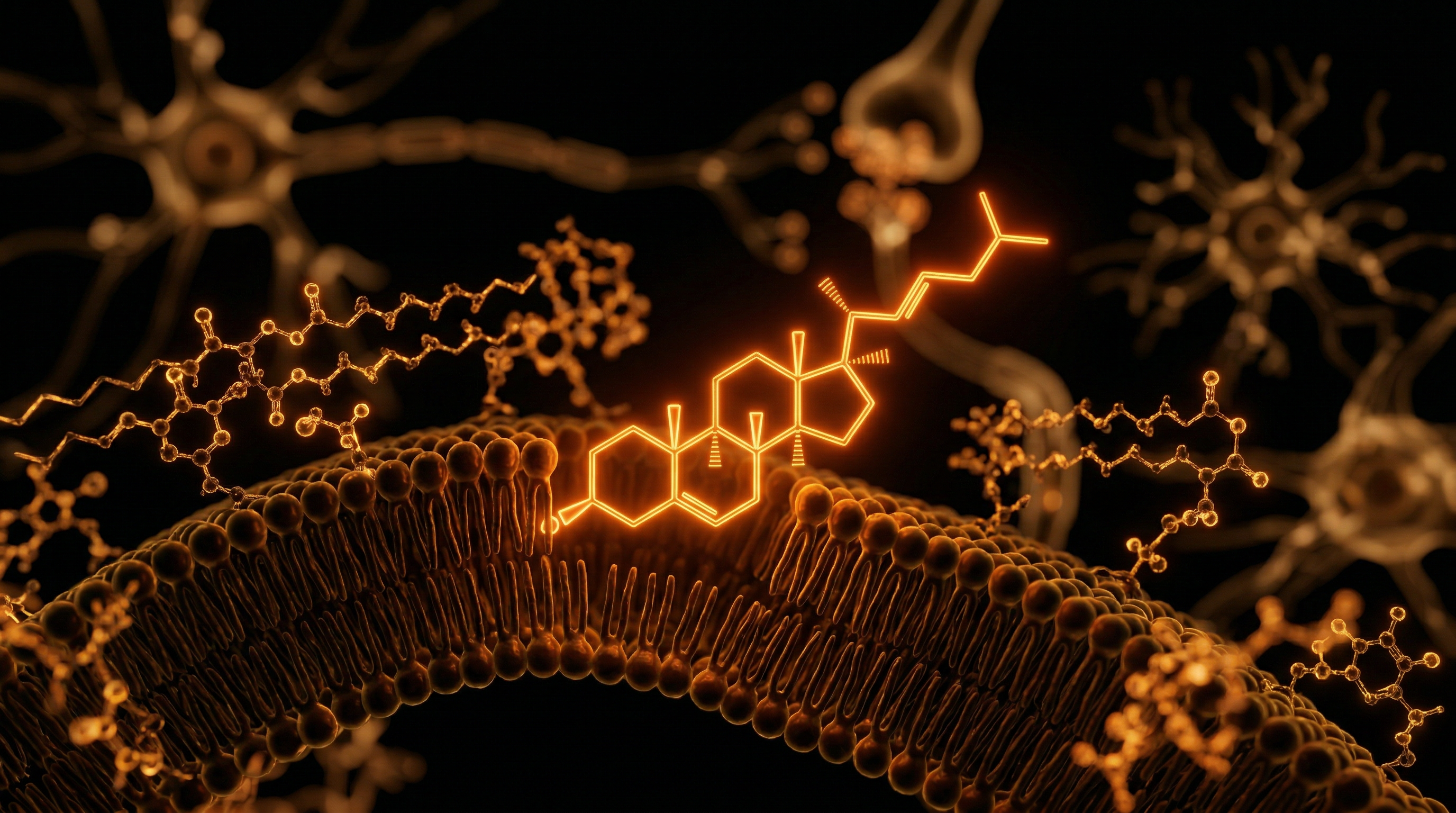
As a senior biological researcher for INNERSTANDING, it is my duty to expose the physiological sabotage inherent in low-cholesterol dogmas. The human brain is the fattiest organ in the body, consisting of approximately 60% fat by dry weight. Within this fatty mass lies a staggering 25% of the total cholesterol found in the entire human body, despite the brain representing only 2% of total body mass. This disproportionate sequestration of cholesterol is not a biological accident; it is an evolutionary mandate.
The transition from the small-brained Australopithecines to the large-brained Homo erectus and eventually Homo sapiens was facilitated almost exclusively by the consumption of nutrient-dense animal fats, scavenged from the marrow and brains of megafauna. We did not evolve on "heart-healthy" grains and seed oils; we evolved as specialized fat-hunters.
Today, we are witnessing a global epidemic of neurodegenerative diseases—Alzheimer’s, Parkinson’s, and Multiple Sclerosis—that correlate precisely with the industrial reduction of animal fats in the human diet. This article serves as a comprehensive deconstruction of the cholesterol myth, illustrating why the myelin sheath, synaptic plasticity, and neurotransmitter efficacy are entirely dependent on the very substances the mainstream medical establishment has urged us to avoid.
Key Fact: The human brain produces its own cholesterol via astrocytes because it is so vital that the organ cannot risk a shortage, yet systemic depletion through diet and medication creates a "biochemical famine" in the cranium.
The Biology — How It Works
To understand the necessity of cholesterol, one must first understand the structural demands of the brain. The brain operates as a high-speed electrical network. For electrical impulses to travel efficiently between neurons, axons must be insulated.
The Role of Myelin
The myelin sheath is the protective, fatty coating that surrounds the axons of neurons. Think of it as the rubber insulation on a copper wire. Without it, the electrical signal—the action potential—leaks, slows down, or dissipates entirely. Myelin is roughly 75-80% lipid, and cholesterol is its primary structural component.
- Fast Signalling: Cholesterol allows for "saltatory conduction," where the electrical impulse "jumps" between gaps in the myelin (Nodes of Ranvier), increasing speed by up to 100 times.
- Structural Integrity: Cholesterol provides the rigidity and fluidity necessary for the myelin membrane to remain stable over decades of life.
- Repair Mechanisms: When myelin is damaged (as seen in Multiple Sclerosis), the body requires an immediate influx of lipids to facilitate remyelination. A low-cholesterol environment makes this repair biologically impossible.
Synaptic Plasticity and Memory
Memory is not stored in a "hard drive"; it is a process of synaptic plasticity—the ability of synapses to strengthen or weaken over time. Cholesterol is the literal building block of the synapse. Research has shown that when cholesterol is depleted from a neuronal culture, the number of synapses drops significantly, and the existing ones fail to release neurotransmitters effectively.
The Blood-Brain Barrier (BBB) Paradox
While the brain synthesises much of its own cholesterol, it is a closed-loop system that is highly sensitive to total body lipid status. The Blood-Brain Barrier is designed to protect the brain from toxins, but it also regulates the transport of lipid-carrying proteins like Apolipoprotein E (ApoE). If the body is in a state of chronic lipid deficiency or if the synthesis pathways are pharmacologically inhibited, the brain's internal "cholesterol factory" (the astrocytes) cannot keep up with the demands of repair and maintenance.
Mechanisms at the Cellular Level
At the sub-microscopic level, cholesterol acts as more than just "filler" or "insulation." It is a dynamic regulator of cell membrane function and protein-to-protein communication.
Lipid Rafts: The Communication Hubs
The neuronal membrane is not a static wall; it is a "fluid mosaic." Within this mosaic are Lipid Rafts—highly organised microdomains enriched with cholesterol and sphingolipids.
- These rafts act as "platforms" where signalling proteins congregate.
- Receptors for key neurotransmitters, such as Serotonin and Dopamine, are housed within these cholesterol-rich rafts.
- If the concentration of cholesterol in the membrane drops, the lipid rafts dissipate. The receptors then drift aimlessly across the membrane, unable to catch the signals sent by neighbouring neurons. This is a primary mechanism behind clinical depression and cognitive fog.
The Astrocyte-Neuron Partnership
Neurons are too busy firing electrical signals to produce all the cholesterol they need. Instead, they outsource this production to Astrocytes (star-shaped glial cells).
Scientific Fact: Astrocytes manufacture cholesterol and package it into HDL-like particles (ApoE) to deliver it to neurons. If astrocyte function is impaired—through oxidative stress or high-sugar diets—the neurons literally begin to starve of the fats they need to maintain their structure.
Antioxidant Protection
Contrary to popular belief, cholesterol acts as a vital antioxidant in the brain. It helps to neutralise free radicals and prevents the oxidation of delicate Polyunsaturated Fatty Acids (PUFAs) like DHA. When cholesterol levels are low, the brain's lipid structure becomes highly susceptible to lipid peroxidation, leading to the "rusting" of the brain seen in Alzheimer's patients.
Environmental Threats and Biological Disruptors
Modernity has introduced a cocktail of factors that directly antagonise the brain’s lipid metabolism. These disruptors have created a "perfect storm" for cognitive decline.
The Seed Oil Invasion
The replacement of tallow, lard, and butter with industrial seed oils (Soybean, Canola, Sunflower) is perhaps the greatest dietary catastrophe in human history. These oils are high in Linoleic Acid, an omega-6 fatty acid that is highly unstable.
- These oils incorporate into the neuronal membranes, making them "leaky" and prone to inflammation.
- Unlike saturated fats, which are straight and stackable (providing stability), these industrial fats are "kinked" and prone to breaking under the heat of metabolic activity.
The Statin Deception
Statins work by inhibiting the enzyme HMG-CoA reductase, which is the primary pathway for cholesterol synthesis. While these drugs target the liver, they are often lipophilic, meaning they can cross the blood-brain barrier.
- By blocking cholesterol synthesis in the brain, statins can cause "transient global amnesia," confusion, and rapid cognitive decline.
- Numerous patients have reported "Statin-induced dementia," which often reverses once the medication is ceased and animal fats are reintroduced.
Glycation and Chronic Hyperinsulinaemia
A diet high in refined carbohydrates and sugars leads to Advanced Glycation End-products (AGEs). These "sticky" sugar molecules bind to proteins and fats, including the ApoE transport proteins. This process "caramelises" the transport system, preventing cholesterol from reaching the neurons that need it most. This is why Alzheimer's is now frequently referred to as "Type 3 Diabetes."
The Cascade: From Exposure to Disease
The path from a low-fat, high-carb diet to a neurodegenerative diagnosis is a predictable biological cascade.
- Initial Depletion: The diet lacks pre-formed cholesterol and fat-soluble vitamins (A, D, E, K2). The body compensates by pulling cholesterol from the periphery, but the brain’s supply begins to dwindle.
- Oxidative Stress: Without sufficient saturated fat to shield them, the brain’s omega-3s (DHA) begin to oxidise. This triggers the activation of Microglia (the brain's immune cells).
- Chronic Neuroinflammation: The microglia, sensing "damaged" fats, release pro-inflammatory cytokines. This inflammation further damages the myelin sheath.
- Plaque Formation: In a desperate attempt to protect the brain from this inflammation and oxidative stress, the body produces Amyloid-Beta plaques.
The Suppressed Truth: Amyloid-Beta is not the cause of Alzheimer’s; it is a "patching material" the brain uses to try and fix the damage caused by a lack of cholesterol and an excess of sugar. Targeting the plaque without fixing the lipid deficiency is like removing a scab from a wound that hasn't healed.
- Synaptic Failure: As cholesterol levels in the lipid rafts drop, neurons can no longer communicate. Memory vanishes. Personality shifts. The brain physically shrinks (atrophy).
What the Mainstream Narrative Omits
The mainstream medical and dietary narrative is not merely mistaken; it is often incentivised to ignore the data. The multi-billion pound industries of statins and processed "heart-healthy" foods rely on the continued demonisation of animal fats.
The Ancel Keys Fallacy
The foundation of the anti-fat movement, the "Seven Countries Study" by Ancel Keys, was a masterpiece of data manipulation. Keys cherry-picked data from seven countries to "prove" a link between saturated fat and heart disease, while ignoring data from 22 other countries (like France and Switzerland) that showed high fat intake was correlated with lower rates of heart disease and superior cognitive health.
The Importance of Vitamin K2
The narrative ignores Vitamin K2 (MK-4), which is found exclusively in animal fats (grass-fed butter, egg yolks, organ meats). K2 is essential for activating the proteins that keep calcium out of the arteries and put it into the bones. In the brain, K2 is involved in the metabolism of sphingolipids, a class of fats that are even more complex than cholesterol and are crucial for the "master-switching" of neuronal signalling.
The "Good" vs "Bad" Cholesterol Myth
The labels "LDL" (Low-Density Lipoprotein) and "HDL" (High-Density Lipoprotein) are misnomers. They are not cholesterol; they are taxicabs that carry cholesterol.
- LDL is the "outbound" taxi, delivering vital fats to cells.
- The brain requires LDL to receive its shipments of cholesterol and fat-soluble antioxidants.
- Labelling LDL as "bad" is like labelling an ambulance "bad" because it is always found at the scene of an accident. It is there to perform a vital service.
The UK Context
In the United Kingdom, the situation is particularly dire. The NHS and Public Health England continue to promote the "Eatwell Guide," which is heavily weighted toward starchy carbohydrates and industrial seed oils, while limiting red meat and eggs.
- The Decline of Traditional Fats: Historically, the British diet was rich in beef suet, lard, and full-fat dairy. The "Sunday Roast" was a nutritional powerhouse of animal fats and minerals. The shift to margarine and "low-fat spreads" in the 1970s and 80s correlates perfectly with the rise of dementia as the leading cause of death in the UK.
- The Statin Prescription Epidemic: The UK has one of the highest rates of statin prescriptions in the world, with over 7 million people currently taking them. There is an unspoken crisis of "brain fog" and cognitive decline in the over-65 population that is frequently dismissed as "normal ageing" but is likely exacerbated by these lipid-lowering agents.
- Institutional Inertia: British medical schools provide minimal nutritional education, and that which they do provide is funded or influenced by the pharmaceutical and food processing industries. This creates a generation of doctors who view a "high cholesterol" blood test as a disease rather than a sign of a robust, well-fuelled nervous system.
Callout: In the UK, dementia and Alzheimer's disease have overtaken heart disease as the leading cause of death. We are quite literally losing our minds because we have abandoned the fats that built them.
Protective Measures and Recovery Protocols
Reversing cognitive decline and building "Cognitive Resilience" requires a radical return to evolutionary biology. We must provide the brain with the raw materials it was designed to use.
The Nose-to-Tail Approach
Eating "nose-to-tail" ensures a spectrum of fats and fat-soluble vitamins that cannot be found in lean muscle meat alone.
- Bone Marrow: Often called "the brain of the bone," marrow is almost pure monounsaturated and saturated fat, rich in long-chain fatty acids necessary for myelin repair.
- Egg Yolks: The richest source of Choline and Lecithin. Choline is the precursor to Acetylcholine, the primary neurotransmitter for memory and focus.
- Tallow (Beef Fat): An incredibly stable fat for cooking, providing the stearic acid that stimulates mitochondrial fusion—the process by which cells repair their powerhouses.
- Organ Meats (Liver/Brain): While consumption of brain tissue is rare today, it is the most concentrated source of pre-formed DHA and cholesterol. Liver provides Vitamin A (Retinol), which is crucial for the gene expression that governs brain health.
Eliminating the Disruptors
Recovery cannot happen while the "sabotage" continues.
- Purge Seed Oils: Replace all vegetable oils with butter, ghee, tallow, or coconut oil.
- Sugar Cessation: Lowering insulin is the only way to "unlock" the body's ability to use fats for fuel (Ketosis).
- Evaluate Statins: Consult with a forward-thinking clinician about the necessity of cholesterol-lowering drugs, especially if cognitive symptoms are present.
The Fasting Connection
Intermittent Fasting and prolonged fasting trigger autophagy—the body's "housekeeping" mode. During autophagy, the brain clears out misfolded proteins (like the aforementioned plaques) and damaged mitochondria, making room for new, cholesterol-rich membranes to be built.
Summary: Key Takeaways
The path to cognitive resilience is not found in a laboratory or a new pharmaceutical drug; it is found in the ancestral wisdom of the human diet.
- Cholesterol is the Brain’s Anchor: It constitutes 25% of the body's total cholesterol and is the primary structural component of the myelin sheath and synaptic membranes.
- Myelin is the Priority: Without cholesterol-rich animal fats, the insulation of our "internal wiring" degrades, leading to the "short-circuiting" seen in neurodegenerative diseases.
- The Narrative is Backwards: High systemic cholesterol is often a protective response to inflammation, not the cause of it. Low cholesterol is a significant risk factor for dementia, depression, and stroke.
- Seed Oils are Toxic: Industrial oils cause the lipid peroxidation that "rusts" the brain from the inside out.
- Eat Ancestrally: To preserve the mind, one must consume the fats that allowed the mind to evolve. Grass-fed beef, suet, marrow, and egg yolks are not "optional" luxuries; they are biological imperatives.
We stand at a crossroads in human health. We can continue to follow the "low-fat" guidelines into a future of cognitive bankruptcy, or we can reclaim our biological heritage. The brain is an organ of fat; to starve it of cholesterol is to starve the very essence of what makes us human.
The choice is yours: follow the dogma, or feed your head.
This article is provided for informational and educational purposes only. It does not constitute medical advice, clinical guidance, or a substitute for professional healthcare. Information reflects cited research at time of publication. Always consult a qualified healthcare professional before acting on any health information.
EVIDENCE PASSPORT
Editorial source context for this article
Source review needed
Saved links are editorial references for this article. They may support specific claims rather than every sentence. Open and assess each source in context. This passport does not independently verify them.
Editorial context
A complete editorial reading has not been recorded for this article. Source links remain available for you to open and assess directly.
Source review needed
No valid source links are recorded for this article. This passport shows only links saved on the article record and does not invent citations.
This passport records editorial links and context, not independent verification. Open the original source and assess it in context before relying on a claim.
Medical Disclaimer
The information in this article is for educational purposes only and does not constitute medical advice, diagnosis, or treatment. Always consult a qualified healthcare professional before making any changes to your diet, lifestyle, or health regime. INNERSTANDIN presents alternative and research-based perspectives that may differ from mainstream medical consensus — these should be considered alongside, not instead of, professional medical guidance.
Read Full DisclaimerContinue the thread
Keep this question moving.
Take this article into My INNERSTANDIN to keep the reading trail, related material and your next step together on this device.
Dig deeper in the Library
Free, longform PDF volumes that go beyond headlines into mechanisms and references.