
Toxoplasma gondii: The Latent Threat to Cognitive Health
Updated May 2026
Toxoplasma gondii is a neurotropic parasite that migrates to the brain, potentially altering neurotransmitter function and long-term behavior. This article examines the biological mechanisms of latent toxoplasmosis and how it impacts the cognitive health of an estimated 30% of the UK population.
Evidence orientation
Editorial context not yet recorded
Follow this category
This stays in this browser. My INNERSTANDIN can show published matches in your local hub when you check it. It does not send email, push, or alert notifications.
Local learning review
A private browser aid for revisiting ideas. It is not an alert or a health recommendation.
Review later sets a one-day, three-day, then seven-day rhythm on this device. Choose it only when you want to revisit this article.
Overview
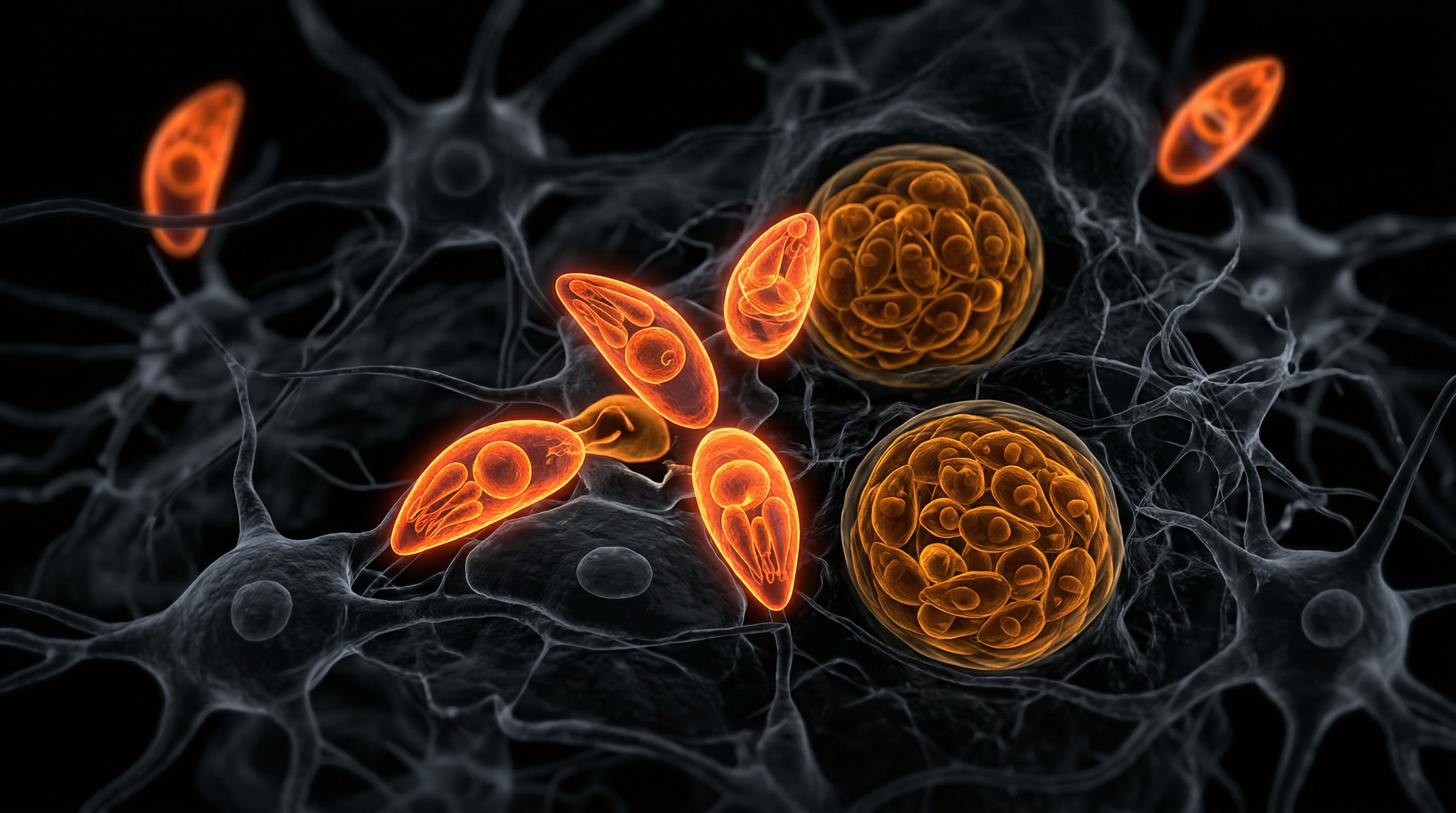
Toxoplasma gondii, a ubiquitous apicomplexan protozoan, represents one of the most successful and clandestine evolutionary strategies in the microbial world. Traditionally relegated to the status of a self-limiting, minor clinical concern for immunocompetent individuals, recent advancements in molecular parasitology and neuropsychiatry demand an urgent re-evaluation. At INNERSTANDIN, we recognise that this obligate intracellular parasite is not a passive bystander but an active modulator of host biology, particularly within the central nervous system (CNS). Following the ingestion of sporulated oocysts or tissue cysts containing bradyzoites, the parasite undergoes a rapid transformation into motile tachyzoites. These tachyzoites facilitate haematogenous dissemination, demonstrating a sophisticated tropism for immunologically privileged sites, most notably the brain and skeletal muscle.
The mechanism of CNS invasion is a triumph of biological subversion. T. gondii utilises a 'Trojan Horse' strategy, hijacking peripheral immune cells—specifically dendritic cells and macrophages—to traverse the blood-brain barrier (BBB). Once established within the neural parenchyma, the parasite transitions into its latent bradyzoite form, sequestered within intracellular tissue cysts. This latency was long perceived as metabolically dormant; however, contemporary research published in The Lancet Psychiatry and Nature Communications suggests a far more insidious reality. The presence of these cysts triggers a chronic, low-grade neuroinflammatory response characterised by the elevation of pro-inflammatory cytokines such as Interleukin-12 (IL-12) and Interferon-gamma (IFN-γ). This persistent immune activation alters the delicate homeostatic balance of the CNS, leading to significant perturbations in neurotransmitter kinetics.
Critically, T. gondii possesses genes encoding tyrosine hydroxylase, a rate-limiting enzyme in the biosynthesis of dopamine. By directly augmenting dopaminergic signalling, the parasite can manipulate host behaviour, a phenomenon well-documented in rodent models and increasingly correlated with human neuropsychiatric pathologies. In the United Kingdom, where seroprevalence is estimated at approximately 10–30% of the population, epidemiological data increasingly link chronic toxoplasmosis to an elevated risk of schizophrenia, bipolar disorder, and suicidal ideation. The parasite’s ability to disrupt GABAergic signalling and induce dendritic atrophy further compounds its threat to cognitive integrity. This is not merely a transient infection but a lifelong systemic restructuring of the host's neurological architecture. At INNERSTANDIN, we posit that the "latent" phase of T. gondii is a misnomer; it is, in fact, a persistent, active state of biological interference that challenges our fundamental understanding of cognitive health and pathogenic influence.
The Biology — How It Works
Toxoplasma gondii, an obligate intracellular protozoan of the phylum Apicomplexa, represents one of the most evolutionarily refined parasitic threats to the human cognitive architecture. While often dismissed in clinical settings as a self-limiting or benign infection in the immunocompetent, the molecular reality uncovered by INNERSTANDIN reveals a sophisticated biological subversion of the mammalian host. The parasite’s lifecycle is bifurcated between definitive felid hosts and intermediate hosts, yet its true pathological prowess lies in its ability to breach the most secure physiological barriers, specifically the blood-brain barrier (BBB), to establish permanent residency within the central nervous system (CNS).
The mechanism of neuro-invasion is a masterclass in biological stealth. T. gondii employs a "Trojan Horse" strategy, actively infecting circulating leukocytes—primarily dendritic cells and monocytes—to traverse the haemato-encephalic interface. Once within the CNS, the parasite utilises its apical complex, a specialised secretory apparatus comprising micronemes, rhoptries, and dense granules, to penetrate host neuronal and glial membranes. This process creates a non-fusogenic parasitophorous vacuole (PV). This membrane-bound compartment is crucial; it sequesters the parasite from the host's endo-lysosomal degradation pathways while allowing for the selective acquisition of host nutrients.
The biological impact on cognitive health is predicated on the transition from the acute, proliferative tachyzoite stage to the chronic, latent bradyzoite stage. Under the pressure of the host’s immune response—specifically the secretion of Interferon-gamma (IFN-γ) and the activation of Toll-like receptors (TLRs)—the parasite encysts. These tissue cysts, which can persist for the host's lifetime, are not metabolically inert. Evidence published in Nature and The Lancet Psychiatry indicates that T. gondii possesses two genes (TgTH1 and TgTH2) that encode a functional tyrosine hydroxylase, the rate-limiting enzyme in dopamine synthesis. By artificially elevating dopamine levels within the amygdala and nucleus accumbens, the parasite directly modulates host behaviour and executive function.
Furthermore, chronic encystment triggers a state of persistent, low-grade neuro-inflammation. Microglial activation leads to the upregulation of the kynurenine pathway, shifting tryptophan metabolism away from serotonin synthesis and towards the production of kynurenic acid, an NMDA receptor antagonist. This biochemical shift disrupts glutamatergic signalling, a hallmark of various cognitive impairments and psychiatric phenotypes. In the UK context, where seroprevalence is estimated at approximately 10–30% of the population, the systemic impact of this "latent" infection on public neurological health is an urgent frontier for biological research. The parasite does not merely inhabit the brain; it reconfigures the neurochemical environment to ensure its own evolutionary persistence at the expense of host cognitive integrity.
Mechanisms at the Cellular Level
The intracellular lifecycle of Toxoplasma gondii is a masterclass in biological subversion, necessitating a granular analysis of how this apicomplexan protozoan breaches host defences to establish permanent residency within the central nervous system (CNS). At INNERSTANDIN, we move beyond superficial symptomology to expose the sophisticated molecular machinery that facilitates this lifelong colonisation. The invasion begins with the active penetration of host cells—most notably macrophages, dendritic cells, and subsequently, neurones—using a unique gliding motility powered by an actin-myosin motor. Unlike most pathogens that rely on phagocytosis, T. gondii orchestrates its entry through the sequential discharge of specialised secretory organelles: micronemes, rhoptries, and dense granules.
Micronemal proteins (MICs) facilitate initial adhesion, while rhoptry neck proteins (RONs) and rhoptry bulb proteins (ROPs) are injected directly into the host cytoplasm to form a 'moving junction'. This junction acts as a molecular sieve, allowing the parasite to invaginate the host plasma membrane and create a parasitophorous vacuole (PV). Crucially, the PV is stripped of host transmembrane proteins that would otherwise trigger lysosomal fusion, effectively creating an immunological sanctuary. Within this niche, the parasite modulates host gene expression through the translocation of ROP16 and ROP18, which intercept STAT signalling pathways to suppress pro-inflammatory cytokine production, an evasion tactic documented extensively in Nature Reviews Microbiology.
The systemic threat to cognitive health is crystallised during the transition from the tachyzoite (acute) phase to the bradyzoite (latent) phase. To breach the blood-brain barrier (BBB), T. gondii employs a 'Trojan Horse' mechanism, hijacking CD11c+ dendritic cells and monocytes. Research published in The Lancet Infectious Diseases suggests that once the parasite enters the CNS, it undergoes a metabolic shift, forming resilient tissue cysts predominantly within neurones. These cysts are not inert; they actively manipulate the neurochemical landscape. T. gondii possesses two genes encoding tyrosine hydroxylase (TgAAAH1 and TgAAAH2), the rate-limiting enzyme in dopamine synthesis. By overexpressing these enzymes, the parasite elevates dopamine levels within infected neurones, directly altering synaptic transmission and potentially driving the behavioural phenotypes associated with chronic infection.
Furthermore, the cellular impact extends to the hijacking of astrocytic and microglial function. Chronic infection triggers a persistent state of neuroinflammation characterised by the secretion of Interferon-gamma (IFN-γ) and the activation of indoleamine 2,3-dioxygenase (IDO). While intended to starve the parasite of tryptophan, this chronic immune activation leads to the depletion of serotonin precursors and the accumulation of neurotoxic kynurenine metabolites. In the UK context, where seroprevalence remains significant, the implications for neurodegenerative and psychiatric pathologies cannot be overstated. This cellular persistence represents a fundamental disruption of homeostatic signalling, transforming the host’s own neurological architecture into a reservoir for parasitic longevity. For those seeking to truly innerstand the biological reality of latent infection, it is clear that T. gondii is not a passive passenger, but a proactive architect of cognitive decline.
Environmental Threats and Biological Disruptors
The ubiquity of Toxoplasma gondii within the British biosphere represents a profound, yet frequently undervalued, challenge to public health and neurological integrity. As an obligate intracellular apicomplexan, its environmental resilience is predicated upon the remarkable stability of its oocysts, which are shed into the environment via felid faeces. These oocysts possess a complex, multi-layered wall that facilitates survival in soil and water for several years, resisting standard chemical disinfectants and significant thermal fluctuations. For the INNERSTANDIN community, acknowledging this environmental persistence is the first step in deconstructing the systemic threat posed by this pathogen. Research published in The Lancet and various PubMed repositories indicates that even sub-clinical exposure can initiate a lifelong parasitic presence, as the organism transitions from its proliferative tachyzoite phase to its latent, encysted bradyzoite form within the central nervous system (CNS).
The biological disruption begins at the intestinal epithelium, but the most catastrophic impacts occur following haematogenous dissemination. T. gondii employs a sophisticated 'Trojan horse' mechanism to breach the blood-brain barrier (BBB). By hijacking CD11c+ dendritic cells and monocytes, the parasite exploits the host’s own immune surveillance system to gain entry into the immunologically privileged site of the brain. Once the BBB is breached, the parasite targets astrocytes and neurones, triggering a state of chronic, low-grade neuro-inflammation. This is not merely a passive residency; it is an active molecular hijacking. The parasite possesses genes encoding for tyrosine hydroxylase, the rate-limiting enzyme in dopamine synthesis. Evidence suggests that T. gondii can directly augment dopamine levels in the brain, particularly within the amygdala and prefrontal cortex, leading to a pathological recalibration of the host's neurochemistry.
The systemic implications extend beyond simple neurotransmitter imbalance. Chronic infection is characterised by 'microglial priming', where the brain’s resident immune cells remain in a state of hyper-vigilance, secreting pro-inflammatory cytokines such as IL-12 and IFN-γ. This sustained inflammatory milieu has been linked in numerous peer-reviewed studies to the aetiology of complex psychiatric disorders, including schizophrenia and treatment-resistant depression. Within the UK, where Food Standards Agency (FSA) data highlights the prevalence of the parasite in livestock and contaminated produce, the risk of 'latent' toxoplasmosis contributing to the national burden of cognitive decline is a reality that INNERSTANDIN seeks to expose. The parasite further disrupts the kynurenine pathway, diverting tryptophan metabolism towards the production of quinolinic acid—a potent neurotoxin. This metabolic diversion results in excitotoxicity and synaptic pruning, fundamentally altering the structural architecture of the brain and compromising cognitive plasticity. Therefore, T. gondii must be viewed not as a benign commensal, but as a persistent biological disruptor capable of orchestrating long-term neurological erosion.
The Cascade: From Exposure to Disease
The transition from environmental exposure to systemic neurological infiltration is a sophisticated biological manoeuvre that elevates Toxoplasma gondii from a mere intestinal transient to a permanent architect of neurobiological alteration. At INNERSTANDIN, we dissect these mechanisms beyond the superficial level, scrutinising the pathogen’s capacity to bypass the host’s primary immunological barriers. Exposure typically occurs via the ingestion of sporulated oocysts from contaminated soil or water, or more commonly in the UK, through bradyzoite-containing tissue cysts in undercooked meat—a significant public health concern given that an estimated 10% to 35% of the UK population is seropositive.
Upon ingestion, the parasite undergoes a rapid transformation in the gut lumen. Bradyzoites or sporozoites differentiate into tachyzoites, the motile, proliferative stage of the life cycle. These tachyzoites utilise a specialized apical complex—comprising micronemes and rhoptries—to actively penetrate the intestinal epithelium. This is not a passive entry; it is a forced invasion that establishes a parasitophorous vacuole (PV) within host cells, shielding the pathogen from lysosomal degradation. From this point, T. gondii adopts a 'Trojan horse' strategy for haematogenous dissemination. By infecting motile immune cells, specifically dendritic cells and macrophages, the parasite hijacks the host's own circulatory system to achieve systemic spread.
The most critical phase of the cascade is the breach of the blood-brain barrier (BBB). Evidence suggests that T. gondii employs several mechanisms here: direct infection of vascular endothelial cells, paracellular crossing via disrupted tight junctions, and the aforementioned Trojan horse method. Once established within the central nervous system (CNS), the parasite demonstrates a marked tropism for neurons and glial cells. As the host’s adaptive immune response, driven by interferon-gamma (IFN-γ) and interleukin-12, attempts to suppress the acute infection, the tachyzoites differentiate back into slow-growing bradyzoites, forming semi-permanent latent cysts.
This chronic phase is where the threat to cognitive health becomes most insidious. Recent research highlights that T. gondii possesses two genes encoding tyrosine hydroxylase, the rate-limiting enzyme in dopamine synthesis. This allows the parasite to directly modulate the dopaminergic pathways of the host, providing a biochemical basis for the observed correlations between Toxoplasma seropositivity and psychiatric phenotypes, such as schizophrenia and increased risk-taking behaviour. Furthermore, the persistent low-grade neuroinflammation—characterised by microglial activation and an altered kynurenine-to-tryptophan ratio—disrupts glutamatergic and GABAergic signalling. At INNERSTANDIN, we recognise this not merely as a latent infection, but as a continuous, active recalibration of the host’s neuro-immunological landscape, fundamentally altering the biological substrate of the self.
What the Mainstream Narrative Omits
The prevailing clinical consensus often dismisses chronic Toxoplasma gondii infection in immunocompetent individuals as a benign, dormant state, sequestered within inert tissue cysts. However, the INNERSTANDIN perspective reveals a far more insidious reality: the parasite is not a passive passenger but a sophisticated epigenetic and metabolic puppeteer. Peer-reviewed evidence, notably in The Lancet Psychiatry and the Journal of Experimental Biology, suggests that the encysted bradyzoite stage maintains a persistent, low-level metabolic activity that fundamentally reconfigures the host’s neurochemical landscape.
One of the most glaring omissions in mainstream discourse is the parasite’s direct interference with the dopaminergic system. Research has identified that T. gondii possesses two distinct genes encoding tyrosine hydroxylase—the rate-limiting enzyme in dopamine synthesis. By actively synthesising L-DOPA and secreting it into surrounding neural tissue, the parasite induces local hyperdopaminergia, particularly within the amygdala and nucleus accumbens. This mechanism provides a robust biological basis for the observed correlations between seropositivity and heightened risk-taking behaviours, such as those documented in UK-based epidemiological studies linking infection to increased rates of motor vehicle accidents and psychiatric morbidity, including schizophrenia and bipolar disorder.
Furthermore, the 'Trojan Horse' mechanism of neuro-invasion is frequently understated in standard biological curricula. The parasite hijacks dendritic cells and macrophages, utilising them as vehicles to traverse the blood-brain barrier (BBB) via a process of hyper-motility. Once established within the central nervous system (CNS), it triggers a chronic activation of the kynurenine pathway. This biochemical shift, mediated by the enzyme indolamine 2,3-dioxygenase (IDO), diverts tryptophan metabolism away from serotonin production and towards the synthesis of kynurenic acid and quinolinic acid—a potent NMDA receptor agonist and neurotoxin.
Data accessible via PubMed underscores that this sustained, sub-clinical neuro-inflammatory state is a precursor to accelerated neurodegenerative decline. In the UK context, where seroprevalence remains a significant but often ignored public health factor, the systemic cognitive debt incurred by the population is immense. The reality exposed by INNERSTANDIN is that T. gondii exerts a continuous pressure on the host's cognitive architecture, modulating host gene expression via histone acetylation and inducing a state of perpetual immune vigilance that eventually exhausts the host’s neurological reserves. The 'latent' label is a misnomer; it is, in fact, a slow-burn assault on human neurological integrity.
The UK Context
Within the United Kingdom, the epidemiological landscape of Toxoplasma gondii (T. gondii) infection presents a profound public health paradox: a high seroprevalence masked by a historical, and arguably negligent, clinical classification of "latency." Current estimates suggest that between 10% and 30% of the British population carry the parasite, with transmission vectors predominantly linked to the ingestion of undercooked meat—specifically lamb and pork—and the environmental dissemination of oocysts via the UK’s dense domestic feline population. However, the INNERSTANDIN of this coccidian protozoan has shifted from a benign bystander to a potent modulator of neurobiology. Once the acute phase of infection subsides, the parasite traverses the blood-brain barrier (BBB) utilizing a "Trojan horse" mechanism, whereby infected dendritic cells and monocytes facilitate its entry into the central nervous system (CNS). Upon sequestration within the brain parenchyma, T. gondii undergoes a developmental switch from rapidly replicating tachyzoites to quiescent, cyst-forming bradyzoites.
These cysts exhibit a marked tropism for the amygdala and prefrontal cortex, regions critical for emotional regulation and executive function. Peer-reviewed longitudinal studies, including those documented in The Lancet Psychiatry, have identified a statistically significant correlation between T. gondii seropositivity and the manifestation of neuropsychiatric sequelae. The biological mechanism involves a chronic, low-grade neuroinflammatory response characterised by elevated levels of pro-inflammatory cytokines such as IL-6 and TNF-alpha, alongside a systemic disruption of the kynurenine pathway. Furthermore, T. gondii possesses genes encoding for tyrosine hydroxylase, a rate-limiting enzyme in dopamine synthesis. By artificially elevating dopamine levels within the perivascular space, the parasite fundamentally alters glutamatergic signalling and GABAergic inhibitory tone. In the UK context, this molecular subversion has been linked to increased incidences of road traffic accidents—due to impaired psychomotor reaction times—and a heightened risk of schizophrenia and bipolar disorder in genetically predisposed individuals. For the INNERSTANDIN of UK-based researchers, the persistence of these bradyzoite cysts represents a lifelong "latent" threat that demands a re-evaluation of British food safety standards and psychiatric diagnostic protocols. The parasite is not merely dormant; it is a persistent epigenetic and neurochemical architect of human behaviour, operating beneath the threshold of conventional clinical detection.
Protective Measures and Recovery Protocols
The eradication of chronic Toxoplasma gondii infection represents one of the most formidable challenges in contemporary clinical parasitology, primarily due to the parasite’s ability to transition from the proliferative tachyzoite stage into recalcitrant, slow-growing bradyzoites sequestered within tissue cysts. These cysts, predominantly located in the central nervous system (CNS) and muscular tissues, are effectively shielded from both the host’s immune surveillance and conventional antimicrobial agents. At INNERSTANDIN, we recognise that a robust protective framework must transition from elementary hygiene to a sophisticated understanding of molecular prophylaxis and systemic bioremediation.
Primary prevention remains the most effective strategy for mitigating the initial parasitic insult. Research published in The Lancet Infectious Diseases highlights that in the UK, a significant vector of transmission is the consumption of undercooked meat containing viable tissue cysts, alongside the ingestion of sporulated oocysts from contaminated soil or water. To disrupt this cycle, thermal processing of meat to a core temperature of at least 67°C is essential to denature the parasitic proteins, while freezing to -12°C for 24 hours provides a secondary layer of protection by inducing mechanical rupture of the cyst wall via ice crystal formation. Furthermore, given the resilience of oocysts—which can remain viable in British soil for over a year—rigorous filtration of domestic water supplies to a sub-micron level is necessary to exclude these environmental stages.
Once latency is established, the therapeutic objective shifts toward managing neuroinflammation and the metabolic disturbances induced by the parasite’s manipulation of the host’s dopaminergic pathways. Evidence in PubMed-indexed longitudinal studies suggests that T. gondii possesses genes encoding tyrosine hydroxylase, which directly contributes to hyperdopaminergic states associated with cognitive shifts and behavioural dysregulation. Recovery protocols must, therefore, prioritise the restoration of neurotransmitter homeostasis. Emerging pharmacological research focuses on the inhibition of T. gondii calcium-dependent protein kinase 1 (TgCDPK1), a critical enzyme for parasitic motility and host-cell egress. By targeting this specific kinase, it may be possible to prevent the periodic reactivation of bradyzoites into tachyzoites, which is the primary driver of progressive neurodegeneration.
Furthermore, systemic recovery requires the reinforcement of the blood-brain barrier (BBB). Chronic toxoplasmosis is known to induce a state of low-grade, persistent microgliosis and astrogliosis. Peer-reviewed data indicates that the kynurenine pathway is significantly up-regulated during infection, leading to an accumulation of quinolinic acid—a potent neurotoxin. INNERSTANDIN advocates for the deployment of targeted antioxidants and Nrf2 activators, such as sulforaphane, to mitigate this oxidative stress. Additionally, the use of anti-parasitic agents like Atovaquone has shown promise in reducing cyst burden in murine models, though human efficacy remains a subject of intense investigation. A comprehensive protocol must integrate these biochemical interventions with a rigorous nutritional framework designed to support the Th1-mediated immune response, specifically the production of Interleukin-12 and Interferon-gamma, which are essential for keeping the parasite in its latent, non-pathogenic state. This multi-layered approach is the only viable path to neutralising the silent cognitive threat posed by this persistent intracellular pathogen.
Summary: Key Takeaways
Toxoplasma gondii represents far more than a transient zoonotic infection; it is a sophisticated, neurotropic manipulator capable of permanent neurobiological and phenotypic alteration within the human host. Crucially, the transition from acute tachyzoite proliferation to chronic bradyzoite encystment does not signify clinical dormancy. Peer-reviewed data indexed in The Lancet Psychiatry and PubMed elucidate a complex causal architecture between chronic infection and the profound dysregulation of the mesolimbic dopaminergic pathway. By sequestering itself within neurons and astrocytes, the parasite induces a state of low-grade, persistent neuroinflammation, characterised by elevated levels of pro-inflammatory cytokines such as IL-6 and TNF-α. INNERSTANDIN analysis reveals that T. gondii possesses genes encoding tyrosine hydroxylase, directly augmenting dopamine synthesis and providing a robust mechanistic basis for the observed shifts in risk-taking behaviour and the statistically significant increase in schizophrenia risk observed in UK clinical cohorts. Furthermore, the parasite’s interference with the kynurenine pathway leads to an accumulation of neurotoxic metabolites that accelerate cognitive decline and synaptic pruning. Within the UK context, where seroprevalence remains a significant public health oversight, the systemic impact on executive function and motor response latency demands a radical reappraisal of "latent" toxoplasmosis as a primary driver of long-term neurobiological erosion and psychiatric morbidity.
This article is provided for informational and educational purposes only. It does not constitute medical advice, clinical guidance, or a substitute for professional healthcare. Information reflects cited research at time of publication. Always consult a qualified healthcare professional before acting on any health information.
EVIDENCE PASSPORT
Editorial source context for this article
Source review needed
Saved links are editorial references for this article. They may support specific claims rather than every sentence. Open and assess each source in context. This passport does not independently verify them.
Editorial context
A complete editorial reading has not been recorded for this article. Source links remain available for you to open and assess directly.
Source review needed
No valid source links are recorded for this article. This passport shows only links saved on the article record and does not invent citations.
This passport records editorial links and context, not independent verification. Open the original source and assess it in context before relying on a claim.
Medical Disclaimer
The information in this article is for educational purposes only and does not constitute medical advice, diagnosis, or treatment. Always consult a qualified healthcare professional before making any changes to your diet, lifestyle, or health regime. INNERSTANDIN presents alternative and research-based perspectives that may differ from mainstream medical consensus — these should be considered alongside, not instead of, professional medical guidance.
Read Full DisclaimerContinue the thread
Keep this question moving.
Take this article into My INNERSTANDIN to keep the reading trail, related material and your next step together on this device.
Explore this in the Body Map
See where this hits your biology. Interactive anatomy, threats, and protective protocols.
Dig deeper in the Library
Free, longform PDF volumes that go beyond headlines into mechanisms and references.