
Chylomicron Metabolism in the Modern British Diet
Updated May 2026
Chylomicrons transport dietary fats from the gut, and their clearance rate is a vital sign of metabolic health. We explore how constant snacking in the UK affects post-meal lipid processing.
Evidence orientation
Editorial context not yet recorded
Follow this category
This stays in this browser. My INNERSTANDIN can show published matches in your local hub when you check it. It does not send email, push, or alert notifications.
Local learning review
A private browser aid for revisiting ideas. It is not an alert or a health recommendation.
Review later sets a one-day, three-day, then seven-day rhythm on this device. Choose it only when you want to revisit this article.
Overview
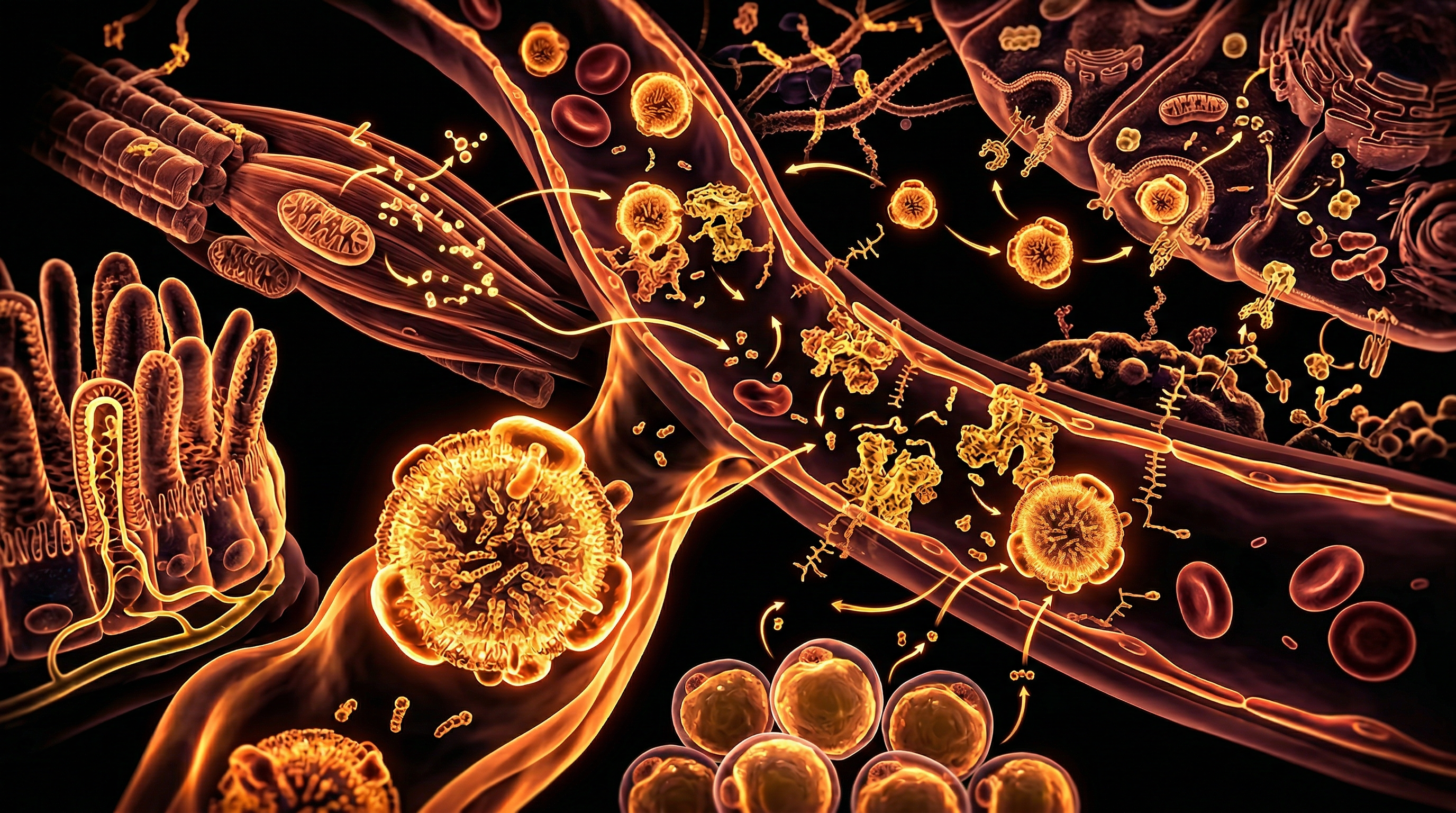
In the realm of modern lipidology, the obsession with fasting cholesterol levels has created a dangerous scientific blind spot. While clinical practitioners in the United Kingdom remain fixated on static markers like LDL-cholesterol (LDL-C) measured after a twelve-hour fast, the biological reality is that the average British citizen exists in a "postprandial" (post-meal) state for up to twenty hours of every day. At the heart of this state lies the chylomicron, a massive, triglyceride-rich lipoprotein responsible for the transport of dietary fats from the intestinal lumen into the systemic circulation.
The chylomicron is not merely a transport vehicle; it is a metabolic signal. Its synthesis, transit, and clearance are finely tuned processes that serve as a barometer for metabolic health. However, in the context of the "Modern British Diet"—characterised by ultra-processed foods (UPFs), chronic grazing, and a profound lack of movement—this system has broken down. We are currently witnessing a silent epidemic of postprandial lipaemia, where chylomicron remnants linger in the blood for hours or even days, driving systemic inflammation, endothelial dysfunction, and atherosclerosis.
This article serves as an exhaustive deep dive into the neglected science of chylomicron metabolism. We will expose how the British lifestyle—facilitated by "meal deals," constant snacking, and late-night caloric intake—is sabotaging our innate ability to process dietary lipids, and why the current medical narrative is failing to address the root cause of cardiovascular and metabolic decay.
The Biology — How It Works
To understand the pathology of the modern diet, one must first grasp the elegant, albeit complex, biology of fat absorption. Chylomicrons are unique among lipoproteins because they are the only ones produced by the small intestine (specifically the enterocytes) rather than the liver.
The Ingestion and Emulsification Phase
The journey begins in the duodenum. Upon the ingestion of dietary fats (predominantly triacylglycerols), the gallbladder releases bile salts to emulsify these lipids into micelles. Pancreatic lipases then break these down into free fatty acids and monoacylglycerols, which cross the brush border of the enterocytes.
Assembly and Secretion
Inside the enterocyte, these components are re-esterified into triglycerides. The crucial step occurs when these lipids are packaged with a specific structural protein called Apolipoprotein B-48 (ApoB-48). This protein is a truncated version of the ApoB-100 found in liver-derived VLDL, and it is the absolute marker of an exogenous (dietary) lipoprotein.
Callout Fact: Unlike glucose, which enters the bloodstream directly via the portal vein to the liver, chylomicrons are too large to enter capillaries. They must enter the lymphatic system via lacteals in the intestinal villi, bypassing the liver’s initial metabolic screening.
The Lymphatic Bypass
The chylomicrons travel through the lymphatic vessels, eventually reaching the thoracic duct, where they are dumped into the left subclavian vein. This "bypass" mechanism allows dietary fats to reach peripheral tissues—like adipose tissue and skeletal muscle—before the liver can regulate them. This is a fundamental evolutionary design intended to allow muscles first access to energy, but in a sedentary British population, it leads to disaster.
Mechanisms at the Cellular Level
The clearance of chylomicrons from the blood is governed by a sophisticated interplay of enzymes and receptors.
Lipoprotein Lipase (LPL) Activation
Once in the bloodstream, the "nascent" chylomicron acquires additional proteins from circulating HDL (High-Density Lipoprotein), most notably Apolipoprotein C-II (ApoC-II) and Apolipoprotein E (ApoE).
- ApoC-II acts as a mandatory co-factor for Lipoprotein Lipase (LPL), an enzyme anchored to the capillary walls of muscle and fat tissue.
- LPL hydrolyses the core triglycerides, releasing free fatty acids for energy use (in muscle) or storage (in fat).
The Formation of Remnants
As the chylomicron loses its triglyceride core, it shrinks, becoming a chylomicron remnant. These remnants are significantly more dangerous than the original particle. They are enriched with cholesterol esters and are small enough to penetrate the arterial wall. Under normal physiological conditions, the liver should clear these remnants rapidly via the LDL-Receptor (LDLR) and the LRP1 (LDL Receptor-related Protein 1), recognising the ApoE on the particle’s surface.
Competition and Crowding
The modern crisis arises from a "competition" at the LPL level. The liver also produces VLDL (Very Low-Density Lipoproteins) to transport internal fats. In a state of constant snacking, the bloodstream is flooded with both chylomicrons and VLDL. LPL becomes saturated. Because the body prioritises clearing chylomicrons, VLDL clearance is delayed, leading to an accumulation of "remnant-like particles" (RLPs) from both pathways. This is the hallmark of atherogenic dyslipidaemia.
Environmental Threats and Biological Disruptors
The biological machinery of chylomicron clearance did not evolve to withstand the environmental pressures of 21st-century Britain. Several "biological disruptors" are currently sabotaging our lipid processing pathways.
The Emulsifier Crisis
Modern British UPFs are loaded with synthetic emulsifiers (e.g., polysorbate 80, carboxymethylcellulose). These compounds alter the gut microbiome and the integrity of the intestinal mucosal barrier.
- Research suggests these emulsifiers can "pre-package" lipids into chylomicrons more aggressively.
- They may also facilitate the translocation of lipopolysaccharides (LPS)—pro-inflammatory bacterial fragments—into the chylomicron itself.
The Fructose-Lipid Synergy
The UK diet is notoriously high in refined fructose, often hidden in "low-fat" snacks. Fructose bypasses standard glucose regulation and stimulates De Novo Lipogenesis (DNL) in the liver. This floods the system with VLDL, which, as previously mentioned, competes with chylomicrons for clearance. The result is a metabolic "traffic jam" that keeps chylomicrons in the blood far longer than nature intended.
Blue Light and Circadian Misalignment
Lipid metabolism is under tight circadian control. The expression of MTP (Microsomal Triglyceride Transfer Protein), necessary for chylomicron assembly, peaks during daylight hours. The British habit of late-night snacking under artificial blue light disrupts the suprachiasmatic nucleus, leading to "nocturnal lipaemia." Eating fats at 10:00 PM results in higher and more prolonged chylomicron levels compared to the same meal eaten at 10:00 AM.
Callout Fact: Studies have shown that a single high-fat, high-sugar meal can impair endothelial function for up to six hours, effectively putting the cardiovascular system in a state of "hibernation" or "injury" during the clearance phase.
The Cascade: From Exposure to Disease
The failure to clear chylomicrons efficiently triggers a pathological cascade that extends far beyond "high cholesterol."
- Oxidative Stress: Chylomicron remnants are highly susceptible to oxidation. Once oxidised, they are no longer recognised by hepatic receptors, and instead, are taken up by scavenger receptors on macrophages.
- Foam Cell Formation: These lipid-laden macrophages become "foam cells" within the arterial intima, forming the bedrock of atherosclerotic plaques.
- Systemic Inflammation: The presence of chylomicrons in the blood stimulates the release of pro-inflammatory cytokines like IL-6 and TNF-alpha. This is why many people feel "brain fog" or lethargy after a heavy meal—it is a low-grade systemic inflammatory response.
- Insulin Resistance: High levels of circulating fatty acids (from poorly processed chylomicrons) interfere with insulin signalling in the muscle, creating a vicious cycle where blood sugar and blood lipids are both chronically elevated.
What the Mainstream Narrative Omits
The current medical guidelines in the UK, largely dictated by NICE (National Institute for Health and Care Excellence), are fundamentally flawed in their approach to lipid monitoring.
The Fasting Myth
The insistence on fasting blood tests is perhaps the greatest omission in modern cardiology. By measuring lipids only after a fast, doctors see the "clean-up crew" at the end of the shift, not the "riot" that occurred during the day. A patient may have a perfectly normal fasting LDL-C but spend 18 hours a day with dangerously high levels of chylomicron remnants.
The ApoB-48 Oversight
Standard lipid panels do not measure ApoB-48. Without this metric, it is impossible to distinguish between liver-derived and gut-derived lipoproteins. The scientific community has largely suppressed the fact that remnant cholesterol—the cholesterol contained within chylomicrons—is likely more predictive of heart disease than LDL-C itself.
The "Saturated Fat" Diversion
The mainstream narrative continues to blame saturated fat in isolation. However, the true culprit is the matrix in which the fat is delivered. Saturated fat in the presence of refined carbohydrates and a lack of fibre (the "British Burger and Bun" model) dramatically alters chylomicron size and clearance kinetics compared to saturated fat eaten with whole foods.
Callout Fact: In clinical trials, postprandial triglyceride levels have been shown to be a more significant independent risk factor for myocardial infarction than fasting levels, yet they are almost never measured in standard NHS health checks.
The UK Context
The United Kingdom presents a unique and troubling case study in chylomicron dysfunction. Several sociocultural factors converge to make the British population particularly susceptible.
The "Meal Deal" Culture
The UK’s reliance on the supermarket "meal deal" (a sandwich, a bag of crisps, and a sugary drink) is a metabolic catastrophe. This combination provides:
- Rapidly absorbed starches that spike insulin.
- Oxidised vegetable oils (from the crisps) that are incorporated into chylomicrons.
- Fructose (from the drink) that induces hepatic DNL.
This "triple threat" ensures that chylomicrons are produced in massive quantities while their clearance pathways are simultaneously inhibited.
The Grazing Habit
Unlike continental European cultures that often prioritise defined meal times, the UK has moved toward a "grazing" model. Constant snacking means the enterocytes are never in a "resting" state. They continue to secrete chylomicrons throughout the day, ensuring the blood never clears of remnants.
The Sedentary Commute
The British commute, often involving long periods of sitting in cars or on trains, followed by sedentary office work, means that LPL activity in the skeletal muscles is perpetually low. LPL is "switched on" by muscle contraction. Without it, chylomicrons simply circulate until they are oxidised or taken up by adipose tissue.
Genetic Predisposition: The "Thrifty Gene" in a Modern UK
A significant portion of the UK population carries variants in the APOE or APOC3 genes that slow down chylomicron clearance. In an ancestral environment, this might have been an advantage during times of famine; in the land of 24-hour Greggs and Deliveroo, it is a death sentence.
Protective Measures and Recovery Protocols
Understanding the "truth" about chylomicron metabolism allows us to move beyond the simplistic "statins for everyone" approach and toward genuine metabolic recovery.
1. Implementation of Time-Restricted Feeding (TRF)
To allow the body to clear chylomicron remnants, the "feeding window" must be shortened. A 16:8 protocol (16 hours of fasting, 8 hours of eating) is often sufficient to ensure that the liver has time to clear remnants via the LRP1 receptor without competition from new incoming particles.
2. The "Post-Prandial Stroll"
Physical activity immediately after a meal is the most potent way to activate Lipoprotein Lipase. Even a 15-minute brisk walk through a British high street can increase LPL activity in the legs, significantly lowering the peak concentration of post-meal chylomicrons.
3. Polyphenol Enrichment
Specific polyphenols, such as those found in high-quality olive oil, green tea, and dark berries, have been shown to inhibit the assembly of chylomicrons in the enterocyte by modulating MTP activity.
- Recommendation: British citizens should replace industrial seed oils (sunflower, rapeseed) with extra virgin olive oil to improve the "quality" of the chylomicrons produced.
4. Fibre as a Kinetic Buffer
Soluble fibre (found in oats, legumes, and flax) slows the rate of gastric emptying and lipid absorption. This prevents the "flood" of chylomicrons, allowing the clearing enzymes to keep pace with the influx.
5. Supplemental Support
- Omega-3 Fatty Acids (EPA/DHA): High-dose fish oil has been shown to reduce the hepatic production of VLDL, thereby reducing the competition for LPL and speeding up chylomicron clearance.
- Berberine: This botanical compound can upregulate LDL-receptors, facilitating the removal of chylomicron remnants from the blood.
6. Critical Testing: The Postprandial Challenge
For those seeking the truth about their health, a fasting lipid panel is insufficient. A "postprandial lipid challenge"—measuring triglycerides 4 hours after a standardised fat-rich meal—is the only way to truly assess chylomicron clearance efficiency. If your triglycerides rise above 2.3 mmol/L (approx. 200 mg/dL) during this window, your metabolic machinery is failing.
Summary: Key Takeaways
- Chylomicrons are the primary transporters of dietary fat, bypassing the liver via the lymphatic system and entering the blood directly.
- The "Postprandial State" is the true danger zone. Most cardiovascular damage occurs in the hours following a meal, yet this is ignored by mainstream British medicine.
- Constant snacking in the UK creates a metabolic traffic jam, where chylomicrons and VLDL compete for the enzyme Lipoprotein Lipase (LPL), leading to the accumulation of toxic remnants.
- Ultra-processed foods and emulsifiers disrupt the gut-lipid axis, causing the production of larger, more pro-inflammatory chylomicrons that carry bacterial endotoxins (LPS).
- The "Fasting Lipid Panel" is a deceptive metric. It misses the prolonged elevations of chylomicron remnants that drive atherosclerosis in people with "normal" fasting cholesterol.
- Metabolic recovery is possible through time-restricted feeding, post-meal movement, and the elimination of refined carbohydrates and industrial seed oils.
The "Modern British Diet" is a biological assault on our lipid processing pathways. By understanding the hidden life of the chylomicron, we can begin to reclaim our health from a system that prioritises pharmaceutical intervention over metabolic truth. The goal is not just to have "low cholesterol" on a piece of paper, but to ensure that our blood remains clear of the remnants that choke our arteries and inflame our bodies. Innerstanding this process is the first step toward survival in an increasingly toxic nutritional landscape.
This article is provided for informational and educational purposes only. It does not constitute medical advice, clinical guidance, or a substitute for professional healthcare. Information reflects cited research at time of publication. Always consult a qualified healthcare professional before acting on any health information.
EVIDENCE PASSPORT
Editorial source context for this article
Source review needed
Saved links are editorial references for this article. They may support specific claims rather than every sentence. Open and assess each source in context. This passport does not independently verify them.
Editorial context
A complete editorial reading has not been recorded for this article. Source links remain available for you to open and assess directly.
Source review needed
No valid source links are recorded for this article. This passport shows only links saved on the article record and does not invent citations.
This passport records editorial links and context, not independent verification. Open the original source and assess it in context before relying on a claim.
Medical Disclaimer
The information in this article is for educational purposes only and does not constitute medical advice, diagnosis, or treatment. Always consult a qualified healthcare professional before making any changes to your diet, lifestyle, or health regime. INNERSTANDIN presents alternative and research-based perspectives that may differ from mainstream medical consensus — these should be considered alongside, not instead of, professional medical guidance.
Read Full DisclaimerContinue the thread
Keep this question moving.
Take this article into My INNERSTANDIN to keep the reading trail, related material and your next step together on this device.
Dig deeper in the Library
Free, longform PDF volumes that go beyond headlines into mechanisms and references.