
Corticotropin-Releasing Hormone (CRH): The Neuroendocrine Pathway Linking Psychological Stress to Mast Cell Degranulation
Updated April 2026
Evidence orientation
Editorial context not yet recorded
Follow this category
This stays in this browser. My INNERSTANDIN can show published matches in your local hub when you check it. It does not send email, push, or alert notifications.
Local learning review
A private browser aid for revisiting ideas. It is not an alert or a health recommendation.
Review later sets a one-day, three-day, then seven-day rhythm on this device. Choose it only when you want to revisit this article.
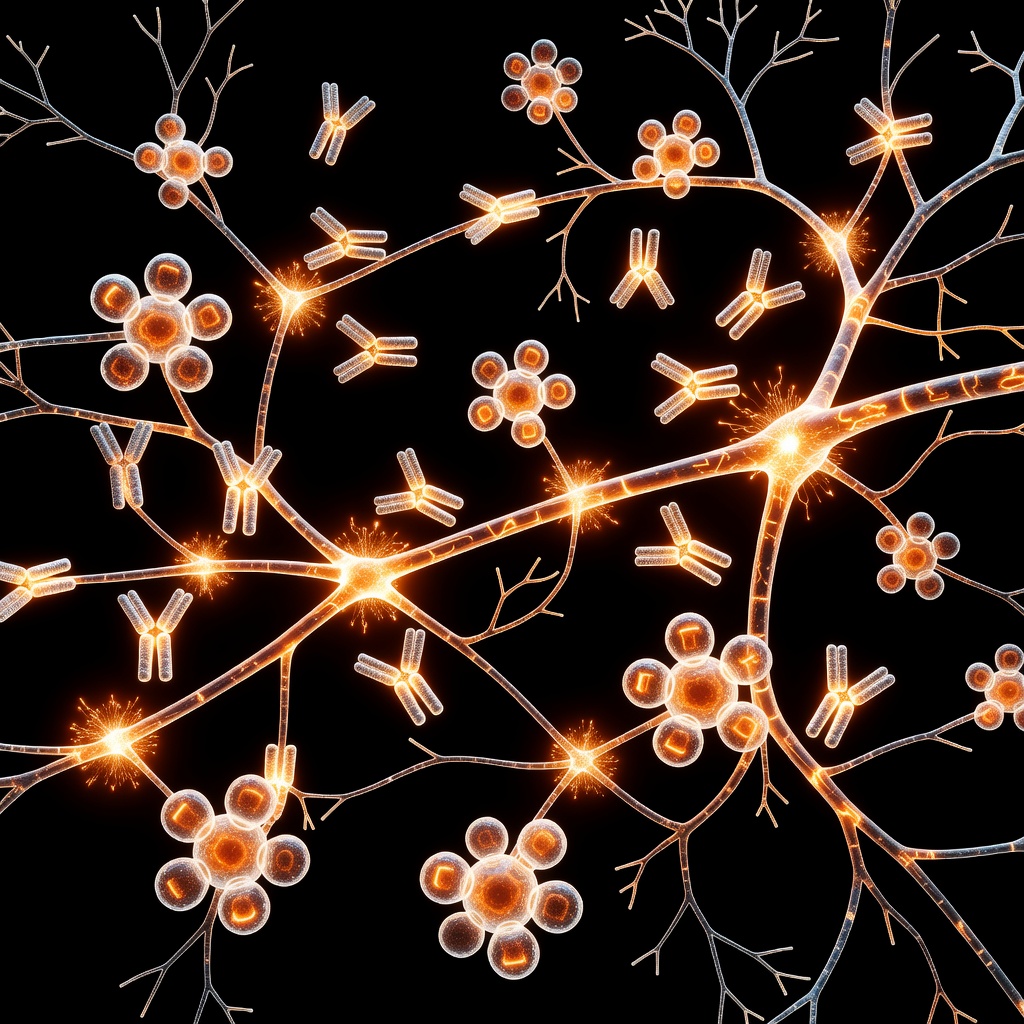
In the landscape of modern medicine, we are often taught to view the body as a collection of isolated systems. The brain belongs to the psychiatrist; the immune system to the immunologist; the gut to the gastroenterologist. However, for those navigating the complexities of Histamine Intolerance (HIT) and Mast Cell Activation Syndrome (MCAS), these artificial boundaries are not only unhelpful—they are dangerous.
At the heart of the "mind-body" connection lies a potent neuropeptide that serves as the master conductor of the stress response: Corticotropin-Releasing Hormone (CRH).
While traditionally understood as the initiator of the endocrine stress cascade, cutting-edge research now exposes CRH as the primary neuroendocrine link that translates psychological distress into physical inflammation. It is the molecular "smoking gun" that explains why a stressful day at the office or a period of emotional upheaval can trigger a full-scale systemic histamine flare.
1. Overview: The Master Switch of the Stress Response
Corticotropin-Releasing Hormone (CRH), also known as Corticotropin-Releasing Factor (CRF), is a 41-amino acid peptide synthesised primarily in the paraventricular nucleus (PVN) of the hypothalamus. Its traditional role is well-documented: when the brain perceives a threat, the hypothalamus releases CRH, which stimulates the pituitary gland to release ACTH, which in turn signals the adrenal glands to produce cortisol. This is the Hypothalamic-Pituitary-Adrenal (HPA) axis.
However, the "truth-exposing" reality is that CRH does not remain confined to the brain-adrenal loop. It is also produced peripherally—in the gut, the skin, and the reproductive organs—and its most significant target outside the endocrine system is the Mast Cell.
Key Fact: Mast cells are uniquely equipped with high-affinity receptors for CRH (CRHR1 and CRHR2). This means that the "stress hormone" can talk directly to the immune system's first responders without needing an intermediate messenger.
2. Biological Mechanisms: How Stress Becomes Inflammation
To understand how psychological stress leads to mast cell degranulation, we must look at the Mast Cell-Neuron Unit. Mast cells are strategically positioned near nerve endings, particularly in the mucosal linings of the gut and the respiratory tract, and within the skin.
The CRH-Mast Cell Axis
When we experience psychological stress—whether acute (a near-miss traffic accident) or chronic (workplace burnout)—the brain pumps out CRH. This CRH travels through the circulation and binds to the CRHR1 receptors on the surface of mast cells.
Once CRH binds to these receptors, it triggers a process called degranulation. The mast cell, sensing a "systemic emergency," opens its internal storage granules and releases a cocktail of pro-inflammatory mediators into the surrounding tissue, including:
- Histamine: Which increases vascular permeability and causes itching, flushing, and digestive distress.
- Tryptase: A protein that breaks down connective tissue and activates further inflammation.
- Prostaglandins and Leukotrienes: Which cause pain and bronchoconstriction.
- Cytokines (such as TNF-alpha and IL-6): Which signal the rest of the immune system to enter a state of high alert.
Increased Epithelial Permeability (Leaky Gut)
One of the most devastating effects of CRH-induced mast cell activation occurs in the gastrointestinal tract. CRH increases the permeability of the intestinal wall—a phenomenon commonly referred to as "Leaky Gut." By stimulating mast cells to release proteases, CRH effectively degrades the "tight junctions" that hold the gut lining together. This allows undigested food particles and bacterial toxins (LPS) to enter the bloodstream, further fueling systemic inflammation and worsening Histamine Intolerance.
3. The UK Context: A Growing Crisis of "Internalised Stress"
In the United Kingdom, the prevalence of stress-related illnesses is reaching an all-time high. However, the British "stiff upper lip" cultural heritage often leads to the suppression of emotional distress, which, ironically, may exacerbate the neuroendocrine response.
The NHS Gap
Current NHS protocols for treating allergies and histamine-related disorders often focus heavily on antihistamines or dietary avoidance (the Low Histamine Diet). While these are necessary tools, they fail to address the CRH-driven neuroendocrine driver. Patients are frequently told their symptoms are "idiopathic" (of unknown cause) or "anxiety-related," with the implication that the symptoms are imaginary.
The "INNERSTANDING" perspective is that these symptoms are not "in the head"—they are mediated by the head. If the brain is constantly secreting CRH due to perceived environmental or psychological threats, the mast cells will continue to degranulate regardless of how much spinach or fermented food is removed from the diet.
Urbanisation and the British Lifestyle
The UK's high population density, particularly in cities like London, Manchester, and Birmingham, contributes to a "baseline" level of sympathetic nervous system activation. Noise pollution, light pollution, and the cost-of-living crisis act as chronic "micro-stressors" that maintain elevated CRH levels, keeping the mast cells in a "primed" or "twitchy" state.
4. Environmental Factors: The Amplification Loop
CRH does not act in a vacuum. Its ability to degranulate mast cells is significantly amplified by environmental "co-factors."
- Circadian Mismatch: CRH secretion follows a diurnal rhythm. Disruption of sleep patterns—common in our 24/7 digital culture—dysregulates the HPA axis, leading to inappropriate CRH spikes at night, which can cause nocturnal histamine flares (insomnia and night sweats).
- Blue Light Exposure: Artificial light after sunset is perceived by the hypothalamus as a stressor, promoting CRH release and subsequent mast cell activity.
- Nutrient Deficiencies: Magnesium is the body’s natural "calcium channel blocker." Since mast cell degranulation is a calcium-dependent process, a deficiency in magnesium (highly prevalent in the UK due to soil depletion) makes mast cells more likely to "fire" when CRH binds to them.
5. Protective Strategies: Regulating the Neuroendocrine Pathway
If CRH is the bridge between stress and mast cell activation, then "healing" must involve more than just diet. It requires a fundamental shift in how we manage our internal and external environments.
Vagus Nerve Stimulation (The Brake)
The Vagus nerve is the primary component of the parasympathetic nervous system. It acts as the "brake" on the HPA axis. High vagal tone inhibits the release of CRH and sends a "safety signal" to the mast cells.
- Strategy: Deep diaphragmatic breathing, cold water face immersion, and humming can acutely increase vagal tone.
Nutritional Modulation of CRH
Certain compounds can help stabilise mast cells or modulate the HPA axis:
- Quercetin and Luteolin: These bioflavonoids have been shown to inhibit the ability of CRH to trigger mast cell degranulation.
- Magnesium Glycinate: Essential for calming the nervous system and reducing the "excitability" of the hypothalamus.
- Vitamin C: High doses are required by the adrenal glands to modulate the stress response and help degrade circulating histamine.
Psychological Boundaries and "Neuro-Somatic" Awareness
We must move beyond "stress management" to "stress resolution." This involves identifying the specific psychological triggers that cause a CRH spike. For many with MCAS, "emotional boundaries" are a biological necessity. Saying "no" to toxic obligations is, in effect, a way of lowering your systemic CRH load.
Truth-Exposing Insight: You cannot "meditate away" a high-histamine diet, but you also cannot "diet away" a high-stress life. Both must be addressed to achieve mast cell stability.
6. Key Takeaways
To master Histamine Intolerance and Mast Cell Activation, one must understand the master conductor.
- CRH is the Link: It is the primary molecule that turns psychological stress into physical mast cell degranulation.
- Direct Access: Mast cells have specific receptors (CRHR1) that allow them to respond directly to stress signals from the brain.
- Beyond the Gut: While diet is important, chronic stress can cause "Leaky Gut" and systemic inflammation via the CRH pathway, bypasses dietary efforts.
- The UK Perspective: We must challenge the medical gaslighting that separates mental health from physical allergy; they are two sides of the same neuroendocrine coin.
- Holistic Intervention: Effective treatment requires Vagus nerve support, mast-cell-stabilising phytonutrients, and radical lifestyle adjustments to lower the CRH burden.
The journey toward INNERSTANDING is the journey of recognising that our thoughts and environment are chemical signals. By regulating the CRH-Mast Cell pathway, we take the power back from our biology and move from a state of reactive inflammation to one of proactive resilience.
This article is provided for informational and educational purposes only. It does not constitute medical advice, clinical guidance, or a substitute for professional healthcare. Information reflects cited research at time of publication. Always consult a qualified healthcare professional before acting on any health information.
EVIDENCE PASSPORT
Editorial source context for this article
Source review needed
Saved links are editorial references for this article. They may support specific claims rather than every sentence. Open and assess each source in context. This passport does not independently verify them.
Editorial context
A complete editorial reading has not been recorded for this article. Source links remain available for you to open and assess directly.
Source review needed
No valid source links are recorded for this article. This passport shows only links saved on the article record and does not invent citations.
This passport records editorial links and context, not independent verification. Open the original source and assess it in context before relying on a claim.
Medical Disclaimer
The information in this article is for educational purposes only and does not constitute medical advice, diagnosis, or treatment. Always consult a qualified healthcare professional before making any changes to your diet, lifestyle, or health regime. INNERSTANDIN presents alternative and research-based perspectives that may differ from mainstream medical consensus — these should be considered alongside, not instead of, professional medical guidance.
Read Full DisclaimerContinue the thread
Keep this question moving.
Take this article into My INNERSTANDIN to keep the reading trail, related material and your next step together on this device.