
Cosmetic Microbead Legacy: Why the UK Ban Wasn't Enough
Updated May 2026
While the UK banned microbeads in rinse-off products, leave-on cosmetics still contain significant quantities of microplastics. This loophole allows tons of plastic to enter the environment annually through everyday use.
Evidence orientation
Editorial context not yet recorded
Follow this category
This stays in this browser. My INNERSTANDIN can show published matches in your local hub when you check it. It does not send email, push, or alert notifications.
Local learning review
A private browser aid for revisiting ideas. It is not an alert or a health recommendation.
Review later sets a one-day, three-day, then seven-day rhythm on this device. Choose it only when you want to revisit this article.
Overview
In 2018, the United Kingdom was heralded as a global leader in environmental stewardship following the implementation of the Environmental Protection (Microbeads) (England) Regulations. This legislation ostensibly banned the manufacture and sale of "rinse-off" personal care products containing plastic microbeads—those tiny, spherical exfoliants that had become a symbol of marine pollution. To the casual observer and the mainstream media, the battle against cosmetic microplastics was won. However, beneath the surface of this regulatory triumph lies a staggering scientific oversight—or perhaps, a calculated omission.
The 2018 ban targeted a specific, visible subset of plastic pollution: solid, spherical scrubbing agents in products like face scrubs and toothpastes. What it ignored, and continues to ignore, is the vast "invisible" ocean of liquid, semi-solid, and soluble polymers used in "leave-on" cosmetics. Foundations, lipsticks, sunscreens, and moisturisers remain saturated with synthetic polymers that meet the chemical definition of plastic but evade the legal definition of "microbead."
As a senior biological researcher, it is my duty to clarify that the biological impact of these substances does not cease simply because they are not "rinsed off" down a drain. In fact, leave-on products present a more insidious threat. They are designed for prolonged dermal contact, increasing the window for dermal absorption, inhalation of volatile components, and accidental ingestion. This article serves as a technical exposé on the systemic failure of UK regulation and the profound biological consequences of our continued intimacy with cosmetic plastics.
The Biology — How It Works
To understand the failure of current regulations, one must first understand the biological interface between human tissue and synthetic polymers. The primary route of exposure for leave-on cosmetics is the skin, specifically the stratum corneum, the outermost layer of the epidermis.
The Dermal Barrier and Particle Size
The classical view in dermatology was that the skin acts as an impermeable barrier to molecules larger than 500 Daltons. However, modern cosmetic science utilises nanotechnology to enhance the delivery of active ingredients. When plastic polymers are formulated as "nanoplastics" (particles <1000nm), they bypass the mechanical barriers of the skin.
- Microplastics (>1μm): These generally remain on the skin surface but can become lodged in hair follicles and sweat glands, causing localised follicular inflammation.
- Nanoplastics (<1μm): These are small enough to penetrate the intercellular lipid matrix of the epidermis. Once they reach the viable dermis, they gain access to the capillary network and the lymphatic system.
The "Leave-on" Prolongation Effect
Unlike rinse-off products, which interact with the skin for seconds, leave-on formulations are designed to remain for 12 to 24 hours. This creates a "concentration gradient" that facilitates the slow migration of polymers and their associated chemical additives into the biological system.
Callout Fact: A single application of a conventional liquid foundation can contain as many as several billion individual plastic particles, often used to create a "soft-focus" effect or to improve spreadability.
Inhalation and Ingestion Pathways
We must also consider the secondary biological pathways. Fine-mist setting sprays and powdered bronzers contain polyethylene and nylon-12, which are easily inhaled. Once in the lungs, these particles bypass the "first-pass metabolism" of the liver and enter the systemic circulation directly via the alveolar-capillary membrane. Furthermore, lipsticks and lip balms result in the direct ingestion of microplastics, with the average user consuming several kilograms of product over a lifetime.
Mechanisms at the Cellular Level
Once these synthetic polymers breach the biological barriers, they do not remain inert. They engage in a series of complex, destructive interactions at the cellular and molecular levels.
The Protein Corona Effect
When a micro- or nanoplastic particle enters a biological fluid (such as blood or interstitial fluid), it is immediately coated by proteins, lipids, and glycans. This is known as the protein corona. This coating "disguises" the plastic, allowing it to interact with cellular receptors as if it were a biological entity. This "Trojan Horse" mechanism enables plastics to enter cells via endocytosis.
Oxidative Stress and Lysosomal Dysfunction
Inside the cell, the presence of a foreign, non-biodegradable polymer triggers the production of Reactive Oxygen Species (ROS). The cell’s internal recycling centre, the lysosome, attempts to break down the plastic particle. Because synthetic polymers like Acrylates Copolymer or Polyethylene are resistant to enzymatic degradation, the lysosome becomes "overloaded." This leads to:
- Lysosomal membrane permeabilisation: Pro-apoptotic enzymes leak into the cytoplasm.
- Mitochondrial distress: ROS production further damages mitochondrial DNA, impairing cellular energy production.
Genomic Instability
Emerging research suggests that the smallest nanoplastics can even penetrate the nuclear envelope. Once inside the nucleus, they can mechanically interfere with DNA replication and transcription or bind to DNA strands, potentially leading to genotoxic stress and mutations.
- Cross-linking: Certain plastic additives can cause abnormal cross-linking of DNA strands.
- Epigenetic Alterations: Exposure to plastic-associated endocrine disruptors can alter DNA methylation patterns, effectively "switching off" protective genes.
Environmental Threats and Biological Disruptors
The narrative that leave-on cosmetics are "safe" because they aren't washed off is a fallacy. These products eventually reach the environment through different, more diffuse routes: washing of clothes, bathing at the end of the day, and even through the shedding of skin cells (desquamation).
The Trojan Horse of Chemical Additives
Microplastics are rarely "pure" plastic. They are complex chemical cocktails containing:
- Phthalates: Used to increase flexibility.
- Bisphenols (BPA/BPS): Used in the manufacture of certain polymers.
- UV Stabilisers: To prevent the product from degrading in sunlight.
These chemicals are not chemically bound to the plastic matrix; they are "adsorbed" or loosely held. When these particles enter the aqueous environment of the body or the ocean, they leach these chemicals.
Callout Fact: Microplastics have a high surface-area-to-volume ratio, making them "magnets" for Persistent Organic Pollutants (POPs) already present in the environment, such as polychlorinated biphenyls (PCBs).
Endocrine Disruption (EDCs)
The most significant biological disruptors found in cosmetic plastics are Endocrine Disrupting Chemicals (EDCs). These molecules mimic natural hormones, particularly oestrogen. By binding to hormone receptors, they can:
- Trigger premature puberty.
- Reduce sperm counts in males.
- Increase the risk of hormone-sensitive cancers (breast, prostate).
Trophic Transfer and Bioaccumulation
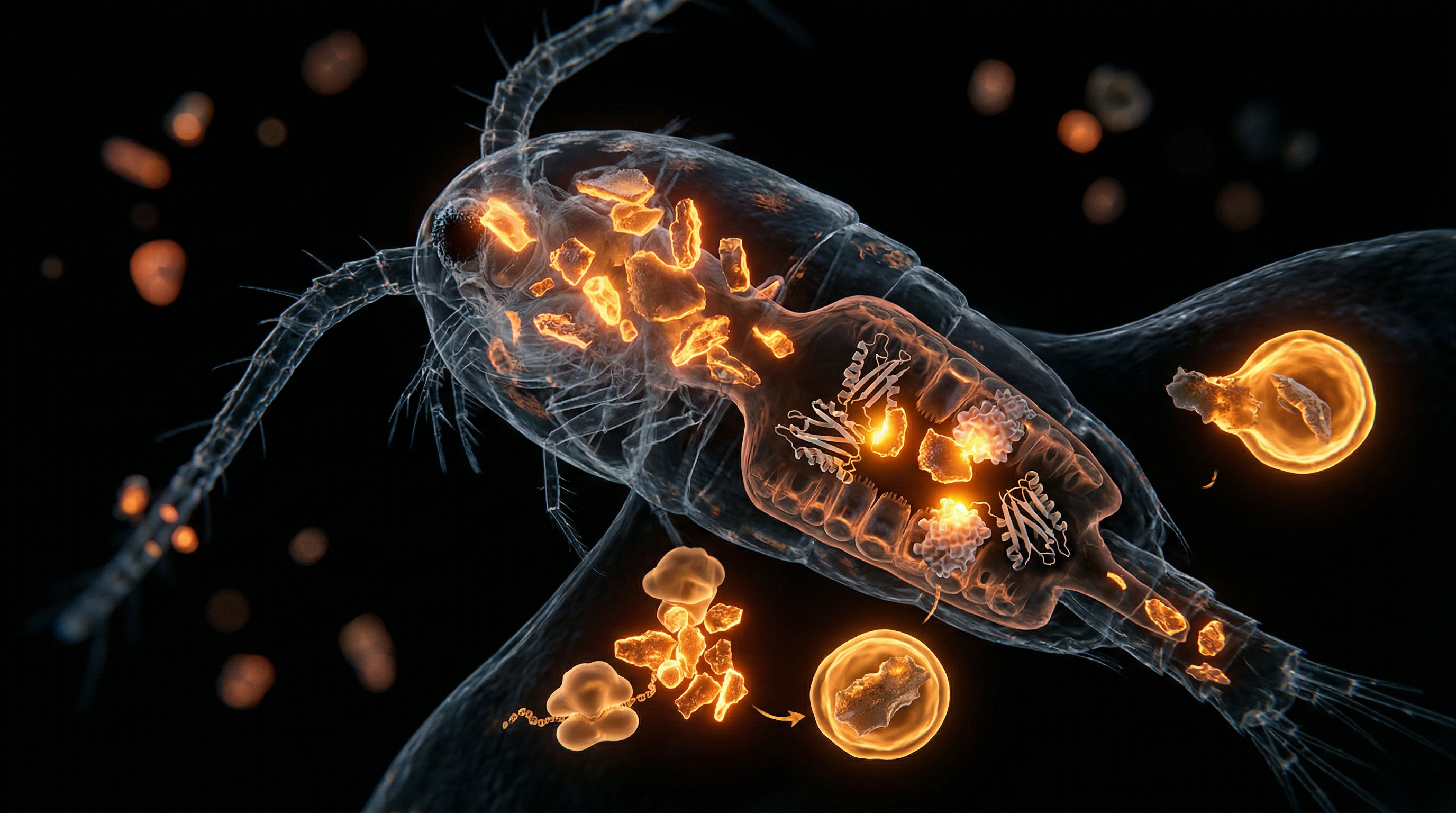
In the environment, these cosmetic-derived plastics are consumed by zooplankton and small fish, which mistake them for food. Because these plastics do not break down, they accumulate in the fatty tissues of organisms. As they move up the food chain—a process known as biomagnification—the concentration of plastics and associated toxins increases, eventually reaching the human diet through seafood.
The Cascade: From Exposure to Disease
Chronic exposure to the microplastics found in leave-on cosmetics does not result in immediate poisoning. Instead, it initiates a "slow-burn" biological cascade that contributes to the rise of modern chronic diseases.
Systemic Inflammation
The constant presence of foreign particles in the blood and tissues keeps the innate immune system in a state of chronic activation. Macrophages, the body’s "scavenger cells," become chronically inflamed as they unsuccessfully attempt to clear plastic debris. This leads to the systemic release of pro-inflammatory cytokines (e.g., TNF-α, IL-6).
The Link to Autoimmunity
There is an increasing body of evidence suggesting that the "protein corona" mentioned earlier can lead to the formation of neo-antigens. When a human protein binds to a plastic particle, its shape changes. The immune system may no longer recognise it as "self" and begin to attack the body’s own tissues, contributing to the epidemic of autoimmune disorders like lupus and rheumatoid arthritis.
Metabolic Syndrome and Obesogens
Microplastics and their associated phthalates are now classified as obesogens. By disrupting the hormonal signalling involved in lipid metabolism and insulin sensitivity, these plastic-associated chemicals can "program" cells to store more fat and burn less energy, contributing significantly to the global obesity crisis.
- PPARγ Activation: Many plastic additives activate the Peroxisome Proliferator-Activated Receptor gamma, the master regulator of fat cell (adipocyte) generation.
- Insulin Resistance: Chronic inflammation triggered by nanoplastics impairs the insulin signalling pathway in muscle and liver tissues.
What the Mainstream Narrative Omits
The mainstream narrative, supported by industry lobbying, focuses almost exclusively on "visible beads." This is a redirection tactic intended to protect the more lucrative use of Liquid Polymers.
The Rebranding of Plastic
In the ingredient lists of your favourite moisturisers or foundations, you will rarely see the word "plastic." Instead, industry chemists use terms that sound benign or "scientific":
- Carbomer: Often used as a thickener, this is a cross-linked acrylic acid polymer.
- Acrylates/C10-30 Alkyl Acrylate Crosspolymer: A common film-forming agent.
- Dimethicone/Vinyl Dimethicone Crosspolymer: Used for a silky skin feel.
Legally, these are not "microbeads" because they are not solid spheres. Biologically, however, they are persistent synthetic polymers that do not biodegrade and possess many of the same toxicological profiles as their solid counterparts.
The "Safe Level" Myth
Regulatory bodies often cite "safe levels" of exposure for individual chemicals. What they omit is the cocktail effect. While a single dose of Polyethylene in a lipstick might be below a certain threshold, the cumulative exposure from fifty different products used daily, combined with environmental microplastics in our food and water, creates a total body burden that has never been adequately studied.
Callout Fact: Recent studies have detected microplastics in human blood, lung tissue, and even the placenta, suggesting that there is no "safe" barrier that these particles cannot cross.
The Biodegradability Fallacy
Many companies are now marketing "biodegradable" glitters and beads. However, many of these are only compostable in industrial facilities at high temperatures. In the cold British environment or the human body (at 37°C), these "eco-friendly" plastics remain just as persistent and hazardous as traditional petroleum-based plastics.
The UK Context
The UK's 2018 ban was a step in the right direction, but it was a step that stopped at the threshold of the multi-billion pound "leave-on" cosmetic industry.
The Regulatory Loophole
The UK legislation specifically targeted "wash-off" products. This was a concession to the industry, which argued that reformulating leave-on products (like long-wear foundations and waterproof sunscreens) would be too technically challenging and expensive. Consequently:
- The Loophole: If a product is meant to be wiped off with a cotton pad rather than rinsed with water, it can legally contain microbeads.
- The Volume: Estimates suggest that the volume of plastic in leave-on products exceeds that of rinse-off products by a factor of at least 10 to 1.
Post-Brexit Divergence
Following the UK's exit from the European Union, there is a growing concern regarding regulatory divergence. The European Chemicals Agency (ECHA) has proposed much broader restrictions on all intentionally added microplastics, including those in leave-on cosmetics. As of now, the UK has not committed to matching these more stringent standards, potentially making the British market a "dumping ground" for plastic-laden formulations that can no longer be sold in the EU.
Economic Influence vs. Public Health
The cosmetic industry contributes billions to the UK economy. Internal documents from various trade associations suggest that the "rinse-off" ban was accepted as a "necessary sacrifice" to prevent deeper scrutiny of the primary product lines. By focusing on the "bead," the industry successfully diverted the public’s attention away from the "polymer."
Protective Measures and Recovery Protocols
While the systemic issue requires legislative change, individuals can take biological and lifestyle measures to mitigate the impact of this plastic legacy.
Dermal Protection and Barrier Health
A compromised skin barrier is far more susceptible to nanoplastic penetration.
- Ceramides and Lipids: Using barrier-repairing topicals that contain plant-based ceramides can help reinforce the stratum corneum.
- Avoiding Penetration Enhancers: Many conventional cosmetics use "glycols" (like propylene glycol) to help active ingredients penetrate the skin. These also inadvertently help nanoplastics enter the system.
Dietary and Biological Support
Since microplastics induce oxidative stress, the body’s internal antioxidant systems must be supported.
- Glutathione Support: Supplementing with N-Acetyl Cysteine (NAC) helps the body produce glutathione, the primary antioxidant for neutralising ROS induced by foreign particles.
- Soluble Fibre: Increasing intake of pectin and other soluble fibres can help "trap" ingested microplastics in the gut, preventing their translocation into the bloodstream.
- Sweating (Saunas): There is emerging evidence that certain plastic additives, like phthalates and BPA, can be excreted through sweat. Regular physical exercise or sauna use may assist in reducing the body burden of these chemicals.
Conscious Consumption
The only way to stop the "Plastic Bloom" on your skin is to learn to read the labels. Avoid any product containing:
- Polyethylene (PE)
- Polypropylene (PP)
- Polyethylene terephthalate (PET)
- Nylon (Polyamide)
- Acrylates Copolymer
- Polyquaternium
Callout Fact: Look for the "Zero Plastic Inside" certification mark, issued by the 'Beat the Microbead' campaign, which independently verifies that a product is free from all synthetic polymers.
Summary: Key Takeaways
The UK's 2018 microbead ban was a superficial fix for a deep-seated biological and environmental crisis. By focusing on a narrow definition of "rinse-off" products, the regulation has left the door wide open for systemic plastic exposure.
- The Illusion of Safety: The 2018 ban only covers visible, solid beads in rinse-off products. "Leave-on" cosmetics like foundation and sunscreen still contain massive amounts of liquid and nanoplastics.
- Biological Penetration: Nanoplastics are small enough to cross the skin barrier, enter the bloodstream, and penetrate cells, leading to mitochondrial damage and DNA stress.
- Chemical Hitchhikers: Cosmetic plastics act as carriers for endocrine-disrupting chemicals (EDCs), which are linked to infertility, obesity, and cancer.
- The Loophole: Industry rebranding uses terms like "Carbomer" or "Crosspolymer" to hide plastic content from consumers.
- Regulatory Failure: The UK is currently lagging behind proposed EU standards which aim to ban all intentionally added microplastics.
- Personal Agency: Protection requires a two-pronged approach: reinforcing the biological barriers and strictly auditing personal care products for synthetic polymers.
The legacy of the cosmetic microbead is not a relic of the past; it is a current and escalating biological reality. Until the law recognises that a polymer's impact is determined by its chemistry—not by whether it is rinsed off or left on—the "plasticisation" of the human body will continue unabated.
This article is provided for informational and educational purposes only. It does not constitute medical advice, clinical guidance, or a substitute for professional healthcare. Information reflects cited research at time of publication. Always consult a qualified healthcare professional before acting on any health information.
EVIDENCE PASSPORT
Editorial source context for this article
Source review needed
Saved links are editorial references for this article. They may support specific claims rather than every sentence. Open and assess each source in context. This passport does not independently verify them.
Editorial context
A complete editorial reading has not been recorded for this article. Source links remain available for you to open and assess directly.
Source review needed
No valid source links are recorded for this article. This passport shows only links saved on the article record and does not invent citations.
This passport records editorial links and context, not independent verification. Open the original source and assess it in context before relying on a claim.
Medical Disclaimer
The information in this article is for educational purposes only and does not constitute medical advice, diagnosis, or treatment. Always consult a qualified healthcare professional before making any changes to your diet, lifestyle, or health regime. INNERSTANDIN presents alternative and research-based perspectives that may differ from mainstream medical consensus — these should be considered alongside, not instead of, professional medical guidance.
Read Full DisclaimerContinue the thread
Keep this question moving.
Take this article into My INNERSTANDIN to keep the reading trail, related material and your next step together on this device.
Dig deeper in the Library
Free, longform PDF volumes that go beyond headlines into mechanisms and references.