
Regulatory Framework Gaps: The UK's Post-Brexit Plastic Policy
Updated May 2026
The UK faces challenges in developing robust microplastic regulations independent of EU frameworks. Closing legislative loopholes is necessary to protect public health and the environment from emerging plastic threats.
Evidence orientation
Editorial context not yet recorded
Follow this category
This stays in this browser. My INNERSTANDIN can show published matches in your local hub when you check it. It does not send email, push, or alert notifications.
Local learning review
A private browser aid for revisiting ideas. It is not an alert or a health recommendation.
Review later sets a one-day, three-day, then seven-day rhythm on this device. Choose it only when you want to revisit this article.
Overview
For decades, the global community has treated plastic pollution as a visual inconvenience—a matter of unsightly litter on beaches and the tragic entanglement of marine megafauna. However, as we transition into the mid-2020s, a more insidious reality has emerged from the shadows of scientific inquiry. We are no longer merely living in a plastic age; we are becoming plastic. The transition from macro-scale debris to microplastics (particles <5mm) and nanoplastics (particles <1µm) represents a fundamental shift from an environmental nuisance to a systemic biological threat.
In the United Kingdom, this crisis is compounded by a unique geopolitical upheaval: Brexit. By withdrawing from the European Union, the UK has decoupled itself from one of the world’s most sophisticated chemical regulatory frameworks, REACH (Registration, Evaluation, Authorisation, and Restriction of Chemicals). While the promise of "sovereign control" was championed by policymakers, the reality on the ground is a widening chasm in legislative oversight. As the EU moves toward banning intentionally added microplastics in a variety of products, the UK risks becoming a regulatory "sink"—a market where lower standards allow for the continued proliferation of these pervasive polymers.
This article serves as an exhaustive investigation into the biological mechanisms by which these particles subvert our physiological defences and the critical legislative failures within the UK that allow this silent invasion to continue. We must move beyond the mainstream preoccupation with "litter picks" and address the molecular reality of xenobiotic accumulation and the regulatory vacuum that facilitates it.
The Biology — How It Works
To understand the threat, we must first define the enemy. Microplastics and nanoplastics (MNPs) are not a single substance but a complex class of contaminants. They are categorised into primary microplastics, which are intentionally manufactured for use in cosmetics, detergents, and industrial abrasives, and secondary microplastics, which result from the fragmentation of larger items through UV degradation and mechanical wear.
The biological danger of MNPs lies in their biopersistence and their ability to bypass traditional anatomical barriers. Unlike organic matter, synthetic polymers like polyethylene (PE), polypropylene (PP), and polyvinyl chloride (PVC) do not possess metabolic pathways for degradation within the human body.
Routes of Internalisation
The human body is currently under a constant "rain" of plastic particles through three primary vectors:
- Ingestion: The most documented pathway. MNPs enter the food chain via trophic transfer. From shellfish that filter-feed on contaminated water to the salt we use to season our food, ingestion is a constant source of exposure. Recent studies have confirmed the presence of MNPs in honey, beer, and bottled water.
- Inhalation: This is perhaps the most overlooked and dangerous route. Synthetic textiles (polyester, acrylic) shed millions of microfibres into the indoor air. When inhaled, these needle-like particles can lodge deep within the alveolar sacs of the lungs, where they evade the mucociliary escalator.
- Dermal Absorption: While the stratum corneum (the outermost layer of skin) is a formidable barrier, nanoplastics are small enough to penetrate the skin through sweat glands and hair follicles, particularly when incorporated into leave-on cosmetics and sunscreens.
Fact: It is estimated that the average person ingests and inhales between 74,000 and 121,000 plastic particles per year. This is roughly the equivalent of consuming a credit card's weight in plastic every single week.
Mechanisms at the Cellular Level
Once MNPs enter the systemic circulation—a process known as translocation—they interact with the body at a fundamental cellular level. This is where the true horror of plastic pollution resides.
The Protein Corona Effect
When a nanoplastic particle enters a biological fluid (such as blood or interstitial fluid), it does not remain "naked." Instead, it immediately adsorbs proteins, lipids, and other biomolecules onto its surface, forming what scientists call a protein corona. This corona effectively "disguises" the plastic particle, allowing it to interact with cellular receptors as if it were a legitimate biological entity. This molecular mimicry facilitates cellular uptake via endocytosis.
Oxidative Stress and Mitochondrial Dysfunction
Once inside the cell, MNPs act as physical irritants and chemical stressors. The presence of a foreign, non-degradable object triggers the production of Reactive Oxygen Species (ROS).
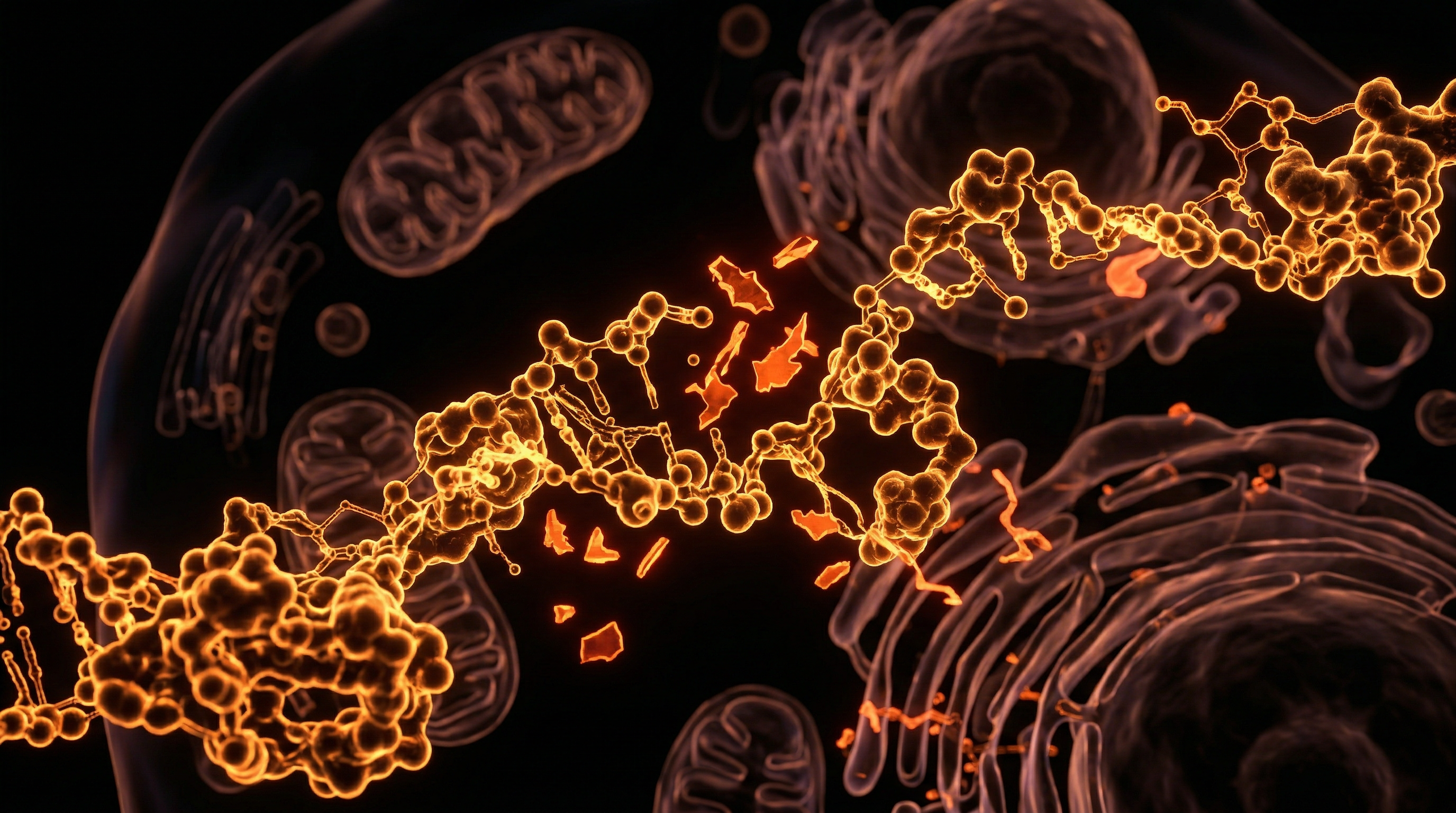
- Mitochondrial Interference: Nanoplastics have been observed to localise within mitochondria, the energy-producing organelles of the cell. By disrupting the electron transport chain, they induce mitochondrial failure, leading to cellular senescence or programmed cell death (apoptosis).
- Lysosomal Rupture: Cells attempt to "digest" these particles within lysosomes. However, the hardness and chemical stability of the plastic can cause lysosomal membranes to rupture, releasing digestive enzymes into the cytoplasm and causing "autodigestion" of the cell.
Crossing the Biological Barriers
The most alarming aspect of nanoplastic biology is their ability to cross high-security biological checkpoints:
- The Blood-Brain Barrier (BBB): Small nanoplastics can penetrate the BBB, entering the central nervous system and potentially triggering neuroinflammation linked to neurodegenerative diseases.
- The Placental Barrier: Research has confirmed the presence of microplastics on both the maternal and foetal sides of the placenta. This means that the "plastic load" is being passed to the next generation before they have even taken their first breath.
Environmental Threats and Biological Disruptors
The plastic particle itself is only half of the problem. MNPs act as Trojan Horses for a cocktail of hazardous chemicals.
The Adsorption of Persistent Organic Pollutants (POPs)
Because plastics are hydrophobic (water-fearing), they act as magnets for other hydrophobic contaminants in the environment. In the ocean or in soil, a microplastic particle will "soak up" legacy pollutants such as DDT, Polychlorinated Biphenyls (PCBs), and Polycyclic Aromatic Hydrocarbons (PAHs). When a human ingests that plastic, these concentrated toxins are released into the highly acidic environment of the stomach and the lipid-rich environment of the gut.
Endocrine Disrupting Chemicals (EDCs)
Plastics are rarely "pure" polymers. They contain a suite of additives designed to give them specific properties:
- Phthalates: Used to make plastics flexible. These are known anti-androgens that interfere with male reproductive development.
- Bisphenols (BPA, BPS, BPF): Used to harden plastics. These are oestrogen mimics that can bind to oestrogen receptors, potentially leading to hormone-sensitive cancers (breast, prostate) and metabolic disorders.
- Flame Retardants: Often added to electronics and upholstery, these chemicals are linked to thyroid disruption and developmental delays in children.
Statistic: Over 10,000 different chemicals are used in the production of plastics, of which more than 2,400 are classified as substances of potential concern due to their toxicity and tendency to bioaccumulate.
The Cascade: From Exposure to Disease
The cumulative effect of chronic MNP exposure is not an acute poisoning event, but a slow-motion biological cascade that leads to chronic disease.
Chronic Inflammation and "Plasticosis"
Pathologists have begun to observe a condition colloquially termed Plasticosis. This is characterised by extensive fibrotic tissue formation in organs heavily contaminated with microfibres. The body’s immune system, unable to clear the plastic, creates a permanent inflammatory response, surrounding the particles with scar tissue. This chronic inflammation is a known precursor to DNA damage and malignancy.
Gut Dysbiosis and the Microbiome
The human gut is the primary interface with ingested MNPs. Research indicates that microplastics alter the composition of the gut microbiota, reducing the diversity of beneficial bacteria. This "dysbiosis" weakens the intestinal barrier (Leaky Gut Syndrome), allowing plastics and their associated toxins to enter the bloodstream more easily, while simultaneously triggering systemic autoimmune responses.
Reproductive Decline
The "Great Sperm Count Decline" observed in Western nations over the last 50 years tracks almost perfectly with the rise in global plastic production. By disrupting the Hypothalamic-Pituitary-Gonadal (HPG) axis, plastic-associated EDCs reduce testosterone levels, impair spermatogenesis, and increase the risk of endometriosis and polycystic ovary syndrome (PCOS) in women.
What the Mainstream Narrative Omits
The mainstream media and corporate-backed environmentalism often focus on "personal responsibility" and "circular economies." However, this narrative serves to obscure several uncomfortable truths:
- The Fallacy of Recycling: Only about 9% of all plastic ever produced has been recycled. The process itself is often a source of microplastic shedding. Furthermore, "recycled" plastic often contains a higher concentration of toxic additives than virgin plastic, as different grades of waste are melted together.
- The Production Surge: Despite the rhetoric of "reduction," global plastic production is projected to triple by 2060. The petrochemical industry views plastic as its "Plan B" as the world transitions away from fossil fuels for energy.
- The "Safe Levels" Myth: Regulatory bodies often set "Acceptable Daily Intake" (ADI) levels for individual chemicals like BPA. However, they almost never account for the cocktail effect—the synergistic toxicity of being exposed to hundreds of different plastic additives simultaneously, nor do they account for the physical presence of the particles themselves.
- Regulatory Capture: The definitions of what constitutes a "microplastic" in legislation are often narrowed by industry lobbyists to exclude liquid polymers or certain biodegradable plastics that are equally persistent in specific environments.
The UK Context
The UK’s departure from the EU has created a precarious "regulatory drift." While the EU is currently implementing a sweeping restriction on intentionally added microplastics under the REACH Regulation, the UK is struggling to maintain its own version, UK REACH.
The UK REACH Data Gap
Under EU REACH, the UK had access to a massive database of chemical safety data shared across member states. Post-Brexit, the UK lost access to this data. Forcing UK companies to re-submit this data is estimated to cost industry upwards of £2 billion—a cost the government is hesitant to impose. The result? A "light-touch" regulatory approach where hazardous chemicals remain on the UK market long after they have been restricted or banned in the EU.
Legislative Loopholes
Current UK legislation, such as the Environment Act 2021, provides the framework for setting targets on waste and resource efficiency, but it is dangerously vague regarding microplastics.
- The "Retained EU Law" Problem: As the UK reviews and potentially "sunsets" thousands of EU-derived regulations, there is a significant risk that protections against specific plastic additives will be quietly dropped to facilitate trade deals with nations with lower environmental standards (e.g., the USA).
- Enforcement Paralysis: The Office for Environmental Protection (OEP), the UK’s post-Brexit watchdog, has frequently raised concerns that it lacks the resources and the "teeth" to hold the government accountable for failing to meet its own environmental targets.
The "Dumping Ground" Risk
There is an emerging trend of "regulatory arbitrage." If the EU bans a specific microplastic-laden cosmetic ingredient, and the UK does not follow suit immediately, the UK becomes the logical destination for manufacturers to offload existing "dirty" stock. This puts British citizens at a higher level of exposure than their European counterparts.
Callout: In 2023, the UK government delayed a planned ban on several single-use plastic items, citing the "economic climate," even as evidence of the health impacts of these materials continued to mount.
Protective Measures and Recovery Protocols
While systemic change requires legislative action, individuals can take steps to reduce their bio-burden and mitigate the effects of the plastic invasion.
Personal Mitigation
- Filtration is Non-Negotiable: Standard carbon filters are often insufficient for nanoplastics. High-quality Reverse Osmosis (RO) systems are the only domestic technology capable of significantly reducing the MNP load in drinking water.
- Ditch the Synthetic Textiles: Prioritise natural fibres like wool, cotton, hemp, and silk. Synthetic clothing (polyester/nylon) is a primary source of indoor microplastic dust.
- Heat and Plastic Don't Mix: Never microwave food in plastic containers. Heat accelerates the leaching of phthalates and bisphenols into the food matrix. Even "BPA-free" plastics often contain BPS, which is equally, if not more, endocrine-disrupting.
- Dust Management: Use a vacuum with a HEPA filter and wet-mop floors regularly. Microplastics accumulate in household dust, which is then inhaled or ingested via "hand-to-mouth" contact, especially in children.
Biological Recovery Protocols
Supporting the body's natural detoxification pathways is essential for managing the MNP load:
- Glutathione Support: As the body’s "master antioxidant," glutathione is depleted by MNP-induced oxidative stress. Supplementation with N-Acetyl Cysteine (NAC) or liposomal glutathione can help maintain cellular defences.
- The Role of Soluble Fibre: Certain types of fibre, such as modified citrus pectin, have been shown to bind to environmental toxins in the gut, potentially reducing their absorption.
- Sauna Therapy: Some lipophilic (fat-soluble) plastic additives, like phthalates, are excreted through sweat. Regular infrared sauna use can assist in lowering the systemic burden of these chemicals.
- Autophagy Induction: Periodic fasting triggers autophagy, a cellular "cleaning" process where the body breaks down damaged cellular components. While autophagy cannot "digest" plastic, it can help clear the cellular debris and damaged proteins caused by plastic-induced stress.
Summary: Key Takeaways
The UK stands at a crossroads. The regulatory gaps created by Brexit are not merely administrative hurdles; they are biological vulnerabilities.
- MNPs are Universal: They have been found in the human blood, lungs, placenta, and breast milk. There is no "away" when it comes to plastic.
- Mechanical and Chemical Toxicity: Plastics harm us through physical irritation of cells and by acting as delivery systems for endocrine-disrupting chemicals.
- The UK REACH Crisis: The UK is currently lagging behind EU safety standards, creating a "regulatory lag" that exposes the population to unnecessary risks.
- The Need for the Precautionary Principle: We cannot afford to wait for "definitive proof" of human mortality from microplastics. By the time that data is undeniable, the biological damage will be multi-generational.
- Sovereignty Must Mean Safety: If the UK is to truly be a "science superpower," it must lead the world in microplastic restriction, rather than trailing in the wake of EU policy.
The "invisible" nature of microplastics has allowed the petrochemical and manufacturing industries to externalise the costs of their products onto the human biological system. Closing the legislative loopholes in the UK is not just an environmental necessity—it is a fundamental requirement for the preservation of public health and the biological integrity of future generations. The time for "monitoring" has passed; the time for total polymer restriction has arrived.
This article is provided for informational and educational purposes only. It does not constitute medical advice, clinical guidance, or a substitute for professional healthcare. Information reflects cited research at time of publication. Always consult a qualified healthcare professional before acting on any health information.
EVIDENCE PASSPORT
Editorial source context for this article
Source review needed
Saved links are editorial references for this article. They may support specific claims rather than every sentence. Open and assess each source in context. This passport does not independently verify them.
Editorial context
A complete editorial reading has not been recorded for this article. Source links remain available for you to open and assess directly.
Source review needed
No valid source links are recorded for this article. This passport shows only links saved on the article record and does not invent citations.
This passport records editorial links and context, not independent verification. Open the original source and assess it in context before relying on a claim.
Medical Disclaimer
The information in this article is for educational purposes only and does not constitute medical advice, diagnosis, or treatment. Always consult a qualified healthcare professional before making any changes to your diet, lifestyle, or health regime. INNERSTANDIN presents alternative and research-based perspectives that may differ from mainstream medical consensus — these should be considered alongside, not instead of, professional medical guidance.
Read Full DisclaimerContinue the thread
Keep this question moving.
Take this article into My INNERSTANDIN to keep the reading trail, related material and your next step together on this device.
Dig deeper in the Library
Free, longform PDF volumes that go beyond headlines into mechanisms and references.