
Deep Sleep: The Glymphatic Flow State
Updated May 2026
Deep non-REM sleep expands the brain's interstitial space by 60% to facilitate metabolic waste removal. This biological process is essential for clearing beta-amyloid and maintaining long-term cognitive health.
Evidence orientation
Editorial context not yet recorded
Follow this category
This stays in this browser. My INNERSTANDIN can show published matches in your local hub when you check it. It does not send email, push, or alert notifications.
Local learning review
A private browser aid for revisiting ideas. It is not an alert or a health recommendation.
Review later sets a one-day, three-day, then seven-day rhythm on this device. Choose it only when you want to revisit this article.
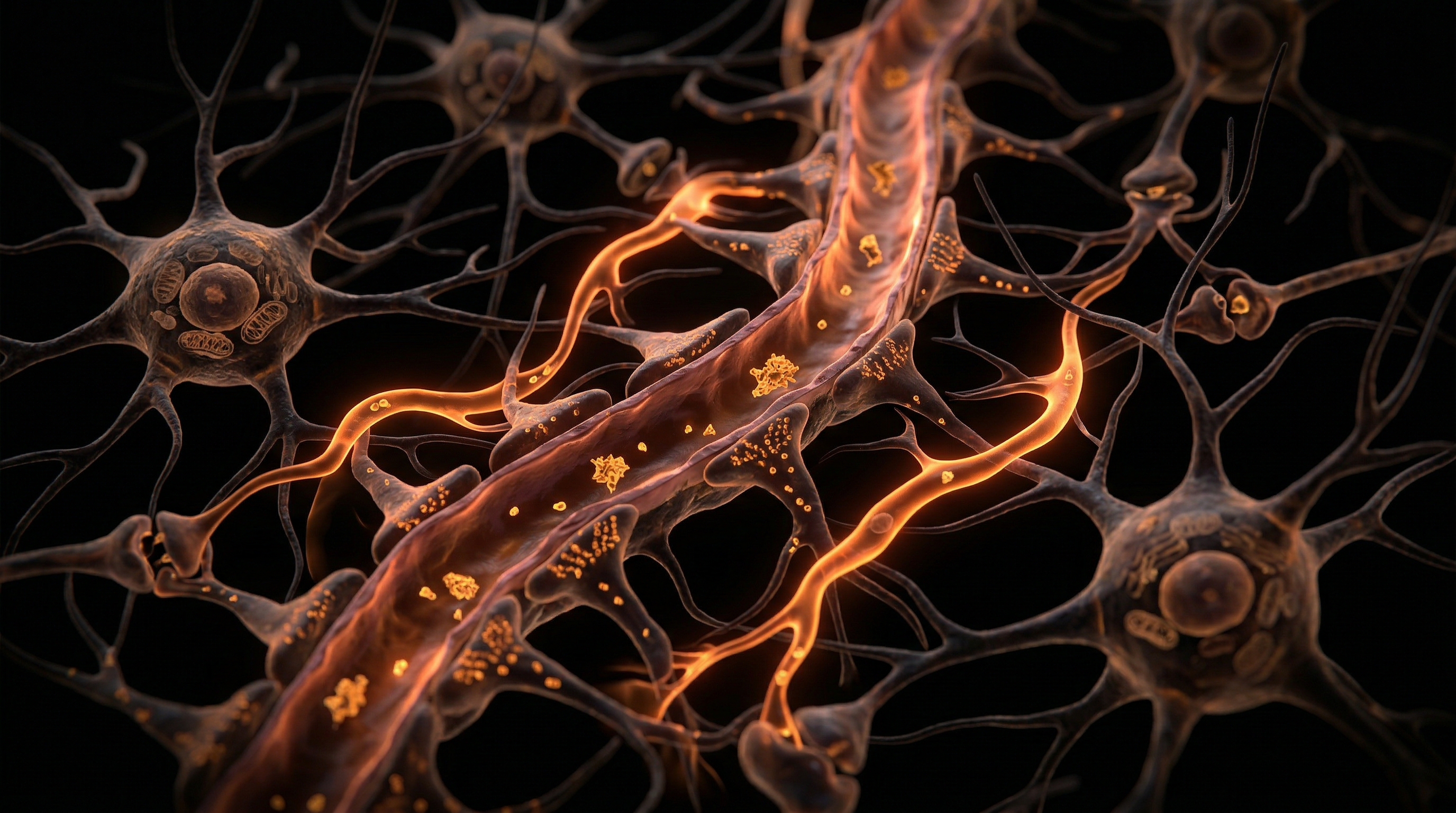
"Deep Sleep: The Glymphatic Flow State"
Category: Glymphatic System & Brain Detox Summary: Deep non-REM sleep expands the brain's interstitial space by 60% to facilitate metabolic waste removal. This biological process is essential for clearing beta-amyloid and maintaining long-term cognitive health. Tags: Sleep Science, Neurobiology, CSF
Overview
For decades, the human brain was considered a biological anomaly—the only major organ seemingly devoid of a lymphatic system. While the rest of the body utilised a network of vessels to clear metabolic waste and debris, the most metabolically active organ in the known universe appeared to have no dedicated plumbing. This scientific blind spot was finally illuminated in 2012 by Dr Maiken Nedergaard and her team at the University of Rochester. They identified what we now call the glymphatic system, a macroscopic waste clearance system that utilises a unique perivascular channel formed by astroglial cells.
However, the glymphatic system does not operate at peak efficiency during our waking hours. It is a nocturnal operation, a "biological night shift" that only commences when the conscious mind retreats into the depths of Slow-Wave Sleep (SWS). During this specific phase of non-REM sleep, the brain undergoes a radical physical transformation: the interstitial space—the gaps between neurons—expands by a staggering 60%. This expansion reduces resistance, allowing Cerebrospinal Fluid (CSF) to surge through the brain parenchyma, flushing out neurotoxic byproducts that accumulate during the day.
The implications are profound. We are not merely "resting" when we sleep; we are undergoing a high-pressure hydraulic wash. The primary target of this clearance is beta-amyloid, the protein fragment associated with Alzheimer’s disease, along with tau proteins and other metabolic "trash." To deny oneself deep sleep is to effectively leave the brain in its own metabolic waste, leading to a state of chronic neuroinflammation and eventual cognitive decay. This article serves as an exhaustive investigation into the mechanics of this flow state and an exposure of the modern environmental factors currently sabotaging our biological sanitation.
##
The Biology — How It Works
The glymphatic system—a portmanteau of "glial" and "lymphatic"—is a functional waste clearance pathway for the central nervous system. Its operation is governed by the principles of fluid dynamics and is intricately tied to the brain’s unique architecture. Unlike the body's lymphatic system, which uses its own vessels, the glymphatic system hijacks the existing vasculature.
The Perivascular Space
The process begins with the Cerebrospinal Fluid (CSF), which is produced in the choroid plexus of the ventricles. This fluid flows into the Virchow-Robin spaces (the perivascular spaces) surrounding the large arteries on the brain's surface. As these arteries dive deeper into the brain tissue, they are shrouded in a "sleeve" of astrocytic end-feet. These end-feet create a conduit through which CSF can travel alongside the blood vessels without mixing directly with the blood itself.
The Sleep-Dependent Expansion
The most critical discovery in glymphatic research is its dependence on the sleep-wake cycle. During wakefulness, the brain is focused on processing sensory information and maintaining consciousness. The interstitial space is constricted, limiting the movement of fluid. However, upon entering N3 (Deep) Sleep, there is a dramatic reduction in noradrenergic tone.
Fact: The hormone noradrenaline (norepinephrine), which maintains alertness, actually inhibits the glymphatic system. When noradrenaline levels drop during deep sleep, the brain's cells physically shrink, increasing the interstitial volume by 60% to allow for "bulk flow" of fluid.
This increase in volume lowers the resistance to fluid movement, enabling the CSF to be "pumped" through the brain tissue by the pulsations of the arterial walls. As the CSF moves through the brain, it mixes with the Interstitial Fluid (ISF), picking up metabolic waste products that have accumulated in the extracellular space.
##
Mechanisms at the Cellular Level
At the molecular heart of the glymphatic system lies a specific water channel protein known as Aquaporin-4 (AQP4). Without these channels, the brain’s waste clearance would grind to a halt.
The Role of Aquaporin-4 (AQP4)
AQP4 channels are highly concentrated on the end-feet of astrocytes—the star-shaped glial cells that support neurons. These channels act as the "valves" that facilitate the rapid movement of water and CSF from the perivascular spaces into the interstitium. In a healthy brain, these channels are highly "polarised," meaning they are precisely located where they are most needed.
- Fluid Interchange: AQP4 allows the CSF to cross the blood-brain barrier interface and enter the tissue.
- Waste Suspension: Once in the interstitium, the fluid creates a convective flow that carries beta-amyloid, alpha-synuclein, and tau toward the venous perivascular spaces.
- Exit Strategy: The waste-laden fluid then exits the brain via the meningeal lymphatic vessels and the dural sinuses, eventually draining into the cervical lymph nodes in the neck.
The Pulsatile Pump
The glymphatic system does not have a heart of its own; it relies on arterial pulsatility. Every time your heart beats, the pressure wave travels through the cerebral arteries. This mechanical pulse acts as a pump, physically pushing the CSF through the glymphatic channels. This explains why cardiovascular health is inextricably linked to brain health—stiff, atherosclerotic arteries cannot provide the "pumping" action required for deep-brain detoxification.
The Delta Wave Connection
Recent neuroimaging has shown that glymphatic flow is synchronised with slow-wave activity (delta waves). During deep sleep, large, rhythmic waves of electrical activity sweep across the cortex. These electrical waves are followed by a massive, slow pulse of CSF. This "washing machine" effect occurs approximately every 20 seconds during the deepest stages of sleep, ensuring that even the most stubborn protein aggregates are dislodged and removed.
##
Environmental Threats and Biological Disruptors
We are currently living through a silent crisis of neuro-sanitation. Modern lifestyles are diametrically opposed to the requirements of the glymphatic system. The "exposing truths" aspect of this research reveals that the degradation of sleep quality is not merely a personal failing, but a result of systemic environmental factors.
Blue Light and Melatonin Suppression
The glymphatic system requires the onset of melatonin to initiate the transition into N3 sleep. Short-wavelength blue light (450-490 nm), emitted by smartphones, LED bulbs, and computer screens, suppresses melatonin production by stimulating the melanopsin-containing retinal ganglion cells. This prevents the brain from entering the "flow state" required for detox, even if the individual manages to fall asleep.
Electromagnetic Fields (EMFs) and Calcium Signalling
Emerging research suggests that non-ionising radiation from Wi-Fi and cellular networks may interfere with Voltage-Gated Calcium Channels (VGCCs) in the brain. Since glial cell activity and the glymphatic pump are dependent on precise calcium signalling, chronic exposure to high-EMF environments can lead to "leaky" astrocytes and a loss of AQP4 polarity, rendering the glymphatic system dysfunctional.
The Impact of Glyphosate and Heavy Metals
The integrity of the blood-brain barrier (BBB) is paramount. Glyphosate, the world’s most widely used herbicide, has been shown in various studies to increase BBB permeability. Furthermore, heavy metals such as aluminium and mercury have a high affinity for the brain. Aluminium, in particular, has been found to interfere with AQP4 channel expression. When these metals accumulate, they create "metabolic roadblocks" that the glymphatic system struggles to clear, leading to localised areas of high toxicity and neurodegeneration.
Pharmaceutical Interference
Many commonly prescribed medications for sleep, such as Benzodiazepines and "Z-drugs" (e.g., Zolpidem), induce a state of sedation but do not facilitate natural Slow-Wave Sleep.
Warning: Sedation is not sleep. Pharmaceutical sedatives often suppress the very delta waves required for glymphatic clearance, meaning users may "sleep" for eight hours but wake up with a brain that has not been "washed."
##
The Cascade: From Exposure to Disease
When the glymphatic system fails—a condition known as glymphatic insufficiency—a predictable cascade of biological decay begins. This is the physiological basis for nearly all neurodegenerative conditions.
The Amyloid Accumulation
Beta-amyloid is a natural byproduct of neuronal activity. In a healthy brain, it is cleared daily. However, when the glymphatic system is compromised, beta-amyloid begins to aggregate into plaques. These plaques are neurotoxic, causing further inflammation and disrupting neuronal communication.
The Tau Tangle
Similarly, tau protein, which normally stabilises microtubules in neurons, begins to misfold and form "tangles" when it is not cleared efficiently. Tau pathology is more closely correlated with cognitive decline than amyloid plaques, and its clearance is heavily dependent on the glymphatic flow during deep sleep.
Chronic Neuroinflammation
As waste products build up, the brain’s immune cells—microglia—enter a state of chronic activation. Instead of performing their normal "gardening" duties, they begin to release pro-inflammatory cytokines like TNF-alpha and IL-1 beta. This creates a "smouldering fire" in the brain that slowly destroys synapses and leads to:
- Alzheimer’s Disease: Driven by amyloid and tau clearance failure.
- Parkinson’s Disease: Driven by alpha-synuclein accumulation.
- Chronic Traumatic Encephalopathy (CTE): Where physical trauma disrupts the glymphatic channels, preventing the clearance of tau.
- "Brain Fog" and Depression: Now increasingly viewed as symptoms of metabolic waste accumulation and neuroinflammation.
##
What the Mainstream Narrative Omits
The mainstream medical establishment continues to focus almost exclusively on "solving" Alzheimer’s through the pharmaceutical removal of amyloid plaques (e.g., Aducanumab). However, this "mop the floor while the tap is still running" approach has seen a nearly 99% failure rate in clinical trials.
The Suppression of "Drainage First" Philosophy
The "innerstanding" of this system reveals a suppressed truth: Alzheimer’s is largely a problem of plumbing, not just pathology. If we focus on maintaining the "drainage" (the glymphatic system) throughout life, the accumulation of toxic proteins becomes much less likely.
There is little profit to be made in advising the public on:
- Optimal Sleep Hygiene: Because it's free.
- Reducing EMF Exposure: Because it threatens the expansion of 5G and IoT infrastructure.
- Avoiding Neurotoxic Pesticides: Because it challenges the agricultural-industrial complex.
The mainstream narrative omits the fact that the glymphatic system is a preventative mechanism. By the time plaques are visible on a PET scan, the glymphatic system has usually been failing for decades. The medical system is geared toward late-stage intervention, ignoring the early-stage environmental and lifestyle disruptions that cause the "clog" in the first place.
##
The UK Context
In the United Kingdom, the crisis of glymphatic health is particularly acute. The UK has some of the highest rates of dementia in the world, with over 900,000 people currently living with the condition—a number expected to rise to 1.6 million by 2040.
The British "Sleeplessness" Epidemic
A study by the Royal Society for Public Health found that the average Briton loses one night’s sleep every week due to stress and environmental factors. In our high-density urban centres like London, Birmingham, and Manchester, the combination of light pollution, noise pollution, and the "hustle culture" has decimated the population’s ability to reach N3 sleep.
Water Fluoridation and the Pineal Gland
A controversial but significant factor in the UK context is water fluoridation. Approximately 6 million people in the UK (concentrated in the West Midlands and North East) drink fluoridated water. The pineal gland, responsible for melatonin production, is a "calcifying" tissue that accumulates fluoride at higher rates than bone.
Important Fact: Research indicates that fluoride accumulation in the pineal gland can inhibit melatonin synthesis, directly impacting the ability to initiate the glymphatic-heavy deep sleep phases.
The NHS Burden
The NHS is currently spending over £12 billion a year on dementia-related care. Yet, there is very little public health messaging regarding glymphatic health. While there are campaigns for "5-a-day" for nutrition, there is no "8-a-night" campaign focused on the quality of deep sleep and its role in brain detoxification.
##
Protective Measures and Recovery Protocols
To reclaim the glymphatic flow state, one must adopt a proactive, bio-regional approach to neuro-sanitation. These protocols are designed to optimise the hydraulic "wash" of the brain.
1. Thermal Regulation
The brain needs to drop its core temperature by approximately 1.5°C to enter deep sleep.
- Protocol: Keep the bedroom at exactly 18.3°C (65°F).
- The "Hot Bath" Paradox: Taking a hot bath 90 minutes before bed causes blood to rush to the surface (vasodilation), which then leads to a rapid drop in core temperature once you exit, triggering the glymphatic system.
2. Sleeping Position: The Lateral Benefit
Research on animal models has shown that the glymphatic system functions most efficiently when sleeping in the lateral (side) position.
- The Science: Sleeping on your side (particularly the right side) facilitates better venous return and optimizes the pressure gradients that drive CSF flow. Sleeping on your back (supine) or stomach (prone) has been shown to be less efficient for waste clearance.
3. Chronobiological Integrity
- Blue Light Blocking: Wear 100% blue-blocking glasses after sunset.
- Total Darkness: Use blackout curtains. Even a small amount of light hitting the skin can disrupt the circadian rhythm and noradrenaline drop required for glymphatic expansion.
- The "Digital Sunset": Disconnect from all EMF-emitting devices (phones, Wi-Fi) at least two hours before sleep.
4. Nutritional Facilitators
Certain substances can enhance glymphatic function:
- Magnesium Threonate: The only form of magnesium that effectively crosses the blood-brain barrier to support the relaxation of the nervous system.
- Glycine: This amino acid not only helps lower core body temperature but also acts as an inhibitory neurotransmitter, promoting deeper delta-wave sleep.
- Hydration with Electrolytes: Glymphatic flow is fluid-dependent. Dehydration increases the viscosity of both blood and CSF, making the "wash" less effective.
5. Intermittent Fasting and Autophagy
Autophagy (cellular self-eating) and glymphatic clearance are synergistic. By finishing your last meal 4–5 hours before bed, you ensure that the body’s energy is directed toward glymphatic "cleaning" rather than digestion. Furthermore, lower insulin levels at night correlate with higher levels of growth hormone, which supports the repair of the AQP4 channels.
##
Summary: Key Takeaways
The glymphatic system is our most potent defence against the "slow burn" of neurodegeneration. Understanding its function is the first step in moving from a state of passive decay to active biological stewardship.
- The 60% Rule: Your brain physically expands its waste-clearance channels by 60% during deep N3 sleep.
- Hydraulic Health: Sleep is not a passive state; it is a high-pressure hydraulic "wash" that clears beta-amyloid and tau.
- The AQP4 Valve: Our brain’s "plumbing" depends on Aquaporin-4 water channels, which are easily disrupted by environmental toxins, EMFs, and poor sleep hygiene.
- Position Matters: Lateral (side) sleeping is the most effective position for glymphatic clearance.
- The Modern Threat: Blue light, fluoride, and "sedative" drugs are the primary enemies of the glymphatic flow state.
- The UK Context: With rising dementia rates and high levels of environmental stressors, British citizens must prioritise sleep quality as a matter of national health urgency.
The brain is a self-cleaning organ, but it can only perform this miracle if we provide it with the necessary conditions: darkness, coolness, silence, and time. To master your sleep is to master your long-term cognitive destiny. The "flow state" is not just for peak performance during the day; it is for the survival of the mind during the night.
This article is provided for informational and educational purposes only. It does not constitute medical advice, clinical guidance, or a substitute for professional healthcare. Information reflects cited research at time of publication. Always consult a qualified healthcare professional before acting on any health information.
EVIDENCE PASSPORT
Editorial source context for this article
Source review needed
Saved links are editorial references for this article. They may support specific claims rather than every sentence. Open and assess each source in context. This passport does not independently verify them.
Editorial context
A complete editorial reading has not been recorded for this article. Source links remain available for you to open and assess directly.
Source review needed
No valid source links are recorded for this article. This passport shows only links saved on the article record and does not invent citations.
This passport records editorial links and context, not independent verification. Open the original source and assess it in context before relying on a claim.
Medical Disclaimer
The information in this article is for educational purposes only and does not constitute medical advice, diagnosis, or treatment. Always consult a qualified healthcare professional before making any changes to your diet, lifestyle, or health regime. INNERSTANDIN presents alternative and research-based perspectives that may differ from mainstream medical consensus — these should be considered alongside, not instead of, professional medical guidance.
Read Full DisclaimerContinue the thread
Keep this question moving.
Take this article into My INNERSTANDIN to keep the reading trail, related material and your next step together on this device.
Explore this in the Body Map
See where this hits your biology. Interactive anatomy, threats, and protective protocols.
Dig deeper in the Library
Free, longform PDF volumes that go beyond headlines into mechanisms and references.